
Things to Do in Kyoto: Plan Beyond a Checklist
Build a Kyoto visit around contrasting experiences, with practical comparisons of temples, shrines, gardens, the market and neighbourhood walks.
Kyoto becomes easier to enjoy when you stop treating every famous place as an equal obligation. A temple terrace, a mountain shrine, a carefully composed garden and a food market ask different things of your attention and energy. Choosing between them is more useful than collecting the longest list of things to do in Kyoto.
Start with the experience you want most, then choose a nearby contrast. Kiyomizu-dera and the surrounding eastern streets make sense together; Tenryu-ji and Arashiyama belong in a western outing. Fushimi Inari is a separate southern decision. The comparisons below help you make those choices without turning a short stay into repeated journeys across the city.
Visitor information was checked on 3 October 2026. Suggested visit lengths are editorial planning estimates, excluding transport and queues, rather than official tour durations.
| Choose this | What the visit gives you | Area | Main distinction |
|---|---|---|---|
| Kiyomizu-dera | Temple architecture, an elevated terrace and city views | Eastern Kyoto | A substantial temple visit with an uphill approach |
| Fushimi Inari Taisha | Torii-lined paths and a choice between a shorter visit and a mountain walk | Southern Kyoto | Reaching the shrine does not mean completing the mountain route |
| Tenryu-ji | A garden visit that can be combined with Arashiyama | Western Kyoto | Garden, buildings and Dharma Hall have distinct admission arrangements |
| Ryoan-ji | A rock garden to contemplate and wider grounds to explore | Northwestern Kyoto | Better for attentive looking than a rapid photo stop |
| Nishiki Market | Food shopping, ingredients and small purchases to taste | Central Kyoto | Individual shops set their own hours |
| Gion and Kiyomizu streets | Traditional streetscapes, shops and places to eat | Eastern Kyoto | Walking through a district does not grant access to every property |
Choose a temple for what you want to see
Kiyomizu-dera: architecture with a view
Choose Kiyomizu-dera when you want the temple itself to anchor your outing. Its wooden main hall stands against the hillside; the stage and the view from Okuno-in give the buildings a setting that is hard to understand from a close-up photograph alone. The temple's grounds guide identifies these viewpoints and the main features of the complex.
Allow roughly 60–90 minutes inside as an editorial estimate, with additional time for the approach and surrounding streets. Do not use the temple's map as a promise that every named space is included in ordinary admission: special openings are a separate consideration. Check the current visitor information before attaching a garden opening or evening event to your plans.
This is a strong choice for someone who enjoys the relationship between architecture and landscape. It is a weaker choice if the only goal is an empty photograph or a minimal-walking stop. Prioritise the main experience over adding every neighbouring temple. After a substantial visit, sitting down for tea can add more to your day than another admission queue.
Ryoan-ji: looking slowly at a garden
Ryoan-ji offers a different kind of attention. Its rock garden is a composition to look at from the viewing area; the wider grounds include a pond and planted gardens. That contrast is described by the official Kyoto destination guide.
Choose it if you would enjoy sitting and noticing how space, stones and gravel work together. Skip it on this trip if that prospect leaves you cold and you would only be travelling across town because it appears on a famous-sites list. Appreciating a garden does not require specialist knowledge, but it does benefit from a willingness to pause.
An editorial allowance of 45–75 minutes suits a considered visit. Ryoan-ji sits in the northwest: do not treat it as an adjacent stop to either Kiyomizu-dera or central Arashiyama. If you have already chosen Tenryu-ji, add Ryoan-ji because comparing gardens interests you, rather than because your visit needs a second garden ticket.
Fushimi Inari: decide how far you want to walk
Fushimi Inari Taisha is the shrine choice for visitors drawn to paths beneath vermilion torii. The official precinct map distinguishes the main shrine area, Senbon Torii and the places farther up the mountain. Treat that distinction as the first planning decision, before deciding what else to do afterwards.
A shorter visit and a sustained mountain walk are different experiences. The shrine describes Inariyama as a sacred mountain with paths and worship sites. You can value the lower part without making the summit your objective. Conversely, if walking the mountain is what appeals, protect time and energy for it instead of squeezing it between distant attractions.
As an editorial estimate, allow 60–90 minutes for a shorter visit or 2–3 hours for a more substantial mountain outing, adjusted to your pace and chosen route. Neither is a guaranteed completion time. Check the map, the conditions and your energy before continuing uphill; the return is part of the walk too.
The shrine is beside JR Inari Station, with Keihan Fushimi-inari Station another option, as shown on its official access page. A straightforward railway arrival should not be confused with a level route through the whole site. If steps or sustained walking are a concern, assess the exact section you intend to visit rather than relying on the station's proximity.
This remains a place of worship. The shrine's visitor requests include keeping worshippers' passage clear and respecting restricted spaces. A photograph is not a reason to stop the flow of people beneath the gates.
Arashiyama: give the journey more than a bamboo photograph
Arashiyama works best when you actually want a western Kyoto outing. Make Tenryu-ji a possible anchor, with the bamboo path and riverside setting as complements, rather than travelling across the city for a single photograph and immediately leaving.
Tenryu-ji's garden provides a more deliberate way to look at a landscape. A pond, a surrounding path and mountains incorporated into the view create a different experience from Ryoan-ji's rock composition. Its official grounds guide explains the garden and buildings. Choose it if you want to spend time with the garden itself; do not assume that purchasing every available admission makes the experience better.
The practical distinction is on the official admission page: garden access, access including the temple buildings, and the Dharma Hall's Cloud Dragon painting are separate choices. Buildings can close for ceremonies, and the Dharma Hall has its own opening schedule. Verify the component you care about before travelling, especially if your interest is the painting rather than the garden.
Allow about 60–90 minutes for the garden and, if open and desired, buildings. A wider Arashiyama outing needs additional time for walking and breaks. Those are editorial estimates, not a promise to fit all the area's attractions into a fixed slot.
Skip this part of Kyoto if your available time is short and the eastern temples already deliver what you came for. It is also reasonable to choose Arashiyama over another temple district if landscape and walking appeal more than adding further architectural interiors. The useful question is what changes in your experience, not how many attractions share the same map pin.
Nishiki Market: browse with a purpose
Nishiki is a chance to look at Kyoto through food and shopping. The market association's website introduces its culinary role and links to the shop directory. Arrive curious about ingredients and individual businesses, rather than expecting a single organised tasting attraction.
A productive approach is to browse first, choose a small number of things you actually want, then buy them. If you want a relaxed seated meal, make that a separate decision; a sequence of snacks does not necessarily provide the same rest or satisfaction. Prices, portions and payment methods belong to individual shops, so read what is offered before ordering.
Allow 45–90 minutes as an editorial estimate, depending on shopping and stops. The market's own FAQ confirms that hours and closing days vary by shop. Check a particular business directly if it is the reason for your visit. An accessible street on a map also does not guarantee an easy visit with every mobility aid when the market is crowded.
For eating, follow the shop's designated arrangement. Kyoto's official visitor guidance asks visitors not to eat while walking through Nishiki. Buy, stop appropriately and eat, rather than carrying an open snack through the flow of shoppers.
Gion and the eastern streets: a neighbourhood experience
The official Gion and Kiyomizu area guide describes a district of temples, traditional streets, ceramics shops, restaurants and teahouses. This makes a useful contrast to time spent inside a single attraction. You can slow down, look at shopfronts and choose somewhere to sit without needing another major sight as an objective.
Combine this with Kiyomizu-dera geographically, but remember that walking the district still takes energy. A map can make an extended stroll look like an effortless connection. Choose the section that interests you, leave room for breaks and avoid attaching a distant final stop simply because the streets themselves have no single ticket time.
Treat Gion as a lived-in, working neighbourhood. Follow current signs at entrances, lanes and properties; a visible doorway or appealing side street is not an invitation. This guide does not offer a blanket rule about which alleys are public or private. Do not block people, pursue geiko or maiko, or turn their working journey into a photo opportunity.
Choose Gion for the streetscape and a planned meal, not for a guaranteed encounter. If performance is your main interest, investigate a separately advertised event with explicit visitor access. Wandering the district and attending a performance are different purchases of your time.
Build a selection with contrast and sensible geography
For a short visit, choose an anchor and a contrasting nearby experience. Kiyomizu-dera plus eastern streets gives you a temple and a neighbourhood. Tenryu-ji plus an Arashiyama walk gives you a garden and landscape. Nishiki can supply a central food-focused visit. Fushimi Inari deserves its own decision about walking distance.
These are combinations, not a timed itinerary. Check opening arrangements first, then assess the journey from your actual starting point. Do not assume every rail station bearing an area's name leaves you at the same entrance. Similarly, arriving before a closing time does not necessarily leave enough time for the visit you want.
When editing your choices, remove the stop with the weakest personal reason. Keep the garden if you want to study it; keep the mountain walk if movement is part of the pleasure. Leave some of Kyoto unvisited so that the places you choose can be experienced with attention.
Plan the next part of your trip
Use these related guides to compare where to stay, what to visit or another destination in the same region. Each guide covers a separate decision; this is not a combined itinerary.
More guides for planning your visit
Match these visits to the weather, seasonal scenery and visitor peaks with our guide to when to visit Kyoto.
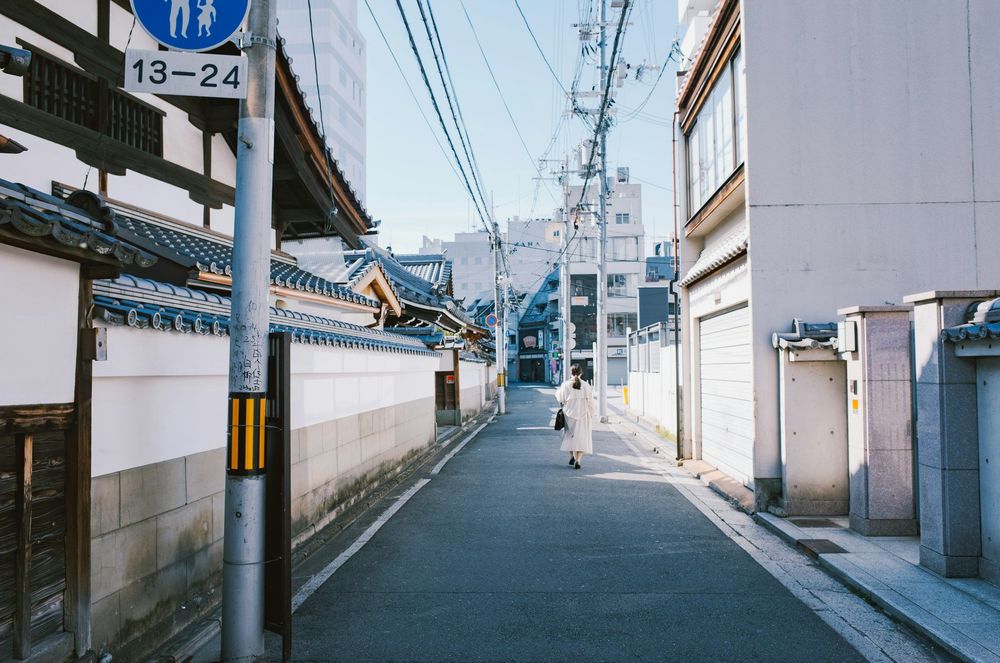
Cover photograph: A person walking along a quiet street with tiled walls in Kyoto. Photo by PJH on Unsplash (Unsplash).
Frequently Asked Questions
What should I prioritise on a first visit to Kyoto?
Choose one substantial temple or shrine visit, then a contrasting neighbourhood or food experience. Kiyomizu-dera with the eastern streets is a coherent starting point; choose Fushimi Inari instead if the shrine paths appeal more.
Do I need to walk to the top at Fushimi Inari?
No. Decide whether you want a shorter shrine visit or a mountain walk. Use the official map to choose your route and include the return in your time and energy allowance.
Should I choose Tenryu-ji or Ryoan-ji?
Choose Tenryu-ji if you want a garden within an Arashiyama outing. Choose Ryoan-ji if contemplating a rock garden is a particular interest. Visit both only if comparing them justifies the extra travel for you.
Does a Tenryu-ji ticket include everything?
Do not assume so. Garden, buildings and Dharma Hall access have distinct arrangements, and some spaces have separate opening conditions. Check the current official admission page for the parts you want to see.
Can I visit Nishiki Market in the evening?
Check the individual shops you want to visit. Nishiki has no single set of opening hours for all businesses, so do not build an evening food plan on the assumption that the whole market will be operating.

Keep Exploring

Things to Do in Los Angeles: Plan by Area
Build a Los Angeles shortlist around geography, with specific cultural and coastal experiences, free-admission caveats and current museum closures.
Things to Do in Tokyo: Pick Your Highlights
Build a Tokyo shortlist that suits you. Compare Asakusa, Meiji Jingu, Ueno, Shibuya, Shinjuku Gyoen, Omotesando, Tsukiji and teamLab Borderless.

Things to Do in Marrakech: A First-Visit Guide
Plan a first visit around the Marrakech experiences you actually want: decorative palaces, garden walks, photography, souks and Moroccan cooking.