
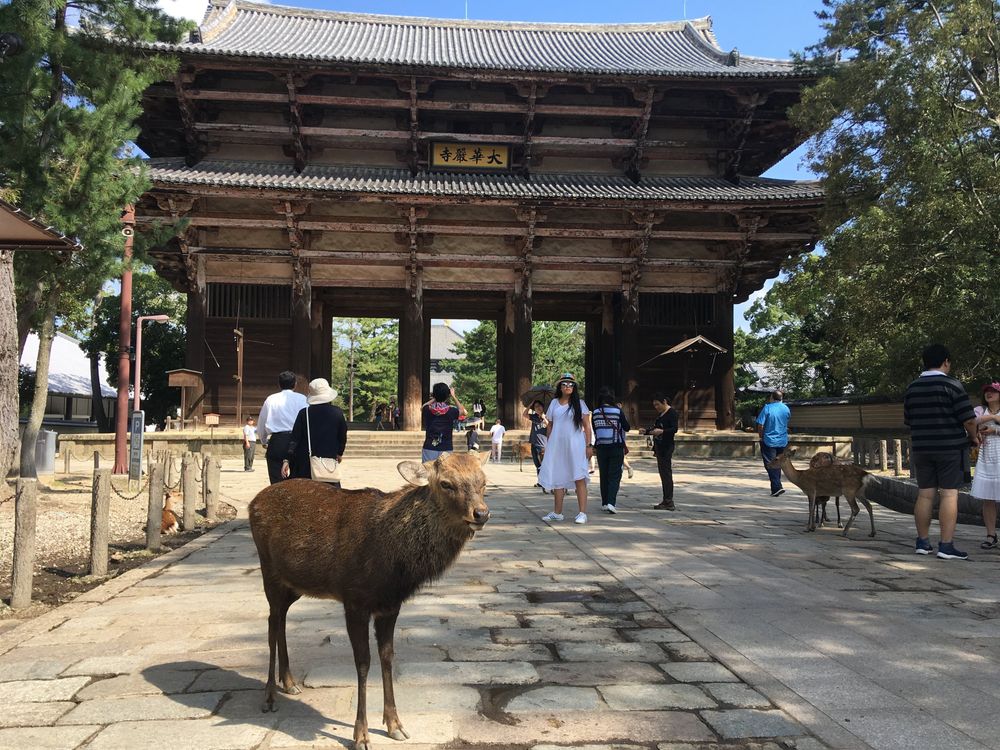
Plan Nara from Kyoto with JR or Kintetsu, Tōdai-ji tickets, an optional Kasuga Taisha visit and sensible time for the park and deer.
A Nara day trip from Kyoto works best with Tōdai-ji as the main visit, time in the park and one optional second focus at Kasuga Taisha. Choose the arrival station before choosing the train: Kintetsu-Nara is closer to the park, while JR Nara may suit a rail ticket or pass you already hold. The difference continues after you leave the platform.
Give Nara a substantial day rather than the gap between two Kyoto attractions. Our Kyoto highlights guide helps decide what to leave for another day in the city. This guide covers the practical choices for a temple-and-park outing, not every attraction in Nara Prefecture.
The day at a glance
| Decision | Practical answer |
|---|---|
| Kintetsu option | Kyoto to Kintetsu-Nara; about 35 minutes by limited express, with extra ticket required |
| JR option | Kyoto to JR Nara; about 45 minutes by Miyakoji Rapid |
| Station closest to the park | Kintetsu-Nara; JR Nara involves a longer walk or a local bus |
| Main visit | Tōdai-ji's Great Buddha Hall and approach |
| Optional extension | Kasuga Taisha and its lantern-lined setting |
| Suggested time in Nara | About 5–6 hours including walking and lunch, before rail journeys |
| Important distinction | The park and the separately ticketed temple or shrine areas are different visits |
Rail times come from Nara City Tourism Association's access guide and are approximate. Information was checked on 27 October 2026. Suggested time on site is our editorial allowance; queues, ceremonies, mobility needs and the route you choose can change the day considerably.
Choose Kintetsu or JR for the whole journey
Kintetsu is the straightforward starting point for a park-focused visit when you do not have another reason to use JR. Its Nara station leaves you closer to the eastern sights. JR can still be convenient, particularly if your existing pass covers the service; confirm the actual coverage rather than buying a pass simply because this is a train day trip.
The official Nara Park area guide describes the park as a short walk east of Kintetsu-Nara and roughly a 20-minute walk from JR Nara along Sanjo-dori. Those are approaches to the park area, not walking times to every temple entrance. Tōdai-ji and Kasuga Taisha require further decisions once you arrive.
For Kintetsu, distinguish an ordinary express from a limited express. The railway's limited-express ticket rules require both a basic fare and a limited-express ticket, with all seats reserved. Paying the basic fare with an IC card does not by itself provide the reserved-seat ticket. Check the train's destination and any transfer shown when booking.
The roughly 35-minute figure belongs to the limited-express option; do not apply it to every departure. Similarly, the JR timing refers to Miyakoji Rapid, not every local train. Compare the departure you can actually catch, including waiting, transfers and your journey from the hotel to Kyoto Station.
We do not quote a fixed rail fare because train type, ticket and pass choice affect the total. Check the operator's fare for your actual departure. Buying a premium sightseeing train is optional; it changes the journey experience and should not be treated as the standard price of reaching Nara.
Make Tōdai-ji the first substantial visit
After arrival, head towards the park and the Nandaimon approach to Tōdai-ji. There will be opportunities to see deer, but you need not turn the first encounter into a lengthy feeding session. Keeping the temple as the morning anchor protects time for the main reason for the trip.
The temple's access page gives about 20 minutes on foot from Kintetsu-Nara Station. It also describes buses from both stations, with the Tōdai-ji Daibutsuden/Kasuga Taisha-mae stop followed by a walk. Treat these as access estimates; waiting for a bus or stopping in the park adds time.
At Nandaimon, look at the gate before hurrying towards the Great Buddha Hall. The scale of the approach helps explain the setting of the buildings. Allow space for worshippers and other visitors, and keep the route through the gate clear when taking pictures.
Inside the Great Buddha Hall, give yourself time to look beyond a single photograph of the Buddha. Notice the relationship between the figure, the surrounding interior and the architecture. You do not need to add every other hall to make this a meaningful temple visit.
As a planning allowance, reserve 60–90 minutes for the main temple visit and approach, with more if you read carefully or encounter queues. That is an editorial estimate, not a promised completion time or an official guided-tour duration.
Know which Tōdai-ji ticket you want
The temple's current admission page lists the Great Buddha Hall at ¥800 for an individual adult. Its hours are 07:30–17:30 from April to October and 08:00–17:00 from November to March. Check again for your date and arrive with time to visit rather than aiming at the closing hour.
The hall-and-museum joint pass is listed at ¥1,200 for adults. Choose it if the museum collection is a genuine priority and you will allocate time to it. It is not automatically better value simply because it adds another building. Other halls have their own admission arrangements.
If you want to explore more of the temple precinct, choose one extension after the main visit. An uphill detour towards Nigatsu-dō is a different commitment from returning towards lunch. Consult the precinct map and assess steps and energy before adding it; keep Kasuga Taisha optional if you extend the temple visit substantially.
Use lunch as the decision point
After the main temple, stop for lunch and reassess. The useful question is whether you still want another religious site or would rather enjoy the park at an easier pace. Decide while seated, before the walk towards a second attraction commits you to a longer return.
Look at a restaurant's menu, queue and opening information before joining it. This guide does not promise a particular restaurant will have space or serve throughout the afternoon. A relaxed meal can be more valuable than adding another admission, especially with children or after several busy Kyoto days.
For a shorter outing, finish with a park walk and return towards your station. For a fuller day, continue to Kasuga Taisha. In either case, leave margin for the journey back through Nara: the return walk does not disappear because the last attraction has closed.
Add Kasuga Taisha for a different atmosphere
Kasuga Taisha offers a shrine setting and lanterns as a contrast to Tōdai-ji's main hall. Follow the paths using the official Nara Park walking map. A park map is useful for toilets, paths and exit choices as well as landmark names.
Distinguish the general shrine approach from special admission inside the cloisters. The shrine's English visitor information lists ¥700 for special admission, with reception 09:00–16:00. Ceremonies and events can prevent access. Visiting the surroundings does not guarantee entry to the paid area.
If the cloisters are your priority, check the shrine's detailed opening and ceremony information before setting the order of your day. A ceremony-related restriction can matter more than the broad daily opening hours. Do not leave the specific paid visit until the last possible moment.
Allow roughly 45–75 minutes for a selected shrine visit, excluding the connecting walk, as an editorial estimate. You can also choose the approach and surroundings without buying every additional admission. After a full temple morning, a shorter shrine visit may be enough.
Treat the deer as wildlife, not a photo service
Nara's deer move freely around the park and can approach people closely. That familiarity does not make them pets. The prefecture's visitor guidance warns about unpredictable behaviour, seasonal aggression and particular care around young children.
If you feed them, use only the designated shika senbei deer crackers. Do not tease a deer by withholding food for a photograph. When finished, show empty hands; keep papers, bags and your own snacks secured. Do not touch fawns, chase deer or leave litter that animals might eat.
You can enjoy watching without feeding. This is often the simpler choice for a nervous child or anyone uncomfortable with several animals approaching. Give deer room, keep children close and leave space to move away. The success of the day does not depend on a bowing-deer photograph.
Keep the return and walking limits realistic
For lower walking capacity, consider local buses for one or both station connections and choose one principal attraction. The city tourism access guide describes the loop-bus network serving the park and both stations. Check the actual stop and direction before boarding; a bus can reduce distance but does not remove steps inside a site.
In wet weather, shorten the outdoor route rather than assuming the whole park day can be moved under cover. Footwear with grip, water and a manageable bag are more useful than a long list of optional stops. Store larger luggage before the outing if possible, without relying on a particular locker being available.
Avoid adding Uji, a substantial Fushimi Inari walk and a full Nara circuit to the same day. Being connected by rail does not create time inside the places. Our Kyoto in 3 days guide helps keep Kyoto's own visits coherent around a separate Nara day.
Before leaving the final site, check the return departure you intend to use and allow for the walk or bus to the correct station. Kintetsu-Nara and JR Nara are not interchangeable meeting points. Finish with a comfortable margin rather than turning the final part of the trip into a race.
Cover photograph: Deer on the approach to the wooden Nandaimon gate at Tōdai-ji in Nara — Christophe95, CC BY-SA 4.0.
Frequently Asked Questions
Is JR or Kintetsu better for Nara from Kyoto?
Kintetsu-Nara is closer to the park and is convenient for this route. JR can make sense if your existing ticket or pass covers it. Compare the complete trip, including the station approach, not just the time on the train.
Does the Kintetsu limited express need a separate ticket?
Yes. It requires a limited-express reserved-seat ticket in addition to the basic fare. An IC-card payment for the basic journey does not replace that ticket.
Can I see Tōdai-ji and Kasuga Taisha in one day?
Yes, with a focused selection and enough walking time. Allow about 5–6 hours in Nara including lunch as an editorial estimate, plus rail travel. Make the shrine optional if you extend the temple visit or need a slower pace.
Do I have to feed the deer?
No. Watching from a respectful distance is a valid way to enjoy the park. If you do feed them, use only shika senbei, do not tease them and supervise children closely.


Keep Exploring
Manly from Sydney: Plan a Harbour and Beach Day
Plan the ferry, the walk across Manly and a coastal outing towards Shelly Beach, with swimming checks and a return journey that leaves room to relax.

Teotihuacan from Mexico City: Plan Your Visit
Plan a day among Teotihuacan's plazas, pyramids and museums, with a route that works without a summit climb and a clear separation between ground visits and balloon packages.

Statue of Liberty and Ellis Island: Plan Your Visit
Plan Liberty Island and Ellis Island with the right ticket, a realistic museum day and clear expectations for security, crown stairs and the return ferry.