
Ryoan-ji Kyoto: Rock Garden and Temple Visit
Plan Ryoan-ji’s rock garden and pond walk, with current admission, winter hours and the separate autumn 2026 evening programme.
Visit Ryoan-ji for two contrasting gardens: the closely framed rock composition and the wider landscape around Kyoyo-chi pond. Give the rock garden time, then walk the grounds instead of leaving immediately after the famous photograph. That contrast makes the temple a worthwhile focused outing even without specialist knowledge of Zen or garden history.
Allow about 45–75 minutes on site as an editorial estimate, longer if you want a sustained pause or a separately booked special visit. Travel to northwestern Kyoto is additional. Ryoan-ji works best when you want to look carefully at a small number of things; it is less rewarding as a hurried stop inserted between distant attractions.
Our Kyoto highlights guide compares Ryoan-ji with other temples and neighbourhoods. Here the decision is more specific: ordinary daytime admission or a special autumn visit, how to approach the rock garden, and how to include the pond without rushing.
Practical facts
| Item | Planning information |
|---|---|
| Location | Northwestern Kyoto, near the Randen Kitano Line |
| Standard admission | Adults ¥600; high-school students ¥500; elementary/junior-high students ¥300 |
| March–November | 08:00–17:00 |
| December–February | 08:30–16:30 |
| Reception cutoff | City learning directory lists 16:30 March–November, 16:00 December–February |
| Core visit | Rock garden viewing area, nearby garden details, Kyoyo-chi pond grounds |
| Suggested allowance | 45–75 minutes, excluding transport; editorial estimate |
| Special visit | Separate autumn 2026 reservation and conditions; not ordinary admission |
Checked on 4 November 2026. The Kyoto Prefecture Tourism Federation confirms ordinary prices and seasonal hours; the city's learning-information directory specifies the reception cutoffs. Recheck any exceptional access before travelling for a particular room or event.
Choose the right kind of visit
Ordinary daytime admission is the sensible starting point if your main interest is the rock garden and grounds. Arrive with enough time to pause at the viewing area and walk around the pond, rather than aiming at the last reception time. A final-entry allowance is not a recommended visit length.
For an early visit, note the seasonal change: November opening is 08:00, while December begins at 08:30. The earlier closing in winter also matters if you combine several northwestern sights. Do not carry November's timetable into a December plan without adjusting it.
The tourism federation lists no regular closed day, but that does not guarantee every room, event or access arrangement at all times. The temple's own website was unavailable during this check, so this guide uses current official city and prefectural sources for practical details and links them directly. A specific special opening needs its own confirmation.
Autumn 2026: a separate evening option
Kyoto City's official special-visit listing advertises a reserved programme on Saturdays and Sundays from 26 September to 29 November 2026, running 16:00–18:30. It includes the rock garden after ordinary closing and Hosokawa Morihiro's cloud-dragon paintings, along with normally restricted spaces.
The listed visit-only price is ¥5,000 per person, or ¥5,500 with a special goshuin; payment is cash on the day. The tour is in Japanese only, requires advance reservation and excludes elementary-school children and younger. Its route cannot accommodate wheelchairs. The booking deadline is 16:00 the previous day, or earlier if full; the listing requests arrival by 15:50.
Choose this because the paintings, restricted spaces and Japanese-language programme interest you. It is not a general extension of the ¥600 daytime ticket, and an advertised date does not establish remaining places. Follow the listing's reservation process and meeting instructions. Do not assume the programme continues into December.
Arrive by the route that fits your starting point
The Randen operator's area map places Ryoan-ji about eight minutes on foot from Ryoanji Station on the Kitano Line. That is an operator estimate to the temple area, not your complete journey from central Kyoto. Check the rail connection from your actual starting point, especially if approaching via another Randen line.
Official local information also identifies Ryoanji-mae as the nearby bus stop. A stop beside the entrance and a railway station within walking distance offer different arrival patterns. Choose the connection first, then include the final walk and temple visit in your plan; avoid assuming the station is at the rock-garden doorway.
Kinkaku-ji and Ninna-ji are useful northwestern comparisons if you want another temple, but neither needs to become compulsory. The purpose of grouping the area is to reduce unnecessary cross-city travel, not to make you buy three admissions. A single considered temple visit and a meal can be a complete half-day outing once transport is included.
From the entrance to the rock garden
Follow the signed visitor route towards the temple buildings, keeping the pond landscape in mind for later. That helps avoid using all your time at the first photogenic water view and reaching the rock garden when you need to leave. You can give each part attention without making the approach a race.
At the building entrance, follow the current shoe-removal and circulation instructions. Keep bags compact and leave the passage clear while you organise your footwear. The viewing area serves many visitors at once; a place to sit is not a reservation for an entire section of the veranda.
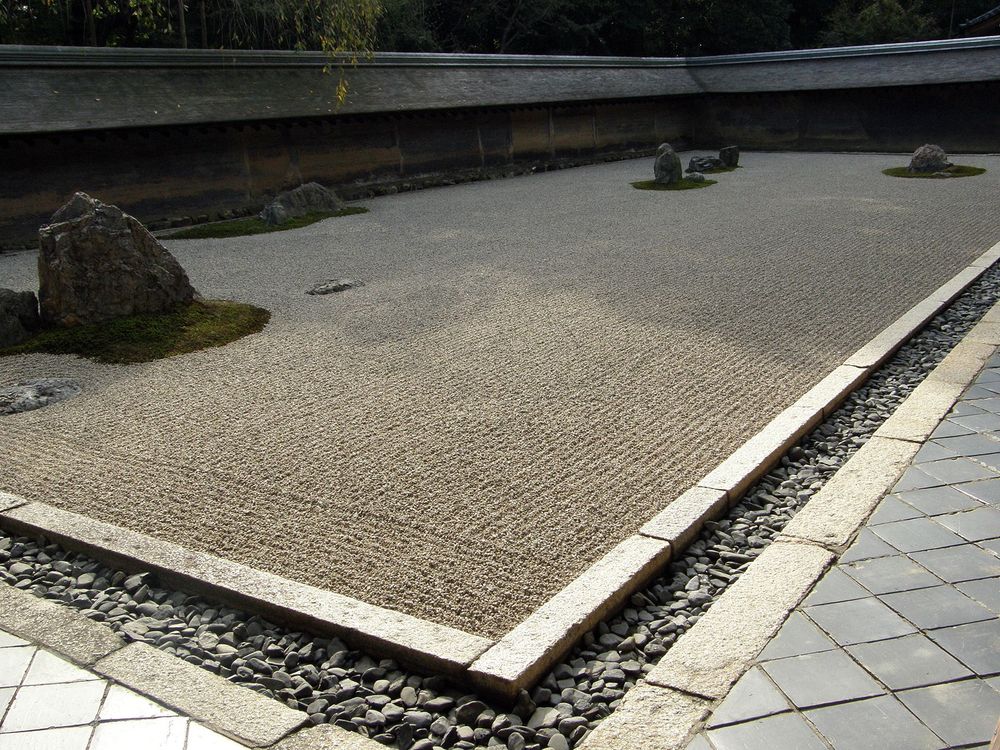
Take an initial look at the whole composition before choosing a position. Notice the boundary wall, the open gravel surface and the grouped stones. A photograph often isolates the stones, but the experience on site also depends on their relationship to the edge, the surrounding trees and the building from which you are looking.
Look without needing to solve a riddle
The Japan National Tourism Organization's garden guide describes fifteen stones and several possible interpretations. The garden's maker and intended meaning are not securely established by a single explanation. Treat ideas about islands, mountains or animals as interpretations, not a solution you must find before the visit becomes worthwhile.
Start with the physical arrangement. Which group attracts your eye first? How much empty space sits between the groups? Do the stones feel connected or separate? These questions help you look without requiring a lesson in Buddhist philosophy or a promise that sitting here will produce a particular emotional response.
If space allows, change viewpoint quietly and compare the overlaps. The familiar challenge of seeing all fifteen stones should not become the whole visit. You do not need to lean into another visitor's view or occupy several positions for photographs to understand that a composition changes with perspective.
Spend a few minutes without a camera, then decide whether one wider image records what interested you. Follow the temple's current photography signs, particularly inside buildings and during special visits. A ticket grants access under those arrangements, not an unrestricted photographic session.
The basin and the smaller garden details
JNTO also highlights the tsukubai, the stone basin associated with the small garden behind the priest's chambers. Its square centre participates in a play on written characters, linked to an idea of knowing sufficiency or contentment. It is a compact detail with a different kind of interest from the broad rock-garden composition.
Look from the visitor route and read the interpretation available on site. Do not enter a planted area to reach the basin or assume every garden feature is intended for visitors to use. The useful contrast is between something perceived at a distance and an object whose meaning depends on a close detail.
Keep temple interiors and special rooms separate in your expectations. The existence of a named tea room or painting does not establish unrestricted access on an ordinary ticket. If a particular interior is your reason for visiting, check its current opening rather than treating a photograph or special-event description as a permanent entitlement.
Finish around Kyoyo-chi pond
The official Kyoto destination guide describes the wider grounds, trees, moss and Kyoyo-chi pond. After the rock garden's contained composition, the pond offers space to walk and changing views. Include it as part of the visit, rather than dismissing it as a path back to the exit.
Follow the open paths and choose one or two places to pause. Look at how water, banks and planting organise the view differently from the gravel courtyard. You do not need to identify every tree or complete every possible loop to appreciate the contrast.
Autumn colour and spring blossom change from year to year. Choose your travel date for the overall trip, then check current seasonal conditions if foliage is an important reason for coming. This guide does not promise a peak week, a particular flowering tree or a crowd-free reflection photograph.
For a shorter visit, preserve the rock-garden pause and one pond-side stretch, then leave. For a longer one, spend the extra time comparing the two landscapes rather than automatically adding a distant temple. That produces a more coherent memory of Ryoan-ji itself.
Accessibility and choosing the next stop
The prefectural tourism listing says staff can guide wheelchair users for rock-garden viewing and identifies accessible toilet provision. Contact the temple about the route and assistance you need before arrival. This ordinary-visit information must not be confused with the autumn evening programme, whose published route explicitly excludes wheelchair use.
If comparing gardens is your priority, our Ginkaku-ji garden guide explains a different eastern Kyoto visit with lower and upper routes. It is useful for choosing between experiences or planning another day; it is not a nearby continuation from Ryoan-ji.
If you remain in the northwest, select another stop only when it adds a distinct interest. Keep enough time for a meal and the return journey. Ryoan-ji's value is not increased by surrounding it with so many timed stops that you cannot sit with the garden you travelled to see.
Cover photograph: Rocks and moss set in raked gravel at Ryoan-ji’s walled garden — Archive photograph; no edits to the downloaded file — Tomi Mäkitalo, CC BY-SA 3.0.
Frequently Asked Questions
How long should I spend at Ryoan-ji?
Allow roughly 45–75 minutes for the rock garden and pond grounds, excluding transport. That is an editorial estimate; the reserved autumn evening programme lasts about two and a half hours.
What does ordinary admission cost?
The official prefectural listing gives ¥600 for adults, ¥500 for high-school students and ¥300 for elementary and junior-high students. Special visits have separate prices and conditions.
Is Ryoan-ji open late in autumn 2026?
A separately reserved Japanese-language programme runs on listed weekends through 29 November, 16:00–18:30. It is not an extension automatically included with ordinary admission.
Do I need to understand Zen to enjoy the garden?
No. Begin with the stones, open space and changing viewpoints, then compare the rock garden with Kyoyo-chi pond. Interpretations can add context without supplying one definitive answer.


Keep Exploring
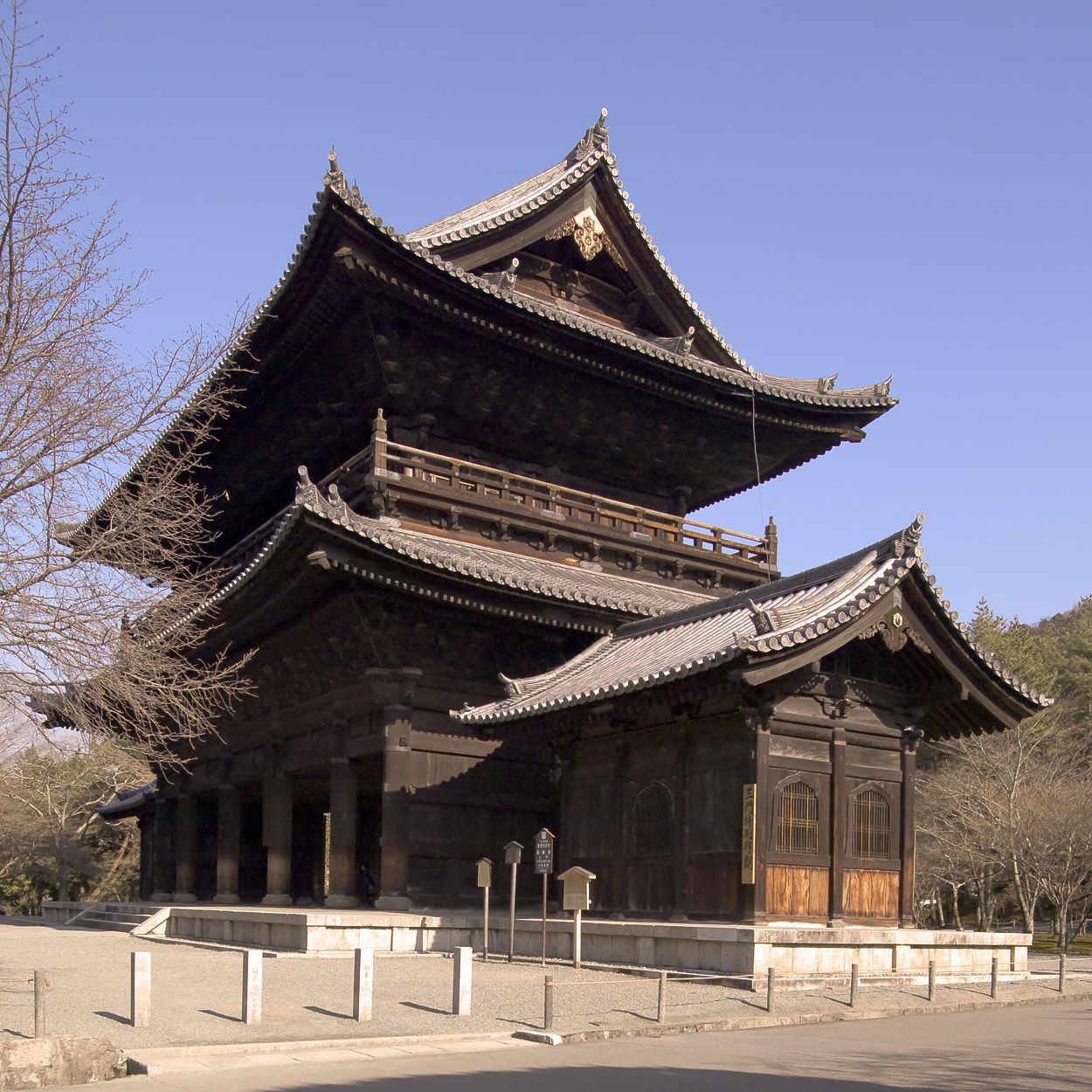
Nanzen-ji: Choose Your Kyoto Temple Visit
Choose Sanmon, the Hojo garden and the aqueduct at Nanzen-ji, with separate fees and the limited November 2026 opening of Nanzen-in.
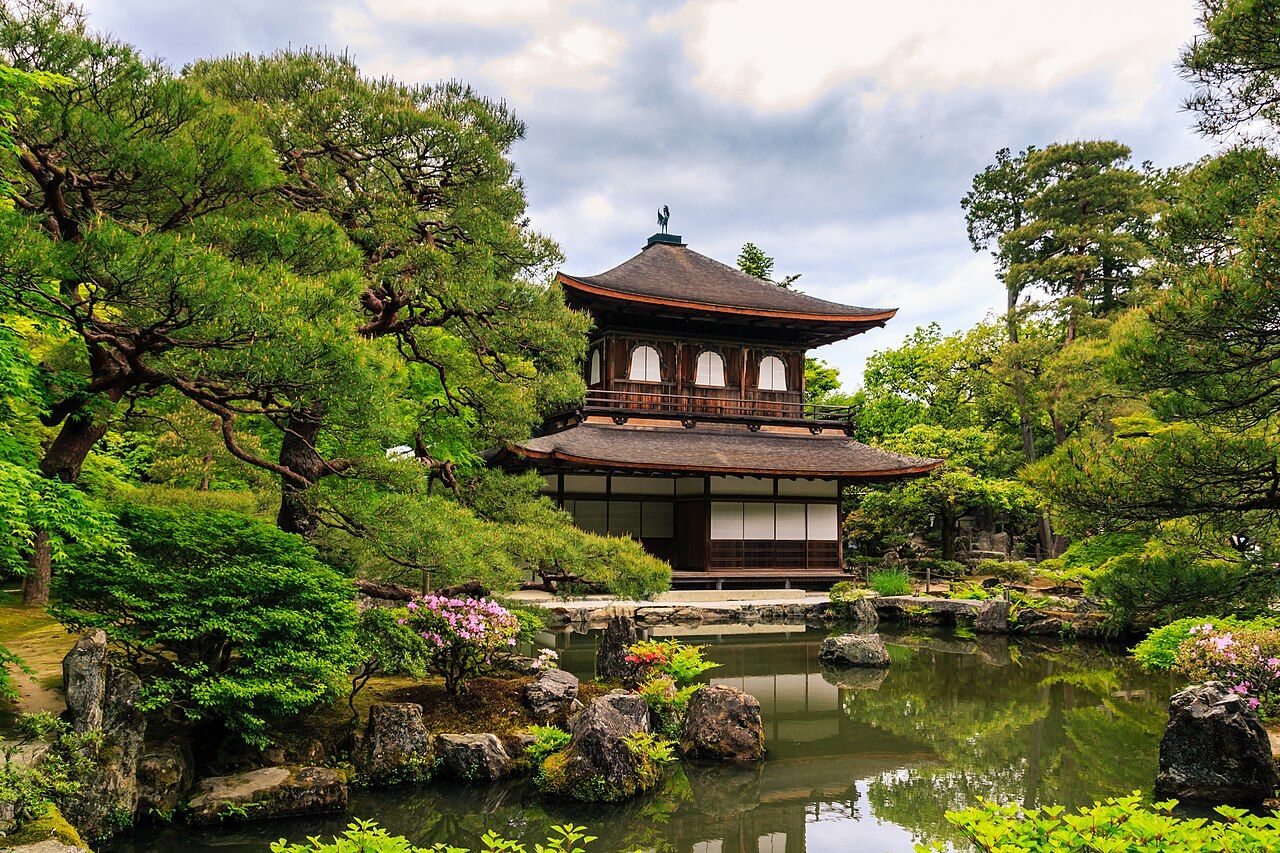
Ginkaku-ji: Plan Your Kyoto Garden Visit
Plan Ginkaku-ji with current admission, seasonal hours, garden highlights, stepped paths and a realistic Philosopher’s Path extension.
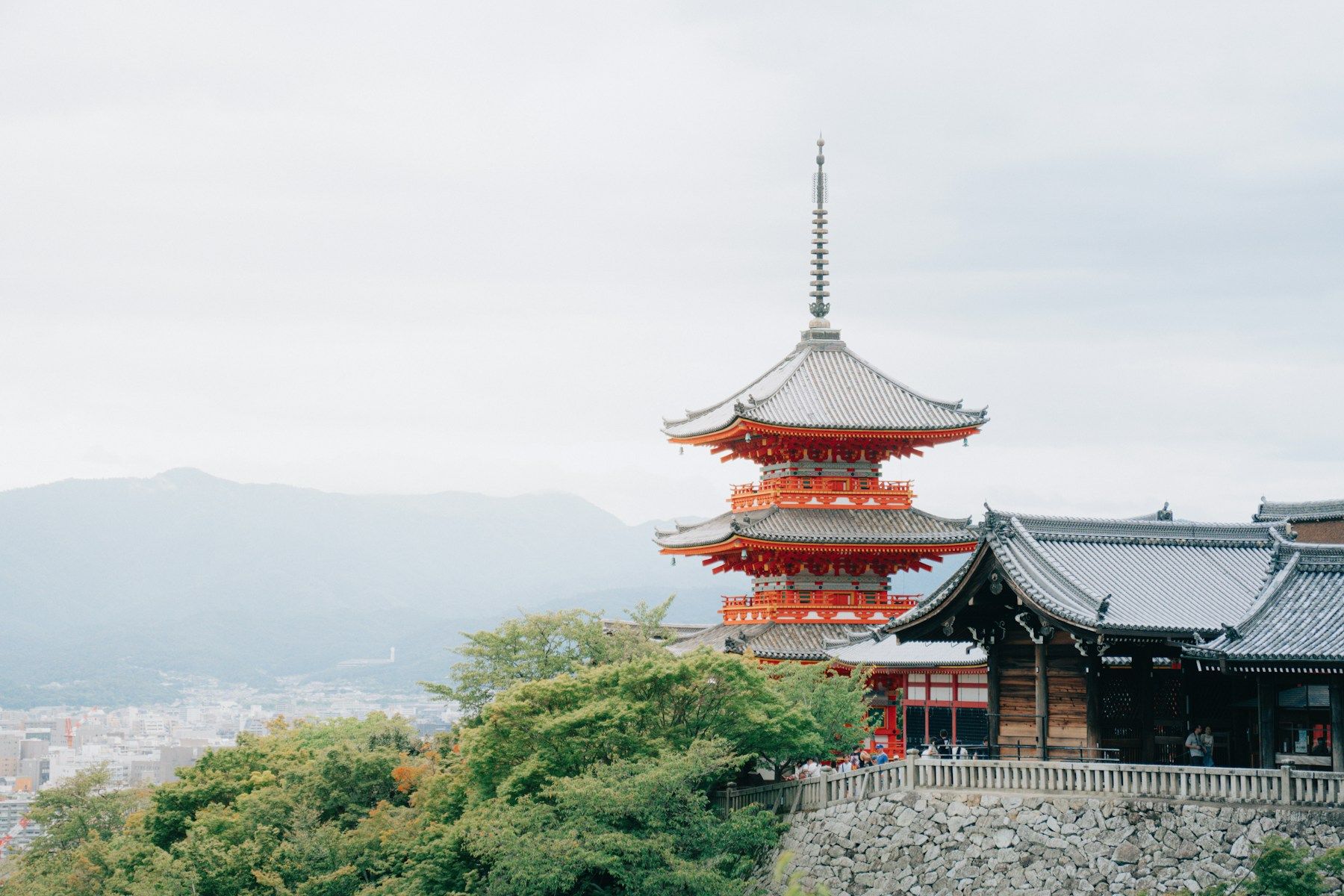
Kiyomizu-dera: Plan Your Kyoto Temple Visit
Plan Kiyomizu-dera with temple hours, the uphill approach, Main Hall viewpoints, autumn night viewing, accessibility and Jishu Shrine closure.