
Choose Sanmon, the Hojo garden and the aqueduct at Nanzen-ji, with separate fees and the limited November 2026 opening of Nanzen-in.
Choose Nanzen-ji for a Kyoto temple visit that can be shaped around architecture, a garden or a longer eastern-city walk. The main decision is which interior or garden to pay for after seeing the precinct: Sanmon offers an elevated architectural experience, while the Hojo garden rewards slower observation. The brick aqueduct adds another layer, connecting the temple setting with Kyoto's modern water infrastructure.
Do not treat Nanzen-ji as one ticket that unlocks every building. Its separately managed visits and occasional special openings require a small amount of selection. Our Kyoto highlights guide helps position the temple within your trip; this guide explains how to choose your version of Nanzen-ji without buying every admission or relying on an outdated closure notice.
Fast facts
| Choice | Current planning information |
|---|---|
| Sanmon admission | Standard adult ¥600 |
| Hojo garden admission | Standard adult ¥600, separate from Sanmon |
| Ordinary visiting hours | March–November 08:40–17:00; December–February 08:40–16:30 |
| Last admission | 20 minutes before closing |
| Year-end interruption | Ordinary visits suspended December 28–31 |
| Railway approach | Keage Station, Tozai Line; temple lists about 10 minutes on foot |
| Nanzen-in | Special garden opening November 1–30, 2026; otherwise check works notice |
The temple's admission page supplies standard prices and hours. Its November 2026 notice extends closing to 17:15 on Saturdays, Sundays and public holidays that month, still with admission ending 20 minutes earlier. Sources were checked on 3 November 2026. Suggested visit lengths below are editorial estimates, excluding transport and queues.
Start with the precinct, then choose an admission
On arrival, give yourself time to understand the arrangement of the grounds rather than immediately joining the first queue. Look at the scale of Sanmon and the relationship between the principal buildings. The precinct is a setting to explore, while the ticketed areas offer more specific experiences.
If your main interest is the monumental gate and aqueduct exterior, a shorter grounds-focused visit can be worthwhile. If you want to sit with a composed garden view, reserve time and budget for the Hojo. If architecture and an elevated outlook appeal more, consider Sanmon. Buying both makes sense when both experiences interest you, not because a complete visit requires a complete receipt.
Allow roughly 60–90 minutes for the precinct and one paid area. Around 2 hours gives more room for a second admission, photography and a pause. These are planning allowances, not promises that every queue or walking pace fits them. A special opening can add another decision and another admission rather than simply extending an existing ticket.
Sanmon: choose the upper level deliberately
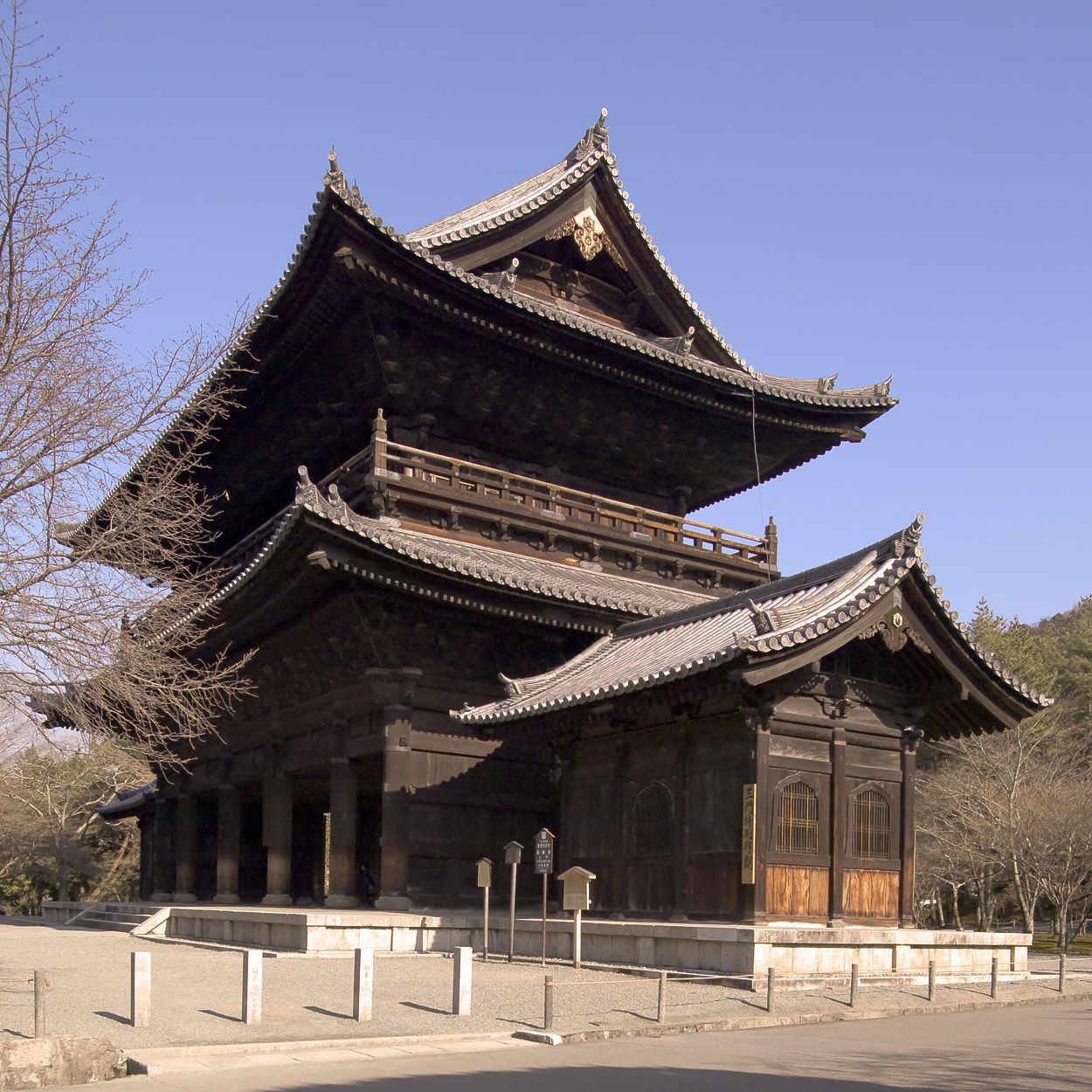
Sanmon is already a substantial architectural presence from ground level. Its paid visit offers a different perspective from simply looking at the gate's exterior. The Japan National Tourism Organization's Nanzen-ji introduction highlights climbing the gate to understand the scale of the precinct.
Choose it when the building and elevated view are genuine interests. If stairs or heights are uncomfortable, seeing the exterior still gives you a meaningful encounter with the gate. Do not assume that paying for a large historic structure means there is a lift or an equally easy alternative route to its upper level.
Keep your hands available when climbing and avoid stopping where you obstruct the flow. Check the staff's current instructions about shoes, bags and photographs before entering. A camera plan should adapt to the building and other visitors, rather than turning a narrow circulation space into a private photo session.
If travelling with people who prefer not to climb, agree on a specific meeting point and a realistic reunion time. This makes splitting briefly a practical choice instead of asking the entire group to buy an experience that only one person wants.
Hojo: leave time to look, not just pass through
The Hojo garden is the stronger first paid choice if you want a quiet visual focus rather than a climb. Approach it with a small question: how do stone, gravel, planting and the edge of the building organise the scene? You do not need to decode every element to appreciate how the composition works.
Find an appropriate viewing position and allow a few minutes before moving on. Notice what changes when you shift your viewpoint and what remains deliberately fixed. A garden visit can be short in distance while still needing time; walking quickly through every available space is not the same as seeing it closely.
Respect any photography restrictions and the distinction between visitor areas and religious or working spaces. Do not infer that every room adjoining the route is open. If you are interested in a particular painting or object seen online, ask about current display and access rather than assuming the image describes ordinary admission.
The standard adult fee for the Hojo garden is ¥600, so adding Sanmon brings those two admissions to ¥1,200 before other purchases. This simple comparison is more useful than an invented overall “temple ticket” price. Keep the charges separate when planning a family budget or deciding which visit matters most.
Read the Nanzen-in notices together
Nanzen-in needs a date-specific check in 2026. The temple's extended-closure notice says works have postponed ordinary visits until spring 2027. However, a later official autumn-opening notice announces a limited special opening of the Nanzen-in garden from November 1 to 30, 2026, with standard adult admission ¥500.
These statements describe a general works interruption and a limited exception. Neither “Nanzen-in is simply closed all autumn” nor “Nanzen-in has permanently reopened” is accurate. If visiting during November, check the special-opening notice and any newer update. For another date, do not assume the November arrangement continues.
The same autumn notice announces access to the Hatto interior from November 16–29, excluding November 26, between 09:00 and 16:00 with a 12:00–13:00 pause. Admission is ¥500 for high-school age and above; younger schoolchildren are listed as free. Treat this as a separate 2026 event, not a normal daily feature of the temple.
Choose a special opening because its content interests you. There is no need to turn the existence of an additional ticket into an obligation to extend the day. If you already have a satisfying Hojo visit and another garden planned elsewhere, a break may add more than another queue.
Look at the aqueduct as infrastructure
The red-brick Suirokaku aqueduct is visually different from the temple architecture around it. JNTO explains that it was built in the Meiji era and remains part of the waterway bringing water from Lake Biwa towards Kyoto. That relationship makes it more interesting than an isolated background for portraits.
Look at the rhythm of the arches and how the structure crosses the grounds. Move away from a crowded viewpoint rather than waiting for the entire place to become empty. Other visitors are part of a shared public-facing space; a long photographic setup should not block circulation.
Do not climb masonry or assume that every narrow path near the water is an approved visitor route. Follow current signs and barriers. If maintenance changes access, appreciate the structure from an available viewpoint instead of seeking an improvised route around a closure.
The aqueduct can be the visual highlight of a shorter visit, but give the temple setting equal attention on the way. Walking directly to the arches and immediately leaving misses the contrast that makes this location distinctive.
Arrive from Keage and keep the next stop realistic
The temple's own access page gives about 10 minutes on foot from Keage Station on the Tozai subway line. It also describes the Nejiri Manpo tunnel as a shortcut towards the precinct. Use the official directions and the current street route rather than an unverified social-media shortcut.
The approach is additional to your time inside. Allow for finding the station exit, using toilets or stopping for water. A comfortable railway connection does not mean all paths inside the temple are level; the temple warns of steps and slopes and recommends assistance where needed for wheelchair users.
Nanzen-ji can begin or end a longer walk in eastern Kyoto. If considering the Philosopher's Path and Ginkaku-ji, regard the connecting walk as an activity that needs time, not an instant link between two map pins. Our Ginkaku-ji garden guide helps decide whether another garden admission is something you want.
Check the next site's actual closing and admission deadline before leaving Nanzen-ji. Late in the day, choose between a pleasant walk and a second interior visit rather than pretending there is enough time for both. In winter the earlier closing pattern makes that decision more important.
Plan for season, surfaces and attention
Autumn can change the atmosphere and visitor numbers, but coloured leaves are not guaranteed for a particular date. Keep the architecture and garden composition as the reason to visit; regard seasonal foliage as an additional element. Current temple notices are more useful than a photograph labelled only “November”.
On wet days, shorten the route if steps or outdoor surfaces become uncomfortable. Carry a small bag so that shoe removal and movement through buildings remain manageable. Bring a reusable shoe bag if staff instructions require one, and check the latest visitor guidance rather than relying on an old account of how shoes were handled.
A temple visit also needs an appropriate pace. Keep voices low, let worshippers pass and avoid entering spaces merely because a door is open. If your group is tired after several religious sites, choose a smaller Nanzen-ji visit and observe it properly. More admissions do not automatically produce a richer day.
Cover photograph: The wooden Sanmon gate at Nanzen-ji in Kyoto — Archive photograph; no edits to the downloaded file — Fg2, Public domain (author release).
Frequently Asked Questions
Does one Nanzen-ji ticket include Sanmon and the Hojo?
No. The temple lists separate standard adult admissions of ¥600 for Sanmon and ¥600 for the Hojo garden. Other gardens or special openings can have their own charges.
Is Nanzen-in open in November 2026?
The official autumn notice announces a limited garden opening November 1–30, 2026. A broader works notice suspends ordinary visits until spring 2027, so do not assume the November exception continues afterwards.
How long should I allow?
About 60–90 minutes for the precinct and one paid area, or around 2 hours for a slower visit with another admission, are editorial starting points. Add transport, queues and any longer connecting walk.
Which station serves Nanzen-ji?
The temple recommends Keage on the Tozai subway line and gives an approximately 10-minute walk. Check the route and remember that the precinct itself includes steps and slopes.



Keep Exploring
Kiyomizu-dera: Plan Your Kyoto Temple Visit
Plan Kiyomizu-dera with temple hours, the uphill approach, Main Hall viewpoints, autumn night viewing, accessibility and Jishu Shrine closure.
ArtScience Museum Singapore: Choose Your Visit
Choose an ArtScience Museum exhibition, understand Future World tickets and plan a manageable Marina Bay visit.

Xochimilco: Choose a Trajinera or Chinampa Visit
Plan Xochimilco around the experience you want, from a social trajinera ride to a guided chinampa visit, with embarkation points, costs and transport explained.