
Xochimilco: Choose a Trajinera or Chinampa Visit
Plan Xochimilco around the experience you want, from a social trajinera ride to a guided chinampa visit, with embarkation points, costs and transport explained.
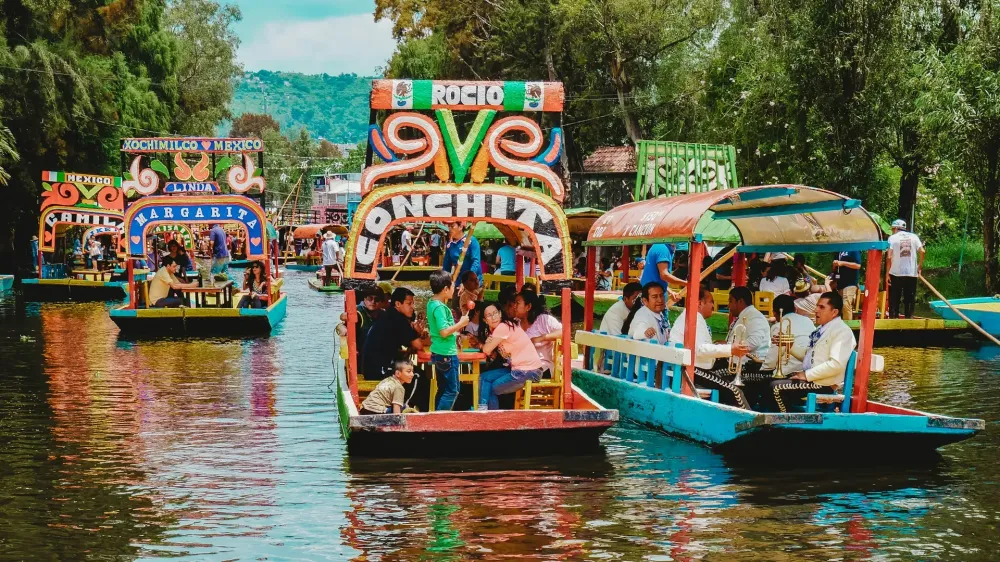
Xochimilco offers more than one kind of day on the water. A colourful trajinera with friends, food and music is a recreational outing. A guided visit to a working chinampa focuses on farming, water and the people maintaining the landscape. Both can be worthwhile, but booking one while expecting the other is the easiest way to leave disappointed.
Start by choosing the purpose of your visit, then the operator and embarkation point. “Xochimilco” is an extensive area in southern Mexico City, not a single dock where every boat follows the same circuit. A map pin for the borough or its town centre is not enough to reach a booked departure.
Our Mexico City cultural guide helps place the excursion within a wider stay. This guide focuses on making the canal visit itself work: the right route, an understandable price and enough time for the journey south.
The main choices at a glance
| Visit | Main purpose | Planning implication |
|---|---|---|
| Recreational trajinera | A social boat ride, with optional food and music | Agree boat duration and extras before departure |
| Quieter canal route | Landscape, birds and a slower outing | Request the actual route, not just an “ecological” label |
| Working chinampa visit | Agriculture and conversation with hosts or guides | Reserve a programme that explicitly includes landing and interpretation |
| Sunrise experience | Early light and a guided morning on the water | Arrange transport before public services fit the departure time |
| Specific distant attraction | Reaching a named stop such as Isla de las Muñecas | Confirm its identity, travel time and any separate admission |
For a simple first boat outing, two hours on the water is a useful editorial starting point to discuss with the boat operator. Allow at least half a day including transport and a meal; a substantial chinampa programme can occupy most of the day once the city journeys are included. These are planning allowances, not promised tour durations.
Why the chinampas matter
UNESCO lists Xochimilco with Mexico City's historic centre, recognising the canal landscape and the human adaptation of the former lake environment. Looking only at decorated boats misses much of the reason the area matters.
Chinampas are built-up agricultural plots separated by waterways. The popular phrase “floating gardens” can suggest drifting rafts, but the land you visit is a cultivated raised-field system. The FAO's description of chinampa agriculture explains the role of soil, vegetation, canals and ahuejote willows, as well as continuing agricultural production.
On a farming visit, useful questions concern what is grown now, how water is managed and where the produce is sold. Crops and work vary with the season. A chinampa is not automatically a visitor attraction, and passing it by boat does not grant permission to land or walk through its beds.
Choose the embarkation point to match the route
An embarcadero is a boat departure point. The borough's official visitor information identifies Nativitas, Zacapa and Las Flores Nativitas as traditional departure areas with visitor facilities. These are sensible names to investigate for the classic recreational outing.
The same authority identifies Fernando Celada, Cuemanco and Puente de Urrutia as access points for routes through the protected natural area. That provides a useful orientation, not a guarantee that every boat from those docks follows a quiet route or includes a farm visit.
Ask the provider for the exact embarkation name, a map pin, meeting instructions and the planned route. If you want conversation about agriculture or ecology, confirm a guide and the language used. A boatman transporting you competently does not necessarily provide a fully interpreted visit.
Keep the confirmed meeting details handy when approaching the area. If someone suggests changing your departure point en route, check directly with your booked provider before accepting. The important issue is staying with the visit you arranged, not treating every informal offer as equivalent.
Official boat price and what it does not include
Checked on 20 October 2026, the Xochimilco borough tourism page states an official rate of 750 MXN per hour per trajinera, with a maximum of 18 passengers. It says the rate applies to tourist and ecological boat routes. Recheck the displayed official tariff before travelling because prices can change.
At that published rate, a two-hour boat hire totals 1,500 MXN for the boat. That is a calculation for the stated hire duration, not an all-inclusive tour quotation. Do not multiply the boat tariff by each passenger when comparing it with an ordinary private boat hire.
Food, drinks, musicians, guides and attraction admissions should be discussed separately. Before accepting music, agree the unit being charged: a song, a set or a period of time are different purchases. Likewise, confirm the food order and total before it is prepared.
A guided chinampa experience may legitimately use a per-person package price because it includes more than the boat. Compare its listed services, group size and duration rather than assuming the municipal hourly boat rate buys a guide, a farm visit and a meal. Solo travellers and couples should check minimum group requirements or shared departures before paying.
A practical recreational outing
For a relaxed first visit, choose a named dock, agree a manageable boat duration and keep lunch flexible. Arrive with time to find the meeting point, use the toilets and settle the route and payment arrangements. Confirm where the ride ends and when the agreed clock starts.
Decide within your group whether you want music and purchases on the water. It is easier to set a shared budget before boarding than to resolve different expectations while a performance is being offered. Food and music are optional parts of the outing, not a requirement for enjoying the canals.
Spend some of the ride looking beyond the bow: the relationship between narrow waterways and cultivated plots, the trees along their edges and the work happening beside the water. A recreational ride need not be a formal lesson to reveal how different this landscape is from central Mexico City.
Keep the return journey loose enough for traffic and the walk from the dock to your collection point. A late-afternoon museum reservation across the city can turn an otherwise comfortable boat trip into a clock-watching exercise.
Booking a working chinampa experience
Choose a programme that names its agricultural or conservation focus and explains who hosts it. Ask how much time is spent on the water and on land, whether a meal is included, which language is spoken and what visitors actually do. “Ecotour” by itself gives little information.
As one concrete example, Chinampas Xochimilco publishes a daytime programme combining canal travel, a chinampa visit and a meal, with an advertised duration of four to four and a half hours. That is one operator's programme, not the standard length of every chinampa visit. Its booking page also asks solo visitors and parties of two to contact it before using the scheduling system.
Ask where your payment goes and whether the host is working with farmers or a named conservation project. Specific answers are more useful than an unsupported claim that every ticket saves the ecosystem. Follow the host's directions around planted beds and equipment, and request permission before photographing people at work.
If an axolotl encounter is advertised, ask whether it involves animals cared for at a project or a claim about wild sightings. These are different experiences. Do not expect to spot a wild axolotl from an ordinary passing boat, and do not treat handling an animal as an essential part of the visit.
Getting there from central Mexico City
UNESCO describes Xochimilco as roughly 28 km south of central Mexico City, useful geographic context rather than a door-to-door road measurement. Plan the actual journey to your chosen dock, not simply to the name Xochimilco.
The borough's public transport directions describe taking Metro Line 2 to Tasqueña and changing to the Tren Ligero for the Xochimilco terminus. From there, the final leg depends on the embarkation point. In particular, do not assume that reaching the rail terminus places you beside a booked Cuemanco departure.
For planning from central neighbourhoods, reserve roughly 90 minutes each way initially, then check a current route estimate for your address, transport mode and departure time. This is an editorial buffer, not a service timetable or maximum journey time; traffic, transfers and the selected dock can change it substantially. Check current service notices before relying on the rail connection.
A taxi or app-based ride can simplify the last leg when the exact dock is pinned correctly. Arrange the return meeting point on a road the vehicle can actually reach. For a sunrise booking, confirm early collection in advance rather than assuming the usual daytime public transport connection will fit.
Weather, comfort and combining visits
Bring water, sun protection and a layer appropriate to an early start. Check the forecast and the operator's rain or cancellation arrangements. A roof over a trajinera does not eliminate wind-driven rain, sun at the sides or wet ground when landing on a chinampa.
Wear shoes suitable for stepping aboard and, for farm visits, walking on potentially muddy paths. Ask about toilets before a longer outing. Travellers with mobility needs should confirm the actual boarding arrangement, gaps and steps, seating and access to any land stop. Accessibility varies by boat and location.
Follow the crew's instructions, supervise children and ask about suitable lifejackets before boarding. Keep belongings secure when moving between shore and boat. Carry litter out, avoid feeding wildlife and respect quieter routes by keeping noise appropriate to the setting.
Coyoacán and Xochimilco are both in the southern part of the city, but that does not make a combined day effortless. A short boat trip can sometimes fit with a carefully timed Coyoacán stop; a sunrise or agricultural programme already has its own rhythm. Avoid attaching a difficult-to-change Casa Azul reservation without realistic travel margins.
Our three-day Mexico City itinerary helps compare that choice with staying in one neighbourhood. Give Xochimilco the time its particular visit needs rather than treating every southern attraction as one compact cluster.
Cover photograph: A recreational boat outing on the canals of Xochimilco. Photo: Roberto Carlos Román Don / Unsplash. Source · License.
Frequently Asked Questions
How much does a trajinera cost in Xochimilco?
The borough's official page lists 750 MXN per hour per boat, with a maximum of 18 passengers, checked on 20 October 2026. Confirm the current tariff and any extras before boarding; guided packages may be priced differently.
Which embarkation point should you choose?
Choose it around the route. The borough identifies Nativitas, Zacapa and Las Flores Nativitas as traditional visitor docks, and Fernando Celada, Cuemanco and Puente de Urrutia for access to protected-area routes. Confirm the exact itinerary with the operator.
Is a trajinera ride the same as visiting a chinampa?
No. A boat ride may pass cultivated land without stopping. For farming, interpretation and time on a working plot, book a programme that explicitly includes those activities and permission to visit.
How much time should you allow for Xochimilco?
Allow at least half a day for a short boat outing with city transport. A substantial guided chinampa programme plus the journeys can occupy most of a day. Check the advertised duration and your actual dock location.
Can you combine Xochimilco with Coyoacán?
Sometimes, if you choose a short canal outing and realistic transfers. A longer farm or sunrise programme is better treated as the main activity; avoid a tightly timed museum booking afterward.

Keep Exploring
MoMA New York: Choose Your Museum Visit
Choose your MoMA visit: collection floors, tickets, Friday eligibility, exhibitions, access and a realistic two-to-three-hour plan.
The Met New York: Choose Your Museum Visit
Choose a focused visit to the Met Fifth Avenue, understand admission and current gallery closures, and decide whether the Cloisters belongs in your plan.
National Gallery Singapore: Choose Your Visit
Plan a focused National Gallery Singapore visit around the open exhibitions, historic buildings and the ticket you need, with a clear note on the Southeast Asia Gallery closure.