
Choose a focused visit to the Met Fifth Avenue, understand admission and current gallery closures, and decide whether the Cloisters belongs in your plan.
A good first visit to the Metropolitan Museum of Art begins with deciding what to leave for another day. The Met Fifth Avenue can support a focused encounter with one collection, a broader introduction or a substantial museum day. Those are different visits, and buying the same ticket does not mean you should attempt the same route.
Choose two interests before choosing a list of famous works. Then check what is actually open. This guide concentrates on the museum decision; our New York attractions guide helps place it in a wider trip, while free things to do in New York explains why eligibility matters when comparing admission offers.
Fast facts
| Detail | Planning answer |
|---|---|
| Main location | The Met Fifth Avenue, 1000 Fifth Avenue, beside Central Park |
| Regular opening | Sun–Tue and Thu 10:00–17:00; Fri–Sat 10:00–21:00; Wednesday closed |
| Suggested allowance | 2–3 hours for a focused visit; a half day for several areas and a break |
| Admission | Check your category; pay-what-you-wish is restricted to eligible residents and students |
| Before choosing galleries | Read current closures and use the museum's map |
| Step-free planning | Consult the accessibility guide before selecting your entrance and route |
| Other Met location | The Cloisters is a separate visit in Upper Manhattan, not a nearby wing |
Opening information was checked on 27 October 2026; holiday and special closures apply. Visit durations are editorial estimates, excluding travel and entry waits. Recheck the museum's calendar and gallery notices for your date.
Choose Fifth Avenue for breadth, then narrow the visit
Fifth Avenue is the useful first choice when your group has different interests or you want art across several cultures and periods. The mistake is to turn that breadth into a requirement to see everything. Start with a subject you genuinely care about: sculpture, painting, decorative objects, architecture or a particular historical setting.
Choose one main collection area and one contrast. Someone interested in how artists represent the body might compare sculpture and painting. Someone drawn to objects can compare materials and workmanship across two displays. This gives the visit a question to follow rather than a score to accumulate.
Use the museum's interactive map to locate those choices and the facilities you need. Keep the route compact enough that you are looking at art rather than repeatedly crossing the building. A room you discover along the way can be a welcome addition, but it does not need to trigger a complete change of plan.
For a short visit, set a stopping point before entering. Two hours of attention can be more rewarding than four hours of fatigue, although no duration guarantees a particular number of rooms. For a longer visit, plan a genuine pause and a second phase with a different focus. Give yourself permission to finish before the building closes.
Check closures before building a route around a famous work
The Met's current gallery-closure list is essential reading. At the check date it listed the Cantor Roof Garden and Modern and Contemporary Art among closures, as well as partial closures in several other departments. Do not book a visit primarily for the roof without checking its status again.
A collection being represented in the museum does not mean every gallery in it is open. Likewise, an artwork appearing in the online catalogue does not prove it is on view. If a single object is the reason for your trip, verify its display information and ask the museum if anything remains unclear.
Build a substitute into the plan. If your preferred room is unavailable, choose another area that answers the same interest rather than adding an unrelated attraction out of frustration. You might still explore portraiture, metalwork or religious imagery without seeing the particular work you first saved.
Avoid using an old gallery number as the only navigation instruction. Save the collection or artwork name as well, and use the current map on arrival. Staff can help orient you, but a prepared shortlist makes that conversation more useful than asking how to see all the highlights in an hour.
Understand the ticket before comparing prices
The official visitor page explains admission categories and eligibility. Pay-what-you-wish admission is for New York State residents and students in New York, New Jersey and Connecticut, with verification requirements. It is not a universal offer for every visitor to New York.
Choose the category that actually applies to each person in your group, and check what proof is accepted. Do not assume that a hotel booking establishes residency or that every student qualifies for the same arrangement. For a trip centred on savings, compare the official terms before counting the Met as a free activity.
The museum says advance tickets are not required and that tickets include exhibitions and same-day admission to both Met locations for the date printed. That is a ticket entitlement, not a recommendation to visit both. Online purchase also does not remove the need to follow security procedures or guarantee that a particular room is accessible.
If considering a guided visit, distinguish the museum entry from the guide's service and meeting arrangements. Know where the tour begins, how long it lasts and what happens if a room closes. An attractive list of artworks should not replace clear information about the actual visit you are buying.
Let the day and the opening hours work together
Regular Fifth Avenue hours currently include later opening on Friday and Saturday, while Wednesday is closed. Check the museum calendar and visitor information for holiday exceptions before anchoring the trip around a particular day. A late opening can create flexibility; it does not require you to stay until the end.
Choose a morning visit if you want to give the museum your freshest attention, or an afternoon if that fits your travel and meal routine better. There is no guaranteed quiet slot in this guide. A major exhibition, group visit or change in conditions can alter the experience on any day.
Leave a useful buffer before a later reservation. Your finish time needs to include collecting belongings, leaving the building and travelling onward. If you plan a walk in Central Park, consider remaining daylight and weather rather than treating the park as an automatic evening extension.
For a rainy day, the museum can be a strong main activity, but do not assume everyone else has overlooked that option. The best response is a manageable route and patient arrival, not an unsupported promise that a certain door or time will always avoid queues.
Arrive with the right bag and the right entrance
Read the visitor guidelines before leaving your accommodation. Large bags and luggage are not accepted in the building or at coat check. Small backpacks are allowed but must be carried in front or by hand. A secure water bottle is permitted; other food and drink restrictions apply.
That makes the Met a poor place to improvise luggage storage between checkout and a flight. Arrange storage elsewhere before travelling to the museum. Bring only what makes the visit comfortable, and avoid packing equipment you will have to negotiate at the entrance.
The accessibility guide should shape the whole route for visitors who need to avoid stairs, require a mobility aid or need other support. The museum identifies step-free entrances at 81st Street and through the parking garage at 80th Street; confirm the most suitable approach for your visit.
Do not stop the access check at the front door. Think about your transport route, lifts, seating, toilets and the distance between selected galleries. If you need assistance or a particular service, contact the museum in advance. A shorter route that matches your needs is a complete museum visit.
Make the galleries work for children and mixed-interest groups
Give each person one choice within an agreed route. A child might choose an animal, a material or a shape to look for; an adult might choose a period or artist. These are prompts for looking, not a competition to find the most objects. Stop at something that produces a question and allow time for the answer.
Read fewer labels more carefully. Compare two nearby objects before moving on, and ask what differs in scale, material or intended use. If the group is losing attention, change activity: sit, look at a single work or take the planned break. Increasing the walking speed rarely restores curiosity.
Agree how you will regroup if interests diverge, and choose a meeting point you can all find on the map. Do not rely on a vague instruction such as “near the entrance” in a large building. Check the museum's current family resources and programmes if you want a structured activity rather than inventing a full guided session yourself.
Decide separately whether to visit the Cloisters
The Met Cloisters is in Fort Tryon Park in Upper Manhattan and focuses on medieval European art and architecture. Choose it because that subject and setting appeal to you, rather than because a shared ticket makes the second visit feel compulsory.
The journey between the two locations uses real time and energy. If visiting both on the same date, check each site's hours and plan the transfer before committing to a long Fifth Avenue route. You may prefer one focused museum day and a different city experience afterwards.
Access at the Cloisters needs its own check; do not assume arrangements at Fifth Avenue apply there. Consult the site's directions and accessibility information for your needs. A plan that works for a person happy with stairs and a park walk may be unsuitable for someone who needs a step-free arrival.
Finish with something you can remember
Before leaving, return mentally to two or three objects that held your attention. A photograph of a label, where permitted, or a short note can be more useful than dozens of images without context. Check the museum's photography rules for the room rather than assuming one rule covers every exhibition.
The visit succeeds when you leave with a clearer interest, an unexpected comparison or a question worth following. You can build a future visit around what remains. The Met's scale is an opportunity to choose, not a demand to exhaust it.
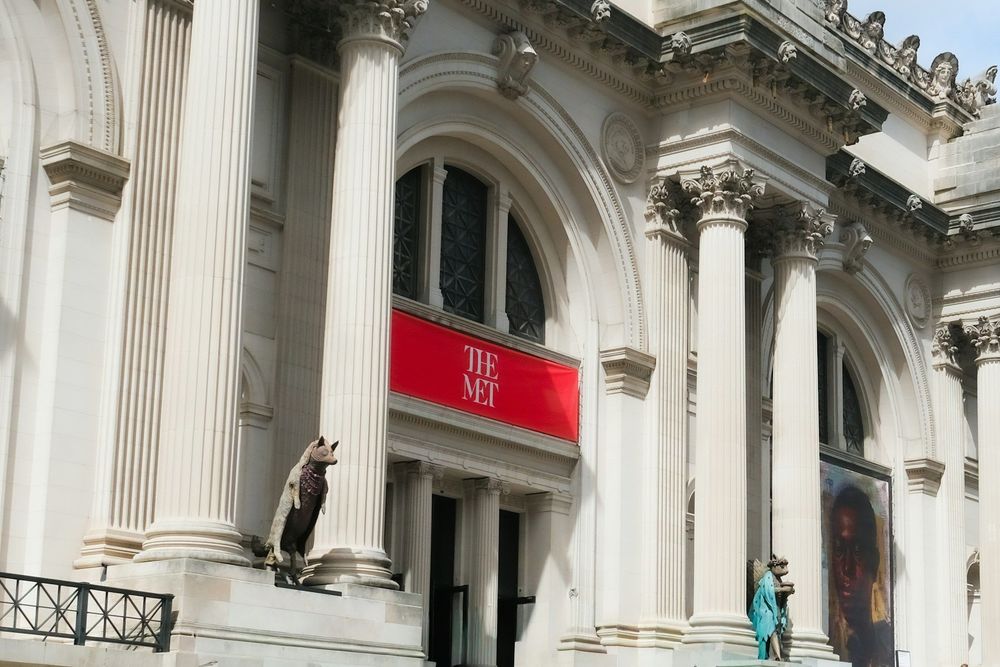
Cover photograph: The Met Fifth Avenue façade with stone columns and the red museum banner — ubeyonroad (@ubeyonroad), Unsplash License.
Frequently Asked Questions
Is the Met pay-what-you-wish for all visitors?
No. Eligibility is restricted to New York State residents and students in New York, New Jersey and Connecticut, with verification requirements. Check the official admission rules for your circumstances.
How long should I allow at the Met Fifth Avenue?
Plan roughly 2–3 hours for a focused selection or a half day for several areas and a break. These are editorial estimates; add travel and entry waits separately.
Can I visit the roof garden during every visit?
No. The Cantor Roof Garden was listed as closed at the 27 October 2026 check. Consult the current gallery-closure page before making it a reason for your visit.
Are the Met Fifth Avenue and the Cloisters in one building?
No. The Cloisters is a separate location in Fort Tryon Park in Upper Manhattan. Same-day ticket inclusion does not remove the transfer or the need to check its own hours and access.

Keep Exploring
Asian Civilisations Museum: Plan Your Visit
Plan a focused Asian Civilisations Museum visit: choose galleries, understand ticket categories, and allow time for trade, faith or design.

Chapultepec Castle: Plan Your Museum Visit
Plan Chapultepec Castle around its history galleries, furnished Alcázar and hilltop setting, with current admission guidance and a realistic visit route.

National Gallery Singapore: Choose Your Visit
Plan a focused National Gallery Singapore visit around the open exhibitions, historic buildings and the ticket you need, with a clear note on the Southeast Asia Gallery closure.