
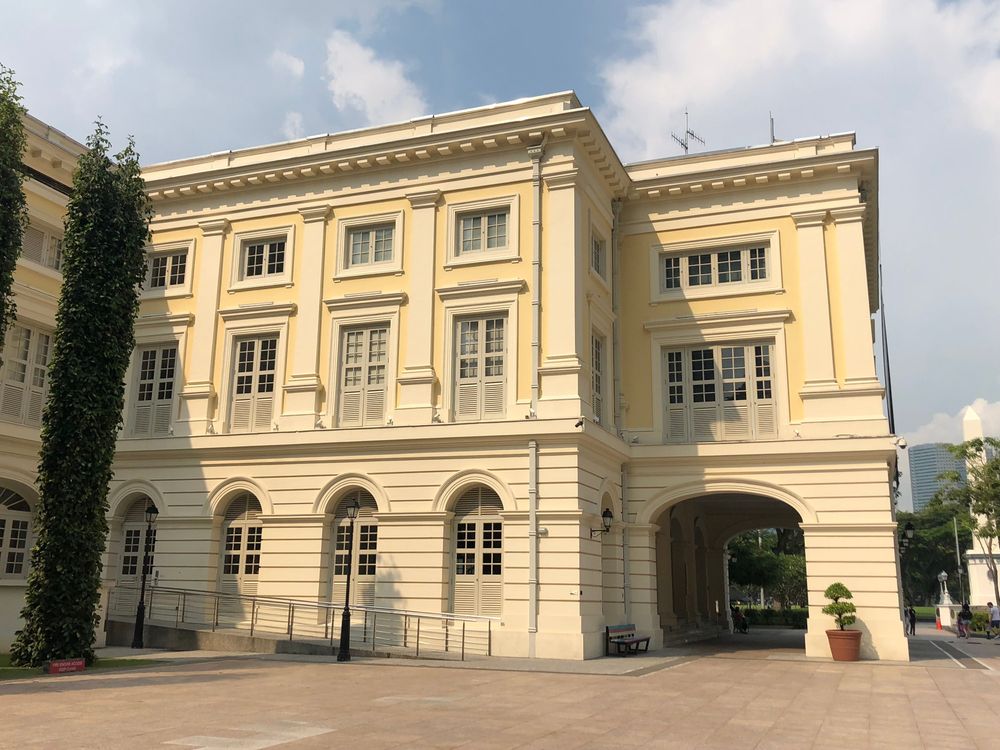
Plan a focused Asian Civilisations Museum visit: choose galleries, understand ticket categories, and allow time for trade, faith or design.
The Asian Civilisations Museum is a good choice when you want to understand how objects, beliefs and ideas travelled between cultures. For a first visit, start with maritime trade and the Tang Shipwreck, then choose either religious art or materials and design. That gives the museum a clear thread without making three floors of galleries feel like an endurance test.
ACM is at Empress Place beside the Singapore River. Its location makes a short riverside walk a sensible complement, but the collection deserves its own time. Use our Singapore highlights guide to decide where it fits among gardens, neighbourhoods and other museums; use this guide once you have decided the collection interests you.
The practical choices at a glance
| Detail | What to know |
|---|---|
| Address | 1 Empress Place, Singapore |
| Listed hours | 10:00–19:00 daily; Friday until 21:00 |
| Last gallery admission | 30 minutes before closing |
| MRT approach | Raffles Place, Exit H; museum lists about 5 minutes on foot |
| Suggested time | 90 minutes for a focused selection; 2–3 hours for a broader visit |
| Ticket decision | Check your visitor category and the exhibitions included |
| Collection themes | Maritime Trade; Faith and Belief; Materials and Design |
The official visitor page supplies opening times and arrival information. Checked on 27 October 2026; recheck before travelling. Visit lengths here are editorial suggestions, not official guided-tour durations, and exclude queues and food breaks.
Choose ACM for connections between cultures
ACM is not arranged as a single chronological history of Singapore. Its description of the museum's purpose explains the emphasis on connections within Asia and between Asia and the wider world. Singapore's role as a port provides a useful starting point for that story.
This changes how to look at the displays. Instead of asking only where an object was made, ask where it travelled, who wanted it and which ideas or techniques it carried. A vessel may tell a story about manufacture and demand; a religious image may reveal how beliefs acquired different forms across places.
You do not need specialist knowledge to enjoy the visit. Choose a question simple enough to follow across several rooms: how did trade change design, or how did craftspeople work with different materials? A question gives you permission to skip objects that do not help you explore it.
If your main interest is modern Singaporean and Southeast Asian art, compare the museum with our National Gallery Singapore guide. Both can justify a visit, but they answer different interests. Two substantial museums in one afternoon can leave too little attention for either collection.
Start with maritime trade and the Tang Shipwreck
For a first visit, Level 1 gives the collection a concrete opening. The official gallery directory places the Tang Shipwreck and Maritime Trade here, before the Faith and Belief galleries on Level 2 and Materials and Design on Level 3. Check the current map on arrival because displays and room access can change.
A shipwreck is an especially useful way into a museum of connections: objects that might otherwise look unrelated become parts of a cargo and a trading journey. Begin with the gallery's introductory explanation before looking closely at individual pieces. This makes the grouping meaningful rather than merely impressive.
Choose a small group of ceramics to compare. Notice size, shape and decoration, then read how the labels describe production and use. Ask whether the differences reflect different functions, customers or levels of expense. Let the labels answer where possible; appearance alone is not enough to identify an object's origin or purpose.
The museum's Tang Shipwreck learning resource offers another looking exercise through an octagonal gold cup. It draws attention to musicians, dancers and signs of cultural exchange. You can use that method even if a particular object is not on display during your visit: notice details first, then use the interpretation to test your assumptions.
For a short visit, this first floor plus one other theme is enough. Do not spend all your available time reading every label at the entrance and then rush the galleries you most wanted to see.
Choose Faith and Belief for religious art and ideas
Level 2 is the stronger second stop if you want to think about worship, ritual and the movement of beliefs. The directory includes Ancient Religions, Ancestors and Rituals, Christian Art, Islamic Art and Scholars. Treat these names as ways into a broad collection, not a demand to cover each room equally.
Pick two sections that interest you and compare how objects functioned. Some were made to be seen in a particular setting, carried, worn or used in a ritual. Read for that context before comparing their decorative details. Similar-looking forms do not necessarily have the same meaning across traditions.
A useful pace is one introductory panel, several objects and a pause to connect what you have seen. If you are visiting with someone else, choose one object each and explain what caught your attention. This gives the room a memorable focus without requiring a guided tour or a long list of highlights.
Respect the objects as cultural and religious material, even when they are displayed in a museum setting. Keep voices low, avoid blocking cases and follow the museum's photography rules. Do not touch objects on open display or lean on showcases to obtain a better view.
Choose Materials and Design for close looking
Level 3 suits visitors drawn to the making and appearance of objects. Ceramics, Fashion and Textiles, and Jewellery offer different ways to explore craft. This can be a satisfying contrast after maritime trade: move from the journey of an object to the decisions involved in making it.
Select one material to follow. With ceramics, compare profiles and surfaces; with textiles, look for the relationship between pattern and garment shape; with jewellery, notice scale and how a piece might have been worn. Then read the labels for the information that observation cannot supply.
This is also a useful choice when you are beginning to tire of dense historical explanations but still want to look carefully. A shorter, attentive visit to a few cases is better than a fast circuit of every room. Display rotations mean an online image should be treated as an introduction to the collection, not a guarantee that a particular piece will be present.
Match the route to the attention you have
For about 90 minutes, allow an initial look at maritime trade, choose one further theme and leave a few minutes to revisit a favourite object. This is a suggested allocation, not a timed museum route. If one gallery captures your attention, stay there and reduce the rest.
For 2–3 hours, explore Level 1, select rooms from Faith and Belief, then make a shorter Materials and Design visit. Include a seated pause. Adding a temporary exhibition should replace part of this selection or extend the visit, not simply squeeze another full experience into the same time.
For a Friday evening, the listed later closing can make the museum a useful choice after a daytime outdoor outing. Arrive early enough for the galleries you want; last admission is not a sensible arrival target for a substantial visit. Check whether a particular programme or exhibition has separate arrangements.
Read the ticket inclusions before paying
Use ACM's admissions page and the dated ticket selection for your intended visit. Visitor categories, concessions and special-exhibition inclusions matter. Do not assume that free permanent-gallery admission for an eligible local visitor applies to every tourist or to every temporary exhibition.
We do not quote a fixed price here because an exhibition-linked ticket can change with the programme. Compare the actual ticket category and date, and carry the proof required for a concession. A cheaper headline price is irrelevant if you do not qualify or if it excludes the exhibition you came to see.
The same caution applies to older exhibition announcements. Check the closing date, not just the title or a search result that still appears current. Build the visit around the permanent collection unless a confirmed temporary exhibition is your principal reason to come.
Access, families and a comfortable finish
The visitor page describes ramped entrances, lifts to galleries, wheelchair and stroller access, seating and portable stools available to borrow. If your route depends on a particular lift or entrance, ask staff at the lobby before starting. The museum also provides accessibility resources and information about assistance arrangements.
For children, choose a manageable object search within the galleries rather than expecting adult-length concentration. If you want the separate ACM & Me family space, consult its own page. It has distinct entry, timing and booking conditions; a general museum plan is not a reservation for that space.
Store bulky items as directed and keep food and drink outside the galleries. The museum permits photography without flash under its visitor rules, but specific displays may have additional notices. For commercial photography or image use, consult the museum directly rather than assuming ordinary visitor permission covers it.
Afterwards, step outside for a short riverside walk if the weather suits. This gives the objects' stories of trade a geographical setting without adding another museum. If you still want a second attraction, decide after a break: the best ending may simply be a meal and time to remember what you saw.
Cover photograph: Pale yellow facade and arched passage of the Asian Civilisations Museum at Empress Place — Bjoertvedt, CC BY-SA 4.0.
Frequently Asked Questions
How much time should I allow for the Asian Civilisations Museum?
Around 90 minutes works for a focused selection; allow 2–3 hours for a broader visit with a pause. These are editorial estimates. Add time or remove galleries if a temporary exhibition is your priority.
What should I see on a first visit?
Start with maritime trade and the Tang Shipwreck, then choose Faith and Belief or Materials and Design according to your interests. Following one theme is more useful than rushing through every room.
Is ACM free for tourists?
Do not assume so. Admission depends on visitor category and exhibition inclusions. Check the official admissions page and your date's ticket options, including the proof required for any concession.
Can I visit on Friday evening?
The published Friday closing time is 21:00, with gallery admission ending 30 minutes earlier. Check current notices and arrive well before last entry if you want time for a meaningful visit.


Keep Exploring
Chapultepec Castle: Plan Your Museum Visit
Plan Chapultepec Castle around its history galleries, furnished Alcázar and hilltop setting, with current admission guidance and a realistic visit route.
Mexico City Anthropology Museum: Plan Your Visit
A focused Anthropology Museum visit: compare Mexica, Maya and regional galleries, make room for living cultures and understand practical admission choices.
The Met New York: Choose Your Museum Visit
Choose a focused visit to the Met Fifth Avenue, understand admission and current gallery closures, and decide whether the Cloisters belongs in your plan.