
Mexico City Anthropology Museum: Plan Your Visit
A focused Anthropology Museum visit: compare Mexica, Maya and regional galleries, make room for living cultures and understand practical admission choices.
Start your Anthropology Museum visit with a small selection of galleries, not a commitment to finish the building. For a first visit, the Mexica gallery, a contrasting regional gallery and an ethnographic theme make a stronger plan than rushing through every room. The museum is a major outing in its own right; leave lunch and the journey outside your gallery allowance.
Choose it for the breadth of Mexico's cultures and the opportunity to compare objects, places and traditions. If your main interest is the archaeological site beneath central Mexico City, Templo Mayor answers a different question. Our Mexico City attractions guide explains that broader choice.
| Your priority | Suggested gallery emphasis | Useful question to follow | Editorial visit allowance |
|---|---|---|---|
| First introduction | Mexica, Maya, then a current ethnographic theme | How do power, belief and everyday life appear differently? | 3 hours |
| Preparing for a site visit | Teotihuacan or Cultures of Oaxaca, with a comparison gallery | What objects help explain the place I will visit? | 2–3 hours |
| Living cultures | Textiles, festivities or peoples and languages, plus selected archaeology | What continues, changes and is reinterpreted? | 2–3 hours |
| A shorter visit | Mexica and the courtyard | Which objects deserve sustained attention? | 90–120 minutes |
These are editorial allowances, not official tour durations. Add queues, orientation, rest and transport. Visitor information was checked on 16 October 2026; individual galleries and objects may be unavailable during your visit.
Know the ticket category before joining the queue
The INAH museum listing publishes Tuesday–Sunday opening from 09:00–18:00, with MXN 210 general admission. The Ministry of Culture listing specifies MXN 105 for Mexican visitors and foreign residents, and Sunday free entry for both groups with the required proof. An international holidaymaker should not assume that Sunday or a foreign student card automatically means free admission.
If you qualify through residency, age, study, teaching or another status, confirm the museum's current eligibility rules and accepted proof before purchasing. Residency means an actual documented status, not simply staying in a Mexican hotel. Budget for the applicable ordinary ticket unless your concession is confirmed; this avoids building a museum day around a saving that may not apply.
Use the museum's official ticket channel if booking online, and read the product before payment. A third-party offer might include a guide, transport or a different cancellation policy. Compare those services separately from admission, and check whether the date or entry conditions matter for your plan. An attractive headline price alone does not explain what you are buying.
Arrive early enough to visit comfortably within the day's access arrangements. Closing time is not an invitation to arrive just before it. If only a late slot fits your schedule, use the shorter gallery selection rather than expecting the full visit to compress without losing attention.
Orient yourself around the courtyard
The city's museum introduction explains the courtyard arrangement and ground-floor archaeology galleries. After entry, take the current visitor map and locate your chosen rooms, toilets and the route to the upper displays. Names are more useful than an old room-number list when galleries are refreshed.
Pause at the central canopy, known as El Paraguas, instead of treating the courtyard only as a corridor. Looking from the open court towards the gallery entrances helps you understand the building's scale and gives the visit a clear reference point. Agree on an actual meeting place if your party plans to separate; “somewhere in the museum” is not enough.
Start with your priority gallery while you are attentive. You do not have to exhaust every introductory display before reaching it. If chronology is important to you, follow the archaeological sequence deliberately; if comparison is the goal, select the relevant rooms and use their introductory panels to establish context.
Mexica: spend time beyond the Sun Stone
The Piedra del Sol, or Sun Stone, is a strong first focus, but it should open the visit rather than end it. Look at the composition as a whole, then read the interpretation before returning to details. This is more rewarding than collecting a photograph and immediately moving to the next large object.
The museum's Mexica collection page provides an official collection and virtual-tour starting point. Use it to prepare questions, not as a guarantee that every catalogued object will be displayed on your date. A collection catalogue and a live exhibition checklist are different things.
Within the room, compare monumental sculpture with smaller objects. Ask what each was for, where it came from and what the label says about its original context. Coatlicue and the Sun Stone are familiar names, but a smaller object can make daily practices or artistic materials easier to understand. Let the labels guide interpretation rather than guessing from appearance.
If you also plan Templo Mayor, use the visit to separate the city of Mexico-Tenochtitlan from the broader story of Mesoamerica. Do not flatten every object elsewhere in the museum into a single “Aztec” culture. The room names and regional distinctions are part of what makes the museum worth your time.
Choose a contrasting archaeological gallery
The Maya gallery makes a useful comparison for a first visit. Follow the differences you can actually observe in sculpture, inscriptions and materials, then use the museum's interpretation to understand their context. Pakal's mask is among the museum's emblematic collection objects; confirm its display on the day rather than making one object the sole condition for enjoying the room.
Choose Teotihuacan if you are preparing to visit the archaeological city. A museum room helps you look beyond the scale of pyramids towards the objects and imagery associated with a place. It does not replace seeing the site, and visiting the room does not establish current access rules at the pyramids.
Choose Cultures of Oaxaca if your trip continues towards Oaxaca or if you want a regional comparison with the central highlands. Read the distinctions between peoples and periods rather than treating the room as a preview of everything in the modern state. This approach turns a forthcoming destination into a specific reason for selecting a gallery.
The Gulf Coast and Western Mexico are further alternatives for someone who already knows the headline rooms. Select a theme such as materials, burial traditions or representations of people, then compare a few objects carefully. Avoid turning the comparison into a contest over which culture produced the “best” art; the useful differences concern meaning and context.
Leave room for living cultures
The museum is not only an account of the distant past. Its current collection navigation distinguishes ethnographic themes including peoples and languages, food, identities and resistance, festivities, and textiles. Choose one to complement the archaeology instead of leaving the upper displays for whatever energy remains.
Textiles work particularly well if you enjoy close observation. Look at construction, materials and how an item is described in relation to its makers and community. A textile can carry information about skill, use and identity; treating it solely as colourful decoration misses much of the point.
Festivities and rituals offer another route through the relationship between objects and practices. Read who uses an object and in what setting before interpreting a mask or costume independently. These displays concern living communities, whose traditions are neither frozen in the past nor interchangeable.
If time is limited, replace a further archaeological room with this section rather than adding it after exhaustion sets in. The contrast is the value: you leave with a broader sense of cultural continuity and change instead of only a sequence of ancient monuments.
Bags, photographs and access needs
Pack lightly and arrange larger luggage elsewhere before the visit. INAH lists a cloakroom, but that does not establish unlimited suitcase storage or acceptance of every item. Ask about the current bag procedure at entry; keep documents, medication and anything essential accessible while following staff instructions.
The published museum rules prohibit food entry and flash photography. Plan snacks outside the galleries and turn flash off before taking photographs. Professional equipment has separate conditions; do not assume that ordinary visitor photography authorises a tripod session, commercial shoot or filming setup.
For a wheelchair, walking aid or other access requirement, confirm the route to your chosen galleries and the current assistance available. A general accessibility symbol does not describe every doorway, lift or temporary detour. Planning a shorter, coherent selection can reduce distance without reducing the value of the visit.
For children or mixed-interest groups, give the visit an observable task: compare a large sculpture with a small object, or notice different materials. Keep that invitation open rather than turning every label into a test. A courtyard pause and a clear finish are often more useful than adding another room because admission has already been paid.
Arrive for the museum, then choose a modest outdoor finish
Use the exact museum address at Paseo de la Reforma and Calzada Gandhi. The Pro Bosque visitor information identifies Auditorio and Chapultepec Metro approaches and the Antropología Metrobús stop among access options. Compare the full route from your accommodation, including the final walk, rather than assuming a station name means arrival at the museum door.
The Tláloc monolith near the museum gives you a recognisable exterior landmark. The city also notes debate about the figure's identification. Appreciate its scale without presenting a contested interpretation as settled fact, and remember that seeing the exterior sculpture is not a substitute for entering the galleries.
After the museum, a short walk near Chapultepec's First Section lake offers an outdoor change. Check current park access and choose a return route before setting off. A lake stroll is optional; lunch and a return to your accommodation may be the better finish after an absorbing visit.
Keep another major museum for a separate block unless you deliberately want a demanding cultural day. Our Mexico City itinerary shows how to group the wider stay geographically. Anthropology earns its place through attention, not through being squeezed between the castle and a distant dinner reservation.
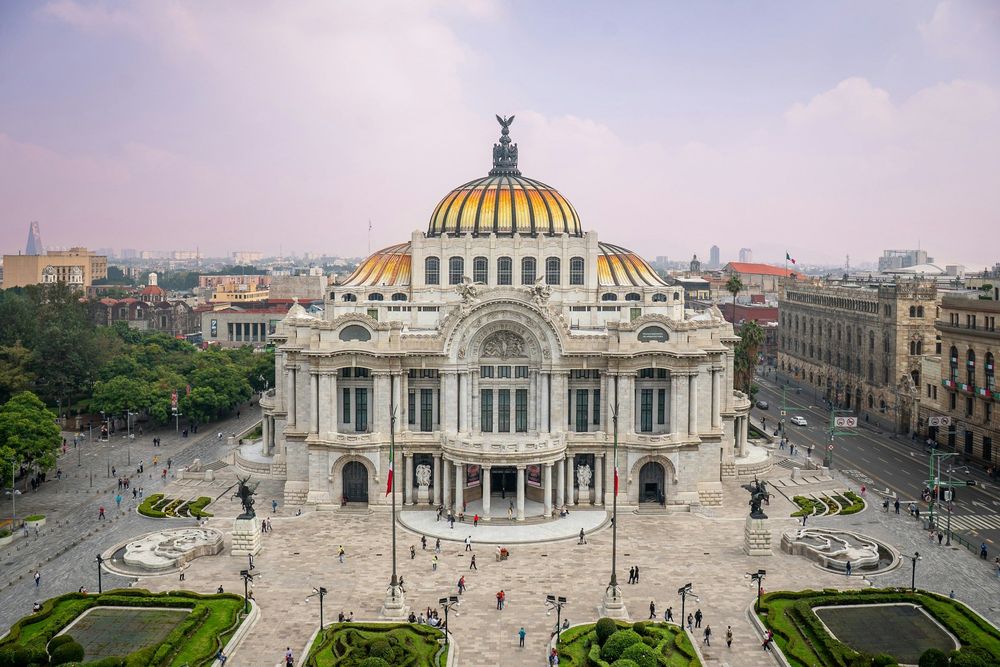
Cover photograph: Destination overview — Palacio de Bellas Artes and its forecourt in Mexico City. Photo by Alexandra Tran on Unsplash.
Frequently Asked Questions
How much time should I allow at the Anthropology Museum?
Choose a selective visit based on the galleries you want. A substantial first visit needs a generous block, while a shorter Mexica-and-courtyard visit can still be worthwhile. Add transport, queues and a meal separately.
Is Sunday admission free for foreign tourists?
Do not assume so. Sunday admission is free for Mexican citizens and foreign residents with the required proof. Foreign residents must present a temporary or permanent resident card; tourists should not assume they qualify.
Should I see every archaeological gallery before going upstairs?
No. Select an ethnographic theme while you still have energy. Textiles, festivities or peoples and languages can provide an important contrast to ancient objects.
Can I bring a large bag and take flash photographs?
Arrange large luggage elsewhere and ask about the current cloakroom procedure. The published rules prohibit flash photography and food entry; professional equipment has separate conditions.

Keep Exploring
Bahia Palace: Plan Your Visit in Marrakech
Look closely at Bahia’s painted ceilings, carved plaster and courtyards, then decide whether to add El Badi, the Mellah or a nearby food museum.
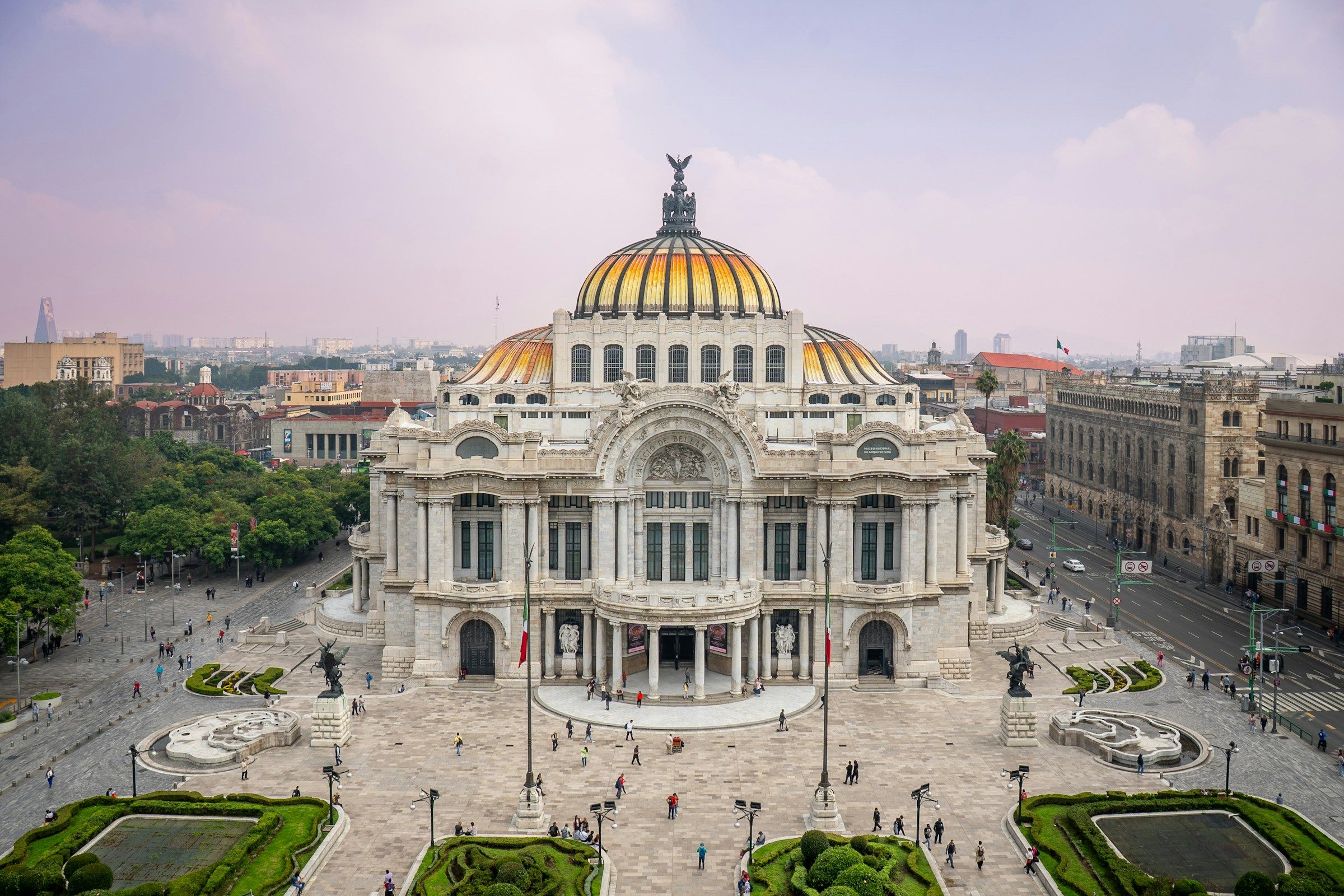
Things to Do in Mexico City: Choose Your Highlights
Choose between archaeology, art, park time, neighbourhood walks and Xochimilco, with practical comparisons for a first visit to Mexico City.
Fushimi Inari: Plan Your Shrine Walk
A focused guide to choosing how far to walk at Fushimi Inari, allowing for the descent and visiting a working shrine respectfully.