
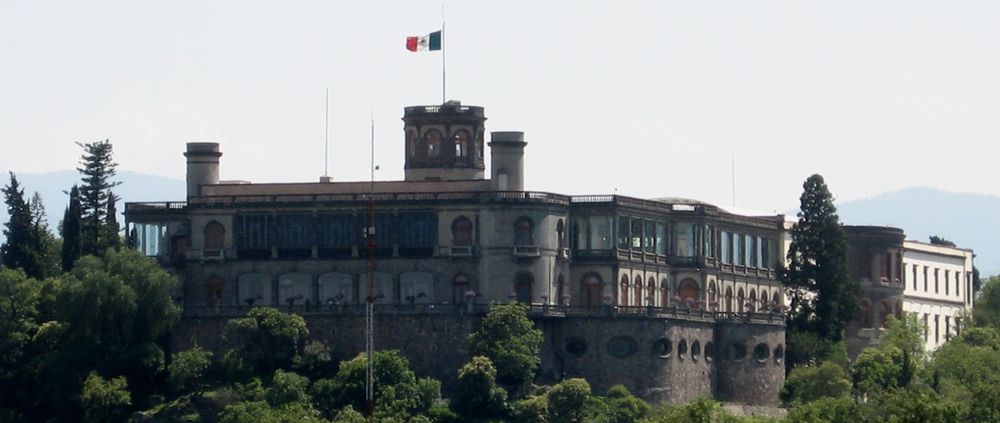
Plan Chapultepec Castle around its history galleries, furnished Alcázar and hilltop setting, with current admission guidance and a realistic visit route.
Visit Chapultepec Castle for two connected experiences: the National Museum of History's account of Mexico's past and the furnished rooms of the Alcázar, where rulers lived and received guests. The hilltop setting adds context, but treating the castle only as a viewpoint misses most of what your visit can offer.
Protect a substantial morning or afternoon, including the approach through the park and uphill. Choose which collection matters most before entering; that lets you enjoy the other section without racing through both. A castle visit followed by lunch and a short park walk is a complete outing.
Visitor information checked on 27 October 2026. Suggested visit lengths are editorial estimates. Official pages contain some inconsistent older prices, so use the current institutional tariff and confirm your category before paying.
Chapultepec Castle planning facts
| Detail | Published information or planning advice |
|---|---|
| Museum | Museo Nacional de Historia, Castillo de Chapultepec |
| Location | First Section of Bosque de Chapultepec, Mexico City |
| Opening | Tuesday–Sunday, 09:00–17:00; closed Mondays |
| End of visit | Rooms begin clearing at 16:45; do not treat closing time as an arrival target |
| Admission | INAH lists MXN 210 for foreign visitors and MXN 105 for national visitors; confirm resident eligibility |
| Suggested museum time | 2–3 hours for a selective visit to history galleries and Alcázar |
| Additional time | Park approach, ascent, ticket arrangements and return downhill |
The museum's current visitor information gives the opening pattern and room-clearing time. INAH's visitor listing provides the differentiated tariff. For the wider landscape, our Chapultepec Park guide compares sections and sensible combinations.
Decide whether this is your museum priority
The castle suits travellers interested in the formation of modern Mexico, the use of political power and the way a residence presents its occupants. It offers objects and historical images alongside furnished rooms, gardens and views. You do not need extensive background knowledge, but a willingness to read selected labels makes the visit more rewarding.
The nearby National Museum of Anthropology is a different choice, with archaeology and Indigenous cultures at its centre. Use our Anthropology Museum visit guide to compare the experience. If you only want one major museum day, choose the subject that holds your attention rather than assuming the two institutions cover the same ground.
Seeing both in one day is possible as a personal selection, but it requires reducing each visit and allowing for the transfer and lunch. Do not count them as adjacent rooms in one museum complex. For a first trip with several days available, separate visits preserve energy for the collections.
Understand the building before following the route
The museum's institutional introduction explains that construction began in 1785 and that the castle later served as a military college, imperial residence and presidential residence. These different uses help explain why this is more than a palace interior. The museum itself opened here in 1944, according to its history page.
Keep those layers in mind as you move between rooms. A space presented with nineteenth-century furnishings does not mean the whole building remained unchanged from one imperial moment. Look for the labels explaining which occupants or period a room represents, and distinguish the historical objects from the present-day museum arrangement.
At entry, check the route and any closures for that day. A room described online is not a promise of access during your visit. Ask where to start for your chosen emphasis, whether the route between floors is available to you and where you will finish. This small orientation step is more useful than immediately following the largest group.
Start with the history galleries for context
The official history-gallery guide follows a broad sequence from the Conquest through New Spain, independence, the young nation, the later nineteenth century and the Revolution. Use that progression to establish the main changes, rather than trying to absorb every date.
Choose a theme to carry through the rooms. You might follow how governments represented themselves, how everyday objects reveal social differences, or how the country changed after independence. Looking for one thread gives the visit coherence and leaves room to notice an unexpected object without losing your way through the chronology.
Spend time with a few objects and images rather than photographing every case. Read the label, identify the date and ask what the object was used for or who commissioned it. A ceremonial object and an everyday possession tell different stories even when they come from the same decade.
For 2–3 hours in the museum overall, an editorial starting point is around an hour in the history galleries, then a similarly substantial block in the Alcázar, with the remainder for orientation and outside spaces. If a period particularly interests you, give it more time and shorten the furnished-room circuit. These are flexible allowances, not an official guided-tour schedule.
Read the Alcázar as a residence and a display of power
The Alcázar overview distinguishes rooms arranged around Maximilian and Carlota's residence from those associated with Porfirio Díaz and Carmen Romero Rubio. The value is in comparing how spaces served private life, official work and reception, rather than simply counting decorated rooms.
The museum's room descriptions identify the dining room, ambassadors' room and stained-glass gallery among the features to examine. Pick several contrasts: a room for receiving visitors, a working space and a domestic room. Ask what each communicates about who could enter and how the household operated.
In the dining room, look at how furniture, tableware and decoration together create a setting for hospitality. In a reception room, notice the scale and arrangement before focusing on individual objects. This approach does not require specialist vocabulary: start with what the space appears designed to make a visitor feel, then use the interpretation to test that impression.
The stained-glass gallery is a reason to pause, not a reason to block the route while waiting for an empty photograph. Look from the areas open to visitors and respect barriers. Do not lean on historic surfaces or assume a doorway beyond a furnished room is part of the public route.
Save some attention for the gardens and the Caballero Alto tower as features of the setting. Seeing a tower does not establish that its interior or summit can be entered. Follow the day's permitted route, and treat a terrace view as part of the visit rather than a guaranteed photograph with particular weather or visibility.
Tickets and Sunday access: check your category
The current INAH visitor portal lists MXN 105 for national visitors and MXN 210 for foreign visitors. The museum's public-studies information also identifies a rate for Mexican nationals and residents. Confirm the documentation needed for your own category, particularly if you are a foreign resident or seeking an exemption. These are published tariffs, not a quote for a guided excursion.
The museum states that Sunday entry is free for Mexican nationals and foreign residents in Mexico. This does not make Sunday universally free for international tourists. Its visitor page also lists exemptions including children under 13 and specified other groups; check the conditions and bring appropriate documentation before relying on one.
Older official pages still show other prices. This guide uses the current INAH listing and current museum information rather than those older figures. If booking online, begin with the ticket link supplied by the museum or INAH, verify the institution and date, and read the terms. A third-party castle tour may include guiding or transport; it is not the same product as basic admission.
Do not plan to arrive just before 17:00. Rooms start clearing at 16:45, and admission arrangements can close earlier. A morning or early-afternoon visit gives you room to handle the approach and spend time inside. Confirm the current final-admission arrangements directly if you cannot arrive early.
Getting to the castle includes the hill
The official visitor information identifies Chapultepec on Metro Line 1 and Auditorio on Line 7 as nearby stations. Check current service and the route from the station to the First Section before travelling. Arrival at a station or a park gate is not arrival at the museum entrance.
Follow the open, signed route through the park to the castle approach. Build the ascent into your time and energy allowance, and include the descent when planning lunch or a later reservation. A taxi drop-off near the park does not remove the remaining walk. The museum says it has no visitor parking available.
For limited mobility, contact the museum about the specific route you need before setting out. Ask separately about reaching the hilltop, entering the building and moving between the rooms you want. An elevator shown on an architectural plan is not confirmation of its availability or of an entirely step-free visit on your date.
With children, reduce the number of galleries and choose a few observable details: a carriage, a room used for receiving visitors, a contrast between objects. Leave room for a break after the descent. A shorter, attentive museum visit is preferable to adding another major collection after everyone has stopped looking.
What to bring and what to leave for later
Wear footwear suitable for the park approach and allow for outdoor weather even though much of the museum visit is inside. Keep bags manageable and check the current cloakroom arrangements if you need storage. Do not rely on a listed service to accommodate a suitcase without confirmation.
INAH's visitor page prohibits food, smoking, pets and flash photography. Follow current signs and staff instructions; ask about assistance-animal arrangements or specialist photography equipment if relevant. Organise your meal outside the museum visit rather than expecting to picnic among the displays.
Afterwards, choose lunch and a short walk in the First Section, or finish the outing. Adding a distant park section spends time and energy on another transfer. The strongest castle day gives both the collections and their hilltop setting enough attention, while leaving the rest of Chapultepec for a visit with its own purpose.
Cover photograph: Chapultepec Castle above the trees with the Mexican flag over its tower (2009) — Cvmontuy, CC BY-SA 3.0.
Frequently Asked Questions
Is Chapultepec Castle open on Monday?
No. The museum publishes Tuesday–Sunday opening, 09:00–17:00, and says it is closed on Mondays, including holiday Mondays. Check exceptional notices before travelling.
How much is admission to Chapultepec Castle?
The INAH visitor portal checked on 27 October 2026 lists MXN 210 for foreign visitors and MXN 105 for national visitors. Confirm resident rates, exemptions and required documents for your category; a guided tour is a separate purchase.
Is Sunday free for everyone?
No. The museum specifies free Sunday admission for Mexican nationals and foreign residents in Mexico. International visitors should not assume they qualify solely because it is Sunday.
How long should I allow for the castle?
Allow 2–3 hours inside for a selective history-and-Alcázar visit, as an editorial estimate. Add the park approach, uphill walk, ticket arrangements and descent. Rooms begin clearing at 16:45.


Keep Exploring
Asian Civilisations Museum: Plan Your Visit
Plan a focused Asian Civilisations Museum visit: choose galleries, understand ticket categories, and allow time for trade, faith or design.
Mexico City Anthropology Museum: Plan Your Visit
A focused Anthropology Museum visit: compare Mexica, Maya and regional galleries, make room for living cultures and understand practical admission choices.
The Met New York: Choose Your Museum Visit
Choose a focused visit to the Met Fifth Avenue, understand admission and current gallery closures, and decide whether the Cloisters belongs in your plan.