
Kiyomizu-dera: Plan Your Kyoto Temple Visit
Plan Kiyomizu-dera with temple hours, the uphill approach, Main Hall viewpoints, autumn night viewing, accessibility and Jishu Shrine closure.
Choose a daytime visit to Kiyomizu-dera if you want to understand the wooden temple, hillside setting and surrounding streets. Choose a special evening opening for the illuminated atmosphere, after checking that your date is included. For a first visit, an early start followed by a slow descent through Higashiyama is a straightforward combination. Arriving early does not guarantee an empty temple, and arriving at closing time does not leave enough time to see it properly.
This guide helps you plan the temple itself: the approach, Main Hall, view from Okuno-in, waterfall and optional additions. For the broader selection of attractions, use our things to do in Kyoto guide. Kiyomizu-dera deserves to be the focus of an outing rather than a photograph squeezed between distant stops.
Fast facts before you climb
| Detail | Planning point |
|---|---|
| Location | Eastern Kyoto, on the slope of Mount Otowa in Higashiyama |
| Opening | 06:00; closing varies by season and special events |
| Adult admission | ¥500 in the checked JR Central destination listing |
| Temple time | Allow roughly 60–90 minutes, excluding approach and queues |
| With surrounding streets | Allow 2–3 hours or longer with a meal, as an editorial estimate |
| Nearest useful rail option | Keihan Kiyomizu-Gojo, about 25 minutes on foot from the temple |
| Important closure | Jishu Shrine currently closed for renovation |
Information checked on 28 October 2026. Visit durations are editorial suggestions, not official completion times. Recheck the temple calendar for your travel date, especially for evening visits and special gardens.
Decide between morning, daytime and evening
The temple's visitor information confirms a 06:00 opening, with closing time changing through the year. A morning visit lets you give the temple your attention before shopping and lunch. Plan the journey from your actual accommodation: a 06:00 opening does not mean every transport option or café is already operating.
Later in the day, it is easier to combine the climb with browsing along the approach streets. The compromise is sharing narrow paths and viewpoints with more people. Do not attempt to solve that by pushing through a group or holding a viewpoint for repeated photographs. Choose a comfortable pace and leave enough room for the descent.
The official special night-viewing calendar lists 21–30 November 2026 for the autumn opening, until 21:30, with last entry at 21:00. These are dated event arrangements, not normal nightly hours. Future years need their own calendar check. Autumn colour also varies independently of the event dates.
An evening visit changes what you notice: lit buildings and trees become the focus, while architectural detail and the wider city view depend on the light. If this is your only visit, decide which experience matters more. You do not need to do both simply because they are different. For night viewing, plan your return transport and dinner separately rather than assuming all approach-street businesses stay open until the temple closes.
Choose an approach you can enjoy
The Kyoto tourism board's access guide recommends rail where practical because direct buses from Kyoto Station can be congested. One option is JR Nara Line to Tofukuji, then Keihan to Kiyomizu-Gojo, followed by roughly 25 minutes on foot. Check the train's stops and your complete route before boarding.
That station is not at the temple gate. Expect the final approach to climb, and add time for navigation, rests and photographs. A longer walk can be a pleasant start when you have energy; it is a poor choice if the group is already struggling with heat, luggage or limited mobility.
From Gojozaka or Kiyomizu-michi bus stops, the temple's own information describes an uphill walk of around 10 minutes. That does not include waiting for a bus or traffic. Special sightseeing services have different operating days and fares, so consult current city guidance instead of assuming every bus with a similar destination works the same way.
The temple warns that mapping apps can suggest paths that do not actually reach the grounds. Its recognised approaches lead via Nio-mon at the top of Kiyomizu-zaka or the emergency-road entrance above Chawan-zaka. Use the official map and signs for the final section. A line that looks shorter on a phone is not a reason to enter a restricted lane or garden.
Admission and the first part of the grounds
JR Central's Kyoto destination page lists ¥500 adult admission on the check date. The temple's dated 2026 announcements also use that adult amount. Confirm current concessions and any special-opening charge rather than assuming a general ticket includes every named space.
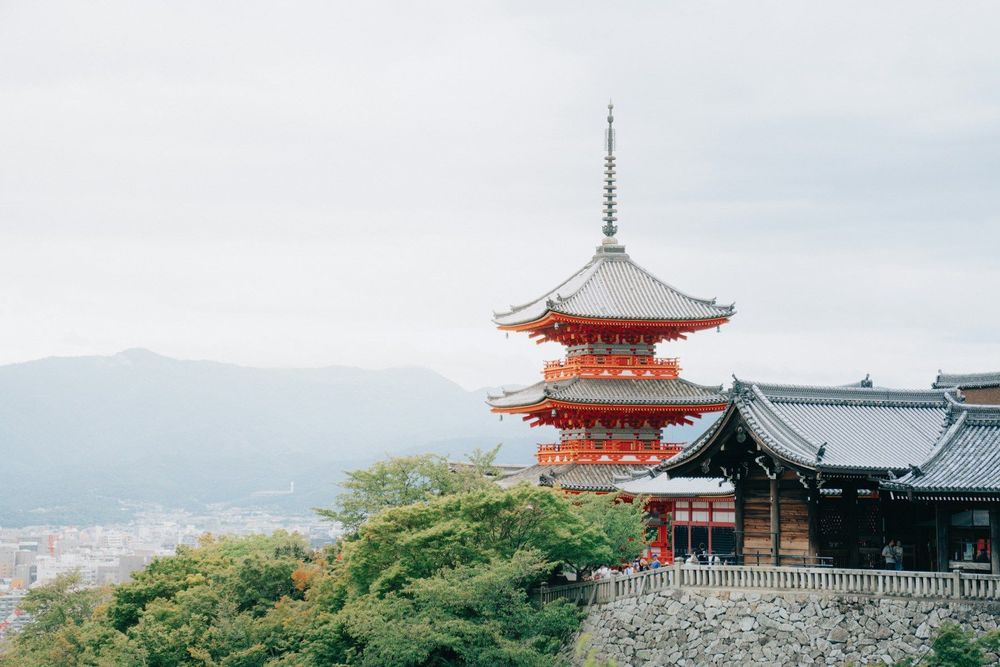
Start by orienting yourself at Nio-mon, then identify the Main Hall route. The vermilion gate and nearby pagoda establish the scale of the complex before the wooden stage appears. Pause to look at rooflines, contrasting materials and the way the approach opens into the temple grounds. There is more to observe than one postcard viewpoint.
The official grounds guide separates Nio-mon, Sai-mon, Zuigu-do, Main Hall, Okuno-in, Otowa Waterfall and Joju-in. Use those names to follow the site, but do not turn the map into seven compulsory queues. Some spaces have special access arrangements; the ordinary visit does not make every interior available.
Give the Main Hall more than a photograph
The Main Hall is both a major wooden building and a place of worship. According to the temple's own history and architecture guide, its present stage dates from 1633 and is supported by a timber framework joined without nails. That description refers to the stage construction, not a claim that every component of the entire complex contains no metal.
On the stage, look first at how the building projects from the slope. Then turn towards the hall and observe the relationship between the worship space and the open platform. The city view is part of the experience, but the stage's religious role matters too. Keep the passage clear for people who have come to pray.
Do not assume ordinary access includes the innermost sanctuary. The temple explains that inner areas open on special occasions. A glimpse through a doorway is not an invitation to continue, and a ticket is not permission to cross barriers. Follow the current signs, including any restrictions on interior photography.
Give yourself a few minutes without looking through a screen. Notice the roof's curve, the surrounding woodland and the difference between standing on the platform and seeing its supports from elsewhere. These observations help make sense of the building more effectively than collecting many near-identical images.
Continue to Okuno-in and Otowa Waterfall
Okuno-in is the useful next viewpoint for understanding the Main Hall in the landscape. From this side, the wooden platform, the slope below it and Kyoto beyond can be read together. Follow the current visitor route and wait for space rather than stopping abruptly in the narrowest section.
Otowa Waterfall brings the visit back to the water associated with the temple's founding. It is a ritual place, not simply a drinking-water attraction. Observe the posted procedure and the conduct of worshippers; if you choose to take part, do so respectfully and without turning it into a staged performance.
A queue at the waterfall is a choice, not an obligation. You can appreciate its setting and meaning without spending the remainder of your visit waiting. If someone is tired, prioritise an orderly exit and a seated break rather than insisting on every activity. Leave room for the return walk: reaching the final attraction does not mean reaching transport.
Separate optional openings from the main visit
The Joju-in garden has limited public openings. Its official page lists the autumn period of 21–30 November, with daytime and evening sessions; the temple's 2026 event calendar identifies those dates for the current year. Check the session and separate admission arrangements before adding it. A garden visit needs attention of its own, not just a hurried detour because it happens to be open.
Zuigu-do's Tainai-meguri is another distinct experience. Check its current operation, entry conditions and whether the nature of the visit suits your group before joining. It is optional; you do not need to include it to understand the Main Hall and hillside setting.
Do not plan around entering Jishu Shrine. The shrine's official website currently states that it is closed for renovation. Older descriptions of the matchmaking stones are not evidence of present access. The closure does not mean Kiyomizu-dera itself is closed; treat the two separately.
Access, photography and a comfortable visit
The temple FAQ confirms step-free routes through public areas, an accessible-route map and accessible toilets. It also states that wheelchairs cannot be borrowed. Consult the route before arrival and discuss the Chawan-zaka vehicle approach if needed; the picturesque stair streets below the temple are not an equivalent accessible route.
Wear shoes that suit slopes and steps, and keep baggage light. In warm weather, reduce extra walking and plan a proper break. In rain, slow down on wet surfaces. A temple visit with exposed outdoor sections is different from an entirely indoor museum afternoon, even when some buildings offer shelter.
The temple's visitor notice prohibits tripods, monopods and drones. Keep voices low, follow photography restrictions, use cafés or tea houses for food and drink rather than eating while walking, and take your rubbish away. A rented kimono does not create permission for a staged commercial photo session.
Finish with a modest Higashiyama walk
After the temple, choose whether you want shopping, a seated meal or a longer neighbourhood walk. Sannenzaka and Ninenzaka can form part of the descent, but their steps and narrow stretches require attention. Browse without blocking entrances, and let residents and deliveries pass.
If you want to continue towards Yasaka Shrine and the Gion area, use our respectful Gion walking guide to choose the next section and understand private-lane boundaries. It is equally reasonable to stop for tea and finish the outing. The temple, approach and descent already make a coherent visit without adding another distant landmark.
Cover photograph: Vermilion pagoda and traditional buildings at Kiyomizu-dera above Kyoto — Published in 2024. — Darren Budiman, Unsplash License.
Frequently Asked Questions
How long should I allow at Kiyomizu-dera?
Plan roughly 60–90 minutes for the temple, plus approach, queues and the return walk. A visit with Higashiyama streets can take 2–3 hours or longer with a meal. These are editorial allowances.
Can I visit Kiyomizu-dera every evening?
No. Evening openings occur on specified dates. The autumn 2026 period is 21–30 November, until 21:30 with last entry 21:00. Check the official calendar for your travel date and year.
Is Jishu Shrine open?
The shrine currently states that it is closed for renovation. Do not rely on older guides describing access to its matchmaking stones. Kiyomizu-dera's own visiting arrangements are separate.
Can I visit with a wheelchair or pushchair?
The temple publishes step-free routes through public areas. Use its accessibility map and check the approach before travelling. Wheelchairs are not available to borrow, and the stair streets below the temple require a different route.

Keep Exploring
Museo Soumaya: Plan Your Mexico City Visit
Plan a free Museo Soumaya visit at Plaza Carso: choose galleries, check English tours and decide whether to add neighbouring Jumex.
MALBA Buenos Aires: Plan Your Museum Visit
Plan a MALBA visit with collection highlights, current exhibitions, opening days, ticket choices, accessibility and practical bag rules.
El Badi Palace: Plan Your Marrakech Visit
Plan El Badi Palace with verified admission categories, an outdoor route, the minbar access question and a practical comparison with Bahia.