
Plan a MALBA visit with collection highlights, current exhibitions, opening days, ticket choices, accessibility and practical bag rules.
MALBA is a strong choice when you want one substantial encounter with Latin American art during a Buenos Aires stay. Give the galleries roughly 2–3 hours, decide whether the collection or a temporary exhibition is your priority, and leave the rest of the afternoon open for a meal or nearby walk. The useful question is not how quickly you can collect its famous paintings, but what you want to notice while you are there.
This guide covers the museum at Avenida Figueroa Alcorta 3415 in Buenos Aires, not the separate Malba Puertos venue in Escobar. It develops the museum stop introduced in our Buenos Aires culture and neighbourhood guide, with ticket decisions, a manageable gallery approach and the practical details that can otherwise interrupt a visit.
Fast facts
| Detail | Planning information |
|---|---|
| Address | Avenida Figueroa Alcorta 3415, Buenos Aires |
| Usual opening | Thursday–Monday 12:00–20:00; Wednesday 11:00–20:00; Tuesday closed |
| Visit allowance | About 2–3 hours for collection and a selective temporary-exhibition visit; editorial estimate |
| Tickets | Museum ticket includes the collection and temporary exhibitions; cinema is separate |
| Wednesday | Reduced general admission; eligibility rules apply to other concessions |
| Main preparation | Check open galleries, current exhibitions, ticket category and bag restrictions |
Operational information was checked on 28 October 2026. Galleries normally close approximately 15 minutes before the building, so avoid treating the final advertised hour as a full hour of viewing. Holiday exceptions require a separate check.
Choose a collection visit or an exhibition-led visit
If this is your first encounter with Latin American modern art, start with the collection. It gives you a wider frame for artists you may already recognise, while introducing names beyond a single internationally famous painter. Rather than reading every label with equal attention, select a few works that differ in medium, date or subject and use those differences to guide your visit.
If you are coming for a temporary exhibition, start there while your concentration is freshest. A specific show can deserve most of your available time. You can then choose a smaller collection visit instead of rushing through both. The combined ticket makes it possible to see multiple displays, but does not create an obligation to give every room the same amount of time.
Consult the museum's current programme before choosing the day. Temporary installations can alter the route, and a famous work's presence in an online collection is not a guarantee that it will be displayed during your visit. If one artwork is the reason for travelling, ask the museum about its current status rather than relying on an undated list of highlights.
Choose the day before buying the ticket
The official visitor page lists Tuesday as the regular closure day, with a later start on most other days than many visitors expect. Do not arrive at 09:00 assuming a conventional morning museum schedule. Wednesday opens at 11:00; Thursday through Monday normally begin at noon. Build a breakfast, outdoor walk or other independently checked activity around that actual opening.
Wednesday has reduced general admission, while some documented concession categories enter free. Check the category that applies to you and bring the required evidence. The saving is useful when your dates are flexible, but it is not worth rearranging a short stay around a discount if another day gives you a calmer, more convenient programme.
The museum recommends buying online for your chosen date. Confirm that you are purchasing admission for the Buenos Aires museum and read what the ticket includes before completing the transaction. Prices are in Argentine pesos and may change; use the current checkout rather than an old converted euro figure. Groups of more than ten need advance arrangements, including groups visiting without their own guide.
Three ways to look at the collection
The collection catalogue is useful preparation because it lets you identify artists and works before entering the galleries. Treat it as a research tool rather than a checklist. You will get more from three carefully considered works than from photographing a dozen labels without stopping to look at the objects themselves.
One approach is to compare how artists represent bodies. Tarsila do Amaral's Abaporu offers a clear starting point: look at the scale of the foot, the small head and the relationship between the figure and its surroundings. The museum's record for the 1928 painting connects it with Brazilian modernism. Read that context after looking, then return to the image and notice what changes in your interpretation.
A second approach is to follow portraiture. The collection catalogue includes Frida Kahlo's Diego y yo and Autorretrato con chango y loro. If they are on view, compare the arrangement of the face and surrounding elements rather than treating either as merely a famous name to photograph. If a selected work is absent, use another portrait in the gallery and keep the question you came to explore.
A third approach is to compare an individual figure with a crowd or social scene. Antonio Berni's Manifestación appears among the collection's highlighted works. Ask how the composition directs attention, which details you notice first and how a change in scale affects your response. These are suggested ways of looking, not claims about a fixed room order or a complete account of each artist.
What the current temporary exhibitions change
At the check date, the museum's Viva Frida page lists the exhibition through 15 March 2027. It brings personal objects into dialogue with paintings and photographs, so it suits visitors interested in the relationship between artistic work and the construction of identity. Check the live page before making a later trip specifically for this show; earlier advance announcements used different dates.
Also listed through 15 March 2027, Belkis Ayón: Myth and Disobedience focuses on the Cuban artist's collagraphy. Its attention to printed texture offers a different experience from looking mainly at paintings. Leave enough time to see the surfaces and tonal relationships rather than moving through it as an optional corridor on the way to another exhibition.
You do not need to add a scheduled guided visit unless its language, time and format suit you. A guided session, a workshop and general museum admission may have different registration arrangements. Read the actual event listing, including whether it is still current, before fixing lunch or transport around an activity mentioned in an older programme.
A practical route through the visit
On arrival, take a moment in the hall to establish which floors and rooms are open. Deal with bags and tickets before starting the galleries, then choose your first priority. If you have around two hours, give the largest share to the collection or exhibition that brought you here and reserve the remaining time for a selective second display.
For a longer visit, insert a proper break rather than attempting continuous reading until you are exhausted. Sit down, look back at the works that stayed with you and decide what you still want to see. A coffee break can help, but check with staff before leaving ticketed areas if you intend to return to them. Do not assume re-entry conditions from the existence of a café.
Finish with one final room or artwork, not an attempt to repair every omission. The museum shop can be useful for a catalogue or a book that extends an interest, but it should not consume the time you wanted for the collection. Leave enough margin to collect checked belongings before your next commitment.
Bags, photography and a visit with children
Travel light. The visitor rules require larger personal bags to be checked and do not accept rolling luggage. This is not a practical stop to insert between hotel checkout and the airport while carrying your suitcase. Arrange storage elsewhere first, then bring only what you need for the galleries and the next part of your day.
The museum FAQ allows personal, non-commercial photography without flash. Follow any additional room instructions, keep circulation clear and avoid spending the entire visit looking through a phone screen. Photographing a work for your own memory is different from having permission to reproduce it commercially.
With children, use a small number of looking tasks: compare two shapes, find a detail that changes a face or describe how a printed surface differs from paint. Give them a stopping point rather than promising a tour of every room. Check the current education programme if you want a workshop; do not assume that a past family event runs every weekend or that general admission reserves a place.
Accessibility and the journey to the entrance
Read the detailed MALBA accessibility guide for the route you need. It describes lifts, ramps, adapted toilets and wheelchairs, while explaining that some areas require assistance. Contact the museum in advance if independent access to a particular room, terrace, auditorium or activity is essential.
Sensory conditions also matter. The guide says that there are no designated quiet hours and that lighting and ambient noise vary. Choose a pace that allows breaks, bring any support you normally use and ask staff where to pause if the galleries become tiring. A general accessibility statement is less useful than checking your specific needs against the actual visit.
The museum is on a major avenue, so choose transport by its exact address. Public transport may still involve walking and crossings; use the live route planner rather than assuming that a nearby neighbourhood name means a door-to-door connection. For a taxi or car pickup, use the museum address and agree a clear return arrangement, particularly if walking further afterwards would be difficult.
Combine MALBA with one nearby plan
After the galleries, choose a meal or a measured walk, not several more substantial museums. Palermo covers a large area: the museum's location does not place every café district or shopping street immediately outside the entrance. Identify the actual next address before deciding to walk there, and allow heat, rain or fatigue to change the plan.
A museum-focused day works especially well when the evening remains flexible. If you want cinema, consult the separate programme and ticketing rather than assuming it is included with exhibition entry. If you prefer to continue outdoors, agree a turnaround point and leave room for a seated break.
Our three-day Buenos Aires itinerary helps distribute the city's cultural stops. Keep MALBA's role clear: one considered art visit, with enough attention to notice differences between artists, is more useful than another hurried museum tick.
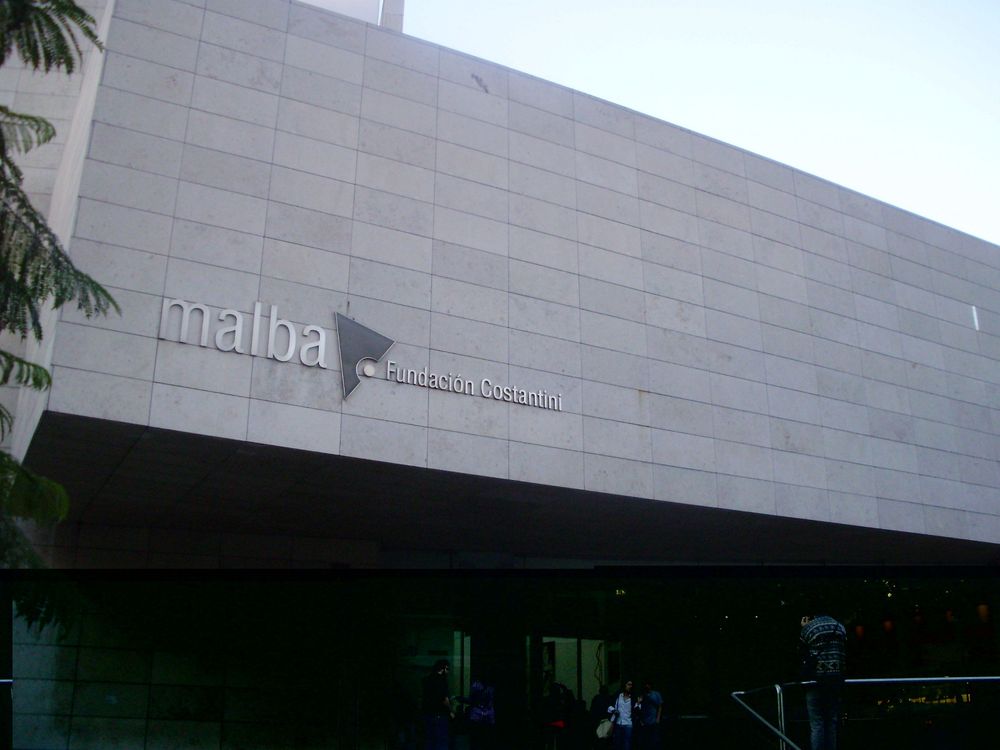
Cover photograph: MALBA museum facade and entrance in Buenos Aires — Photographed in 2012. Image licensed under CC BY-SA 3.0. — Rodrigo Pereira da S…, CC BY-SA 3.0.
Frequently Asked Questions
How long should you spend at MALBA?
Allow about 2–3 hours for the collection and a selective temporary-exhibition visit. This is an editorial estimate. A detailed exhibition, guided activity or long break can extend the visit.
Is MALBA open on Tuesdays?
The Buenos Aires museum normally closes on Tuesdays. Check the official visitor page for your date and any exceptional arrangements; restaurant or event opening does not imply that the galleries are open.
Does one museum ticket include temporary exhibitions?
The current visitor information says the museum ticket includes the collection and temporary exhibitions. Cinema and activities with separate registration have their own arrangements, so read their individual listings.
Can you bring a suitcase to MALBA?
Rolling luggage is not accepted under the published visitor rules. Arrange storage elsewhere before arriving. Larger personal bags may need to be checked, so bring a small bag for a simpler gallery visit.


Keep Exploring
Asian Civilisations Museum: Plan Your Visit
Plan a focused Asian Civilisations Museum visit: choose galleries, understand ticket categories, and allow time for trade, faith or design.
Chapultepec Castle: Plan Your Museum Visit
Plan Chapultepec Castle around its history galleries, furnished Alcázar and hilltop setting, with current admission guidance and a realistic visit route.
Mexico City Anthropology Museum: Plan Your Visit
A focused Anthropology Museum visit: compare Mexica, Maya and regional galleries, make room for living cultures and understand practical admission choices.