
Things to Do in Buenos Aires: Culture and Neighborhoods
Find your cultural starting point in Buenos Aires: compare neighborhoods, choose between museums and decide when a theater visit or tango evening deserves priority.
The most useful way to choose things to do in Buenos Aires is to decide what you want to understand, then choose a neighborhood that helps you explore it. San Telmo works for street life and material history; Recoleta for art and commemorative architecture; Palermo for a museum visit followed by a less structured afternoon. Downtown gives political and theatrical culture a different setting.
You do not need to collect every district. A substantial indoor visit, a neighborhood walk and time to sit down usually reveal more than a sequence of cross-city photo stops. This guide helps you choose those ingredients, without prescribing a day-by-day itinerary.
Choose your cultural starting point
| Your main interest | Start here | Useful pairing | Main planning decision |
|---|---|---|---|
| Antiques, market buildings and street life | San Telmo | Mercado San Telmo and Museo Moderno | Market browsing or an exhibition-led visit? |
| Art and monumental architecture | Recoleta | Cemetery and Bellas Artes | Outdoor sculpture or time in galleries? |
| Latin American art and a flexible afternoon | Malba, then Palermo | Museum and a separately chosen café area | Which part of Palermo do you actually mean? |
| Political history and the city’s formal face | Plaza de Mayo | Avenida de Mayo | Read the urban setting or book an interior? |
| Theater architecture or live performance | Teatro Colón | A central-city walk | Guided tour or a performance ticket? |
| Colorful streets and neighborhood identity | La Boca | Caminito and a planned cultural stop | Does this justify a dedicated transfer? |
All visit allowances below are editorial estimates, not official tour lengths or transfer guarantees. Opening information was checked on 3 October 2026; recheck holiday exceptions and tickets before traveling.
San Telmo: choose between browsing and contemporary art
San Telmo suits travelers who enjoy looking closely at ordinary objects, shopfronts and buildings. Begin with a specific anchor rather than trying to locate an undefined “old town.” Plaza Dorrego, Defensa and the covered market provide a manageable focus; stopping to browse will determine how far you get.
The official Mercado San Telmo page identifies its mix of antiques and food, and the original metal-and-glass structure. Treat it as both a place to eat and a building to examine. Look above the counters before choosing somewhere to sit. The covered market and the outdoor neighborhood fair are different experiences; do not assume their stall schedules are identical.
For a browsing-led visit, leave room for an unplanned shop or coffee stop. For a museum-led visit, reverse the emphasis: secure enough gallery time first and use the market as a meal break. Allow roughly 3–4 hours for either version, including a substantial stop, rather than promising yourself the whole neighborhood in a hurried hour.
Museo Moderno’s visitor information places it at Avenida San Juan 350 and lists Tuesday closure, except public holidays. Admission is free for all visitors on Wednesdays and the last Sunday of the month. Confirm the current exhibition before making that saving the reason for your visit.
Moderno is the practical art choice when you are already in San Telmo. It lets you connect the streets with a different kind of cultural experience without moving north across the city. Choose it if the exhibition interests you, not simply because you want to tick off another museum. Check the visitor page for current hours, eligibility conditions and tickets.
Recoleta: sculpture, remembrance and a broader art collection
Recoleta offers a strong pairing for travelers who want to alternate outdoor and indoor looking. The cemetery rewards attention to materials, inscriptions and how families represent themselves. It is a burial place, so keep your visit considerate and avoid treating every doorway as a photography set.
The city’s cemetery guide highlights Eva Perón’s tomb and several architectural styles. Use a map and choose a small number of monuments instead of wandering solely in search of one famous name. An editorial allowance of 60–90 minutes gives space to notice the setting; history enthusiasts may want longer.
Bellas Artes is the alternative when your priority is a wider encounter with Argentine and international art. Its official museum history describes that breadth and its Recoleta setting. Choose a section or theme before entering: a focused visit is more rewarding than racing through every room because the collection is large.
The cemetery and an art museum ask different things of your attention. Pair them if you enjoy comparing public memory with artistic representation. If tombs hold little interest for you, put that time into the galleries and a leisurely meal. You do not need to include the cemetery simply because it appears on nearly every city list.
For a mixed group, agree on the main stop in advance. Someone interested in paintings and someone looking for architecture can share the neighborhood without having to spend identical amounts of time inside every attraction. Check Bellas Artes’ current visitor information separately; this guide does not assume a particular admission policy or opening schedule.
Malba or Museo Moderno: let the collection and location decide
Choose Malba if Latin American art is a central reason for visiting Buenos Aires. The museum’s official site lists the Malba–Costantini collection and works by artists including Tarsila do Amaral, Antonio Berni and Frida Kahlo. A collection listing does not guarantee that a particular work is on display on your date.
Allow an estimated 2–3 hours if you want to read labels and see a temporary exhibition as well. Pick the exhibition first, then judge whether to add more. Seeing both Malba and Moderno can make sense for an art-focused trip, but they should earn separate blocks of time rather than compete for one rushed afternoon.
Malba currently lists Thursday–Monday opening from 12:00 to 20:00, Wednesday from 11:00 to 20:00, and Tuesday closure. That makes an early-morning museum arrival a poor default. Use the morning for another activity and confirm the ticket category when booking.
Palermo needs a more precise plan than its name suggests. Malba’s location does not mean every café, shop or park you have saved under “Palermo” is immediately beside it. Pin the actual addresses before deciding whether to walk or take transport. A museum-plus-café afternoon works well when the café is chosen for convenience as well as reputation.
If you care more about wandering than art, shorten the museum ambition rather than purchasing a ticket out of obligation. If you care deeply about the collection, protect that time and make the rest of the afternoon optional. This simple distinction prevents both museum fatigue and an unnecessary detour.
Downtown: read the city around Plaza de Mayo
Plaza de Mayo is a useful starting point for political and architectural interests. The national government’s account of the square explains its place in a civic axis linking major institutions through Avenida de Mayo. That relationship is more informative than treating the surrounding façades as unrelated photo opportunities.
Look at how the square frames the Casa Rosada and how the avenue carries the eye away from it. A self-guided visit can concentrate on public space and exteriors. Interior access is a separate decision, with its own booking and opening conditions; standing in the square does not imply access to government buildings.
Allow about 60–90 minutes for an introductory look and a short continuation along the avenue, longer if you stop to read or enter an attraction. This is an editorial allowance for one focused area, not a walking-time claim for a complete route to Congress.
Downtown and San Telmo can be thematic companions if political history and everyday urban life both appeal. Still, choose the priority first. A booked interior visit changes how much unstructured wandering remains realistic, and a long lunch deserves space in the plan too.
Teatro Colón: a tour and a performance answer different wishes
Choose a guided tour if your main interest is architecture and the building’s story. Choose a performance if you want to spend an evening listening or watching. A daytime visit is not a substitute for a concert, and a performance ticket should not be assumed to include the guided route.
The official Teatro Colón tour page gives a duration of 50 minutes and lists visits in Spanish, English and Portuguese. It also warns that operational activity can change the route. Book the language and departure you need rather than assuming every departure is interchangeable.
Leave arrival time outside that published duration. A tightly timed transfer from another neighborhood can undermine the most carefully chosen booking. If you are comparing a theater visit with an additional art museum, choose the one that adds a new dimension to the trip: architecture and performance offer a useful change after several gallery visits.
For an evening performance, read the program, running-time information and ticket conditions before committing. Your interest in the work matters more than securing any available seat simply to enter the building. Keep the surrounding meal plan flexible until the event details are confirmed.
La Boca: make Caminito a deliberate choice
Caminito suits visitors interested in color, street-scale art and the way a neighborhood presents its identity. The city’s Caminito guide describes an open-air museum associated with Benito Quinquela Martín and La Boca’s Genoese community. It is a specific street attraction, not shorthand for everything in the district.
Choose it when that visual and cultural setting genuinely interests you. If your available time is short and your priority is museum collections, another transfer may be less rewarding than staying in Recoleta or San Telmo. Plan the arrival and departure around the particular places you intend to visit, rather than assuming the whole southern part of the city forms one compact walking circuit.
A photograph stop and a cultural visit are different commitments. To make the latter, read some neighborhood history before arriving, look at the built environment and identify any additional venue you want to enter. Verify that venue’s current program independently; do not infer that it opens whenever the street is accessible.
Tango: decide whether you want to watch or participate
A stage show, a class and a social dance evening serve different interests. For performance, compare what the ticket actually includes and how much time is devoted to dancing. For participation, choose a beginner class and ask about language, partners and the level expected. For a milonga, check the organizer’s format and whether observing is possible.
UNESCO’s tango account describes a shared Argentine and Uruguayan tradition shaped by several communities. Keeping that broader history in mind gives more context than reducing tango to a dinner-show souvenir.
There is no single venue recommendation that fits all three purposes. Pick the experience first, then check a current program. Leave the next morning lighter if your chosen evening runs late; enjoying the event is more valuable than preserving an overfilled sightseeing checklist.
Plan the next part of your trip
Use these related guides to compare where to stay, what to visit or another destination in the same region. Each guide covers a separate decision; this is not a combined itinerary.
More guides for planning your visit
Before choosing dates for these neighbourhood walks and cultural outings, see our guide to the seasons in Buenos Aires.
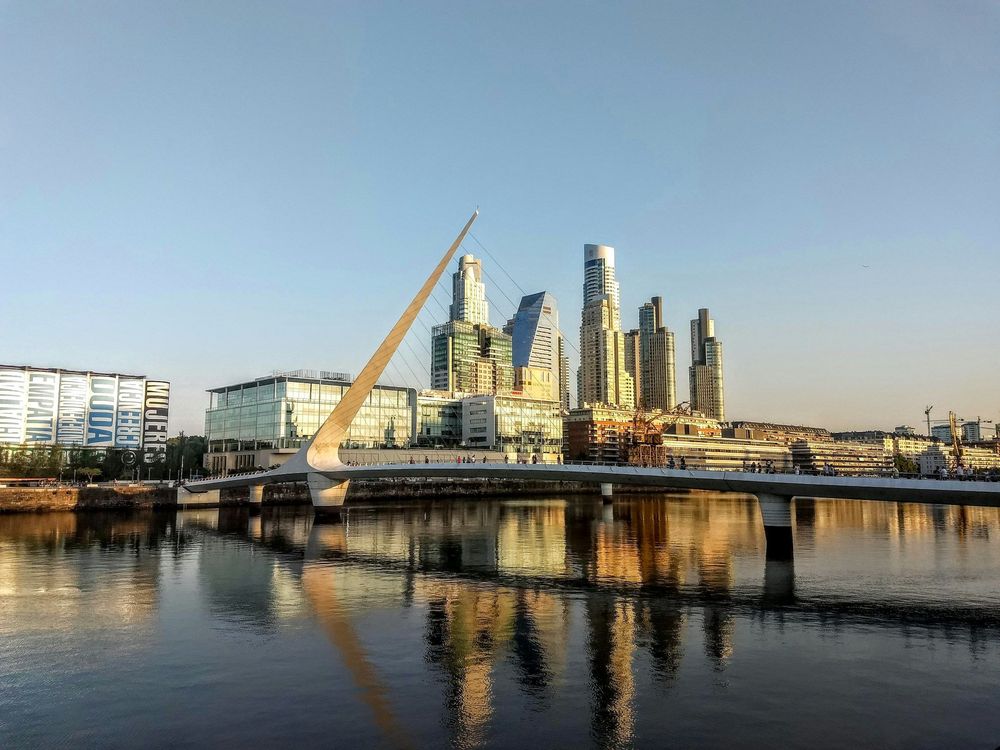
Cover photograph: Puente de la Mujer and waterfront buildings in Buenos Aires.. Photo by Francisco Ghisletti on Unsplash.
Frequently Asked Questions
Which neighborhood should I choose for a first cultural visit?
Choose San Telmo for market browsing and street life, Recoleta for art and commemorative architecture, or Malba and a selected part of Palermo for Latin American art and a flexible afternoon. Your interests should decide the starting point.
Should I visit both Malba and Museo Moderno?
Yes if their exhibitions interest you and art is a priority. Otherwise choose by collection and geography: Malba anchors a northern visit, while Moderno pairs naturally with San Telmo. Both normally close on Tuesdays; Moderno lists a public-holiday exception.
Is Teatro Colón worth visiting without seeing a performance?
A guided tour suits an interest in architecture and theater history. Its advertised duration is 50 minutes, with the route subject to operational changes. Book a performance separately if live music or dance is what you want to experience.
What should I prioritize with only half a day?
Choose one neighborhood and one substantial cultural stop. Add a nearby walk and a meal or coffee break. Avoid trying to combine La Boca, Recoleta and Palermo in the same short window.

Keep Exploring
Things to Do in Melbourne: Culture and Neighbourhoods
Build a Melbourne visit around the culture you enjoy: Australian art, screen culture, First Peoples' stories, market food and distinctive neighbourhoods.
Things to Do in Sydney: Harbour, Culture and Coast
A practical guide to choosing Sydney experiences, with harbour and coastal alternatives, museum comparisons and realistic time allowances.
Things to Do in Oaxaca: Culture, Food and Day Trips
A practical guide to Oaxaca de Juárez: connect museums with food and living craft traditions, and choose a valley excursion that deserves your time.