
When to Visit Buenos Aires: Seasons and City Life
Compare spring, autumn, summer and winter for a Buenos Aires city break, including realistic jacaranda expectations and how to plan around cultural events.
For a first trip built around neighbourhood walks and cultural evenings, the best time to visit Buenos Aires is usually April or October–November. That is our planning recommendation, not a promise of perfect weather. Choose November if jacarandas matter; choose April if you want an autumn visit without making flowering the centre of the trip. A particular performance or festival can justify a different month.
Buenos Aires lies in the Southern Hemisphere. December–February is the summer planning window and June–August the winter one; the shoulder months bring transitions rather than an abrupt change on a calendar date. The best choice depends on how much of your day you want to spend outdoors, and whether an actual cultural booking matters more than general weather comfort.
Choose your travel window
| Travel window | Strongest reason to choose it | Main compromise | Shape the day around |
|---|---|---|---|
| March–May | Neighbourhood walks and autumn cultural visits | March can retain summer warmth; rain remains possible | A substantial walk and an indoor alternative |
| June–August | Museums, cafés and a confirmed evening programme | Cooler outings, especially after dark | Daylight walks and a coat for the return |
| September–November | Spring streets and parks; November jacaranda hopes | Variable weather and flowering | Flexible outdoor blocks, with one cultural anchor |
| December–February | Warm-weather evenings and a slower daytime rhythm | Heat and humidity can make long walks tiring | Shorter morning outings, indoor afternoons |
These are broad seasonal tendencies and editorial choices, not a forecast for your dates. The city's climate guide describes humid summer conditions, identifies July as the coldest month and flags spring and autumn as rainy seasons. Mild weather therefore does not mean dry weather. Check the forecast close to departure and again before a long outdoor outing.
April or November: the most useful first decision
If your ideal day is a slow walk through San Telmo, lunch, a museum and dinner, April is a strong starting point. You can build a visit around ordinary city experiences rather than a brief natural spectacle. Late March is also worth comparing, but do not assume the change of season immediately removes warm afternoons. May can work if you are happy to carry an extra layer and move more of the visit indoors when needed.
November offers a different attraction: a chance to see flowering jacarandas alongside the usual parks, avenues and cultural life. October is a sensible spring alternative if walking comfort matters more than those purple trees. Do not move a well-priced October trip solely because every photograph you saved shows November blooms; the same neighbourhoods are worth exploring without them.
To decide between April and November, first compare the actual flights and rooms, then the cultural programme. If both periods fit your budget and interests, choose April for an autumn city break or November for the additional flowering possibility. Neither month guarantees cheaper accommodation. Compare the total cost for your dates, including cancellation terms, instead of treating a seasonal label as a price forecast.
Jacarandas: aim for November, keep the route flexible
The official seasonal tree guide places the city's characteristic jacaranda display around mid-November. It suggests Avenida Figueroa Alcorta and Avenida Sarmiento, Parque Lezama, Parque Los Andes and Parque Centenario among the places to look. Choose a location that fits the rest of your day rather than linking every tree-lined avenue into a citywide expedition.
That guidance describes a usual seasonal pattern. It is not a flowering forecast. A municipal report from November 2019 explicitly described flowering as somewhat late that season. Different trees and locations will also look different on the same day. A booking for the middle of November improves the logic of a flower-focused trip, but it cannot secure a particular peak.
If you have several days, leave one outdoor block uncommitted until you arrive. Ask about current flowering and choose between a northern avenue walk and a southern stop at Parque Lezama. Allow 60–90 minutes, an editorial estimate, for a focused tree-and-street outing with photographs; add transport separately. A northern walk can precede a museum visit, while Lezama fits more naturally with time in San Telmo.
If the trees are early, late or disappointing, keep the neighbourhood day. Replace the flower hunt with architecture, a park stroll or a longer café stop. Avoid paying for a difficult detour merely to reproduce a photograph. Travellers whose entire trip depends on peak blossom should keep booking conditions flexible and accept that the timing remains uncertain.
Summer: change the rhythm of the day
December–February makes most sense when you enjoy warm evenings and are willing to shorten daytime walks. Heat and humidity matter particularly if your planned route crosses several neighbourhoods. A long central walk followed by a park excursion and a late dinner can become exhausting even when each stop looks manageable on a map.
Use 60–90 minutes as an editorial allowance for a focused morning walk, then pause for a meal or move indoors. Save another short outdoor outing for later if conditions suit. Avoid using an air-conditioned museum merely as somewhere to recover after overcommitting: choose an exhibition you want to see and protect time for it from the start.
San Telmo can work as a streets-and-meal outing, with a museum added on a suitable day. Recoleta can be a shorter architectural walk followed by galleries. In Palermo, decide whether your priority is parkland or cafés and shops; the district is too large for its name alone to define a comfortable route. The trade-off in summer is often how much walking to remove, rather than which entire neighbourhood to abandon.
For travel around Christmas and New Year, confirm the opening of the specific restaurant, museum or venue you are counting on. A citywide claim that everything closes or everything stays lively will not settle your dinner plans. Check cooling and room conditions when booking accommodation, especially if a midday rest is part of the routine.
Winter: let the cultural evening justify the date
June–August can suit a visit centred on art, food and performances. Plan outdoor wandering during daylight and carry a warmer layer for the evening return. Winter is not automatically an inferior visit: a museum exhibition or a performance you genuinely want can be a stronger reason to travel than a generic recommendation for spring.
Nor should you assume winter guarantees bargain rooms. Compare your actual stay, particularly when an event is the reason for coming. The useful question is whether the itinerary still appeals if a chilly or wet day removes a long walk. If your answer is yes because you want galleries, cafés and a booked evening, the seasonal compromise is manageable.
A practical winter shape is a late-morning walk, lunch, one substantial indoor visit and a return to your accommodation before going out. Allow 2–3 hours for that indoor visit as an editorial estimate, adjusted to your interest and the venue's opening. Do not fill the afternoon with multiple distant museums merely because the weather encourages indoor plans.
Festivals: use confirmed editions, not recurring guesses
Festival dates can override the weather recommendation, but a familiar event month is only a starting point. The following are confirmed past editions, checked on 8 October 2026, not dates to reuse for a future trip:
- The official BAFICI listing records the independent film festival from 15–26 April 2026 and marks it finished. This illustrates the appeal of an autumn cinema trip; wait for the edition matching your year before booking around it.
- The Tango BA organiser's page records the festival and world championship from 19 August–2 September 2026. That late-winter window is historical evidence, not a confirmed schedule for the next edition.
For a film festival, choose screenings by language, subtitles, location and timing before building the rest of the day. For a tango event, distinguish watching a competition from attending a concert, taking a class or joining a milonga. They need different tickets, preparation and amounts of time. A festival name on the calendar does not mean every activity is available without a reservation.
Do not book flights around an old announcement copied into a general travel guide. Confirm the year and organiser, then check the programme and the ticket release arrangements. If the next edition is not yet announced, either keep the trip flexible or choose dates that appeal even without the festival. Tango and cinema interests can still shape an ordinary visit through separately confirmed venue programmes.
Cultural evenings need their own calendar
The Teatro Colón's official programme separates opera, ballet, concerts and guided visits. Start with the production you want and verify its date, venue and ticket availability. A concert presented by the theatre's musicians may be at another venue; an attractive institutional name does not settle the address.
A guided visit is a different booking from an evening performance. If seeing the building is your priority, you do not need to force a performance into an inconvenient date. If the music or dance matters most, give that night priority and keep the preceding afternoon modest. Build dinner around the actual start time and published duration, leaving room for travel and arrival.
For tango outside a festival, decide whether you want a seated show, a beginner lesson or a social dance evening. Check the current organiser's schedule and whether observers are welcome at a milonga. After a late night, keep the following morning loose. A pleasant season cannot compensate for scheduling every day as though you will always be rested.
Make the weather backup local
A rainy day becomes easier when the substitute is in the same part of the city. In San Telmo, the Museo Moderno visitor page lists Tuesday closure except public holidays. Check that condition before relying on it as an automatic fallback. Pair a visit with a meal nearby and shorten the outdoor browsing as conditions require.
For a northern day, identify the gallery or museum you actually want before choosing your walk. Check its opening separately; “we will find a museum if it rains” is less useful than a specific option with enough time to enjoy it. Keep essential reservations, and move the flexible outdoor block between days when practical.
Pack for the routine you have chosen: comfortable walking shoes, a light rain layer and clothing that can be combined for changing temperatures. For summer, prioritise breathable clothes and a realistic break indoors; for winter, remember the journey home after the event. The seasonal choice should help you enjoy the city at a sustainable pace.
For attraction choices, use our Buenos Aires culture and neighbourhood guide. Once the month and cultural anchors are settled, adapt the Buenos Aires itinerary for 3 days. Choose your base separately with our Buenos Aires neighbourhood accommodation guide.
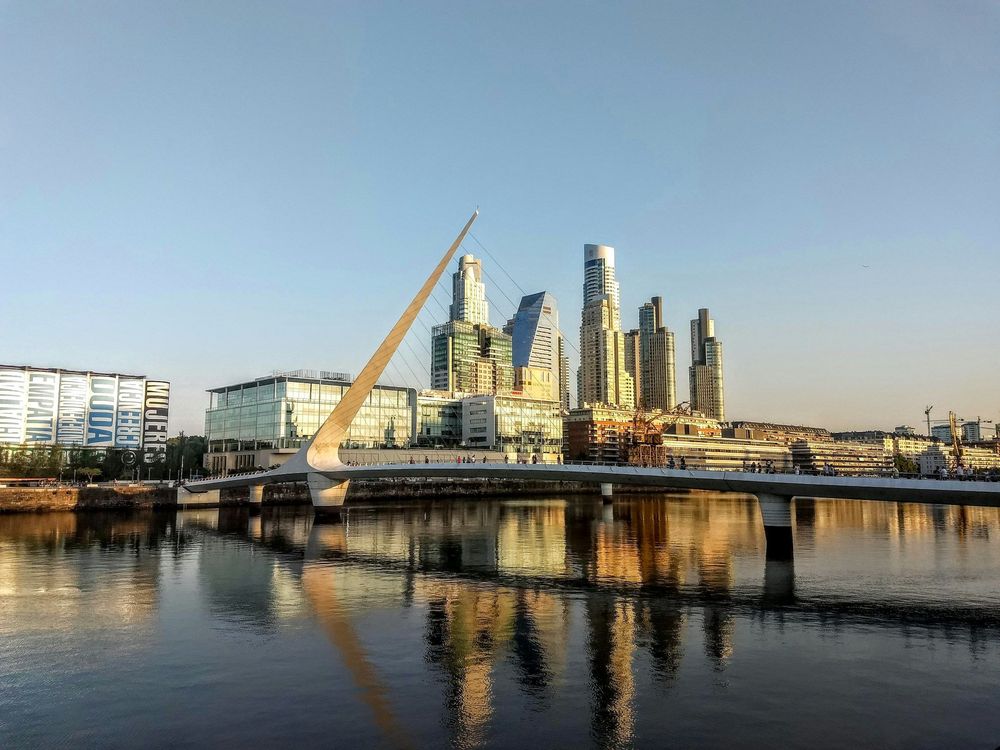
Cover photograph: Puente de la Mujer and waterfront buildings in Buenos Aires. Photo by Francisco Ghisletti on Unsplash.
Frequently Asked Questions
What is the best month for a first visit to Buenos Aires?
April is a strong choice for an autumn visit built around walking and culture. November adds the possibility of jacarandas. Compare the actual cultural programme and travel costs; neither month guarantees dry weather or a particular price.
When do jacarandas bloom in Buenos Aires?
November, with mid-November a useful planning target according to the city's seasonal guide. Flowering varies by year and location, so keep a flexible outdoor block and an alternative neighbourhood plan.
Is Buenos Aires worth visiting in winter?
Yes, particularly for museums, cafés and a confirmed performance or event. Keep walks in daylight, take a warmer layer for evenings and do not assume that winter automatically means cheaper accommodation.
Can I book next year's trip using this year's festival dates?
Use past dates only to identify a possible seasonal window. Confirm the edition for your year with the organiser before committing to flights or non-refundable accommodation for a specific festival.

Keep Exploring
Best Time to Visit Kyoto: Seasons and Tradeoffs
Compare Kyoto's seasons by walking comfort, crowds and seasonal scenery. Plan around uncertain blossom dates, summer heat and shorter winter days.

When to Visit Los Angeles: Seasons and Trip Plans
Match Los Angeles to your trip: coastal mornings, inland sightseeing, shorter winter days and event calendars need different seasonal decisions.
When to Visit Sydney: Seasons and Trip Planning
Compare Sydney's seasons for a beach holiday or city break, then check daylight, school holidays and major events before choosing your dates.