
When to Visit Sydney: Seasons and Trip Planning
Compare Sydney's seasons for a beach holiday or city break, then check daylight, school holidays and major events before choosing your dates.
For a first visit combining the harbour, neighbourhood walks and a coastal outing, shortlist March–April or October–November. These are our editorial starting choices for a mixed trip, rather than a promise of perfect weather or quiet streets. Choose December–February if summer beach time is the priority; consider June–August if museums, food and city views matter more than swimming.
The best time to visit Sydney depends on which part of the trip you least want to compromise. A beach holiday needs more weather flexibility than a stay built around galleries and restaurants. A festival visit needs the actual event dates before you book flights. Sydney's seasons run opposite to those in the Northern Hemisphere: Christmas is in summer, and July is in winter.
Choose a season around your main reason for coming
| Period | Strongest reason to choose it | Main compromise | Planning response |
|---|---|---|---|
| Summer: December–February | Beach time and long light evenings | Heat, holiday demand and busy waterfront events | Protect a flexible coastal day; check holiday and event dates |
| Autumn: March–May | A mix of harbour walks and indoor culture | March and late May feel different; rain remains possible | Favour March–April for a mixed city-and-coast visit |
| Winter: June–August | Museums, performances and shorter outdoor visits | Cooler mornings and evenings; less daylight | Put the coast or garden before the indoor visit |
| Spring: September–November | Gardens, neighbourhoods and coastal scenery | Variable days; swimming is a separate decision | Favour October–November for a mixed trip, with layers |
These are trip-planning recommendations, not weather forecasts. Visitor information was checked on 7 October 2026. For deciding which experiences belong in the trip, use our things to do in Sydney guide; this article helps you choose when to go.
Understand the weather figures before choosing a month
The Bureau of Meteorology's historical Observatory Hill record gives a useful central-Sydney comparison: January's mean maximum is 26.0°C, against 16.4°C in July. Mean minimums are 18.8°C and 8.1°C respectively. These are long-term station averages through 2020, not current climate normals, daily limits or a forecast for your holiday. Individual days can be substantially hotter or colder.
The same record has measurable rainfall in every month. September has a lower historical mean rainfall than June, but that does not tell you whether your particular September weekend will be dry. Do not choose a long-haul trip on the assumption that Sydney has a dependable rain-free tourist season.
For a practical decision, compare the type of day you want. Walking between central sights in a light jacket is compatible with a winter city break. Spending a long afternoon in beachwear is a different objective. Once you have selected dates, use the current forecast to arrange the outdoor days, and check coastal conditions separately from the temperature.
Summer: choose it for the coast, and leave room to slow down
December–February makes sense when beaches are central to your idea of Sydney. Give Bondi or Manly a substantial block of time instead of squeezing the coast between several central bookings. A relaxed beach visit needs the journey, a meal, shade breaks and a return plan, even when the time on the sand is unstructured.
As an editorial allowance, reserve 4–6 hours for a coastal outing from the centre, including travel and lunch. That is a planning estimate, not a transport timetable. On a hot day, move the walking section earlier and leave the middle of the day for a shaded meal or an indoor break. Avoid making a long exposed walk the compulsory activity immediately after a long flight.
Summer is also the period when Christmas and New Year's plans can dominate a short visit. A harbour-side celebration may be exactly why you want to come, but it changes the trip: accommodation, evening access and the journey home deserve attention before ordinary sightseeing. If the celebrations are not the draw, compare dates away from them before committing.
Warm air does not establish safe swimming conditions. Follow Waverley Council's beach guidance: swim during patrol hours, between the red and yellow flags, and follow signs and lifeguard directions. A closed beach stays closed regardless of season. Keep a promenade visit and lunch as a worthwhile version of the day if entering the water is unsuitable.
Autumn: the useful compromise for a first visit
March and April are our first months to compare if you want the harbour, some walking, a museum and a coastal day without making the whole trip a summer beach holiday. The choice is an editorial judgement about that balance, not evidence that these months are always drier or less expensive.
March still sits close to summer in the annual temperature pattern. By May, shorter days and cooler evenings deserve more weight. Treat March–May as a season with a progression, rather than assuming a late-May visit will feel like early March. Pack a layer for dinner and the journey back from the water even when the daytime forecast looks inviting.
For walkers, autumn works best with a route you can shorten. Spend time on the harbour frontage or choose an open section of coastal path, then add a meal instead of another distant viewpoint. Check current closures before committing to a through-walk. The season does not remove access restrictions, and a pleasant temperature does not guarantee comfortable wind conditions.
An Easter or school-holiday overlap can change the character of an otherwise appealing week. Check the calendar for your travel year rather than assuming that any April date is a quiet alternative to January. If your dates are fixed, keep the coastal outing movable and reserve only the experiences that actually require a particular session.
Winter: a city break with an earlier outdoor finish
June–August is a reasonable choice when your priorities are exhibitions, performances, meals and harbour views. It is less convincing if daily casual swimming is the non-negotiable reason for coming. You can still visit the coast for scenery, but take warmer layers and judge the outing by the actual conditions.
Daylight is the practical constraint. Tourism Australia's Sydney weather guide gives June sunrise and sunset at approximately 07:00 and 17:00, compared with roughly 05:30 and 20:00 in December. These are broad seasonal examples, not exact times for your date. Daylight is also different from sunshine: a long day can be cloudy.
In winter, put the harbour, garden or coast before a substantial indoor visit. A slow breakfast followed by a long museum stop can use up much of the available outdoor day. If sunset photography matters, check the date-specific sunset before accepting a late-afternoon reservation elsewhere.
The Royal Botanic Garden publishes seasonal closing times: check it before treating the grounds as an evening shortcut. For an indoor alternative, the Australian Museum offers free entry to permanent exhibitions; special exhibitions and programmes have separate arrangements. It closes on Christmas Day, a useful exception if you reuse your indoor plan for a summer visit.
Allow 2–3 hours for a selected museum visit as an editorial estimate. In persistent rain, stay with that substantial indoor choice rather than trying to rescue the day with repeated wet transfers. Our free Sydney activities guide separates free collections and public spaces from optional charges.
Spring: good for walking, without promising beach weather
September–November suits a trip where being outdoors matters more than swimming. October and November are our suggested starting comparison for a mixed visit, while September can work well for travellers happy with cooler conditions. Pack clothes that let you add or remove a layer instead of choosing only summer outfits.
Use spring to give the garden, waterfront and neighbourhoods their own time. A short outdoor visit next to an indoor booking is easier to adapt than an entire day of distant open-air stops. If a warm afternoon makes the coast appealing, move that outing forward; if conditions turn unpleasant, retain the central cultural option.
Do not treat the first warm day as proof that the ocean will feel equally warm, or that a full coastal route is open. Walking, swimming and ferry travel each have different practical constraints. Choose the coastal experience you actually want, then check its conditions rather than using a single city weather icon to decide everything.
Events and school holidays can outweigh the season
Start with the NSW school-holiday calendar and the event you care about. The summer break is particularly relevant to a beach-focused trip, but autumn, winter and spring breaks also exist. Check the actual dates and allow for school development days when organising family travel.
For New Year's Eve, use the City of Sydney's official event website to choose a viewing area and understand tickets, access and transport. A hotel near the harbour does not by itself secure a fireworks view or entry to a particular vantage point. Make the evening plan before adding a full day of sightseeing beforehand.
Winter is not automatically a quiet harbour experience. Vivid Sydney brings light, music, ideas and food programming into the city. If it is your reason for travelling, confirm the announced dates and specific programme before making non-refundable arrangements. If you prefer a calmer evening, compare dates outside the festival rather than relying on the winter label.
There is no defensible universally cheapest month without comparing your actual flights and rooms. Price several feasible date combinations with the same baggage, cancellation terms and accommodation standard. A lower nightly rate can lose its advantage if it requires an inconvenient flight or extra nights. Event proximity and flexibility may matter more than the season's broad reputation.
Turn the chosen season into a workable short stay
Once you have dates, keep a harbour block, an indoor block and a coastal block that can change order. Our Sydney itinerary for three days provides the geographical sequence. Seasonality determines the order and length of outdoor visits, rather than requiring a completely different list of sights.
For a summer stay, protect breaks during the hottest part of the day. For winter, protect daylight before adding indoor time. In the shoulder seasons, keep the forecast and your energy ahead of a rigid schedule. Reserve a performance or timed experience deliberately, then let the nearby walk remain flexible.
Check the forecast, attraction access and transport updates shortly before travel. Bring sun protection, a rain layer and footwear appropriate to the walking you intend to do. The most useful preparation is a satisfying alternative day: a museum and an unhurried meal should feel like part of the holiday, not compensation for weather that failed to follow an average.
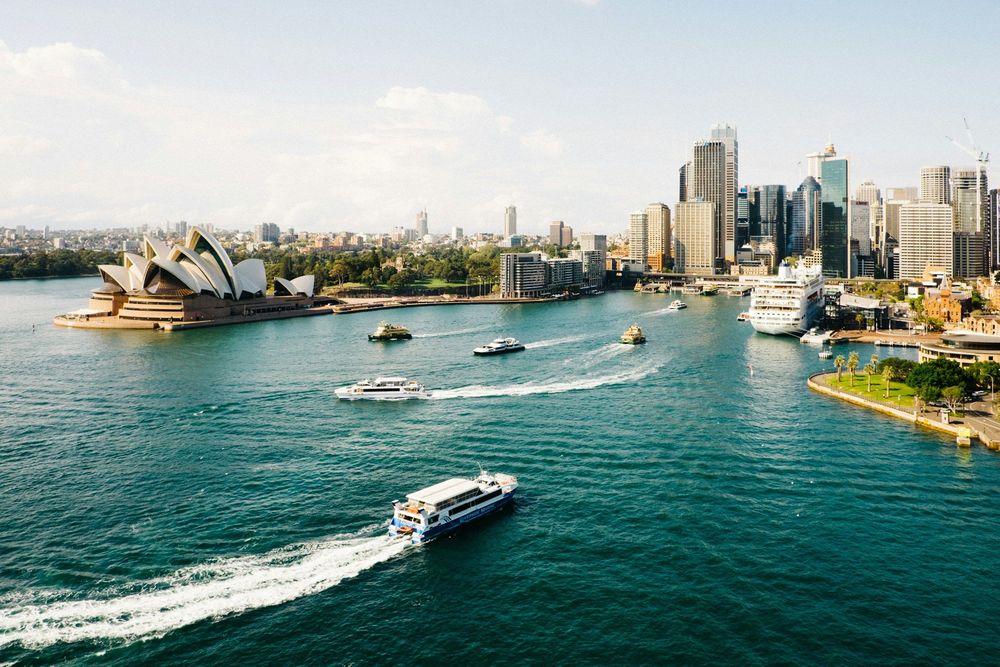
Cover photograph: Sydney Opera House, boats and waterfront skyline beside the harbour. Photo by Dan Freeman on Unsplash.
Frequently Asked Questions
What is the best time to visit Sydney for a first trip?
Start by comparing March–April and October–November for a mixture of harbour walks, culture and a coastal outing. These are editorial recommendations for a balanced visit, not guarantees of dry weather, low prices or small crowds.
When is Sydney best for a beach holiday?
December–February is the summer choice when beach time is the priority. Keep outdoor days flexible and check conditions locally. Warm weather never replaces beach signs, patrol hours and lifeguard advice.
Is Sydney worth visiting in winter?
Yes, if museums, performances, food and harbour views match your plans. June–August brings cooler conditions and shorter days, so place outdoor visits earlier and keep swimming optional.
Which month is cheapest for Sydney?
No single month is reliably cheapest for every traveller. Compare flights and accommodation together for your dates, checking school holidays, major events and cancellation conditions before deciding.

Keep Exploring
When to Visit Tokyo: Seasons and Trip Planning
Compare Tokyo's seasons by the trip you want: comfortable walks, uncertain blossom windows, summer evenings or winter culture. Turn your choice into a workable plan.

Best Time to Visit Kyoto: Seasons and Tradeoffs
Compare Kyoto's seasons by walking comfort, crowds and seasonal scenery. Plan around uncertain blossom dates, summer heat and shorter winter days.

When to Visit Los Angeles: Seasons and Trip Plans
Match Los Angeles to your trip: coastal mornings, inland sightseeing, shorter winter days and event calendars need different seasonal decisions.