
Choose a Delta cruise, island visit or Tigre town walk, with rail options, November service changes and practical return planning.
Tigre works best as a deliberate change of pace from Buenos Aires: a river journey, a waterfront walk or time browsing by the docks. The useful decision is whether you want to see the Delta from a boat, spend time at a specific island destination, or stay in Tigre town. Those are different outings, with different transport and return arrangements. A boat labelled “Delta” does not automatically include an island stop.
For a first independent visit, a short sightseeing cruise followed by either Paseo Victorica or Puerto de Frutos makes a manageable day. Choose an island lunch or recreation venue instead if spending time ashore is the main attraction. Our Buenos Aires cultural guide helps compare this excursion with another day in the city. Information was checked on 5 November 2026; timings below are editorial allowances unless identified as an operator's advertised duration.
Choose the shape of your day
| Plan | Main experience | Allowance from Buenos Aires | What to settle first |
|---|---|---|---|
| Cruise and town walk | Delta views plus waterfront | A full, flexible day | Cruise departure and return point |
| Island venue | Lunch, rest or activities ashore | Most of a day | Exact dock, booking and return boat |
| Town only | Market, architecture or museum | Half to full day | Which bank and main attraction |
| Scenic rail journey | Tren de la Costa plus a focused stop | A full day with transfers | Both rail services and connection |
These are alternatives, not four components of one itinerary. Adding an island stop, two museums, a market and a different railway for the return is likely to turn the excursion into a sequence of deadlines. Protect the experience that brought you here and treat everything else as optional.
Rail travel: distinguish Tigre from Delta station
The direct railway option is the Mitre line's Retiro–Tigre branch, ending at Tigre station. Use the official route and timetable page for current departures and fares. Do not board merely because a service says “Mitre”: other branches have different destinations. Your journey from the accommodation to the correct departure station is additional.
Dated November disruption: the operator's 3 November notice says Tigre-branch trains will run only as far south as Belgrano C from 8am on 9 November and 4pm on 10 November 2026, until security authorities permit normal service. Do not build those journeys around boarding or returning at Retiro; check the latest operation for your exact day.
A separate option uses the Tren de la Costa, between Avenida Maipú and Delta. Delta station and Tigre station are not the same terminus. The usual rail approach to Avenida Maipú involves the Bartolomé Mitre branch and a transfer to Maipú; confirm both legs independently. The Tren de la Costa route page provides the operator's information.
Choose the scenic railway because you want that journey, not because its name sounds like the quickest way to every boat. Transfers and waiting add time, and the current restrictions can affect your approach. Save the return timetable before leaving, confirm the payment method and allow a spare departure rather than relying on the day's last train.
On arrival, establish your boat plan first
If a cruise is the reason for coming, head to the Domingo Faustino Sarmiento river terminal before committing to a long walk or lunch. Find the operator on your booking, confirm the departure location and check whether you return to the same dock. A riverfront full of boats does not mean every vessel follows the same route or sells interchangeable tickets.
Ask four practical questions before paying: how long is the sailing, does it stop anywhere, what commentary or language is offered, and what happens if weather changes the service? Also check the full fare for your party rather than assuming the child policy matches another operator's. This guide does not reproduce peso prices, which can change, or claim same-day places are available.
Do not use the word “ferry” as a substitute for reading the product. A scheduled passenger boat serving island docks is transport; a circular sightseeing cruise is designed around viewing the waterways; a private transfer is another arrangement again. Each can be appropriate, but only when its route and return match your actual plans.
A short cruise: best for a first look at the Delta
For a simple introduction, choose a round-trip sightseeing sailing from Tigre. Líneas Delta Argentino advertises a traditional excursion of approximately one hour from the river-terminal area. That is one operator's published product, not a universal duration for all Delta trips. Boarding, waiting and finding the ticket office need extra time outside the sailing itself.
Use the boat journey to look at the relationship between homes, docks and water. The Delta is inhabited, not simply scenery beyond the city. Seeing houses from a boat does not give permission to land on their jetties or walk through gardens. A sightseeing circuit also does not promise wildlife sightings, swimming access or an island trail.
This version suits travellers who want the water experience without committing to a remote lunch reservation. After returning, take a break and choose one town direction. If the cruise is cancelled, decide whether the town still interests you; do not buy a different boat simply to preserve the original schedule without checking its conditions.
An island day: reserve the destination and the return
Choose an island venue when the attraction is time ashore: a particular restaurant, recreation area or accommodation offering day access. Start with that venue rather than selecting a boat at random. Ask for its exact dock name, which operator serves it, whether transport is included and which return you should plan around.
Get the answer for the date you intend to travel. A restaurant appearing on a map does not establish current opening, a free public landing or a boat stopping there whenever needed. If a package includes lunch, check what is included and how dietary requirements are handled. If it includes recreation facilities, confirm seasonal operation rather than treating photographs as a list of guaranteed activities.
A scheduled passenger launch can be useful for a confirmed destination, but an improvised “hop off and explore” plan is poor preparation for unfamiliar island docks. Agree on the return arrangement before leaving Tigre and keep the operator and venue details accessible. A missed return is more consequential when your next leg depends on a boat, so leave the evening in Buenos Aires flexible.
For mobility requirements, discuss the actual boarding step, gangway, boat interior and destination dock directly. A general statement that a venue welcomes everyone does not answer those practical questions. Water levels can change the geometry of boarding; request current information for the service you will use.
Town route one: Paseo Victorica and a museum
For architecture, riverside views and a cultural stop, choose Paseo Victorica. From the central station and river-terminal area, orient towards the crossing of the Río Tigre and continue to the promenade along the Río Luján. Check a map at the start rather than following any path labelled waterfront; the two rivers make direction matter.
Use the Museo Naval at Paseo Victorica 602 and Museo de Arte Tigre at 972 as clear landmarks along this side of town. Choose one interior if you want a relaxed outing. The national Naval Museum page explains its maritime collections and visitor information; confirm opening before making it your anchor.
The municipal museum directory places the art museum in the former Tigre Club and lists museum opening Wednesday–Sunday and holidays, noon–6pm, with the ticket office closing at 5:30pm. Gardens have separate hours. Check the programme and admission again; access to the surrounding grounds does not mean the galleries are open.
Allow roughly 2–3 hours for a promenade, one focused museum and pauses, excluding any cruise. This is an editorial estimate, not a measured complete walking circuit. Decide where to turn back according to your energy and return transport. The art museum's building can be the architectural endpoint without requiring a second full exhibition visit after the Naval Museum.
Town route two: Puerto de Frutos
Choose Puerto de Frutos if browsing, homewares and a meal matter more than galleries. It lies in a different direction from the Victorica museum route, so avoid treating it as the next doorway along the same promenade. From the terminal area, set your map to the market rather than wandering until the shops look right.
The municipality's Puerto de Frutos description identifies today's mixture of crafts, furniture, decoration, regional products and food around the docks. The historic name should not lead you to expect only a fresh-fruit market. Individual businesses set their own trading arrangements; public access to the area does not guarantee that every shop is open.
Allow 1–2 hours for selective browsing, longer if you eat or shop seriously. Think about the return journey before buying something bulky. If shopping is not an interest, a brief look may be sufficient; there is no reason to spend the entire afternoon here because it is a familiar name on excursion lists.
Weather, pace and the return to Buenos Aires
A useful day bag includes sun protection, water, a light layer for the boat and protection for belongings if the weather changes. Wear shoes suited to walking and boarding. Check the operator's current weather decision rather than assuming a sunny city forecast guarantees every sailing.
For a first visit, one sensible sequence is railway, confirmed short cruise, lunch and either Victorica or the market, then the return train. For an island booking, remove the town ambitions first. For a town-only day, choose the museum or market before setting out and leave the boat entirely optional.
If what you really want is outdoor time with less transfer planning, compare our Costanera Sur walking guide. Tigre earns its place when the waterways or a specific riverside experience appeal. It need not be included merely to say you left Buenos Aires, and it should not depend on squeezing the last possible boat into a tightly booked evening.
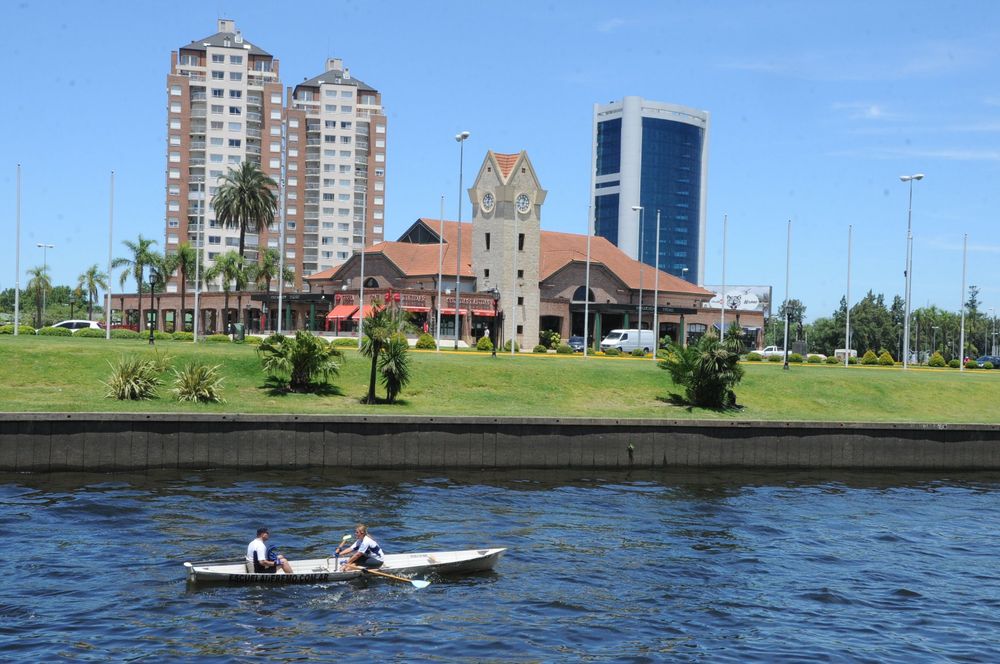
Cover photograph: Tigre railway station across the Río Tigre, with two rowers in the foreground — Archive photograph; no edits to the downloaded file — Tigre Municipio, CC BY 2.0.
Frequently Asked Questions
Can I visit Tigre independently from Buenos Aires?
Yes. Choose the railway and a specific town or boat plan, then verify current service. November 2026 includes dated restrictions affecting the normal Retiro approach.
Are Tigre and Delta the same station?
No. Tigre is the Mitre branch terminus; Delta is the Tren de la Costa terminus. Check which one your route uses and how you reach your boat or attraction from there.
Does a Delta cruise include an island stop?
Not automatically. A circular sightseeing trip and transport to an island venue are different products. Confirm stops, dock names and the return before buying.
Should I choose Paseo Victorica or Puerto de Frutos?
Choose Victorica for a riverfront walk, architecture and a museum; choose Puerto de Frutos for shops, crafts and browsing. They are different directions, so prioritise one after a cruise.


Keep Exploring
Palermo Buenos Aires: Choose Your Neighbourhood Walk
Choose between Palermo Soho, Hollywood and the parks, with practical walking plans, transport checks and room for a proper café stop.
MALBA Buenos Aires: Plan Your Museum Visit
Plan a MALBA visit with collection highlights, current exhibitions, opening days, ticket choices, accessibility and practical bag rules.
Things to Do in Buenos Aires: Culture and Neighborhoods
Find your cultural starting point in Buenos Aires: compare neighborhoods, choose between museums and decide when a theater visit or tango evening deserves priority.