
Buenos Aires Botanical Garden: Plan Your Walk
Choose a Carlos Thays Botanical Garden route, with seasonal hours, last entry, weather closures and the greenhouse access to check.
The Carlos Thays Botanical Garden is a good Buenos Aires choice when you want to look closely at plants without turning the day into a long excursion. Its Palermo setting makes it easy to combine with another nearby interest, but the garden deserves a purpose of its own: Argentine trees, plant collections, sculpture or a quiet hour following one thematic path.
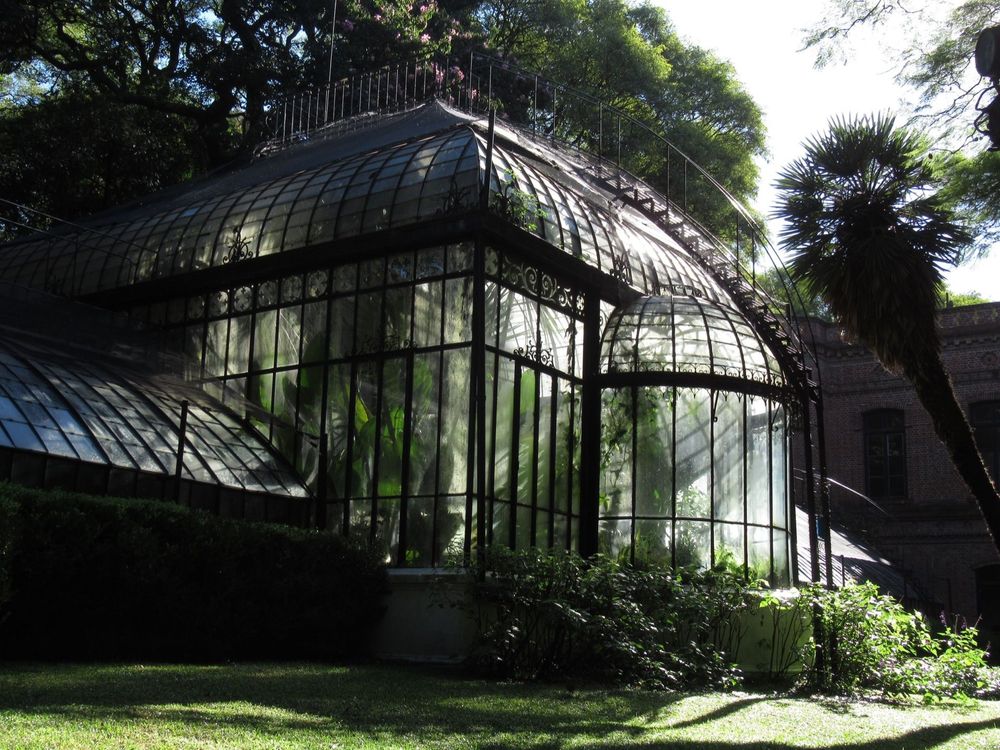
Plan around the outdoor garden. The main greenhouse is listed as closed for maintenance in the city’s activities information checked on 13 November 2026, and access to other indoor spaces needs separate confirmation. A photograph of its iron-and-glass architecture is not a promise that you can enter it. If the greenhouse interior is the only reason you want to come, verify reopening before traveling.
For the wider city, our Buenos Aires culture and neighborhoods guide helps choose the rest of the day. Here the decision is smaller: which garden experience suits your time, interests and conditions?
Choose a garden visit
| Your interest | A useful focus | Suggested time |
|---|---|---|
| A short green pause | One area, plant labels and a place to sit | About 45–60 minutes |
| Plants and conservation | A thematic route with time to observe | About 90 minutes |
| Art and garden design | Sculpture, the historic house exterior and contrasting layouts | About 90 minutes |
| A guided or family activity | The confirmed activity plus independent browsing | Around 2 hours, depending on the program |
These are editorial allowances, not official route lengths. They exclude travel and do not imply that every program runs daily. A shorter visit can be worthwhile if you choose one theme; a longer one is useful when you want to read, compare leaves or spend time watching wildlife without expecting a particular sighting.
Opening hours: closing and last entry are different
The city’s garden page gives seasonal hours and free admission. Use the last-entry time when planning arrival, not just the closing time.
| Season | Tuesday–Friday | Saturdays, Sundays and holidays | Last entry |
|---|---|---|---|
| 22 September–21 March | 08:00–19:00 | 09:30–19:00 | 18:30 |
| 22 March–21 September | 08:00–18:00 | 09:30–18:00 | 17:30 |
Monday is outside the regular visiting schedule. The city also lists closures on 1 January, Good Friday, 1 May, 21 September, Municipal Employee Day and 25 December. Check the actual calendar when one of those occasions falls within your trip; a public holiday in the opening-hours table does not override a specifically named closure.
Give yourself more time than the final half-hour. Entering before the cutoff still leaves little opportunity to settle into a route. If you only have a late gap between bookings, decide whether a brief look is enough or whether a different day would let you enjoy the garden properly.
Weather can close the whole garden
The official page states that strong winds, rain and persistent drizzle can close the garden for safety. This is therefore a poor automatic replacement for another outdoor activity canceled by bad weather. Being in the middle of a city does not remove the practical consequences of trees, branches and wet paths.
Check the garden’s latest information before setting out, especially after unsettled weather. A forecast that improves later is not confirmation that the gates have reopened. If access is suspended, use an independently checked indoor alternative rather than waiting at a closed entrance with an inflexible onward reservation.
On a warm, settled day, bring what you need for a comfortable outdoor walk and choose the amount of walking realistically. Shade can make pauses more pleasant, but it does not eliminate heat. Keep the plan modest if anyone is already tired from the city. The garden is most useful as a change in pace when you actually allow that change to happen.
Arrive at a visitor entrance, not just the perimeter
The national heritage description places the garden between Avenida Santa Fe, Avenida Las Heras and República Árabe Siria, with the address Avenida Santa Fe 3951. Use that address and the current visitor signs to orient your arrival. A triangular green area on a map has more perimeter than a single entrance pin suggests.
Do not assume every historic gate is open whenever the garden is open. Follow the available public entrance and ask staff about your exit before planning a through-walk. If step-free access or a short distance from a vehicle is important, confirm the usable gate and internal route directly; the existence of several entrances does not establish an accessible route between all of them.
At the entrance, look for the information board and choose your route before wandering far. It is also the right moment to ask about temporary path restrictions, restrooms and the day’s activities. Plan food outside the collection rather than treating the garden as a picnic venue. Follow the current entry rules and keep children with the adults responsible for them.
Follow a theme instead of every path
The city publishes self-guided botanical routes, accessed through a QR code on the information board beside the main entrance. The current themes include Río de la Plata trees, art and nature, urban ecological corridors, the origins of notable garden plants and female figures in the sculpture collection.
Choose the Río de la Plata tree theme if you want a stronger connection with the region. Look at leaf shapes, bark and branching patterns before reading the label, then use the information to refine what you noticed. You do not need to memorize scientific names for the visit to be worthwhile. Learning to recognize a few differences will also change how you see trees in the surrounding streets.
The urban ecological-corridor theme suits visitors curious about how small green areas support life within a large city. Watch the relationships between plants, insects and birds instead of seeking a single impressive specimen. Stay on the permitted paths, avoid handling wildlife and allow an observation to remain incomplete if an animal moves away.
For a mixed group, art and nature can provide a shared subject even when not everyone enjoys botany. Agree on one route first and leave additional sections optional. Repeating a short stretch to look more carefully can be more rewarding than pushing on merely to cover new ground.
Collections and design tell different stories
The official collections overview explains that some plants are organized by geographic origin, while another sector groups them by botanical family. That is a useful distinction when reading the layout: adjacent specimens may be related through origin or classification, not simply chosen to make a decorative display.
Use the Argentine flora areas to understand the garden’s local purpose, then compare a contrasting collection that interests you. Palms, cacti or other groups may reward a focused look, but do not assume every specialist collection is freely accessible just because it appears in the garden’s scientific description. Ask which areas are open for general visitors.
The heritage account describes a combination of formal geometry and more curving, picturesque paths, with sculpture and the historic brick house contributing to the composition. Notice how the experience changes between a straight view and a winding route. The house’s exterior can be appreciated as part of that layout without assuming the building is open for a museum visit.
There is no need to turn this into an architectural survey. Pick a contrast that you can actually see: straight versus curved paths, a plant viewed alone versus in a group, or sculpture framed by foliage. Those observations give the visit substance without requiring a long list of dates.
Greenhouse, interpretation center and butterflies
The garden’s activities agenda lists the main greenhouse as closed to the public for maintenance at the check date. Treat its exterior as the dependable architectural subject only where the surrounding path is open. Do not plan an indoor tropical walk or repeat older advertised greenhouse tour times without confirming reopening.
The interpretation center also needs a current check. The activities page carries a maintenance-closure notice, while a city article describes its educational displays. Ask whether it is available on your date rather than relying on the article as proof of access. Its existence and its operational status are separate matters.
For the butterfly garden, the specific visitor page directs visitors to the on-site noticeboard for opening times. This is an outdoor planting that attracts butterflies, not a guarantee of a scheduled encounter. Weather, season and animal behavior affect what you see. If it is open, take time to look without chasing insects or stepping into planted areas.
The agenda advertises general guided walks on weekends and holidays at 10:30 and 15:00 without advance registration. Confirm that day’s arrangements when you arrive, including language and meeting point. A listed activity remains subject to the garden being open and to any operational changes; it should add to a visit that already works independently.
Pair it with one nearby interest
The botanical garden is a defined collection visit. It is different from a broad Palermo neighborhood walk, the separate Japanese Garden and the larger landscape of Costanera Sur. Choose according to the experience you want rather than treating all green places as interchangeable.
A practical combination is the garden followed by a meal or café chosen by its actual address. If you add another attraction, check its opening and transfer separately. “Palermo” covers more ground than a compact garden itinerary; a saved restaurant in another part of the neighborhood may require a deliberate journey.
For a low-cost day, our free Buenos Aires guide offers other options with their own conditions. Keep the garden as one focused block, then change the kind of attention you ask of yourself. Plants followed by a seated break often make more sense than another long walk added automatically.
Cover photograph: Iron-and-glass greenhouse exterior at the Carlos Thays Botanical Garden — Felipe Restrepo Acosta, CC BY-SA 4.0. Archive photograph taken on 28 May 2019; proportionally resized. The photograph remains under CC BY-SA 4.0.
Frequently Asked Questions
Is the Carlos Thays Botanical Garden free?
Yes. The city lists free admission. Check opening days, last entry and weather notices before traveling; free entry does not mean unrestricted access at all times.
Can I go inside the main greenhouse?
The official activities agenda checked on 13 November 2026 lists it as closed for maintenance. Confirm reopening directly before making the interior the reason for your visit.
Does the garden stay open in rain?
Do not assume so. The city states that strong winds, rain and persistent drizzle can cause closure for safety. Check current access before setting out.
How long should I allow?
Allow about 45–60 minutes for one short area, around 90 minutes for a thematic visit or roughly 2 hours with a confirmed activity. These are planning estimates, not official tour durations.


Keep Exploring
Buenos Aires Japanese Garden: Plan Your Visit
Choose a Japanese Garden walk or guided visit in Palermo, with current resident and visitor prices, rain rules, access and meal arrangements.
New York Botanical Garden: Plan Your Visit
Choose NYBG tickets, a forest or exhibition route, and the right Bronx arrival, with current tram limits and the 2026 Holiday Train Show dates.
Rio Botanical Garden: Plan Your Visit
A focused Jardim Botânico visit: paid arboretum versus free museum, themed plant routes, Wednesday opening and practical food and access choices.