
Recoleta: Cemetery, Museums and a Neighbourhood Walk
Choose a cemetery visit, a substantial art stop and a manageable Recoleta walk, with admission distinctions and alternatives for rain or limited time.
Recoleta works best as a cemetery visit followed by one substantial museum or a neighbourhood walk. For a first visit, start around the cemetery and Basílica del Pilar, pause for lunch, then choose Bellas Artes or the streets around Avenida Alvear. Adding every northern Buenos Aires attraction turns a coherent outing into a series of transfers.
The important admission distinction is between residents and international visitors: do not assume that a free guided tour means free cemetery entry. Nor should the cemetery's arrangements be applied to the cultural centre or other museums. Each venue has its own conditions.
| Your priority | Main stop | What to add | What to leave for another day |
|---|---|---|---|
| Argentine history and memorial architecture | Recoleta Cemetery | Pilar basilica exterior and a café | A second distant neighbourhood |
| Paintings and sculpture | Museo Nacional de Bellas Artes | A shorter cemetery visit | Another major art museum |
| Streets and a relaxed lunch | Junín and Avenida Alvear | The cemetery if it interests you | A complete museum collection |
| Limited outdoor time | Bellas Artes when open | A meal nearby | The exposed Floralis extension |
Allow 4–5 hours for a cemetery visit, lunch and a focused museum or street walk. All durations recommended here are editorial planning estimates, not official tour lengths. Travel from your accommodation is additional. This guide covers the Recoleta outing; use our Buenos Aires culture guide to decide how it fits with other neighbourhoods.
Start with the cemetery's admission rules
The city's Spanish cemetery page lists tourist visiting hours of 9:00–17:00 daily and links to official ticketing. Plan within that tourist window, leaving enough time before closing to finish your route. Confirm holiday arrangements and any access notice before travelling.
The city's explanation of cemetery visits distinguishes paid entry for foreign visitors from free entry for national residents. That announcement is dated 2024: use it to understand the distinction, not as a current peso quotation. Consult the official ticket link for the amount and conditions applying to your visit. Residents should bring the identification needed to establish eligibility; if your status is unclear, ask before purchasing.
A guided visit and admission are separate questions. Before booking a private tour, check whether the cemetery ticket is included, the meeting point and the language. If joining a city tour, confirm its current departure and capacity. A free guiding service does not automatically remove an admission charge for an international visitor. Avoid buying overlapping products because both use the word “entrance”.
Give the gate and orientation some room in the plan. Have any required ticket available, then obtain a map or locate the visitor information before entering the lanes. If there is a queue, shorten the later street extension rather than sprinting through the cemetery. This is the stop that benefits most from knowing what you are looking at.
Visit a few memorials with attention
Budget 60–90 minutes for an independent introductory visit. Choose a small group of memorials rather than attempting to find every famous name. Eva Perón's resting place in the Duarte family vault is an obvious historical anchor; the Paz family mausoleum and Rufina Cambaceres monument provide different architectural subjects. The official English introduction identifies these monuments and describes the range of styles.
Use the map to connect them, then let nearby sculpture, inscriptions and ironwork hold your attention. The distinction between an elaborate family monument and a comparatively restrained façade is part of the experience. You do not need an exhaustive list of politicians to appreciate the choices families made about commemoration, status and religion.
If Eva Perón is your main reason for coming, locate the Duarte vault early, then explore the rest at your own pace. Do not spend the whole visit following the largest group and assume it will lead you there. For deeper political history, a guide can supply context that a photograph cannot; choose that format before arrival so the tour timetable anchors the morning.
Remember that this remains a cemetery. Keep voices low, do not enter vaults or cross barriers, and give people visiting family graves space. Photograph architecture without obstructing narrow passages. Stories about particular burials are often repeated as folklore; distinguish a documented biography from a dramatic anecdote rather than treating every tour story as established fact.
Keep the Pilar stop short and respectful
On leaving, stay on Junín for the white Basílica Nuestra Señora del Pilar. Its position beside the cemetery helps explain the neighbourhood's origins. The national heritage description connects the church, the former Recollect convent and the neighbouring cultural centre, and identifies the baroque altars among its interior features.
Allow 15–30 minutes for the exterior and, if permitted at the time, a quiet look inside. Worship takes priority over sightseeing. If a service or restricted access prevents entry, the exterior still makes a useful architectural stop; there is no reason to wait outside until it disrupts the museum visit.
Treat any cloister, museum or special visit as a separate activity with its own opening and admission conditions. A church door being open does not establish access to every associated space. The practical plan here needs only the basilica exterior, so it remains workable when interiors are unavailable.
The nearby Centro Cultural Recoleta is another possible stop, but choose it from its current exhibition programme. A cultural centre offers changing exhibitions and events; Bellas Artes offers a substantial art collection. They are not interchangeable simply because both occupy buildings you can visit. Check the cultural centre's own admission category, programme and hours before replacing the museum block with it.
Bellas Artes: choose a collection route
For an art-focused afternoon, cross toward Avenida del Libertador and make Museo Nacional de Bellas Artes your main indoor stop. The museum's official pages identify Argentine and European art on the ground floor and Argentine and international art on the first floor. Its published regular schedule closes on Mondays, so put this version of the outing on another day and check exceptions.
Allow 90–120 minutes for a selected route. Begin with the section you most want to see, rather than walking every gallery in order and running out of attention before reaching it. Visitors interested in Argentina should protect time for Argentine works instead of treating them as an appendix after familiar European names. Temporary exhibitions can change that balance; choose one deliberately.
Before entering, decide whether the museum is the day's main event or a short complement to the cemetery. If it is the main event, have lunch first and keep the later walk optional. If the cemetery absorbed more time than expected, select a smaller gallery route. A slow encounter with a few works is a more satisfying use of the afternoon than a hurried circuit of every floor.
The collection catalogue is useful for preparation but does not guarantee that a particular work is on display. Check current exhibitions and ask at the entrance about the rooms you want. Confirm access arrangements directly if lifts, seating or a step-free route are essential to your visit. Do not infer a complete accessible route from the fact that a building is a national museum.
Choose the green-space extension or Avenida Alvear
After Bellas Artes, the outdoor extension toward Floralis Genérica suits visitors who want fresh air and a large-scale sculpture. Follow pedestrian crossings across the broad roads rather than taking a straight line on a map. Build the return journey from the place you actually finish, especially if you no longer want to walk back to the cemetery.
The city's Floralis description identifies Eduardo Catalano as its creator and explains the hydraulic concept behind the flower. Go for the sculpture and setting; do not make a precise petal movement the condition for a worthwhile visit. Operations, maintenance and weather can affect what you see. Allow 30–45 minutes for a look and a pause, excluding the walk from the museum.
For streets and façades instead, return toward the cemetery area and choose a short stretch of Avenida Alvear and its surrounding streets. This option pairs more naturally with a café than with another ticketed attraction. Look up at entrances and rooflines, but respect private buildings: an attractive doorway is not an invitation to enter.
Choose between these extensions when leaving the museum. Adding both can be reasonable on a long, relaxed day, but neither is essential to understanding Recoleta. El Ateneo Grand Splendid and Malba belong to separate extensions requiring their own time and access checks. They are not hidden inside the walking allowance above.
Lunch, weather and the version that fits
Place lunch between the cemetery and your afternoon choice. Look at the menu and seating before committing, particularly around the busiest visitor frontage. A café stop and a full meal require different time; choose a simple meal if gallery time is the priority. Carry water for the outdoor sections rather than assuming refreshment stops inside the cemetery.
In sustained rain, make Bellas Artes the anchor when open and reduce the cemetery or move it to another day. A cemetery lane and a sculpture lawn are outdoor environments, even when surrounded by cultural buildings. On a Monday, a café and street walk can still work, but they are not an equivalent indoor substitute for a closed museum. Recheck the cultural centre separately if considering it.
With children or anyone who tires of standing, choose fewer monuments and make the pause a real seated break. For limited mobility, ask venues about the exact route, surface and facilities needed; keep road crossings and travel between entrances separate from time spent looking around. A shorter route around Junín may work better than pursuing every extension.
If you are fitting Recoleta into a larger stay, our Buenos Aires itinerary explains the citywide sequence. Keep this neighbourhood's main choice intact: cemetery plus art, or cemetery plus streets. Extra travel should replace an activity, not quietly consume the time reserved for it.
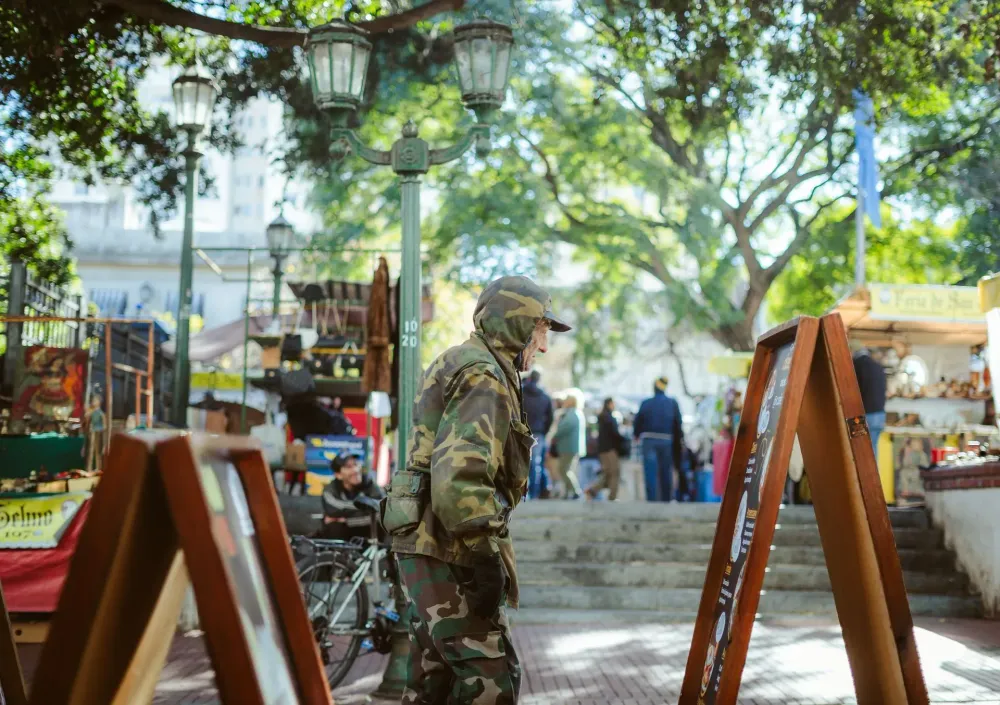
Cover photograph: Outdoor market stalls and pedestrians in Recoleta, Buenos Aires. Photo: Andres Alaniz / Pexels.
Frequently Asked Questions
Is Recoleta Cemetery free for foreign visitors?
Do not assume so. The city distinguishes paid admission for foreign visitors from free entry for national residents. Check the current official ticket conditions, and establish separately whether a guided tour includes admission.
How long should I allow for Recoleta?
Our planning estimate is 4–5 hours for the cemetery, lunch and a focused museum or neighbourhood walk, plus travel from your accommodation. A substantial second museum needs additional time.
Should I choose Bellas Artes or the cultural centre?
Choose Bellas Artes for its art collection; choose Centro Cultural Recoleta for a current exhibition or event that interests you. Check each venue's programme and admission conditions independently.
Does this walk work on Monday?
The cemetery and an exterior neighbourhood walk can form a Monday outing, subject to current access. Bellas Artes normally closes that day. Do not count on another cultural venue without checking its own calendar.

Keep Exploring
Kampong Glam: A Neighbourhood Walk
Choose a compact Kampong Glam walk, understand mosque visiting arrangements and leave time for Malay heritage, independent shops and a meal.
Gion: A Respectful Neighbourhood Walk
A manageable Gion walk through the Shirakawa area, Yasaka Shrine and Hanamikoji, with public access, private boundaries and cultural visits kept clear.
Ueno Park: Choose Museums and a Walk
Make Ueno a manageable Tokyo outing: choose one museum, check its actual exhibitions and closures, then connect the park, Shinobazu Pond and an optional meal.