
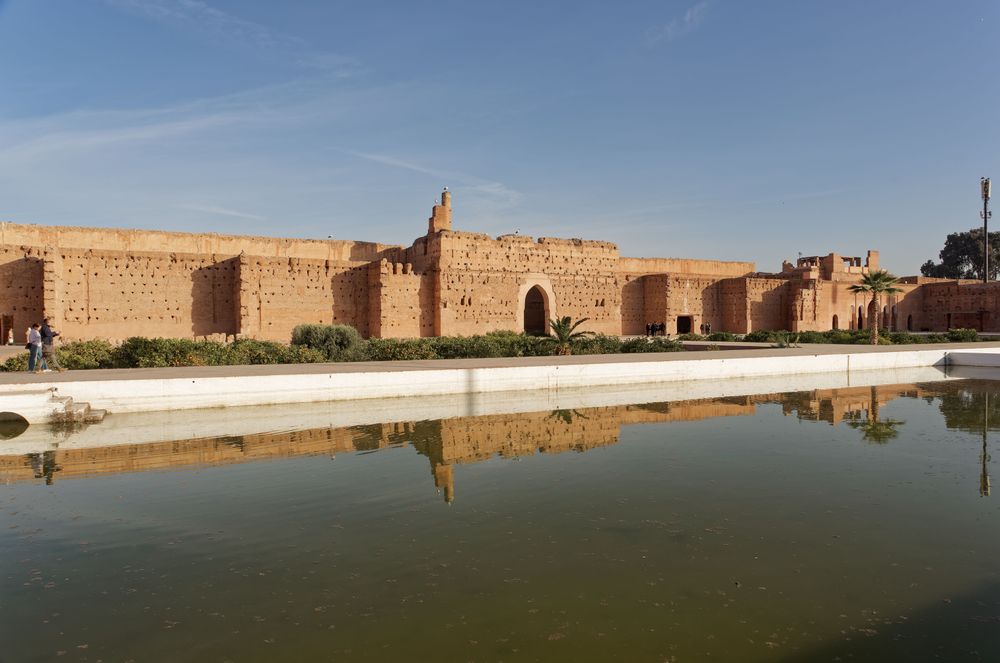
Plan El Badi Palace with verified admission categories, an outdoor route, the minbar access question and a practical comparison with Bahia.
El Badi Palace is the Marrakech visit to choose when you want to understand a building through its surviving footprint: broad water basins, sunken planting and walls that make people look small. Give it about 60–90 minutes, preferably before the hottest part of the day, and arrive expecting a palace ruin rather than a sequence of furnished rooms.
The practical decision is whether that outdoor experience deserves a place alongside Bahia Palace, or should replace it. This guide helps you make that choice, read what remains and avoid using an old admission price. For the wider selection of monuments and neighbourhoods, start with our first-visit Marrakech guide.
Fast facts
| Detail | Planning information |
|---|---|
| Location | Ksibat Nhass, southern medina, near Place des Ferblantiers |
| Published hours | 09:00–17:00; confirm the day's last admission and any restricted sections |
| Foreign visitors | Adult 100 MAD; children aged 7–13: 50 MAD |
| Moroccan or resident tariff | Adult 30 MAD; children aged 7–13: 10 MAD |
| Suggested visit | 60–90 minutes, excluding queues and the walk there |
| Best fit | Palace layout, outdoor ruins, architectural photography |
Tariffs and published hours were checked on 28 October 2026 using the Moroccan Ministry of Culture's Palais Badii ticket page. Durations and routing suggestions below are editorial estimates, not operator promises. Prices are in Moroccan dirhams; no fixed euro conversion is implied.
Buy for the right visitor category
The ministry distinguishes foreign visitors from Moroccan visitors and residents. Select the category that applies to you and carry evidence if claiming a resident or age concession. Its displayed child categories cover ages 7–13; confirm the treatment of younger children rather than inferring it from a different monument's rules.
The same page advertises free admission for Moroccans on Fridays and the first days of national and religious holidays. This is not a universal free-Friday offer for tourists or necessarily the same benefit as the resident tariff. If it matters to your budget, verify eligibility and required identification before planning around it.
Use the official page to check the current sale options. A reseller's walking tour, transport package or guided visit can include services beyond admission, so compare what is actually supplied. Do not assume that buying a tour is necessary to enter or that an online purchase automatically removes every queue. We have verified the displayed tariffs, not completed a test purchase or secured admission for a particular date.
There is also a useful source caveat: the historical description on the ministry's Badii ticket page appears to describe Bahia Palace. Use its labelled ticket fields for admission, but do not use that paragraph to identify what you will see. Official pages can contain copied text, and the two similarly named palaces are easy to confuse when booking quickly.
Find the entrance before starting the walk
The regional tourism board places El Badi at Ksibat Nhass. Save that location, the palace name and your accommodation's return address before leaving. Look for El Badi or El Badii, not simply “the palace”; Bahia is a separate attraction nearby.
From the Jemaa el-Fna area, the southern medina provides a natural approach toward Place des Ferblantiers and the palace. Treat any mapping-app walking time as a minimum: narrow streets, shop browsing and finding the correct entrance all add time. Give yourself a buffer before any onward reservation rather than promising to cross the medina in an exact number of minutes.
If arriving by taxi, agree a usable drop-off point and the fare or meter arrangement before departure. A vehicle cannot necessarily deliver you to the precise pedestrian entrance. For someone who finds walking difficult, the final approach matters as much as the distance from their hotel; ask accommodation staff to help explain the entrance you need.
Make El Badi the anchor of a southern-medina outing. Crossing town immediately afterward for a tightly timed garden ticket is possible only if you leave adequate transport margin, and it often turns a thoughtful visit into clock-watching.
How to read a palace with its rooms missing
Begin with the whole composition. Stand where you can follow the long axes of the courtyard, then notice how the basins and planting divide the open ground. The space is easier to understand as a planned arrangement of gardens, water and reception areas than as an empty square with walls around it.
Choose three things to examine closely: an opening in the wall, the relationship between a planted area and its surrounding walkway, and a surviving change in ground level. Move between them slowly. Looking back across the same space from another side reveals relationships that a single panoramic photograph can flatten.
The UNESCO listing for Marrakech's medina explicitly includes the ruins of Badi Palace among the city's significant monuments. That context matters: the value of the site does not depend on every room surviving in decorative condition. Its scale and organisation form part of a broader historic urban landscape.
Do not invent a function for every recess or room. Use on-site labels, a reliable plan or a qualified guide to distinguish documented interpretation from imagination. If hiring a guide, ask for an explanation of the palace's layout and changes over time; a tour made mostly of photo stops adds less to this particular site.
A simple 60–90-minute visit
For the first 10–15 minutes, orient yourself and identify the accessible route. Check signs or ask staff about any closed areas, the location of the minbar display and whether an elevated viewpoint is open. Those answers determine the order better than following an old online map without adjustment.
Spend the next 30–40 minutes on the courtyard and surrounding remains. Walk one side, cross only on permitted routes and compare the view from the opposite side. You do not need to inspect every wall to understand the geometry, but rushing straight from entrance to exit misses the main reason to visit.
Use the remaining time for displays or viewpoints that are actually accessible. If stairs, heat or a closure make an extra section unsuitable, shorten the route without treating the visit as incomplete. The courtyard is the core experience; the plan should not depend on reaching every upper level.
Leave a little unallocated time for sitting down afterward. This is particularly useful if you have already spent the morning walking or want to continue to another monument. The suggested duration is a comfortable planning allowance, not a minimum you must fill.
Ask about the Koutoubia minbar
A minbar is a pulpit used for delivering a sermon; it is not a minaret. El Badi is associated with the historic minbar from the Koutoubia Mosque, a work whose delicate craftsmanship creates a striking contrast with the palace's broad open spaces.
The Metropolitan Museum's publication on the minbar documents its beginnings in Córdoba around 1137 and the joint Moroccan–Met conservation project. It records the restored object at Badi Palace. This is evidence of the object's history and display location, not a guarantee that its room is open during every visit today.
Ask at admission whether the display can be visited and whether a separate charge or restriction applies. No current minbar supplement was independently confirmed for this guide. If seeing it is your main reason for coming, obtain that answer before paying. When access is available, look for the relationship between carved surfaces, inlay and repeating geometric patterns, rather than judging the object only by its size.
El Badi or Bahia: choose by what interests you
Choose El Badi if you enjoy archaeological remains, broad compositions and reconstructing a vanished building in your mind. Choose Bahia if your main interest is decorated interiors, ceilings and close examination of surface detail. Our Bahia Palace guide explains that separate visit.
If you have a full morning and a strong interest in architecture, the pair can work because they offer contrasting ways of looking. Start with the more exposed visit when conditions are cooler, pause between them and treat each ticket separately. Geographic proximity does not make the visits interchangeable or create a combined ticket.
With children or companions who prefer variety, one palace followed by a meal or neighbourhood walk may work better than two consecutive historical sites. Let everyone choose something to look for: the shape of a basin, a doorway that frames another wall, or a bird on a distant parapet. Keep that activity observational rather than turning the ruins into a climbing area.
Heat, photographs and practical limits
Bring water, sun protection and shoes suitable for uneven surfaces. The open courtyard can be demanding in strong sun, so judge your visit by the actual forecast rather than the calendar alone. Earlier arrival is a comfort strategy, not a promise of an empty monument.
For photographs, start with a wide view that shows the relationship between walls, water and planting. Then choose one detail. Water levels, light and access can differ from the cover photograph, which documents the subject rather than today's exact conditions. Keep paths clear and do not step into planted areas to reproduce a composition.
The tourism board mentions storks nesting on the walls. Watch from a distance if they are present, without treating wildlife as a guaranteed attraction. Avoid approaching nests or using food to draw birds toward you; the architecture remains the reason to plan this visit.
We did not find a sufficiently detailed current accessibility statement to promise a complete step-free route. Ask specifically about the entrance, surfaces, toilets, resting places and stairs to any viewpoint. A description such as “mostly outdoors” answers none of those questions. Visitors with particular needs should confirm the usable route before committing.
Finish in the same part of the medina
After the palace, Place des Ferblantiers is a useful place to regroup before choosing the next stop. Decide between Bahia, the Mellah area or a return toward Jemaa el-Fna according to your energy, rather than adding all three automatically.
For a short visit, the strongest plan is often El Badi, a meal and a slower walk through the surrounding streets. That leaves room to notice how the monumental enclosure sits within a living neighbourhood. Check restaurant menus before sitting down and allow time to return to your accommodation without relying on a last-minute rush.
Before leaving for the day, confirm the palace name, current tariff, opening arrangements and any display you consider essential. Once those are settled, the visit needs relatively little scheduling: time to look, suitable weather and realistic expectations do most of the work.
Cover photograph: El Badi Palace walls reflected in a courtyard basin in Marrakech — Photograph from 2025; resized for display. — Jakub Hałun, CC BY 4.0.
Frequently Asked Questions
How much does El Badi Palace cost?
On 28 October 2026 the ministry listed foreign adults at 100 MAD and foreign children aged 7–13 at 50 MAD. Moroccan or resident rates were 30 MAD and 10 MAD respectively. Check eligibility and current prices before purchase.
How long should I allow for El Badi?
Allow about 60–90 minutes for the courtyard, accessible remains and optional displays, plus your journey and any queue. This is an editorial estimate; heat, mobility and closures may change the route.
Is El Badi better than Bahia Palace?
El Badi suits visitors interested in ruins and spatial scale. Bahia suits decorative interiors and craftsmanship. Choose by interest, or combine them with a break if architecture is a priority.
Is the Koutoubia minbar always included?
The minbar is documented at El Badi, but current access and any separate charge were not confirmed. Ask staff before buying if seeing it is essential to your visit.


Keep Exploring
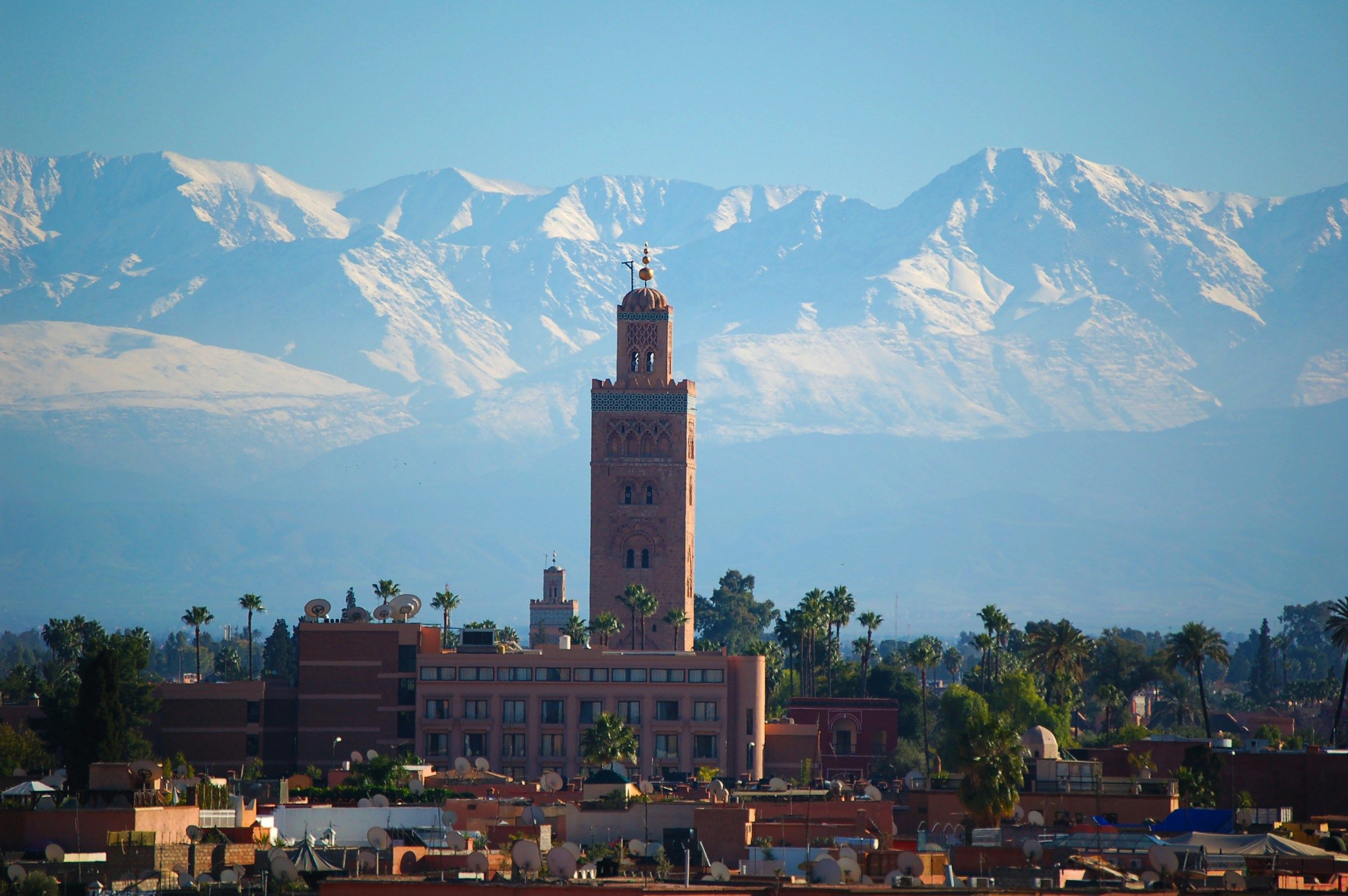
Bahia Palace: Plan Your Visit in Marrakech
Look closely at Bahia’s painted ceilings, carved plaster and courtyards, then decide whether to add El Badi, the Mellah or a nearby food museum.
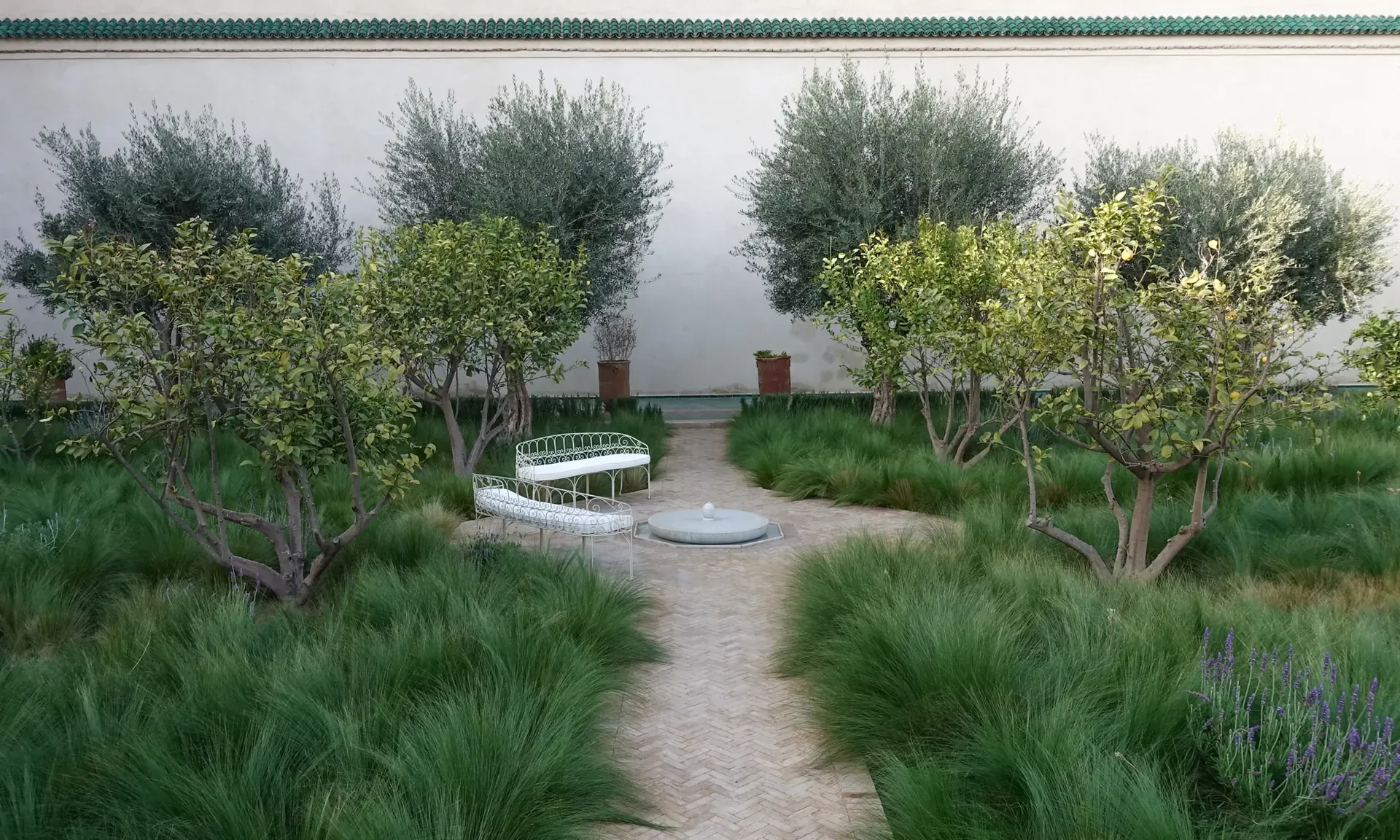
Le Jardin Secret: Plan Your Marrakech Visit
Plan a focused Le Jardin Secret visit in Marrakech's medina: compare the two gardens, follow the historic water system and decide whether the tower adds enough to your visit.
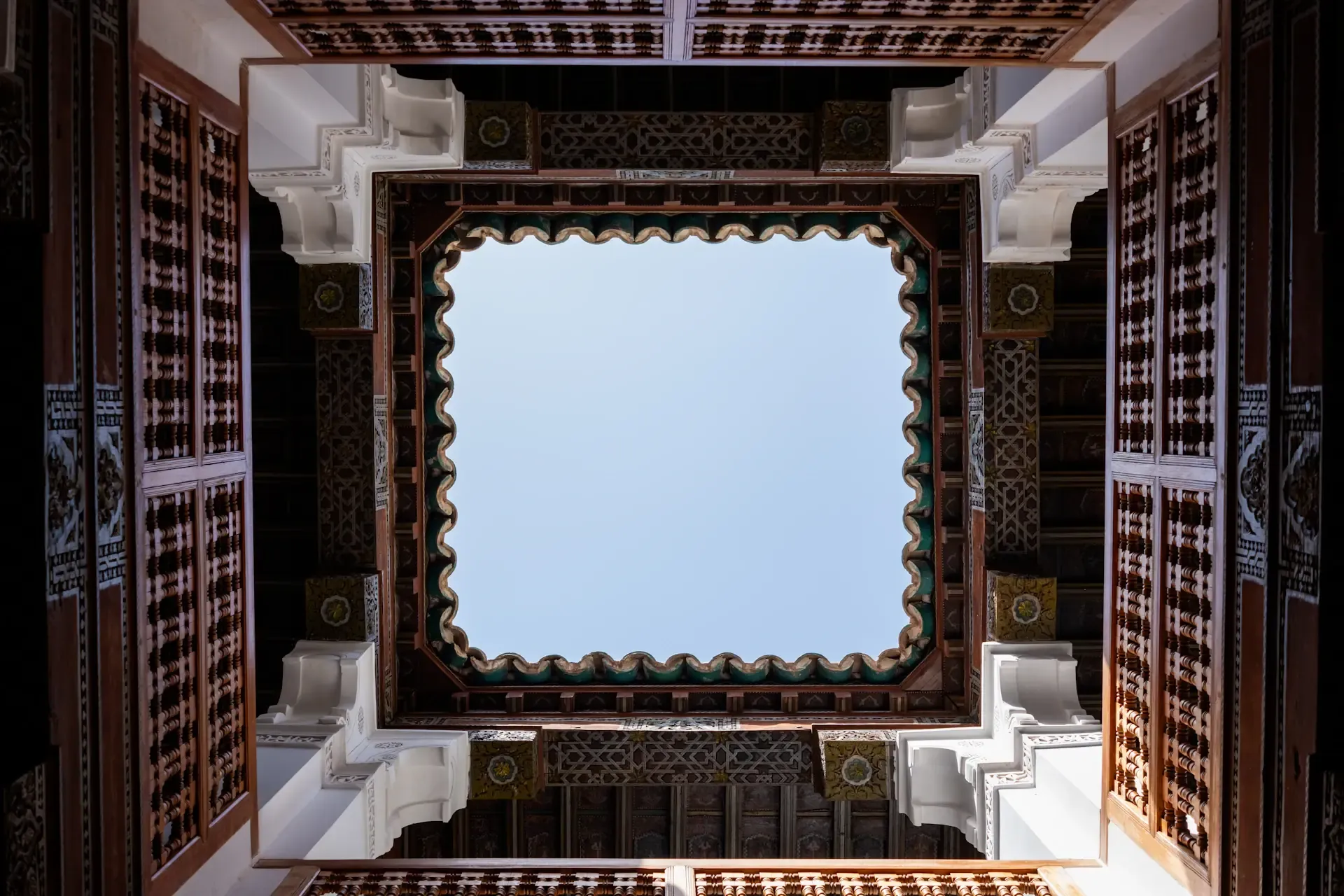
Ben Youssef Madrasa: Plan Your Marrakech Visit
Plan Ben Youssef Madrasa with verified ticket information, opening hours, architectural details and practical advice for your Marrakech visit.