
Things to Do in Marrakech: A First-Visit Guide
Plan a first visit around the Marrakech experiences you actually want: decorative palaces, garden walks, photography, souks and Moroccan cooking.
For a first visit to Marrakech, build your shortlist around the medina and Jemaa el-Fna, one architectural landmark, and a garden or museum that matches your interests. Bahia Palace suits visitors drawn to decorative interiors; El Badi suits those who enjoy exploring ruins. Jardin Majorelle deserves a separate decision because its garden and associated museums offer different experiences.
You do not need to see every palace or fill every afternoon. The most useful way to choose things to do in Marrakech is to balance close observation, walking and time to sit down. This guide helps you make those choices without committing you to a fixed itinerary.
For a route that puts these choices into separate days, use our Marrakech itinerary. Decide which experiences matter first, then arrange their order.
Fast facts: choose your Marrakech experiences
Visit allowances below are editorial planning estimates, excluding queues and travel between sights. Opening arrangements and quoted tariffs were checked on 3 October 2026; confirm them again before your visit.
| Experience | Choose it for | Suggested allowance | Planning point |
|---|---|---|---|
| Medina and Jemaa el-Fna | Markets, street life and an evening atmosphere | 2–3 hours, with breaks | Leave room to wander rather than scheduling continuous stops |
| Bahia Palace | Painted cedar ceilings, tilework and marble | 60–90 minutes | A decorative architecture choice; confirm current access locally |
| El Badi Palace | Palace ruins, open courtyards and scale | 60–90 minutes | Plan for an outdoor visit |
| Ben Youssef Madrasa | Craftsmanship and a former place of learning | 45–75 minutes | Official site currently directs visitors to buy at the entrance |
| Jardin Majorelle | Garden design, plants and bold colour | 60–90 minutes for the garden | Online booking; choose museum inclusions deliberately |
| Le Jardin Secret | A garden pause within the medina | 45–75 minutes | Entrance sold on site; tower costs extra |
| Maison de la Photographie | Historical photographs and visual context | 60–90 minutes | Tickets sold on site; includes the partner music museum |
| Moroccan cooking class | A hands-on experience and a shared meal | About half a day | Confirm duration, location and dietary needs before booking |
Explore the medina without turning it into a checklist
The medina is a living district as well as a collection of monuments. UNESCO's Marrakech listing describes its lanes, houses, souks and traditional trades as part of the historic city's significance. Leave time for that setting rather than treating the spaces between attractions purely as transit.
Give a souk walk a purpose: compare ceramics, look closely at metalwork, or browse textiles. A specific interest makes the experience more manageable than trying to inspect every stall. Ask what a piece is made from and how it was produced; price alone tells you little about its workmanship. Ask permission before photographing people or their work.
If you prefer interpretation to shopping, arrange a guided walk and explain that beforehand. Agree the duration, meeting point and whether shop visits are included. A useful brief might be “architecture and craft techniques, with time for questions” rather than simply “show us the medina.”
Save Jemaa el-Fna for a time when you can linger. The regional tourism board describes the square becoming more active toward late afternoon and changing atmosphere again in the evening. You can spend time at ground level or choose a terrace to watch from a distance. Before ordering, check the menu and any conditions attached to a terrace seat. Neither option requires you to make dinner a major event.
Choose your architecture: Bahia, El Badi or Ben Youssef
Bahia Palace: look at the detail
Choose Bahia if your attention goes first to ceilings, surface patterns and the relationship between rooms. The official tourism description of Bahia identifies tilework from Tetouan, marble from Meknes and cedar used for painted ceilings. These materials give you specific things to look for instead of simply passing through with a camera.
Allow yourself to pause over one ceiling or tiled wall. Comparing repeated motifs can be more rewarding than rushing to record every space. Bahia is a strong single-palace choice for someone interested in interiors, although the actual route depends on which sections are accessible when you visit.
El Badi Palace: read the empty spaces
El Badi offers a different kind of visit. The regional tourism board describes its surviving walls, large open space, pools and orange trees. Its appeal lies in imagining the scale of the former palace from its remains.
Choose it if ruins make you curious. If you mainly want decorated rooms, choose Bahia first. Both can be worthwhile for an architecture enthusiast, but a visitor with only one spare morning need not treat them as an inseparable pair.
Because El Badi is an outdoor experience, put more thought into the day's conditions than into getting a perfect photograph. In hot weather, a morning visit and a proper break afterward make a more comfortable plan than stacking it between other open-air sights.
The Mellah lies near both palaces, making its streets and Place des Ferblantiers a logical extension if you have energy. For a visit focused on Jewish heritage, seek interpretation of the quarter's history and confirm individual religious sites' visiting arrangements separately.
Ben Youssef Madrasa: architecture with a different purpose
Ben Youssef adds the setting of a former school and student residence. Its official architectural guide explains the carved cedar, geometric tilework known as zellige, sculpted plaster and student rooms. Those details help distinguish it from another palace visit: think about how teaching, communal space and residential rooms fitted together.
As checked on 3 October 2026, the official tariff page lists 50 MAD for foreign adult visitors and regular opening from 09:00 to 19:00 daily, with shorter Ramadan hours. The homepage says online ticketing is under maintenance and tickets are available only at the entrance. Recheck that notice rather than assuming an online “skip-the-line” product is the site's own admission ticket.
Pick the garden that fits your day
Jardin Majorelle: decide what you want to see before booking
Majorelle is for visitors interested in plants, composition and bold architectural colour. The garden's own account describes interlocking paths, changes of level and colourful Art Deco buildings, and explains that Yves Saint Laurent and Pierre Bergé bought it in 1980.
Treat three visits as separate choices:
- Jardin Majorelle: prioritise this for the planted setting and garden design.
- Musée Pierre Bergé des arts berbères: add this for Amazigh cultural objects and regional traditions. The museum is inside Jacques Majorelle's former studio within the garden.
- Musée Yves Saint Laurent Marrakech: choose this if fashion and the designer's work interest you. Check its exhibitions before deciding how much time to give it.
The official Majorelle homepage says tickets are sold online and identifies tickets.jardinmajorelle.com as its official sales site. The official booking page offers garden-only and museum combinations; check exactly which sites your selection includes. Buying a broader package is useful only if you want those visits and have left enough time for them.
One important distinction: the Yves Saint Laurent museum lists Wednesday as its weekly closing day, while the garden lists daily opening. Checked on 3 October 2026, the garden's official pages contained inconsistent hour ranges, so use the available dated booking slots and your confirmation to plan arrival. Allow roughly half a day if you want the garden and both museums at an unhurried pace.
Le Jardin Secret: keep your garden break in the medina
Le Jardin Secret, at 121 Rue Mouassine, is a convenient choice when you want to stay within the medina. Make it the pause between walks, rather than adding it automatically on top of Majorelle.
On 3 October 2026, its official visitor page listed 100 MAD for standard entrance, with a 40 MAD standard tower supplement. Tickets are sold on site. For October it lists 09:30–18:00, with last entry 30 minutes before closing.
You can enjoy the garden without climbing the tower. The venue says all areas except the tower and one café are accessible to visitors with reduced mobility; confirm your particular requirements if that affects your choice. For a short trip, select Majorelle for its specific garden-and-museum combination or Le Jardin Secret for a garden visit that fits a medina outing.
Choose a museum for its subject
Maison de la Photographie gives you something architectural visits cannot: images through which to consider Morocco's changing streets, landscapes and representations of everyday life. Its permanent collection includes albumen prints from 1870, glass plates, autochromes and later photographs.
This is a good choice if you enjoy looking closely and reading context. Historical photographs are a photographer's view of a place and period; pay attention to dates, locations and who made the image, rather than assuming each photograph presents a timeless picture of Morocco.
The museum's website states that admission is bought on site, by card or cash, and also gives access to the Musée de la Musique de Marrakech. Check the partner museum's opening arrangements before trying to combine them. The extra inclusion is a reason to consider a second visit if music interests you, not an obligation to squeeze it in.
Make time for something participatory
A cooking class changes the rhythm of a sightseeing trip. Choose one if you would rather spend several hours learning a process than fit in another sequence of monuments.
As one concrete option, Café Clock's Moroccan cooking workshop combines a market visit with preparing a meal and gives a duration of 4.5–5 hours. Its published schedule starts at 10:00 and reaches the meal around 14:30. Confirm the Marrakech location when booking, as the business operates in several cities. State dietary requirements in advance and ask what you will cook yourself.
For a shorter cultural experience, Café Clock's Marrakech storytelling listing advertises performances in English and Darija on Thursdays at 19:00, checked on 3 October 2026. Reconfirm the programme for your date. This offers a more structured opportunity to listen than expecting to understand whatever happens to be taking place in the square.
How much should you fit in?
With one full day, choose a medina walk, one architectural sight and time around Jemaa el-Fna. If Majorelle is your main reason for visiting, reserve it and shorten the medina component rather than trying to add it to a full monument list.
With two or three days, add a garden and one museum or participatory experience. Keep the southern medina palaces together in your planning, and give the Majorelle area its own outing. Allow space for meals and returning to places that caught your attention.
With longer, deepen an interest: compare palace architecture, spend more time with photography, or take the cooking class. An extra day does not have to mean a longer attractions list or a trip out of the city.
Before paying for activities, check three things: what the ticket includes, whether admission or transport is extra, and how the booking handles changes. Those details will do more for your visit than choosing attractions by a universal ranking.
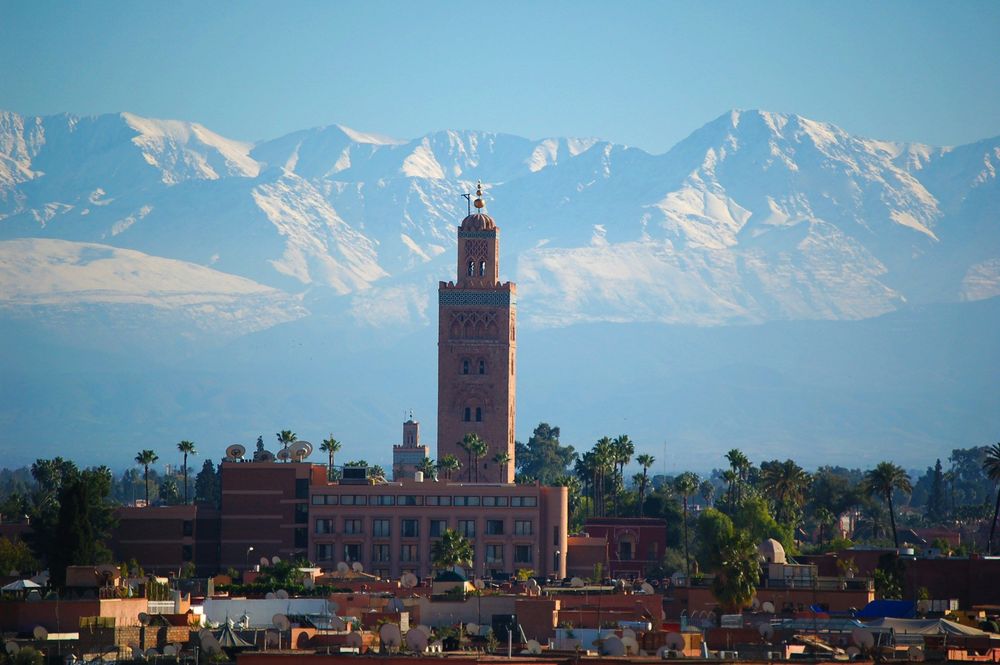
Cover photograph: Marrakech rooftops and a minaret with snowy mountains behind.. Photo by Paul Macallan on Unsplash. (Unsplash).
Frequently Asked Questions
What should I prioritise on a first visit to Marrakech?
Start with the medina and Jemaa el-Fna, then choose one architectural sight and a garden or museum. Bahia suits decorative interiors, El Badi suits ruins, and Ben Youssef combines detailed craftsmanship with the history of a school.
Is Bahia Palace or El Badi Palace a better choice?
Choose Bahia for painted ceilings, tilework and marble. Choose El Badi for open spaces and palace remains. They offer different experiences, so your interests matter more than trying to establish an overall winner.
Do I need to book Jardin Majorelle in advance?
Yes: the official site says tickets are sold online and recommends booking early for your chosen slot. Check museum inclusions carefully; the Yves Saint Laurent museum lists a Wednesday closure even though the garden opens daily.
Can I visit Marrakech's gardens without buying a combined museum ticket?
Choose the garden admission option that matches your plans on Majorelle's official booking site. Le Jardin Secret sells entrance on site and prices its tower separately, so there is no need to make the tower part of your visit.
How many days should I allow for Marrakech?
Two or three full days are a practical editorial recommendation for a first visit combining the medina, selected monuments and a garden or museum. One day can cover a smaller selection; add time if you want workshops, detailed shopping or a slower pace.

Keep Exploring

Things to Do in Tokyo: Pick Your Highlights
Build a Tokyo shortlist that suits you. Compare Asakusa, Meiji Jingu, Ueno, Shibuya, Shinjuku Gyoen, Omotesando, Tsukiji and teamLab Borderless.

Things to Do in the Maldives: Planning Your Stay
A practical guide to Maldives experiences, from snorkeling and sandbanks to local food and island walks, with advice on choosing a base and making room for the things you want to do.
Things to Do in Singapore: Choose Your Highlights
Choose Singapore highlights that earn their place: conservatories, neighbourhood meals, orchids, art and wildlife, with practical trade-offs and current access checks.