
Mouassine Music Museum: Visit or Evening Concert?
Choose a daytime Mouassine museum visit or a reserved music evening in Marrakech, with current schedules, shared tickets and prices to confirm.
Choose the Mouassine Music Museum for a daytime encounter with Moroccan musical traditions and a decorated historic house; reserve an evening separately if hearing musicians is your priority. The two visits share a setting, but an ordinary museum ticket should not be mistaken for a concert reservation. That distinction is the most useful decision to make before walking into the medina.
The venue also appears as Musée de Mouassine or Musée de la Musique de Marrakech. It is in Derb el Hammam in the Mouassine quarter, rather than a large modern concert complex. Our Marrakech first-visit guide helps place it among the city's palaces, gardens and other cultural stops.
Day visit or evening performance?
| Your priority | Choose | Check first |
|---|---|---|
| Historic interior and music displays | Ordinary museum visit | Opening and ticket conditions |
| Listening to a live ensemble | Reserved concert | Date, musical tradition, final price and inclusions |
| Music and historical photography | Two-museum admission | Keep the ticket and confirm validity conditions |
| Tea or a terrace break | The selected hospitality option | Whether it needs its own reservation |
On 24 November 2026, the current museum website advertises daily opening 10:00–19:00 and ordinary admission of 80 MAD for adults, 50 MAD for Moroccan residents, and free entry for children under 15. The ticket is also valid at Maison de la Photographie. Older price blocks remain visible on the site, so use the current visitor-information block and confirm at the desk.
For the concert season September 2026–May 2027, the dated programme page lists Monday, Wednesday and Friday performances at 18:00. The regular pattern is Andalusian music on Monday, Amazigh music on Wednesday and Gnawa on Friday. Specific dates, holiday changes and availability still need checking when reserving.
What the daytime museum offers
The museum's own introduction describes exhibitions with documentary material, musical evenings and a terrace café, housed around a historic reception apartment. Expect a small-scale cultural visit that links sound, images and domestic architecture, rather than a comprehensive national encyclopaedia of instruments.
The useful approach is to choose a musical question before entering. How does an ensemble organise a shared rhythm? What changes when a performance is filmed rather than heard in the same room? How does the place of performance affect your attention? These questions make documentary displays more rewarding than simply scanning names unfamiliar to you.
If there are recordings available during your visit, listen to a complete passage rather than a few seconds from every example. Notice whether a solo voice leads, how other performers respond, and how repeated patterns develop. You do not need to identify every instrument to hear a change of texture or a return to a refrain.
Displays and documentary selections can change. The official pages checked for this guide do not provide a reliable room-by-room inventory of every instrument currently on show, so do not travel expecting one specifically named object. If an instrument or film is your main reason to come, ask the museum whether it is presently available.
The douiria is part of the subject
The douiria is the reception apartment within the historic house. It gives the visit a domestic scale different from a palace courtyard or a purpose-built auditorium. The museum presents it as an example of Arab-Andalusian architecture, and it is also the setting for its concerts.
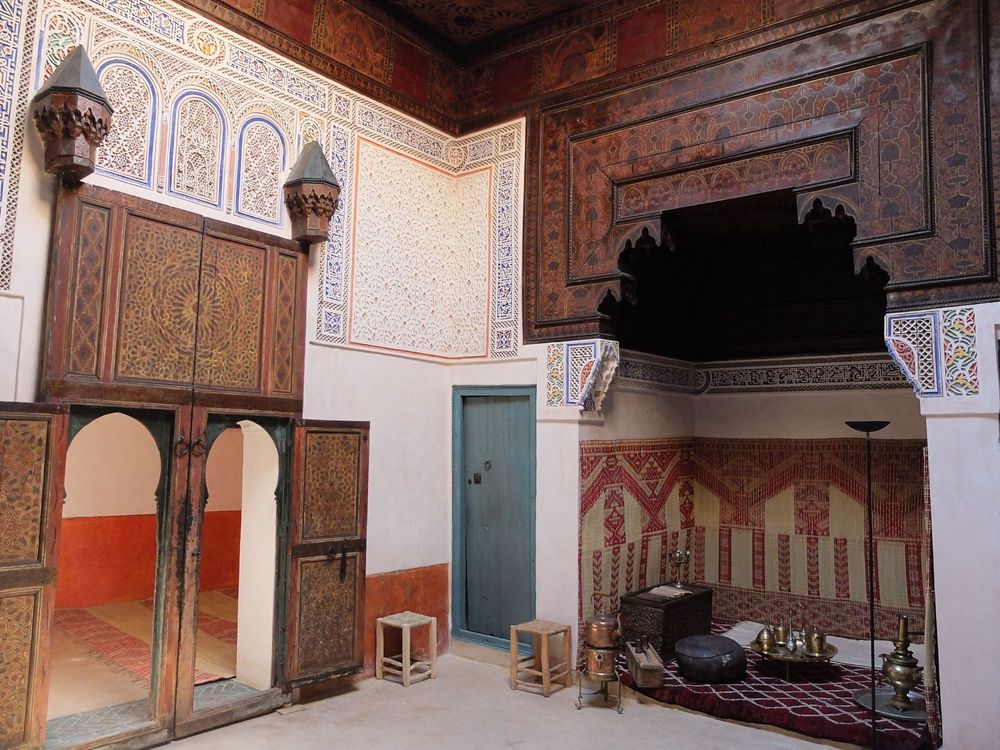
Look upwards as well as at the displays. Painted wood, patterned plaster and the framing of doors and recesses reward close observation. Compare the lighter wall decoration with the darker wooden surfaces, then look at the room as a whole. The change between detail and overall proportion helps explain why the interior deserves time even on a day without a performance.
The cover photograph shows this actual salon in 2014. It documents the architecture, not today's furnishings, seating arrangement or instrument display. Do not assume that an object visible in that image remains part of the current exhibition.
Treat the decorated surfaces as museum material. Avoid leaning on doors or touching plaster to examine its texture, and follow the current visitor route. If you are attending a concert, finish your close architectural looking before the musicians begin rather than moving around the room during the performance.
Choose a concert by its music, not just its time
The regular weekly programme offers three different labels, and they should not be treated as interchangeable examples of a single Moroccan sound. Monday's Andalusian programme, Wednesday's Amazigh programme and Friday's Gnawa programme offer different entry points. Choose the one you want to learn about, then confirm who is playing on your actual date.
For Gnawa, a little context helps avoid reducing a cultural practice to a tourist performance. UNESCO's account describes music alongside fraternal practices and rituals, with sacred and secular dimensions, and records its 2019 inscription on the Representative List of Intangible Cultural Heritage. A short museum concert introduces part of that musical world; it should not be presented as equivalent to an entire ritual tradition.
During any programme, listen for the relationship between the lead performer and the group. Watch how musicians cue each other and how a repeated phrase changes when voices or percussion enter. This gives a first-time listener something concrete to follow without needing a technical vocabulary.
Ask before photographing or recording. An intimate room makes screen light, movement and conversation more noticeable than in a large hall. Arrive early enough to settle and to clarify seating needs without interrupting the opening. Let the performance itself, rather than collecting video clips, be the reason for choosing the evening.
Booking: resolve the price before paying
The official concert booking form offers a concert with tea and a concert with a traditional meal. However, the page contains inconsistent price blocks: euro amounts of €14.56 and €28.67 appear alongside a separate form quoting 120 MAD and 300 MAD. Those are not a reliable single tariff or a currency conversion to apply yourself.
Request confirmation of the total, payment currency, selected date and exact inclusions before paying. Also establish whether ordinary museum access is included and when you may arrive to see the displays. The published 80 MAD daytime ticket alone does not establish entitlement to an evening seat.
If choosing the meal option, confirm dietary needs and where the meal is served. Do not infer the whole evening's finish time from the advertised one-hour concert. An old holiday programme or New Year's package on the same page should not be treated as the current ordinary offer.
For a family, check the concert's own child conditions. Free ordinary museum entry for under-15s does not automatically mean a free concert seat or meal. For a group, secure the actual number of places rather than assuming that several independent bookings will produce adjacent seating.
Use the shared photography ticket sensibly
The partner's official information page independently confirms the 80 MAD adult ticket and its validity at the music museum. This makes a music-and-photography pairing practical, but it does not mean the two museums are the same building or offer identical opening hours.
Our Maison de la Photographie guide explains the historical images and viewing choices at the other venue. Keep the ticket, ask about its validity period and leave walking time between addresses. Do not buy a second ordinary admission simply because you entered through the other museum first.
The combination works best when the two subjects genuinely interest you. A shared ticket removes a financial barrier, but it does not remove the need for attention. If you have already spent hours in galleries, choose one venue carefully and retain flexibility rather than treating the second as an obligation.
Tea, terrace and the shape of the day
The museum also advertises a separately bookable tea experience. Distinguish that activity from an ordinary cup at the café and from tea included in a confirmed concert product. The same ingredient does not make the three experiences identical.
For a daytime visit, allow approximately 45–75 minutes as an editorial planning estimate, depending on how long you spend with the interior and documentary material. Add a café stop separately. For a concert, protect the confirmed arrival time and performance, then add any agreed meal and the journey back through the medina.
A useful sequence is one cultural visit, an unhurried walk and an evening performance. A less comfortable sequence is several distant attractions followed by a rush to a small lane just before the concert starts. If you choose the shared museum ticket, the ordinary visits can shape the day while the reserved performance remains its fixed appointment.
Finding the entrance and checking accessibility
Use the museum's contact page for the pin at 4–5 Derb el Hammam. Save the location before entering the lanes, and distinguish the museum from the nearby mosque and other places carrying the Mouassine name. Ask your accommodation for the walking approach if your map becomes unclear near the final turns.
The historic house and reception apartment should not be assumed to provide a fully step-free route. The current operator pages checked do not establish lift access or a complete wheelchair-accessible visitor circuit. Contact the museum with your needs before reserving, including access to the performance room, seating and toilets.
For the evening, also decide your return route before the performance. Check where your taxi or other transport can actually meet you, rather than assuming a vehicle can reach the museum door. A confirmed concert and a clear walking route make this a focused cultural evening instead of a last-minute navigation exercise.
Cover photograph: Painted wood and patterned plaster in the Mouassine museum reception salon, photographed in 2014 — Archive photograph Image adapted for publication. — Robert Prazeres, CC BY-SA 4.0.
Frequently Asked Questions
Are Musée de Mouassine and the Music Museum the same venue?
These names refer to the music museum in the historic house at 4–5 Derb el Hammam in the Mouassine quarter. Use the current Musée de la Musique website for practical arrangements.
Does the 80 MAD ticket include a concert?
Do not assume so. It is the advertised ordinary museum ticket, also valid at Maison de la Photographie. Reserve a concert separately and confirm its price and inclusions.
Which evenings have concerts?
The published September 2026–May 2027 programme lists Monday, Wednesday and Friday at 18:00, respectively Andalusian, Amazigh and Gnawa music. Check your exact date.
Is there a single confirmed concert price online?
The booking page currently displays conflicting euro and dirham price blocks. Ask the museum to confirm the final amount, currency and chosen package before paying.
Is the historic house fully wheelchair accessible?
A complete accessible route was not established from the operator information checked. Ask directly about the reception apartment, concert seating and toilets before booking.


Keep Exploring
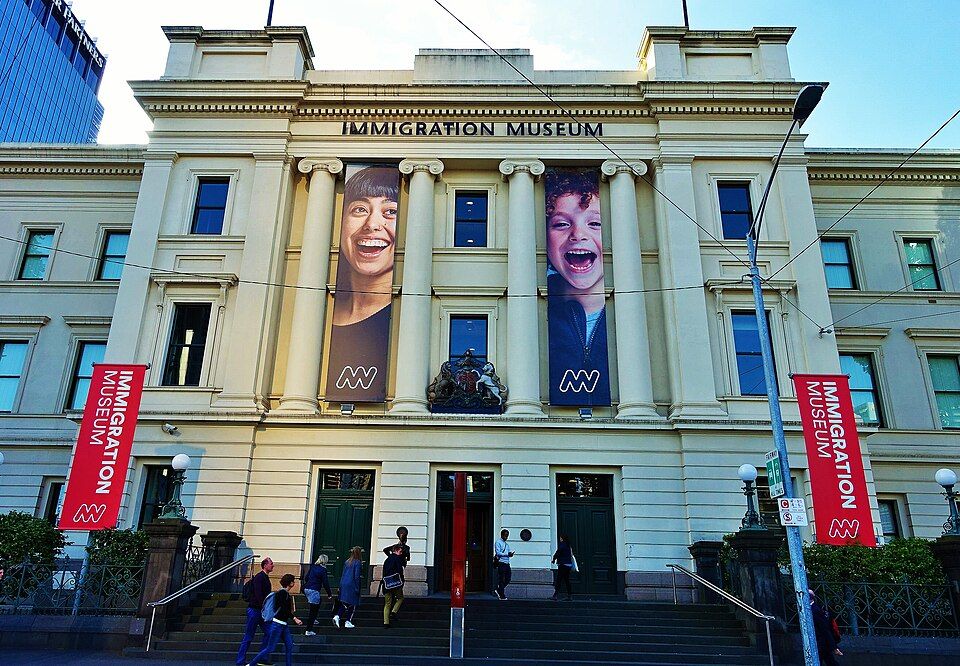
Immigration Museum Melbourne: Plan Your Visit
Choose Melbourne’s Immigration Museum galleries, current exhibitions or a guided tour, with ticket eligibility, access and a thoughtful visiting plan.
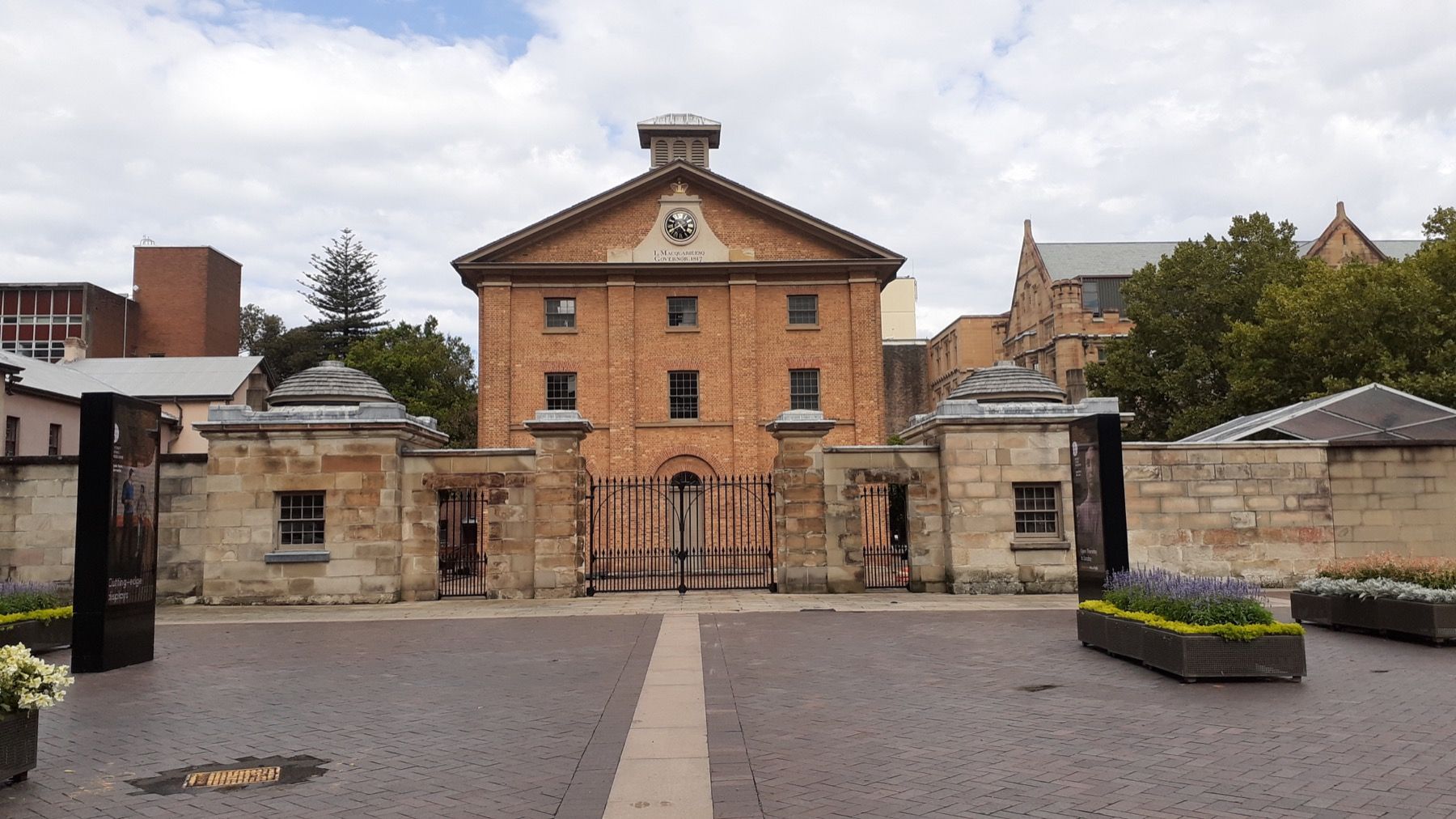
Hyde Park Barracks Sydney: Plan Your Museum Visit
Plan Hyde Park Barracks in Sydney: free entry, audio sessions, languages, access options and the history behind the museum.
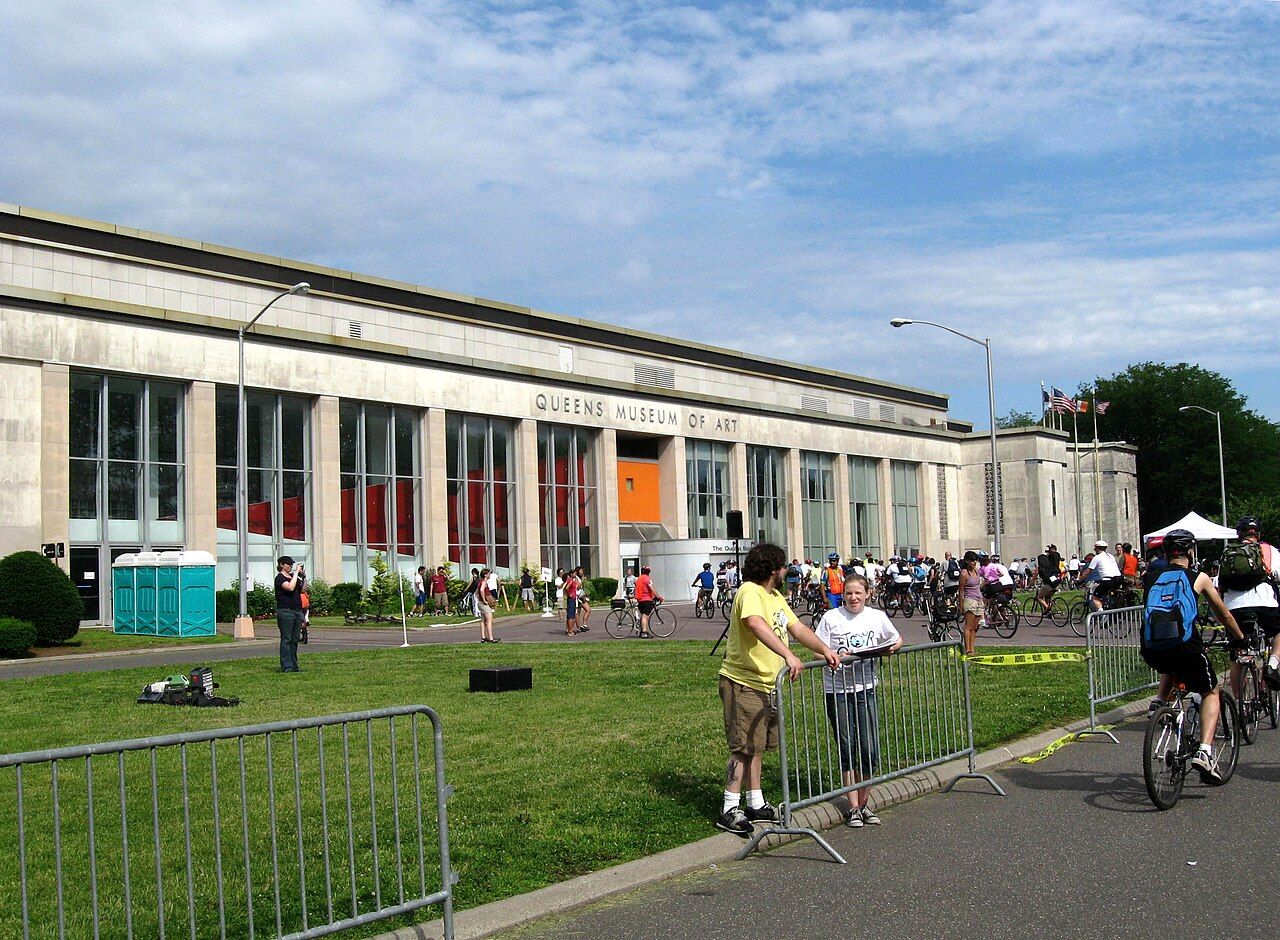
Queens Museum New York: Panorama and Visit Planning
Plan a Queens Museum visit: Panorama model, pay-what-you-wish entry, opening hours, subway walk, accessibility and a nearby Unisphere stop.