
Hyde Park Barracks Sydney: Plan Your Museum Visit
Plan Hyde Park Barracks in Sydney: free entry, audio sessions, languages, access options and the history behind the museum.
Hyde Park Barracks is a museum of forced migration, colonial labour and the people who lived inside one Sydney building. Choose it for a focused encounter with that history, using an audio experience that responds to your movement through the rooms. It is a different commitment from walking through neighbouring Hyde Park: allow roughly two hours around the museum's approximately 90-minute experience, including arrival and a pause afterwards.
Museum entry is free, with advance booking recommended. The practical decision is which session and version of the experience suit you, especially if you need a particular language, accessible device or a quieter approach to immersive displays. For the rest of your trip, place this stop within our Sydney things to do guide.
The visit at a glance
| Decision | What to plan |
|---|---|
| Admission | Free museum entry; prebook a session through the museum |
| Normal hours | Daily 10:00–18:00; last entry 16:30; closed Good Friday and Christmas Day |
| Time inside | About 90 minutes for the audio experience; allow extra arrival time |
| Format | Self-guided, with a supplied device and headphones |
| Location | Queens Square, Macquarie Street, next to The Mint |
| Access planning | Ask ahead for an adapted experience or limited-availability equipment |
These are the museum's published arrangements checked in November 2026. Confirm your date on the official visit page, particularly around public holidays. The 16:30 last entry matters more than the 18:00 closing time if you want to complete the experience.
What story does the Barracks tell?
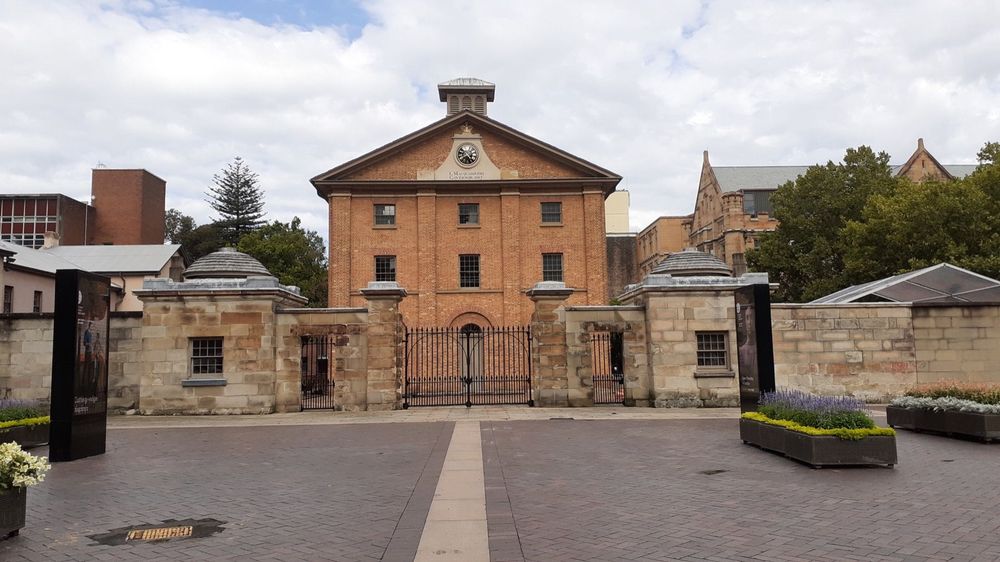
The building stands on Gadigal Country. Its history does not begin with a picturesque colonial façade, and the stories inside should not be reduced to colourful tales of convicts. The museum connects transported prisoners, immigrant women and institutional life with the effects of colonisation on First Nations people. That breadth makes it a useful early stop if Sydney's historic centre otherwise looks like a collection of handsome stone buildings.
A few dates provide enough structure before you arrive. Construction took place between 1817 and 1819; male convicts occupied the Barracks until 1848. It then became a female immigration depot, and an asylum for women was established in 1862. Government offices and courts followed in 1886. The museum's site timeline helps distinguish those successive uses without requiring you to memorise a long chronology.
Keep that sequence in mind when looking at a room. Ask who was housed there at that point, who decided whether they could leave, and what the institution expected from them. The same walls served different systems. A detail associated with migrant women should not automatically be interpreted as evidence of convict accommodation.
The Barracks is one component of the UNESCO-listed Australian Convict Sites, a group of places connected to convict transportation. The listing gives context to its international significance; it is not a separate ticket category or an extra attraction to book.
How the self-guided audio experience works
You receive a device and headphones on arrival. Audio responds to your location as you move through the museum, so this is more integrated with the rooms than a podcast you play while walking. Sessions start every half hour, and the museum permits entry within your booked 30-minute session window. Follow the time on your confirmation rather than treating a free reservation as an all-day pass.
Start by checking that the equipment is comfortable and that the language is correct. English, Mandarin, Japanese, Korean, French, German, Italian and Spanish are listed. Ask the ticketing team for the version you want before starting: changing it after you have moved upstairs would interrupt the sequence unnecessarily. If you prefer your own headset, check connection compatibility with the museum instead of assuming wireless earbuds will work.
Allow the narration to finish before rushing to the next room. Equally, you do not need to turn every pause into a long study session. A good rhythm is to listen, choose one physical detail to examine, then move on when you are ready. For two visitors with different levels of interest, agree to regroup at the end rather than repeatedly interrupting each other's listening.
This format is particularly suitable for independent visitors who like a clear narrative but do not want to keep pace with a live group. It is less suitable as a five-minute shelter from rain. If your timetable only permits an exterior stop, save the interior for a day when you can give the story its full length.
Look for evidence, not just atmosphere
The museum brings together original objects and interpretation. Its overview of the Barracks describes a collection of more than 4,000 original artefacts associated with the experience. That does not make every room fitting or immersive element an untouched survival. Read the labels to distinguish historic material from the way the museum helps visitors imagine its use.
Small things can make the strongest connection. For example, the museum's research on a hammock fragment explains how material recovered beneath floorboards contributes to understanding everyday life. Use that as a way of looking, rather than as a guarantee that one particular fragment will be displayed on your date: textiles, scraps and ordinary possessions can answer questions that a grand façade cannot.
Try three questions as you go: what is the object, how does the museum know where it came from, and what can it actually tell us? A scrap might reveal material or use without revealing its owner's name. Leaving room for those limits makes the history more compelling than filling every gap with an imagined biography.
The asylum and immigration stories also deserve attention after the convict sections. If you finish remembering only imprisonment, you will have missed much of the building's later life. Take a moment outside to compare the orderly frontage with the very different individual experiences described inside.
Accessibility, sensory needs and visiting with children
The museum offers a mobility version of the experience, lift access in the main building and ramps along the accessible route. It recommends the main Macquarie Street entrance for wheelchair users. Plan the visit around that route rather than assuming every historic doorway is equally convenient.
Other options include descriptive audio for visitors who are blind or have low vision, and an iPad with descriptive text for visitors who are deaf or hard of hearing. Wheelchairs and video magnifiers are available for free hire, subject to availability. Contact the bookings team in advance at bookings@mhnsw.au or +61 2 8239 2211 to discuss the specific version or aid you need. A general entry reservation does not automatically reserve a limited device.
Some rooms use bright, flickering light and large ocean projections. If those effects could make the experience uncomfortable, ask the museum what route or adaptations are possible before booking. Do not assume an audio-based museum will be visually subdued throughout. Aboriginal and Torres Strait Islander visitors should also note the museum's advice that the experience includes names and images of people who have died.
The standard audio experience is described as suitable for ages eight and over, and children under 15 must be accompanied by an adult. A children's trail adds prompts and activities. Consider your child's tolerance for listening and the subject matter, not only their age: a museum built around institutions and displacement calls for a different kind of attention from an outdoor playground.
Getting there and organising a manageable day
The museum gives approximate walks of five minutes from St James station and seven from Martin Place. Treat those as orientation rather than guaranteed transfer times, allowing longer for station exits, crossings or mobility needs. There is no public parking at the Barracks itself. Check your actual public-transport journey for the day, especially if arriving with luggage.
A simple plan is a morning museum session, a lunch break, then a walk through the nearby public spaces. Our suggestion of roughly two hours on site includes a margin for collecting equipment and settling in; it is not a compulsory tour duration. Avoid placing a non-refundable appointment immediately after the expected finish, since accessibility arrangements or a slower listening pace may require more time.
For a second museum, use our Australian Museum visit guide to decide whether its different collections deserve another substantial visit. Combining both is reasonable for an enthusiastic museum day, but they should not be squeezed together as two short photo stops. Leave a break between them, or spread them across separate days if travelling with children.
Before you go inside, deal with practical distractions: check your onward appointment, use the facilities if needed and ask where to store your bag. Free self-service lockers are listed at the rear of the site. Professional photography equipment requires advance permission; ask staff about the rules for your equipment rather than using a tripod in the galleries without checking.
A final booking check
Choose the day, reserve the free session and note the entry window. Then make a separate request for an accessible device or version if needed, and allow enough time to arrive at the correct entrance. For a group of ten or more, use the museum's group-booking enquiry process rather than splitting the group into ordinary individual reservations.
The most useful preparation is modest: understand that the Barracks had several institutional lives, be ready to listen, and leave room for the objects to complicate an easy story about old Sydney.
Cover photograph: Brick facade and sandstone entrance of Hyde Park Barracks in Sydney — Archive photograph Resized for publication. — Kanzcech, CC BY-SA 4.0.
Frequently Asked Questions
Is Hyde Park Barracks free to visit?
Yes. Museum entry is free, and the museum recommends booking an audio-experience session online in advance. Special programs may have separate arrangements, so use the general museum booking for this visit.
How long should I allow at Hyde Park Barracks?
The museum estimates about 90 minutes for the self-guided audio experience. Allow roughly two hours overall for arrival, collecting equipment and a little breathing space afterwards.
Is the audio experience available in other languages?
Yes. The published options are English, Mandarin, Japanese, Korean, French, German, Italian and Spanish. Request your preferred language at ticketing before starting.
Is Hyde Park Barracks wheelchair accessible?
The main building has a lift and the site offers a mobility version of the experience with ramps along the accessible route. Contact bookings ahead about equipment and your specific access needs.
Can I visit with young children?
The main audio experience is recommended for ages eight and over, and a children's trail is available. Children under 15 need an accompanying adult. Consider the listening format, immersive effects and historical themes when deciding whether it suits your family.


Keep Exploring
Immigration Museum Melbourne: Plan Your Visit
Choose Melbourne’s Immigration Museum galleries, current exhibitions or a guided tour, with ticket eligibility, access and a thoughtful visiting plan.
Academy Museum Los Angeles: Plan Your Visit
Plan an Academy Museum visit with gallery tickets, separate screenings and Oscars Experience, current closures and a realistic afternoon route.
Oaxaca Textile Museum: Plan Your Visit
Plan a thoughtful textile museum visit, with current hours, guided tours, workshop checks and a useful link to Oaxaca’s weaving communities.