
Australian Museum Sydney: Choose Your Visit
Plan a free Australian Museum visit around dinosaurs, wildlife or cultures, with gallery routes, access advice and current closure notices.
The Australian Museum is a strong Sydney choice when you want natural history, First Nations perspectives or Pasifika cultures in a central location. Its free permanent exhibitions make a short, selective visit worthwhile: you do not need to purchase a large exhibition package or commit to seeing every floor. The useful decision is which subject deserves your attention, then whether a special exhibition adds something you actually want.
For a first visit, choose two main galleries and keep a third optional. A dinosaur-focused family morning, an Australian wildlife visit and a culture-led afternoon can all work in the same building, but they are different routes. Our Sydney cultural guide places the museum alongside harbour, garden and coastal choices. Practical information was checked on 5 November 2026; all route durations below are editorial estimates, excluding your journey to the museum.
The essentials before you choose galleries
| Question | Practical answer |
|---|---|
| Where? | 1 William Street, at the College Street corner, opposite Hyde Park |
| Regular opening | Daily 10am–5pm; closed Christmas Day |
| Permanent exhibitions | Free general admission; no ticket required |
| Special exhibitions and programmes | Separate conditions and possible fees |
| A focused visit | Around 90 minutes–2 hours |
| Two galleries with breaks | Around 2–3 hours |
| Current gallery exception | Birds of Australia closed for redevelopment |
The admission page confirms free permanent-gallery entry and the standard opening pattern. Free entry makes it easier to leave when you have had enough, or to return on another day. It does not make ticketed events, purchases or every temporary exhibition free. Check the exact exhibition page before deciding your budget.
November 2026: two notices that change the plan
Birds of Australia is currently closed. Its official gallery page gives an expected reopening in mid-December 2026 after redevelopment. Do not include it as an available stop for a November visit, and reconfirm the reopening if birds are your main reason for coming later. A gallery remaining visible on a general museum map does not cancel its closure notice.
The World's Biggest Dinosaur: Dinosaurs of Patagonia is upcoming. The special-exhibition page advertises an opening on 28 November. It is separate from the permanent Dinosaurs gallery; check the current ticket options for your chosen date. The announcement does not mean the exhibition is already open on 5 November.
This distinction matters for families responding to a photograph of a huge skeleton. You can already choose the permanent dinosaur gallery, but should verify the separate exhibition's opening and ticket arrangements if that specific display motivates your visit. Do not promise children a named temporary attraction until the date and entry are confirmed.
Arrive at the museum, not just a station with its name
The museum's transport page identifies Museum, St James and Town Hall railway stations and Gadigal Metro as nearby options. Museum station is not an entrance inside the museum: there is still an outdoor walk. Pick the station that suits your starting point and current service rather than choosing by name alone.
At the Hyde Park edge, use the William Street and College Street corner as your destination. For wheelchair or pram routes, the transport guidance identifies stairs around College and Park Streets and alternatives via the St Mary's Cathedral crossing or College and Liverpool Streets. Check your actual exit and crossing before following the shortest walking route offered by a map.
There is no public parking on the museum site. If driving, choose and check a separate nearby car park. Leave room for the final walk and for finding the correct entrance; an exhibition start time is not the time to begin looking for parking. For specific access needs, use the current museum map and contact the museum if the route is unclear.
Route one: dinosaurs and Australian wildlife
Choose this route if the main interest is animals, fossils or how Australian environments shape life. Head first to Level 2 and the permanent Dinosaurs gallery. Start with a small number of displays and compare what their labels say about skeletons, fossils and models, rather than treating every large form as an original complete skeleton.
You might ask one question throughout the gallery: what evidence lets researchers reconstruct an animal? Looking at a skull, a limb and a model with that question gives more purpose than trying to memorise every species name. With children, let them select something they want to explain back to you. With adults, allow time for the material that changes an assumption you arrived with.
Continue, if you still have energy, to Surviving Australia, also on Level 2. Its exhibition description connects animals and adaptation across Australian environments. Treat it as a change of scale from prehistoric creatures to the wider relationships between animals and habitats, rather than merely another room of impressive specimens.
Allow 2–3 hours for both galleries with pauses. Shorten this to one gallery if attention is fading. The free permanent route does not require buying the forthcoming Patagonia exhibition, and the temporary closure of Birds of Australia does not prevent a substantial animal-focused visit.
Route two: Sea Country and Pasifika cultures
For a culture-led visit, begin with Garrigarrang: Sea Country on Upper Ground. The gallery's own introduction presents the cultures of Australia's Salt Water People. Read who is speaking and where a story or object comes from. Avoid flattening different communities into one interchangeable account of “Aboriginal culture.”
Give the exhibition enough uninterrupted attention for its interpretation, rather than using it as a passage to the natural-history galleries. A useful approach is to choose a few objects, read their context and notice how connections between people, places and water shape their meaning. Photography should follow the gallery's instructions; ask staff before recording if permission is unclear.
Then consider Wansolmoana on Level 2. Its official page describes Pasifika cultures through objects and stories, with contemporary voices as well as ancestral connections. It is not another name for the First Nations gallery. The pairing works because you can pay attention to distinct peoples and relationships with ocean environments without treating them as a single culture.
Allow 2–3 hours for this route, adjusting for how much you read and listen. If you have only 90 minutes, select one gallery and give it that time. This route can be valuable for adults without children; the Australian Museum is not only a dinosaur outing.
Route three: minerals and a shorter visit
If you want a compact visit with a clear visual focus, choose Minerals on Level 1. The gallery page introduces the rocks and minerals on display. Start by looking closely at differences in shape, colour and structure, then read a few labels to understand what you are comparing. A photograph of a bright specimen is less informative than learning what makes it distinctive.
Add one other permanent gallery only if you want a different subject. Use the current visitor map to identify the connecting levels and facilities instead of repeatedly retracing your steps. A selective 90-minute–2-hour visit can include a pause and still feel complete.
This is also a sensible approach when you arrive later in the day. Choose one clear priority instead of attempting the dinosaur and cultural routes together before closing. Free admission removes the pressure to extract a full-day experience from a ticket, but opening hours still apply.
Families: use Burra and breaks deliberately
The Burra learning and play space on Level 2 can provide a different rhythm from reading display cases. The admission information lists it as part of free general entry, closing at 4:30pm, earlier than the museum. If it is important to your children, place it before the final half-hour instead of assuming it will be available after the galleries.
Agree on a modest plan before entering: one priority gallery, a break and one optional addition. Different ages will sustain different kinds of attention. Let a child stay with an engaging display rather than interrupting solely to preserve a checklist. Conversely, changing floors will not necessarily fix fatigue; sometimes the best next step is to leave.
Check the arrangements for any paid family programme separately. General free entry does not reserve a workshop place. With a pram, verify the rules for a special exhibition: the museum's admission guidance says prams are not allowed inside special-exhibition spaces and identifies designated parking. Plan how you will manage belongings and the child during that part of the visit.
Access, sensory planning and what to carry
The accessibility and inclusion page and visitor map are useful planning tools, including sensory information and available services. Decide which route suits your group before arrival; a gallery with engaging sound or interactive elements may feel different from a room of cases. A visual story can help someone prepare for the sequence of entering, moving between floors and leaving.
Use staff advice for a current accessible route, especially if an entrance or lift matters to your plan. The map identifies a William Street accessible entrance leading to a lift. Website descriptions of entrances are not completely consistent, so check the map and current staff directions rather than relying on one street label alone.
Bring a modest bag. The admission rules warn against bags larger than A3 size, carry-on luggage, long umbrellas and bulky items; do not plan an airport transfer around guaranteed museum storage. Photography rules vary by gallery, especially in First Nations areas and the Westpac Long Gallery. Read local signs and ask before using flash or filming.
Fit the museum into a central Sydney day
Hyde Park offers a nearby outdoor change of pace before or after the museum, subject to weather and your preferred walking route. Keep that walk flexible rather than adding another timed activity immediately after the galleries. If you booked a special exhibition, build the rest of the day around its confirmed session and allow the permanent galleries to expand or contract.
If you are choosing between institutions, our Art Gallery of New South Wales guide helps assess the art alternative. Choose by subject: paintings, installations and the gallery campus serve a different interest from the Australian Museum's natural-history and cultural routes. You can visit both over a longer stay, but neither improves when squeezed into the exhausted end of the other.
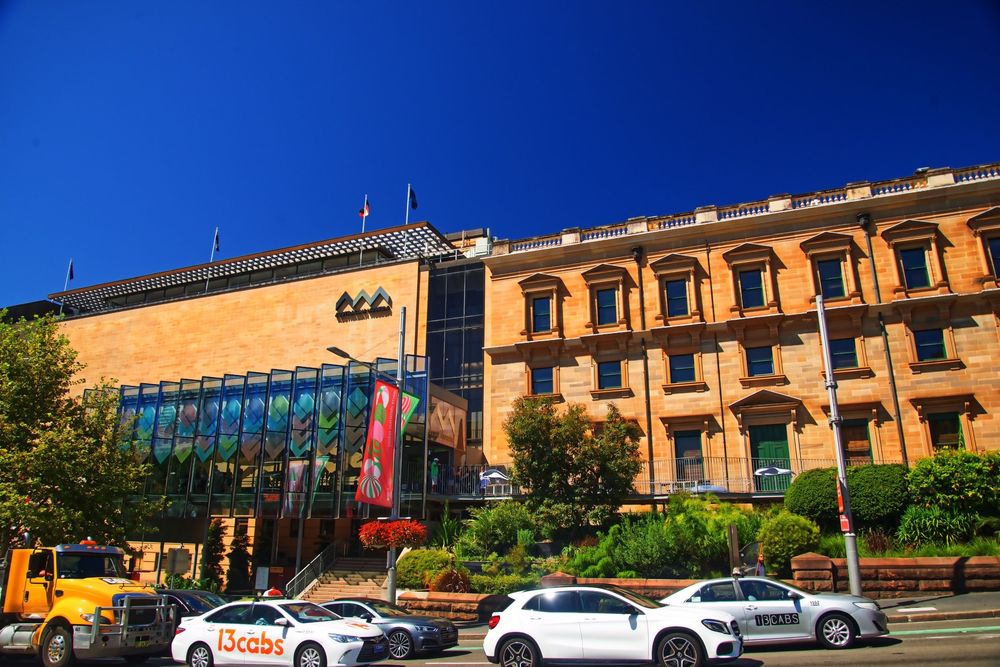
Cover photograph: Australian Museum exterior on William Street, Sydney, with its glass entrance and sandstone facade — Archive photograph; no edits to the downloaded file — Chen Hualin, CC BY-SA 4.0.
Frequently Asked Questions
Is the Australian Museum free?
Permanent exhibitions have free general admission and do not require a ticket. Special exhibitions, events and programmes have separate booking conditions and may charge.
Can I see dinosaurs without buying a special-exhibition ticket?
Yes. The permanent Dinosaurs gallery is included in general entry. The forthcoming Dinosaurs of Patagonia exhibition is separate; check its date and ticket arrangements independently.
Is Birds of Australia open in November 2026?
No. The museum currently lists it as closed for redevelopment, with reopening expected in mid-December 2026. Recheck that date before a bird-focused visit.
How long should I spend at the museum?
As an editorial estimate, 90 minutes–2 hours suits a focused visit and 2–3 hours suits two substantial galleries with breaks. Pick subjects before adding more floors.


Keep Exploring
Tokyo National Museum: Choose Your Visit
Choose Tokyo National Museum galleries and tickets, with a focused Honkan route, late-2026 closures, hours and suitcase rules.
Guggenheim New York: Choose Your Museum Visit
Plan a Guggenheim visit around the spiral, current exhibitions and Thannhauser Collection, with ticket choices and November closure checks.
ArtScience Museum Singapore: Choose Your Visit
Choose an ArtScience Museum exhibition, understand Future World tickets and plan a manageable Marina Bay visit.