
Ait Ben Haddou from Marrakech: Day Trip or Overnight?
A practical choice between a long day from Marrakech and a night near the ksar, with architectural highlights, access limits and realistic time tradeoffs.
An Ait Ben Haddou day trip from Marrakech suits travellers who specifically want to see the earthen ksar and accept a substantial mountain journey in both directions. Stay overnight if the architecture, changing light or an onward journey through southern Morocco is the main reason for going. The extra night gives you more control over when you visit; it does not remove the Atlas crossing.
Start by deciding whether you want a visit to Ait Ben Haddou or a wider excursion including Ouarzazate. Those are different uses of the same day. Adding film studios, a long lunch and shopping stops can leave surprisingly little time among the buildings that brought you here.
Which version fits your trip?
| Plan | Best reason to choose it | Main tradeoff |
|---|---|---|
| Return to Marrakech the same day | The ksar is a priority and you accept a long road day | Less flexibility over light, lunch and the return journey |
| Sleep near Ait Ben Haddou | You want an afternoon visit and another look the following morning | An accommodation change and another travel day |
| Include it in a southern Morocco circuit | You are already continuing toward Ouarzazate and the valleys | The onward itinerary still needs separate travel allowances |
| Remain in Marrakech | Your short stay has little room beyond the city itself | You leave the ksar for a future journey |
Information was checked on 16 October 2026. Walking allowances below are editorial estimates, excluding meals, transfers and delays. They are not tour schedules. Our Marrakech itinerary helps identify what an excursion would replace before you commit a day to it.
Understand what you are travelling to see
The UNESCO property is the ksar, a fortified grouping of homes and communal buildings, rather than a single palace. It stands in the Ounila Valley, on the southern side of the High Atlas. The surrounding modern village provides accommodation and services; a hotel described as being in Ait Ben Haddou is not necessarily inside the historic settlement.
UNESCO's listing records inscription in 1987 and describes surviving construction from the 17th century, using older regional building traditions. Look for the contrast between modest houses and larger dwellings with corner towers, and between the compact buildings and the open landscape around them.
That distinction matters when choosing a tour. A distant photograph shows the outline, but a walk helps explain how homes, lanes and shared spaces fit together. A film-location stop and an architectural visit can overlap; they are not automatically the same experience. Ask whether the guide discusses building techniques and everyday uses as well as screen appearances.
How much of the day goes on the road?
For a useful operator reference, Intrepid's Classic Morocco itinerary allows approximately 4 hours for its Ait Benhaddou-to-Marrakech travel day. This is an example from a particular itinerary, not a promise for your hotel pickup or a universal driving time. Stops, road conditions and the precise departure point change the total.
A same-day visit requires that substantial journey twice. Compare the advertised time at the ksar separately from the excursion's overall duration. A tour that lists many stops may be attractive for variety, but it cannot give each stop the attention of a dedicated visit.
Before paying, obtain a written outline covering the pickup point, expected return window, time available at Ait Ben Haddou and whether lunch, a local guide and any building admissions are included. If your riad is in a pedestrian lane, establish the vehicle meeting point in advance. Carry the accommodation name and address for the return, particularly if the drop-off differs from the pickup.
Avoid putting a flight, train departure or prepaid evening event immediately after the excursion. If your travel dates only allow a tightly timed return, keeping that day in Marrakech is the more workable choice. A private vehicle can change the itinerary's priorities, but it cannot guarantee the road journey.
A focused visit: exterior, lanes, then an optional climb
Allow 60–90 minutes for a compact walk focused on the ksar, with additional time for lunch and a longer guided explanation. This is an editorial starting point for someone comfortable with uneven walking; access restrictions or limited mobility may require a different plan.
Begin with the overall shape
From an authorised viewing area, take in the relationship between the settlement, its defensive outline and the terrain. Locate the larger towers before moving into the lanes. Seeing the whole first makes it easier to understand why an individual doorway or decorated upper wall matters when you are close to it.
Do not start by chasing the highest viewpoint. If the distant silhouette is your main photographic interest, a suitable exterior viewpoint may satisfy that aim better than spending all your available time climbing. Confirm that any restaurant terrace or private viewpoint is open to you and whether a purchase or payment is expected.
Look at the buildings from ground level
In accessible lanes, compare the size of neighbouring houses, the placement of doors and the treatment of upper walls. Pause where you can stand clear of residents and other visitors. A guide can help distinguish the use of a building from its appearance; a decorated facade alone does not establish who lived there or what happened inside.
The ksar is not a collection of freely accessible interiors. An invitation into a house, gallery or terrace should come with a clear explanation of what is offered and any charge. Agree the scope and price before entering or accepting a guided service. Carry cash for agreed purchases, but do not assume that every request represents a standard site admission fee.
Treat the upper section as optional
An uphill extension can add a wider view, but it should depend on the permitted route, conditions underfoot and your group's comfort. For limited mobility, discuss the approach and terrain with your accommodation or guide before departure; a description such as “easy walk” is not a reliable accessibility assessment.
Stay on the authorised visitor route. Do not enter closed structures or climb walls for a photograph. UNESCO's current conservation report describes post-earthquake restoration that began in February 2025, with visitor-management work still under development in 2026. A historic photograph of a route does not confirm present access.
What an overnight actually adds
An overnight is most useful when you use the extra time at Ait Ben Haddou. Arrive, settle in, visit while there is sufficient daylight, then leave the following morning flexible for another exterior view or a shorter return walk. This separates the visit from the pressure of completing the outward and return journeys in a single day.
Choose accommodation by its exact location and approach. Ask whether the quoted room has a view of the ksar, whether dinner needs arranging and where a vehicle can stop with luggage. A property across from the historic settlement can be convenient without being inside it; a romantic description of a “kasbah stay” does not resolve those practical details.
An evening there need not mean an after-dark walk through the monument. A meal at your accommodation and a view from an authorised terrace can be the point of staying. Do not assume that public paths, interiors or viewpoints remain available after daylight simply because you have booked a nearby room.
For a more personal cultural stop, Intrepid describes a visit to Tawesna, a community-run tea project supporting local women, within its itinerary. Ask about current availability if this interests you; inclusion in that operator's trip does not establish unrestricted opening hours for independent visitors. A planned tea break and conversation can make better use of extra time than another hurried attraction.
Ouarzazate and the valleys: additions with their own purpose
The national tourism office's Ouarzazate regional guide highlights the area's film connections and its wider landscape of valleys and fortified architecture. If studios are your main interest, look for an excursion that allocates a proper studio visit rather than treating Ouarzazate as an unspecified photo stop.
Conversely, if you have come for earthen architecture, protect your ksar time before adding another attraction. Ask which building or studio is actually included, whether admission is separate and what happens if it is closed. The name of a city on an itinerary does not tell you what you will see there.
The tourism office's route des kasbahs overview places the Dadès and Drâa valleys and southern dunes within wider circuits. Treat these as onward travel possibilities, not extras to attach casually to a return day from Marrakech. Seeing Ait Ben Haddou does not by itself constitute a Sahara dune excursion.
If your aim is simply a change from Marrakech's medina, compare the different appeal of an Essaouira trip: Atlantic waterfront and a coastal town rather than a mountain crossing to an earthen settlement. Choose the landscape you want to spend time in, not the longest attraction list.
Weather, daylight and the crossing
Check conditions for the mountain journey as well as the destination. Sunshine in Marrakech does not settle the question of conditions higher along the route. The UK government's Morocco travel advice highlights mountain-road hazards in poor weather, night-driving difficulties and flash-flood risks around mountains and rivers.
Ask the operator how it handles disruption and whether the return involves driving after dark. For independent driving, obtain current local advice and avoid making a late return essential to the plan. An overnight can reduce pressure to leave the ksar immediately, but the next day's crossing still depends on conditions.
Use the authorised approach to the settlement and follow local closures. Do not wade through the river or use improvised crossings because an old guide describes them. If access is restricted, an exterior view from a permitted place may be the available visit; that is a reason to revise the plan, not find a way around a barrier.
Bring footwear suited to uneven surfaces, sun protection, drinking water and a layer for the journey. Keep your day bag small enough for narrow passages. For broader seasonal planning, consult our best time to visit Marrakech guide, then check the actual mountain forecast close to departure.
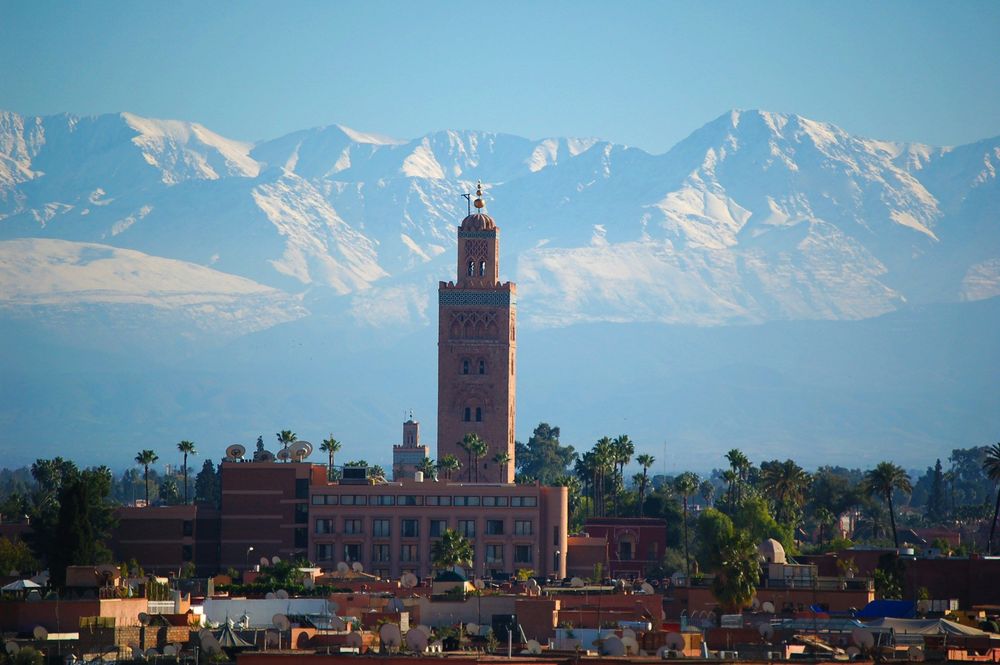
Cover photograph: Destination overview — Marrakech rooftops and a minaret with snowy mountains behind. Photo by Paul Macallan on Unsplash.
Frequently Asked Questions
Is Ait Ben Haddou worth a day trip from Marrakech?
Yes, if the ksar is a specific priority and you accept substantial travel in both directions. Choose a tour with clear time at the settlement. If your city break is short or you need a tightly timed evening return, staying in Marrakech may suit you better.
Is staying overnight better?
It gives more flexibility for an afternoon visit and a following-morning view, and fits an onward southern Morocco trip. It also means changing accommodation and arranging another travel day. Check the property's exact location rather than assuming it is inside the ksar.
Is there one entrance ticket covering everything?
Do not assume that a quoted tour price or a payment at an individual building covers every interior, terrace and guiding service. Confirm current access and charges with the provider, and agree any separate service before accepting it.
Can I visit without climbing to the top?
Yes: exterior views and accessible lower lanes can provide a worthwhile architectural visit. Discuss the actual approach and walking surfaces in advance if mobility is limited. Follow current restrictions, and treat any upper route as optional.

Keep Exploring
Teotihuacan from Mexico City: Plan Your Visit
Plan a day among Teotihuacan's plazas, pyramids and museums, with a route that works without a summit climb and a clear separation between ground visits and balloon packages.
Malé Stopover: Plan a Short City Visit
Decide whether to leave the airport or stay overnight, then build a manageable Malé walk around the historic centre and your onward connection.
Maafushi: Plan a Stay on a Local Island
Choose where to sleep and how to spend your days on Maafushi, from Bikini Beach to snorkeling trips, without confusing a guesthouse island with a private resort.