
Plan the Saadian Tombs with current ticket categories, conflicting published hours, chamber viewing and a sensible El Badi pairing.
Visit the Saadian Tombs for concentrated architectural detail in a royal burial complex, and leave flexibility for the main chamber's viewing arrangements. This is a compact stop in Marrakech's Kasbah, not a palace with room after room to explore. Its value lies in looking closely at the decoration and understanding what the different spaces were built to commemorate.
Make it one part of a southern-medina outing. Our first-visit guide to Marrakech helps compare monuments across the city; this guide concentrates on the tombs, current admission categories and a visit that does not depend on an unrealistic promise of empty rooms or instant entry.
Fast facts
| Detail | What to plan around |
|---|---|
| Location | Rue de la Kasbah, beside the Kasbah Mosque |
| Main interest | Saadian royal burial architecture, including the Twelve Columns chamber |
| Foreign adult admission | MAD100 on the ministry ticket portal |
| Foreign child, 7–13 | MAD50 on the same portal |
| Published hours | Ministry portal says 09:00–17:00; tourism-board listing differs |
| Suggested allowance | 45–60 minutes on site, plus any queue; editorial estimate |
| Useful nearby contrast | El Badi Palace for a larger ruin and open-air spaces |
Information checked 29 October 2026. Prices are displayed admission tariffs, not a booking quote. Opening-hour sources disagree, so verify the day's arrangements before a special journey. No specific last-admission time, queue length or complete step-free route was established from the primary pages reviewed.
Decide whether the tombs fit your interests
Choose this visit if you enjoy comparing decorative surfaces at close range: geometric tilework, carved ornament, columns and the way an opening frames an interior. The setting asks for slower looking rather than a long walking route. Visitors interested in funerary architecture will find a clearer reason to come than those mainly seeking a large garden to wander.
The official Marrakech tourism description identifies the royal necropolis and the chamber associated with Sultan Ahmed al-Mansur. The site's rooms form part of a burial complex. Keep that purpose in mind while looking at the richness of the decoration: this is not simply a collection of attractive backgrounds for portraits.
If your group has already visited several elaborately decorated monuments, ask whether another close-detail visit adds something meaningful. It can, especially when comparing different functions and periods. If everyone is tired of standing and looking, a meal and a shorter neighbourhood walk may make a better afternoon than paying for another site out of obligation.
Understand the complex before joining a queue
The ministry's monument page describes two architectural groups. One includes the Mihrab room, Twelve Columns room and Three Niches room; the other is associated with Lalla Messaouda. Those names are useful orientation points, not a promise that every room can be entered and explored freely.
The burial complex developed through several royal commissions. Rather than memorising a list of rulers, keep a simpler distinction in mind: different spaces commemorate different members of a dynasty, and decoration helps articulate their status. Read the on-site interpretation to connect a particular burial with its setting instead of assuming every visible tomb belongs to the same ruler.
The UNESCO description of the Medina of Marrakesh includes the Saadian Tombs among the city's significant later monuments. That places the visit within a larger urban history. It does not create a separate ticket entitlement, priority entrance or guarantee that every area is open during conservation work.
Buy the right admission category
The ministry portal currently lists MAD100 for foreign adults and MAD50 for foreign children aged 7–13. Moroccan or resident categories are MAD30 for adults and MAD10 for children aged 7–13. Select the category that matches your actual eligibility, and carry any supporting document the purchase conditions require.
The French ticket page advertises free entry for Moroccan nationals on Fridays and the first days of national and religious holidays. That is not a blanket free Friday for every visitor. The page does not clearly establish every possible concession or the treatment of children under seven; ask directly if one of those cases affects your group.
Use the ministry domain, e-services.minculture.gov.ma, to identify the official tariff before comparing commercial offers. A package with a guide or audio commentary may cost more because it includes another service. Compare the exact inclusions, provider, cancellation terms and delivery method rather than assuming that a similar-looking monument name identifies the operator.
An admission purchase also does not establish queue priority. A line at a viewing point can remain even if your ticket has already been paid for. If a seller promises priority access, ask precisely which queue is covered and what happens at the chamber itself. Keep your booking confirmation accessible without relying on a new download at the entrance.
Handle conflicting opening hours sensibly
The ministry portal displays 09:00–17:00 as visiting hours. The official tourism-board listing gives 08:30–11:45 and 14:30–17:45. These statements cannot both be treated as one confirmed daily timetable. Use the ministry as the ticket reference, but verify the current gate arrangements before planning a midday or late-afternoon arrival.
A morning visit after confirming the day's opening is a practical way to preserve alternatives. It leaves time to adapt if there is a restriction or a wait. This is an editorial planning preference, not a claim that the site will be quiet at a particular hour. No reliable current crowd dataset or guaranteed queue duration was found.
Avoid making the final half-hour of an advertised day your only opportunity. Ticket sales, chamber access and the time needed to leave can differ from the broad opening range. During holidays or altered schedules, confirm again rather than transferring normal hours automatically. The small size of the site does not make a last-minute arrival risk-free.
Look beyond the most photographed chamber
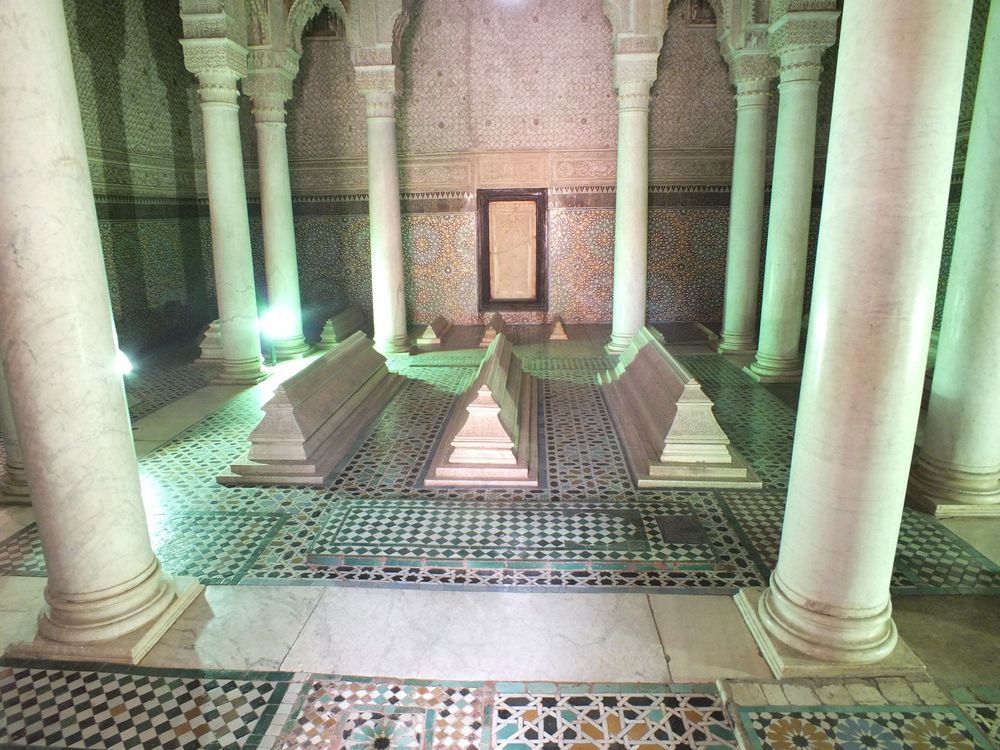
At the Twelve Columns viewing area, start with the room as a whole. Notice how vertical supports divide the space and how ornament becomes denser or changes material across surfaces. Then choose one detail to study. This approach works better than spending the entire viewing opportunity trying to reproduce a photograph taken under different conditions.
Follow staff directions and any barriers. If access is from an opening rather than through the room, treat that as the visit arrangement rather than an obstacle to negotiate. Do not lean over protected areas or hold a phone beyond a barrier to improve the frame. A clear view is worth less than preserving the fabric you came to see.
Elsewhere in the complex, compare the scale and placement of tombs and the relationship between enclosed rooms and open space. Read available labels before drawing conclusions about an individual burial. A quieter section can help you understand the whole site, even if it is less visually elaborate than the principal chamber.
If one area is temporarily unavailable, decide whether the remaining visit still meets your interest. Conservation barriers or an incomplete route should not be explained away with a promise that everything will reopen soon. Current room-by-room availability was not established during this check; ask on site before buying if one particular space is essential to you.
Plan for queues, mobility and children
Reserve about 45–60 minutes on site, excluding queues, as an editorial allowance for a measured visit. The time you need depends more on viewing access and your interest in detail than on walking distance. Do not book a rigid next appointment on the assumption that a compact monument must take only a few minutes.
If you use a wheelchair or need to avoid steps and narrow passages, contact the site before committing. The primary visitor pages do not provide enough detail to certify a complete step-free route, turning widths or independent access to each viewing point. Explain the actual requirements of your chair or mobility aid, rather than asking only whether the site is generally accessible.
With children, prepare a short explanation that these are burial places. Looking for repeated shapes or comparing a plain surface with a decorated one can keep the visit concrete. Avoid games that involve running between tombs, touching surfaces or climbing. A shorter respectful visit is more appropriate than extending the stop after attention has gone.
For photographs, follow the rules displayed that day and make space for other visitors. Do not assume that permission to take a personal photograph also allows tripods, lighting equipment or commercial work. If a chamber queue is slow, keep belongings compact so your group does not block the circulation space around it.
Reach the Kasbah without confusing the entrances
The tourism board locates the tombs on Rue de la Kasbah, close to the Kasbah Mosque. Save the monument entrance, not just the neighbourhood or mosque pin. Access to the tombs does not mean access to the neighbouring place of worship; follow the entrance signs for the attraction you are visiting.
From your accommodation, choose the walking route or vehicle drop-off according to your mobility and the day's conditions. Allow extra time to orient yourself once in the district. This guide does not promise a fixed taxi price or walking duration from every part of the medina: your exact starting point and route matter.
Arrange food, water and a rest around the visit rather than assuming the monument supplies everything. In warm weather, a nearby break before another open-air site can be more useful than squeezing in a second ticket immediately. Keep the return journey realistic, especially if the group has already spent the morning walking through the medina.
Combine with El Badi, or stop after one monument
Our El Badi Palace visit guide helps decide whether to add a different kind of site. Its larger surviving footprint and outdoor spaces offer a contrast to close observation at the tombs. Treat the two as separate visits with separate admission checks, not an automatically included combined ticket.
Choose both when comparing royal architecture genuinely interests you and you have energy for another visit. Otherwise, finish with a meal and a Kasbah walk. A simple sequence is tombs first, a break, then El Badi only if the conditions and your attention still suit it. This is a flexible editorial suggestion, not a timed guided itinerary.
Cover photograph: Marble columns and decorated tombs in the Twelve Columns chamber of the Saadian Tombs — Archival photograph; resized for display. Image remains under CC BY-SA 4.0. — Aegithalia, CC BY-SA 4.0.
Frequently Asked Questions
How much is admission to the Saadian Tombs?
The ministry portal currently lists MAD100 for foreign adults and MAD50 for foreign children aged 7–13. Moroccan and resident categories differ. Check eligibility and the current purchase screen before paying.
What are the confirmed opening hours?
The ministry displays 09:00–17:00, but the tourism board publishes a split-day timetable. Verify the day's arrangements directly, particularly for midday, late arrivals and holidays. No precise last-admission time is confirmed here.
Does an online ticket remove every queue?
Do not assume so. Paying admission does not establish priority at a chamber viewing point. Check any commercial priority claim carefully and leave room for waiting after you arrive.
Can I combine the tombs with El Badi Palace?
Yes, they make a sensible southern-medina pairing if you want contrasting architectural experiences. Check each site's admission and opening arrangements separately, and allow a break instead of treating the pair as one rapid stop.


Keep Exploring
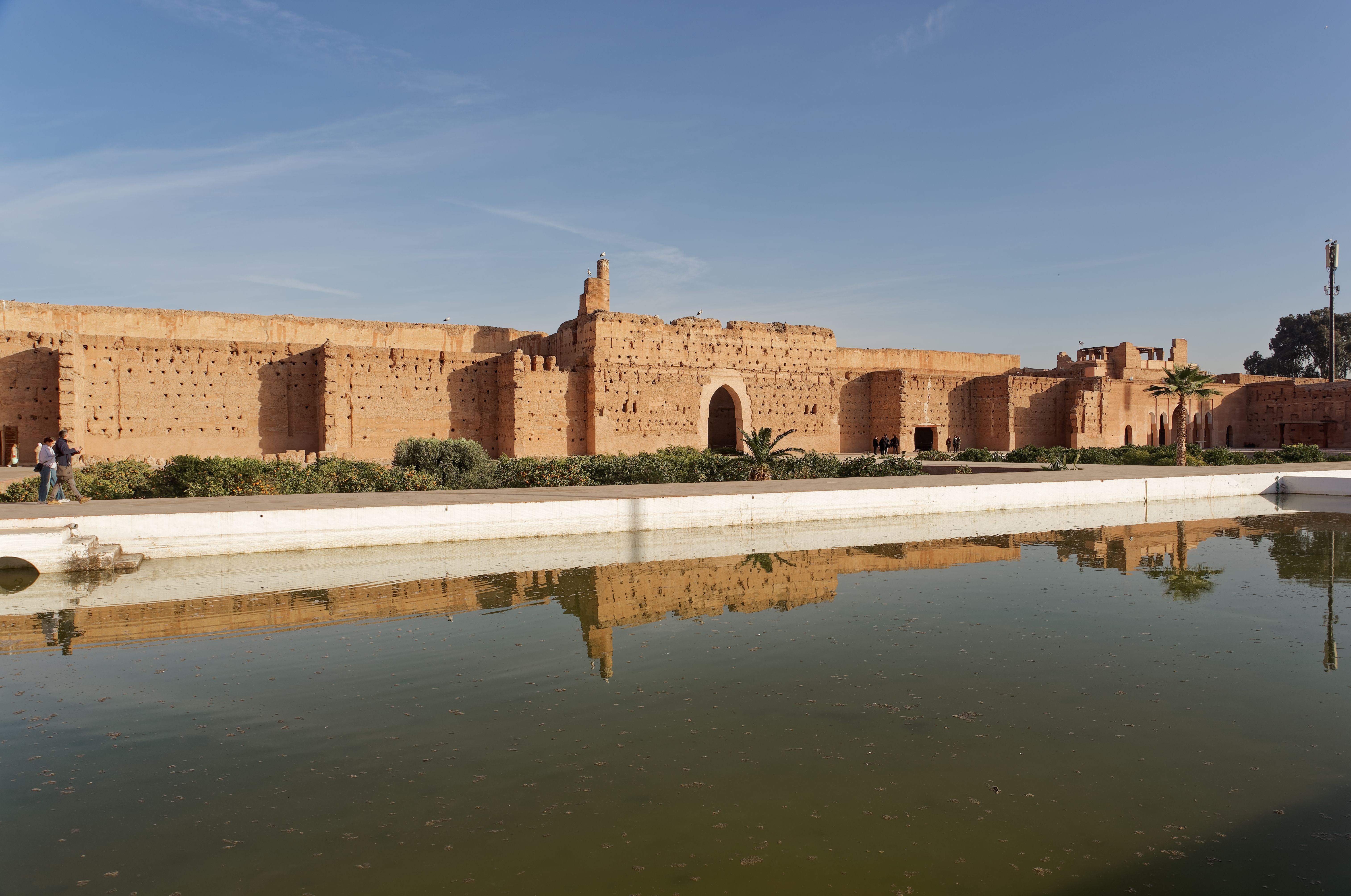
El Badi Palace: Plan Your Marrakech Visit
Plan El Badi Palace with verified admission categories, an outdoor route, the minbar access question and a practical comparison with Bahia.
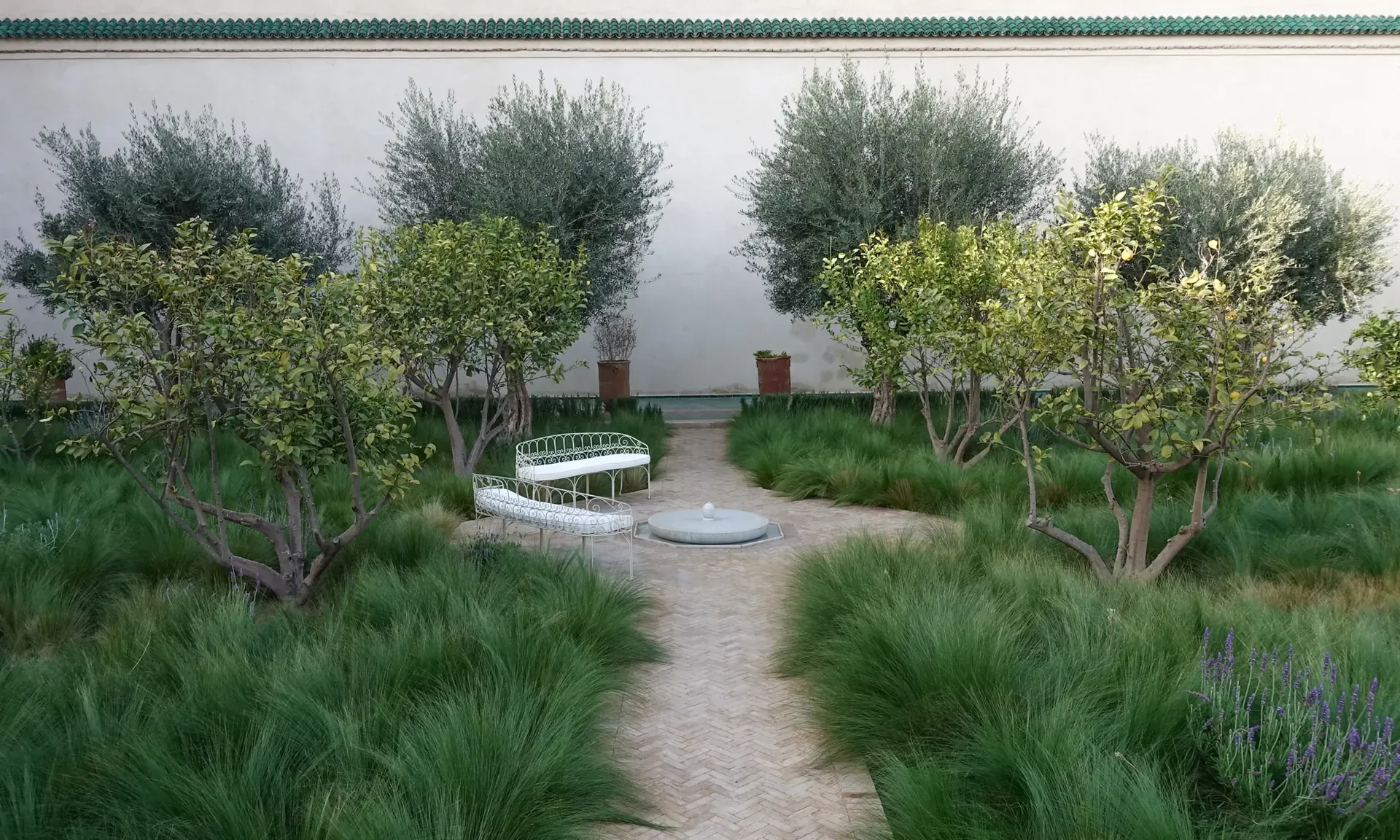
Le Jardin Secret: Plan Your Marrakech Visit
Plan a focused Le Jardin Secret visit in Marrakech's medina: compare the two gardens, follow the historic water system and decide whether the tower adds enough to your visit.
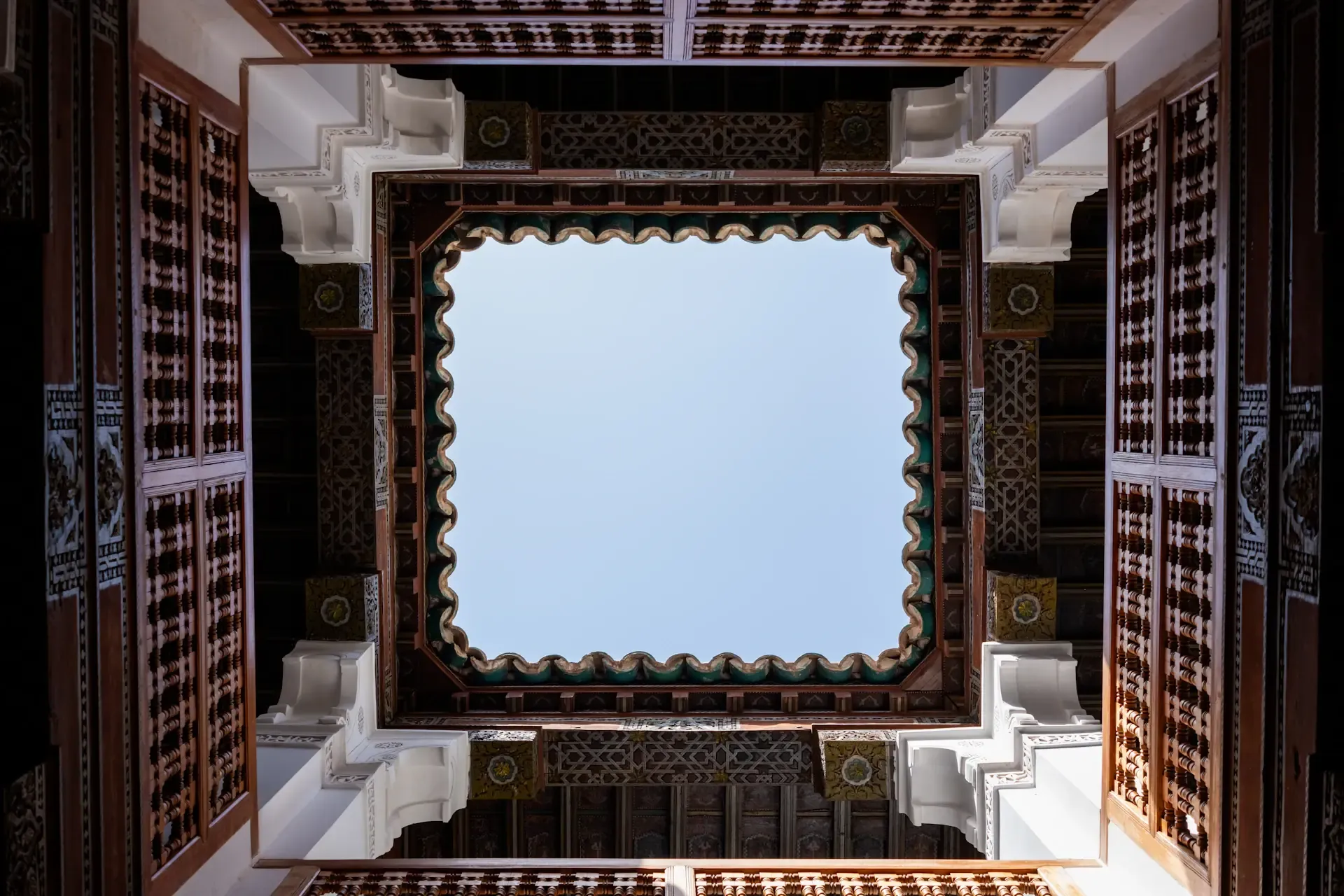
Ben Youssef Madrasa: Plan Your Marrakech Visit
Plan Ben Youssef Madrasa with verified ticket information, opening hours, architectural details and practical advice for your Marrakech visit.