
Free Things to Do in Kyoto: Know What Is Included
Enjoy Kyoto without admission tickets: compare Fushimi Inari, the Imperial Palace, Nanzen-ji's outer grounds, the Philosopher's Path and public city walks.
The best free things to do in Kyoto include Fushimi Inari's shrine paths, the designated visitor route at the Kyoto Imperial Palace, the Kamo riverbanks and the Philosopher's Path. Nanzen-ji adds a temple setting and brick aqueduct without requiring admission to its paid gardens or gate. Public streets in Gion offer another kind of experience, provided you respect residents, working people and access signs.
“Free” here means the described visit has no admission charge. It does not include transport, food, purchases, ceremonies or every space inside a religious complex. Choose a few places that fit together geographically; crossing Kyoto repeatedly to avoid a small admission fee can cost more time and money than it saves.
Choose the free experience you actually want
| Experience | What is free | What is outside this free visit | Best reason to choose it |
|---|---|---|---|
| Fushimi Inari Taisha | Ordinary shrine visit and permitted torii paths | Purchases, organised guiding and access to restricted spaces | A shrine visit with an optional longer walk |
| Kyoto Imperial Palace | Designated exterior visitor route on open days | Entry inside palace buildings; separate Sento arrangements | Court architecture and formal surroundings |
| Nanzen-ji | Outer precinct and aqueduct area | Sanmon ascent, Hojo garden and separately admitted areas | Temple scale and a contrasting brick structure |
| Philosopher's Path | Canal-side walking path | Neighbouring temples' ticketed areas | A walk with a clear beginning and end |
| Kamo River | Public riverside paths | Restaurant terraces, meals and paid activities | A flexible pause near central Kyoto |
| Gion's public streets | Walking on streets open to visitors | Private lanes, performances and photo access to people | Streetscape and neighbourhood observation |
All visit lengths below are editorial planning allowances, excluding travel and queues. They are not official tour durations or promises that a route will suit every visitor. Check the particular entrance and surfaces if stairs or walking distance are a concern.
Fushimi Inari: a substantial shrine visit without a ticket
Choose Fushimi Inari if you want a religious setting that can occupy a short visit or a longer morning. The official Kansai tourism listing confirms free admission. You do not need to buy a guided experience simply to enter the shrine; a guide would be a separate choice for explanation and organisation.
Begin with the main shrine area, then decide how far to continue along the torii paths. Allow 60–90 minutes for a shorter visit. If you want a substantial mountain walk, protect 2–3 hours and adjust the route to your pace, conditions and energy. Include the descent in that decision: the absence of an admission charge is no reason to walk farther than you want.
The lower precinct and the mountain are not equivalent physical outings. Check the official maps on site and decide on a turnaround before committing to a longer climb. Keep daylight, weather and your onward journey in mind rather than chasing an allegedly empty hour. An early arrival can help your schedule without guaranteeing quiet paths.
Free admission also has boundaries. The shrine's visitor requests prohibit entering restricted buildings and fenced areas without permission, and blocking worshippers for photographs. Eat or drink only in the designated rest areas. A passage under the torii is shared with people visiting for worship, so take photographs where you can keep moving routes clear.
This is a southern Kyoto outing. Give it its own place in the day rather than appending it to every other free walk. After a longer route, lunch and a rest may be the most useful next activity.
Kyoto Imperial Palace: free entry, with a defined route
The Kyoto Imperial Palace is a particularly useful choice when you want architecture and historical context without paying for a museum or temple garden. Its official visitor page confirms free admission with no advance application for the ordinary visit. Enter through Seishomon Gate, undergo the entrance security check and follow the designated route.
This is an exterior visit. You cannot enter the palace buildings. Allow 60–90 minutes to follow the route and look at the relationship between gates, courtyards and ceremonial buildings, rather than expecting a sequence of furnished rooms.
Check the calendar before travelling. The palace normally closes on Mondays; when Monday is a national holiday, it opens that day and closes on Tuesday instead. There is also a year-end holiday closure, and weather or court functions can prompt additional closures. The surrounding area is not a substitute for confirming access through the palace gate.
Large baggage cannot be taken inside, and the visitor route includes gravel. Sort out luggage before arriving and ask about the specific route if surfaces are difficult for your group. Do not assume free admission makes this an unrestricted place to picnic; follow the palace's visiting rules.
The similarly named Kyoto Sento Imperial Palace is a separate visit. Its official access page requires a staff-guided tour and an application or registration under its own procedures, with limited capacity. Do not transfer the main palace's walk-in arrangements to Sento or assume a place will be available on arrival.
Nanzen-ji: enjoy the outer grounds and aqueduct
Nanzen-ji is the clearest example here of a free visit that does not include the whole attraction. The outer precinct lets you appreciate the temple setting, see the large Sanmon gate from ground level and walk to the brick Suirokaku aqueduct. This is a worthwhile architectural contrast without buying access to every component.
The temple's official admission information separately lists the Hojo garden, Sanmon and Nanzen-in. Treat these as additional visits with their own charges and opening conditions. Seeing the gate from outside does not include climbing it; walking past a garden entrance does not mean seeing that garden.
Allow 45–60 minutes for the outer grounds and aqueduct, adjusted to how much you stop. Look at the contrast between the timber buildings, trees and brick arches. You do not need to turn the aqueduct into a long photography queue to enjoy its place in the grounds.
Stay on permitted paths and follow any temporary barriers. If a particular paid garden is actually your main interest, budget for it deliberately and check its current availability. Calling the whole day “free” is less useful than knowing which experience would make the visit worthwhile for you.
Nanzen-ji fits an eastern Kyoto outing. You can connect it with a canal-side walk farther north, but leave time for the streets between them: the aqueduct is not the southern entrance to the Philosopher's Path.
Philosopher's Path: the walk is separate from the temples
The official city guide places the Philosopher's Path beside a canal between the Ginkaku-ji area and Nyakuoji Bridge. This is the free attraction: a walking route through an eastern-city setting. Nearby temple admissions are separate decisions.
Give the walk 45–75 minutes, allowing longer if you stop for refreshments or explore an open, permitted side route. Before starting, choose which end suits your arrival and where you will finish. If you intend to continue to Nanzen-ji, include the connecting streets and remaining energy instead of treating everything as a single short path.
Come for the canal and the pace of the walk. Cherry blossom can change the setting in spring, but the trees will not follow your booked dates and the route is not guaranteed to be quiet. Outside the flowering period, decide whether you still want a neighbourhood walk; do not cross town expecting a seasonal photograph to exist all year.
Passing near Ginkaku-ji is not a free visit to its garden. Similarly, an open gate at another temple does not tell you which buildings or gardens are accessible without payment. Read the entrance information and choose the visit consciously rather than following others across a threshold.
Kamo River: a flexible break, with no purchase required
The Kamo riverbanks work well when you want to interrupt a busy sightseeing day without committing to another entrance or a long excursion. Choose a short section near your existing plans, walk for a while and stop where permitted without obstructing the path.
The city's Kamogawa route guide shows walking and running possibilities around the river and warns that water levels can rise with the weather. Check conditions and obey barriers; use a bridge rather than making stepping stones essential to your route. A photograph of people crossing in different conditions does not establish access on your day.
For a central visit, choose the area between Sanjo and Shijo bridges as a manageable starting section, then extend only if you want more walking. For a northern outing, investigate the paths around Kamo Ohashi instead. These are alternatives, not an instruction to walk the full river between them.
Public riverside space and the dining terraces above it are different places. Sitting by the water does not require buying a restaurant meal, while a terrace table belongs to the business operating it. Bring what you need for the weather, take rubbish away and keep space for people passing through.
Gion: appreciate the streets without treating people as sights
Gion can be part of a free walking afternoon, but the activity is looking at a working neighbourhood's streetscape. It is not a substitute for a booked performance or an invitation to seek out people leaving for work.
Follow the city's visitor guidance: do not stop maiko or geiko, take their pictures without permission or obstruct the street with photography equipment. Respect signs on lanes and property entrances. Public access to one street does not extend to every attractive alley leading off it.
Choose a limited walk on streets open to visitors, pause only where you do not block access and leave residential doorways clear. You can notice shopfronts and building details without entering a business or making a purchase. If you want tea, dinner or a cultural performance, make that a separate budget decision with clear visitor access.
A riverbank break and a public-street walk in Gion can complement each other geographically. They also offer an easy way to shorten the afternoon: stop after the part you enjoy rather than adding a hill or distant shrine simply because it has no entry fee.
Put the options together without creating hidden costs
For an eastern walking outing, pair Nanzen-ji's free outer grounds with the Philosopher's Path and allow for the connection. For a more central day, start with the Imperial Palace on a confirmed open day, then choose a section of the Kamo River. Keep Fushimi Inari as a separate southern outing. These are combinations to adapt, not a timetable that fits every accommodation.
Transport remains part of the budget. Calculate actual journeys from your base before deciding that another free sight is a saving. Our Kyoto neighbourhood guide helps with that location decision. Allow money and time for meals, and keep room for a paid visit if it provides the thing you most want to see.
Most choices here are outdoors. During heavy rain, excessive heat or uncomfortable cold, shorten the route, return to your accommodation or select a separately budgeted indoor visit. The Imperial Palace's exterior route and a temple's open grounds do not become indoor alternatives because buildings appear in the name.
Use our Kyoto attractions guide to compare the paid experiences you might add, and the Kyoto itinerary to organise a longer stay. A good free day leaves you with time to look, rest and understand the places you chose.
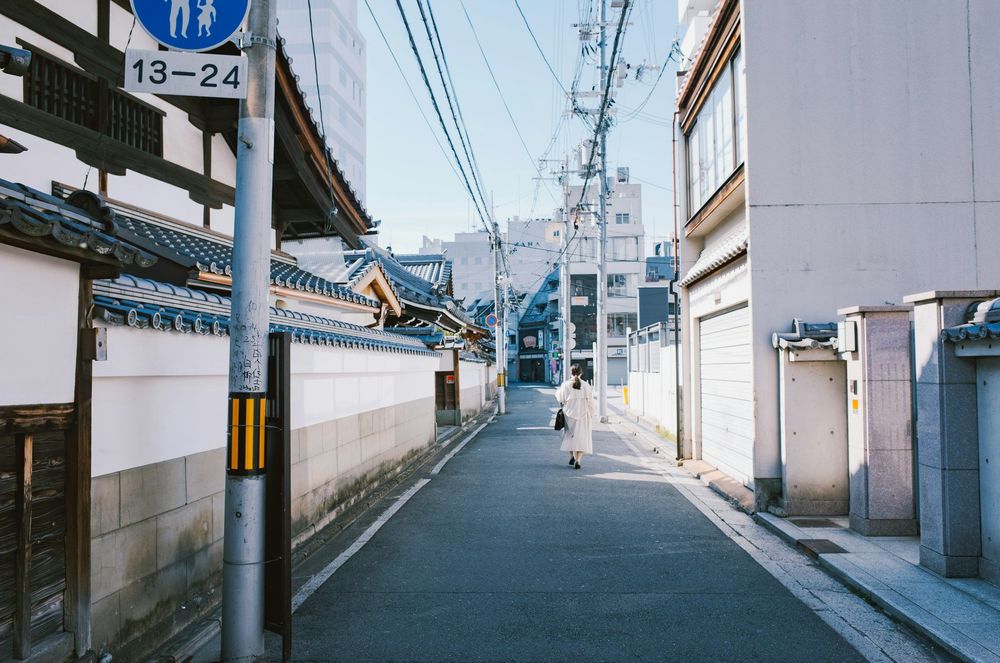
Cover photograph: A person walking along a quiet street with tiled walls in Kyoto. Photo by PJH on Unsplash
Frequently Asked Questions
Is Fushimi Inari free to visit?
Yes, ordinary shrine admission is free. You can visit the permitted shrine paths without purchasing a guided tour. Restricted buildings and fenced areas remain off limits without permission, and purchases or organised experiences are separate.
Do I need a reservation for Kyoto Imperial Palace?
Not for the ordinary visit to the main Kyoto Imperial Palace: entry is free and no advance application is required. Check its opening calendar, enter through the designated gate and follow the exterior visitor route. Sento Imperial Palace has separate arrangements.
Are all of Nanzen-ji's gardens free?
No. The free option is the outer precinct and aqueduct area. The Hojo garden, Sanmon ascent and other separately admitted areas have their own charges and opening conditions.
Can I have a completely free day in Kyoto?
You can choose a day without attraction admission fees. Transport, meals and purchases remain separate, so group nearby places and calculate your journeys. Free access also does not override private-property signs or religious-site rules.

Keep Exploring

Free Things to Do in Marrakech: Know What Is Included
Choose no-admission walks and garden breaks in Marrakech, distinguish public space from paid experiences, and find an art option to check before heading to Gueliz.
Free Things to Do in Buenos Aires
Admission-free Buenos Aires, organised into manageable outings: Casa Rosada museum, San Telmo, Moderno free days, Palermo's Rosedal and Costanera Sur.

Free Things to Do in Mexico City
Build a Mexico City day around genuinely free parks, streets and museums. Compare compact areas, avoid Sunday admission surprises and budget separately for transport.