
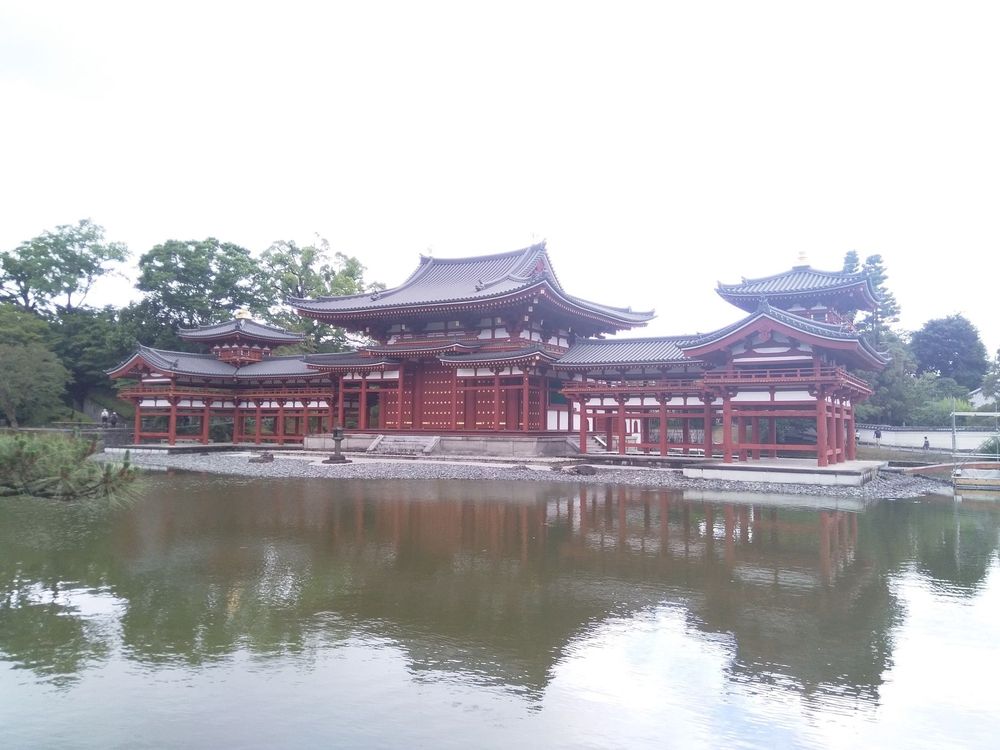
Byodoin Uji: Phoenix Hall and Hoshokan Museum
Choose the Byodoin visit that suits you: Phoenix Hall tickets, original Buddhist treasures, museum restrictions and practical access in Uji.
Visit Byodoin for three connected experiences: Phoenix Hall across its pond, Buddhist sculpture inside the hall and original temple treasures in the Hoshokan Museum. The first and third come with ordinary admission. Entering Phoenix Hall requires a separate, limited-capacity ticket bought on the day, so decide early whether the interior is essential to you.
This is a guide to looking closely at the temple, rather than fitting every Uji attraction into one outing. For the surrounding tea streets, river and station choices, use our Uji day-trip guide. To decide whether Uji belongs in your stay at all, start with our Kyoto cultural highlights.
Choose your admission before choosing your route
| Decision | Ordinary arrangements |
|---|---|
| Garden and Hoshokan | Adults ¥700; secondary students ¥400; primary pupils ¥300 |
| Phoenix Hall interior | Additional ¥300; same-day timed ticket |
| Garden hours | 08:45–17:30; last admission 17:15 |
| Museum hours | 09:00–17:00; last admission 16:45 |
| Interior visits | 09:30–16:10, every 20 minutes; maximum 35 people |
| Interior ticket reception | Inside the garden, from around 09:10; can sell out |
These details were checked on 24 November 2026 against the official admission guide. There is no cheaper garden-only ticket. An adult choosing both the ordinary visit and the interior therefore pays ¥1,000 before any optional purchases.
The garden's last entry is not a sensible target if the museum matters to you: the museum stops admitting visitors earlier and closes sooner. Work backwards from the part you most want to see, leaving enough time for more than a quick circuit of the pond.
Current restrictions: read the museum notices
Two temporary measures affect a late-November visit. The Tobira-e room notice announces work from 2–27 November 2026, with the room closed on working days but open on weekends and the 23 November holiday. This is the room recreating the hall's original door paintings and colour scheme; it is not a closure of the entire Hoshokan Museum.
The separate autumn visitor notice closes the museum's Artifact Section from 13 November–6 December 2026. Video displays are also suspended on selected busy dates, including 28–29 November. Check the notice if these displays are a particular reason for travelling, and recheck the end dates before assuming normal access has resumed.
These limitations make the distinction between the collection and today's display especially useful. A museum can own important roof tiles or reconstructed architectural elements without every related gallery being accessible that day. Plan around confirmed access, not a photograph of a previous exhibition.
Phoenix Hall: start with the building across the water
Phoenix Hall was completed in 1053. Its central hall and extending wings create a composition intended to evoke the Buddhist Pure Land. According to the temple's architecture account, it faces east across Aji-ike Pond, placing the imagined Pure Land to the west of the viewer.
Start with the whole composition before moving closer. Notice the relationship between the central roof, lower side structures and open water. The pond is part of how the building is understood, not simply a foreground for a photograph. The familiar name refers both to its birdlike profile and the phoenix figures above it.
The spreading wings can suggest corridors that you will walk through, but the temple explains that these sections serve the architectural composition rather than an ordinary circulation route. An interior ticket is not permission to roam every part of the structure. Follow the designated group route and staff instructions.
Look again after visiting the museum. Knowing that the roof ornaments have original counterparts displayed indoors changes what you notice outside. This second look is often more useful than spending the whole visit waiting for an empty viewpoint or a perfectly still reflection. Wind, light and other visitors remain part of an actual temple visit.
Is the Phoenix Hall interior worth the extra ticket?
Choose the interior if seeing Jocho's Amida Buddha in its architectural setting is a priority. Choose the ordinary garden-and-museum visit if your main interests are the exterior composition and viewing individual objects, or if the available interior time would disrupt the rest of your day.
The temple's interior guide explains that tickets are issued inside the grounds and the spoken explanation is in Japanese. Printed information is available in several languages, including English, French and Spanish; request it at reception. Do not assume an English-speaking guide is included in the small additional fee.
Buy the interior ticket before settling into the museum. Its assigned time determines your sequence. Arrive at the meeting point at least five minutes early, with the ticket ready. The temple describes the interior visit as roughly 15 minutes; any wait is additional, so a short tour can still require a substantial part of your schedule.
Since 16 October 2026, each group is limited to 35 visitors, replacing the older 50-person limit. The dated capacity announcement also permits holders of an unused interior ticket to leave and re-enter while waiting, by showing it at the main reception. Re-entry ends once the interior visit has taken place; missed slots cannot be changed or refunded under that notice. Confirm the procedure with staff before stepping outside.
What to look for around Amida
The seated Amida is the focus, but try to read the surrounding arrangement too. The temple's sculpture account identifies a wooden figure covered with lacquer and gold leaf, made in 1053 using joined wooden components. Look at the calm posture and the relationship between the figure, halo and overhead canopy.
Cloud-borne bodhisattvas form a surrounding assembly. Their poses are not identical: some play instruments, others dance or pray. Rather than trying to count everything in a limited visit, choose two contrasting gestures and notice how movement around the walls differs from the central figure's stillness.
This is a religious space as well as a protected building. Let the staff's instructions set the pace, and follow the posted photography restrictions. A useful memory of the interior can be a single visual relationship—the seated figure under the canopy, for example—rather than an attempt to record every detail before the group moves on.
Hoshokan: give the originals their own time
The museum's collection page lists the original temple bell, a pair of phoenixes and 26 cloud-borne bodhisattvas among its National Treasures, alongside an Eleven-faced Kannon and other works. These objects make the museum a substantial part of admission, even when you do not enter Phoenix Hall.
Use the phoenixes to compare an ornament seen high on a roof with an object at museum viewing distance. Their shape, surface and scale are easier to consider indoors. The temple bell invites a similar change of attention: instead of expecting a sound demonstration, look for its decorated body and the sculptural handling of its upper section.
With the bodhisattvas, slow down for differences between bodies, hands and instruments. Pick a pair and ask what makes one seem still and the other active. You do not need specialist Buddhist vocabulary to notice a tilted head, a lifted leg or the direction of a cloud. Reading the label after looking can make the explanation more memorable.
The museum opened in 2001 and places much of its structure underground to preserve the setting outside. The transition from the open pond to controlled display conditions is part of the visit's appeal. It also lets you examine details that would be difficult to make out from the garden. Respect gallery rules and temporary barriers, particularly during the current conservation work.
Build a visit around attention, not a stopwatch
For the ordinary garden and museum, allow about 60–90 minutes as an editorial planning allowance if you want to read and look carefully. An interior ticket can extend this considerably because the allocated slot may be later. The temple's model routes distinguish a basic circuit from a longer exploration; neither should be read as a guarantee about queues.
A workable sequence is to check interior availability, look at Phoenix Hall from the pond, visit the museum, then return for your slot or a second exterior view. Reverse museum and exterior time if weather or the assigned ticket makes that more comfortable. Keep any meal or tea reservation far enough away that you can decline a late slot without losing the whole day.
For families, comparing the phoenix on the roof with its original indoors gives children a concrete task. With someone who dislikes waiting, agree before arrival whether the interior is optional. The extra ticket is inexpensive compared with many attractions, but its real cost may be the time it fixes in your itinerary.
Access, payments and the final checks
JR Uji and Keihan Uji are different stations. Both are commonly used for the temple; choose the journey from your actual Kyoto starting point and use the wider Uji guide for the town route. The temple's access page gives the address as 116 Uji Renge and confirms there is no dedicated visitor car park.
The general visitor FAQ says ordinary admission accepts electronic payment, but the Phoenix Hall interior ticket is cash-only. It also confirms wheelchair access to the garden and museum while warning about rough gravel; the hall interior and some other areas are not wheelchair accessible. Ask reception about the temple's loan wheelchairs and the suitable route.
Before leaving Kyoto, check the current news, bring cash if the interior matters, and choose one priority inside the museum. Those simple decisions leave more attention for what makes Byodoin distinctive: a building, its sacred image and objects that become easier to understand when seen together.
Cover photograph: Phoenix Hall at Byodoin in Uji reflected in Aji-ike Pond — Archive photograph Image adapted for publication. — Cun Cun, CC BY-SA 4.0.
Frequently Asked Questions
Does Byodoin admission include Phoenix Hall?
It includes the garden and Hoshokan Museum. Entering Phoenix Hall costs an additional ¥300 and requires a separate timed ticket issued on the day.
Can I reserve the interior in advance?
The temple accepts reservations at the on-site reception on the day, not by phone or email. Places are limited, and reception can close when they are filled.
Is the museum worthwhile without the interior visit?
Yes, if original temple art interests you. Its collection includes the phoenix figures, temple bell and cloud-borne bodhisattvas, complementing the exterior view of the hall.
Is all of Hoshokan open in November 2026?
No. The Tobira-e room has weekday restrictions through 27 November, with specified exceptions, and the Artifact Section is closed through 6 December. Recheck the dated notices for changes.
Can a wheelchair user enter Phoenix Hall?
The temple says the interior is not wheelchair accessible. The garden and museum can be visited, with gravel and route limitations that should be discussed with reception.


Keep Exploring
Immigration Museum Melbourne: Plan Your Visit
Choose Melbourne’s Immigration Museum galleries, current exhibitions or a guided tour, with ticket eligibility, access and a thoughtful visiting plan.
Mouassine Music Museum: Visit or Evening Concert?
Choose a daytime Mouassine museum visit or a reserved music evening in Marrakech, with current schedules, shared tickets and prices to confirm.
Hyde Park Barracks Sydney: Plan Your Museum Visit
Plan Hyde Park Barracks in Sydney: free entry, audio sessions, languages, access options and the history behind the museum.