
Arashiyama: Bamboo, Temples and River Walks
A geographical guide to Arashiyama: combine the bamboo grove, a deliberate garden visit and the river without turning every attraction into an obligation.
For a first Arashiyama visit, make Tenryu-ji, the bamboo path and the Togetsukyo riverfront your core. They offer different experiences within the same outing: a composed garden, a short walk enclosed by bamboo and an open riverside landscape. A scenic train journey or a longer northern temple walk changes the scale of the day; choose one deliberately rather than attaching both at the end.
Arashiyama is in western Kyoto. The question is how to spend time after reaching it, not how many photographs you can collect before crossing the city again. Compare it with the eastern temple districts in our Kyoto attractions guide if you have not yet chosen your main outing.
| Component | Best reason to include it | Admission distinction | Editorial allowance |
|---|---|---|---|
| Public bamboo path | Walking beneath the tall stems | Separate from paid gardens | 30–45 minutes |
| Tenryu-ji | Sogenchi garden and its composed views | Garden, buildings and Hatto are separate choices | 60–90 minutes |
| Togetsukyo and riverfront | Open views and a change of pace | Public walk; activities cost extra | 45–60 minutes |
| Sagano Romantic Train | A railway outing through the gorge | Separate train ticket and schedule | Reserve a substantial extra block |
Allowances are editorial estimates for those components, not official durations. Add transport, lunch and waiting. Information checked on 16 October 2026.
Start with the right railway station
The name Arashiyama appears on different railway systems. JR Saga-Arashiyama is useful for arrivals on the Sagano Line; Randen Arashiyama is near the central temple and shopping area; Hankyu Arashiyama approaches the district from the other side of the river. These are not interchangeable entrances to a single attraction.
Tenryu-ji's official access and admission page identifies all these approaches. Decide what you want to visit first, then compare the route from your actual accommodation. From Kyoto Station, start by comparing JR. From a location well connected to Hankyu or Randen, inspect those options before adding a transfer through the main station.
The same page lists garden admission at ¥500 for high-school age and older, with buildings an additional ¥300. Garden hours are 08:30–17:00, last entry 16:50. These are published conditions, not a dated booking quote. Buildings can close for ceremonies; the published calendar lists a building closure on 29–30 October 2026. Buying the extra component depends on availability that day.
Save both arrival and departure stations. A route ending near the river may suit a different departure from a route ending near the bamboo grove. Conversely, returning to the same station keeps navigation simple if your party is tired. Do not let a generic map label choose the operator for you.
Tenryu-ji: buy the experience you want
The garden is the strongest anchor for a first visit. Tenryu-ji's grounds description identifies Sogenchi as a pond garden using the surrounding mountains as borrowed scenery. This gives you something specific to observe: how the pond, stones and more distant slopes work together from changing positions.
Spend time looking before moving on to the next view. A garden can feel like a quick passage if your attention is already on reaching the bamboo exit. If the garden is your main reason for coming, make it the centre of the morning and treat the grove as the continuation. If it does not interest you, take the public bamboo route without purchasing a garden ticket simply to follow a popular itinerary.
The buildings are another decision. Consider them if you want the relationship between interior spaces, verandas and the garden. Do not assume that a garden ticket gives you entry to every room, or that every part of the temple is a public visiting space. The Kuri, Hojo and Hatto are names worth distinguishing when reading the signs.
Hatto houses the Cloud Dragon painting and has separate admission. The painting's official page publishes ¥500 admission, 09:00–16:30 hours and last entry at 16:20. Regular viewing is on weekends and public holidays, with daily viewing during special periods. It explicitly lists closure on 28–30 October 2026. If the painting is your priority, its calendar should determine your visit rather than the garden's longer opening window.
The practical consequence is simple: arriving late enough for the garden does not guarantee time for the painting. Equally, a closed building does not mean the whole garden visit is unavailable. Check the component you actually want, and have a garden-only version ready when ceremonies affect interiors.
The bamboo path: a passage, not a day-long forest hike
JNTO's bamboo grove guide describes a short path and its relationship with Tenryu-ji. Treat the public grove and the temple garden as distinct spaces. The bamboo walk does not require buying every nearby garden admission, and a paid tour is a service rather than the price of simply walking the public path.
If you start with Tenryu-ji, use the permitted exit towards the bamboo when available, confirming whether your ticket allows any return you might need. If you visit the grove first, navigate directly to its public approach rather than entering a paid garden under the assumption that it is the only way through.
The pleasure is in the height, light and enclosure. Walk slowly enough to notice them, while keeping the path moving. A photograph with other visitors in it can still describe the place honestly. Waiting indefinitely for a completely empty frame usually spends the time that would have made a garden or river visit more satisfying.
Do not cross barriers or mark the bamboo. Kyoto's official Saga and Arashiyama guide specifically explains the damage caused by carving stems. It also links to local congestion information. Use that information to adjust your order, not as a promise that a particular hour will be empty.
Special evening events are separate arrangements. Check their advertised area, dates and ticket conditions if one interests you; do not infer from a festival advert that every daytime public path has become a ticketed attraction.
Finish the compact route beside Togetsukyo
After the garden and bamboo, turn your attention towards the river and Togetsukyo Bridge. This is the open-landscape contrast to the enclosed grove. Choose a section of the riverfront to enjoy rather than treating the bridge as merely another place to stand for a photograph.
For a compact visit, the riverfront makes a natural finish with lunch nearby. Crossing the bridge adds a different perspective, but is not compulsory if you would then retrace your steps solely to reach your station. Look at the onward route before crossing, especially when the pavements are busy or members of your group want a rest.
Keep walking and boating separate in the budget. A public riverside stroll does not include a boat ride. Likewise, a boat advertised elsewhere in the district may be a different product with a different departure point. Read the operator, landing and return arrangements before deciding it fits into your afternoon.
If rain or fatigue makes the riverside less appealing, shorten it and use a seated lunch as the contrast to the temple. Do not describe a long exposed walk as a rest simply because it lacks an entrance ticket. The useful measure is how the next part of the day feels for the people actually doing it.
Add the scenic train only with a return plan
The Sagano Romantic Train operator provides a separate calendar, timetable and reservation route. This is a sightseeing railway choice, not a substitute name for the JR train that brought you from central Kyoto. Check the service and available departure before organising the rest of the visit around it.
Station choice matters here too. The operator's station guide places Torokko Saga beside JR Saga-Arashiyama and Torokko Arashiyama near the bamboo path. It warns that Torokko Arashiyama has about 60 steps to the platform and recommends Torokko Saga for wheelchair users and people using walking sticks.
A departure near the grove can look efficient on a map but be the wrong access choice. Resolve the station before purchasing, along with any assistance or equipment arrangements your group needs. Include reaching the platform in the schedule rather than arriving at the station's map pin at departure time.
Choose a return strategy as carefully as the outward ride. A round trip, onward connection and a separately booked river activity are different plans. If your desired service is unavailable, the garden, bamboo and riverfront still make a coherent outing. Avoid filling the gap with an unplanned distant attraction merely to preserve the feeling of a full day.
Decide whether to stay compact or continue north
The central loop is a good default for visitors who also want time elsewhere in Kyoto. A longer walk towards northern Saga should replace the scenic train or another major component. The district's temples and quieter streets are not all adjacent to the bridge, even when travel articles group them under Arashiyama.
Choose a named northern destination first, then check its opening and the approach. Avoid walking north without a destination and discovering that the return consumes the afternoon. If a particular temple is the main reason for your trip, reverse the priority: visit it first and make the central grove optional.
For the compact version, the sequence is station, Tenryu-ji, bamboo, river and lunch, adjusted to your arrival operator. For a train-focused version, anchor the outing around the confirmed departure and remove a lengthy temple extension. Both plans leave room to experience the district rather than continually catching up with a list.
Our Kyoto itinerary places a western outing within a broader stay. Keep the rest of that day light if you choose the extended version here; cross-city travel is still part of the day even after the sightseeing finishes.
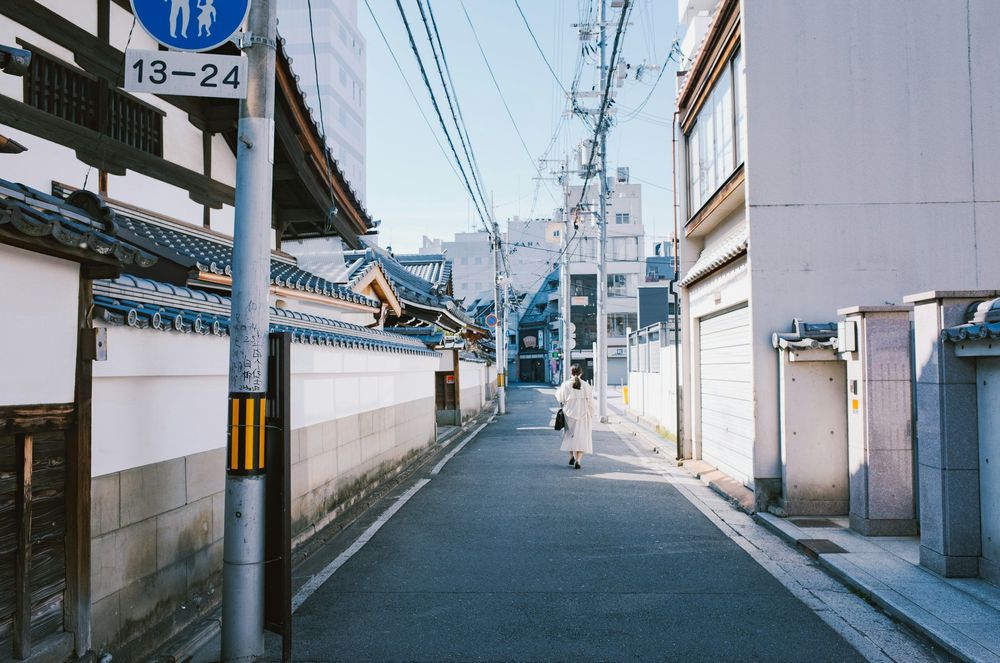
Cover photograph: Destination overview — A person walking along a quiet street with tiled walls in Kyoto. Photo by PJH on Unsplash
Frequently Asked Questions
Do I need a Tenryu-ji ticket to walk through the bamboo grove?
The public bamboo path and the paid temple garden are separate. Use the public approach if you do not want a garden visit, and follow current access signs.
Does Tenryu-ji admission include the Cloud Dragon painting?
No. The Hatto has separate admission and its own viewing calendar, hours and ceremony closures. Check it specifically if the painting is your priority.
Are Saga-Arashiyama and Torokko Saga the same station?
No. JR Saga-Arashiyama serves the regular railway, while adjacent Torokko Saga serves the scenic train. Save the correct station and operator for each journey.
Can I combine the garden, bamboo, river and scenic train?
Yes, with enough time and a suitable train departure, but treat the train as a substantial addition. Plan the return and remove a long northern temple extension rather than compressing everything.

Keep Exploring
Singapore Chinatown: Temples, Food and Walking Stops
Build a Chinatown visit around South Bridge Road's temples, nearby shophouse streets and one good meal, with clear choices for morning, afternoon and rain.
Mexico City Anthropology Museum: Plan Your Visit
A focused Anthropology Museum visit: compare Mexica, Maya and regional galleries, make room for living cultures and understand practical admission choices.
Fushimi Inari: Plan Your Shrine Walk
A focused guide to choosing how far to walk at Fushimi Inari, allowing for the descent and visiting a working shrine respectfully.