
Singapore Chinatown: Temples, Food and Walking Stops
Build a Chinatown visit around South Bridge Road's temples, nearby shophouse streets and one good meal, with clear choices for morning, afternoon and rain.
For a first Chinatown visit, start around Pagoda Street, follow South Bridge Road to the temples and finish with a meal at Maxwell or Chinatown Complex. A morning visit works particularly well if entering Sri Mariamman Temple matters: its regular opening day has a substantial midday break. An afternoon still works for streets and food, but it should not depend on entering every religious building.
This is a small neighbourhood outing, centred on Kreta Ayer and South Bridge Road. Telok Ayer and the wider Chinatown precinct can wait for another walk. For the rest of your trip, use our Singapore highlights guide; here, the aim is to enjoy a few connected streets without turning lunch into a hurried checkpoint.
Choose the version that fits your day
All durations are editorial planning allowances, including ordinary pauses but excluding travel to Chinatown and unusually long food queues. They are not advertised tour lengths.
| Visit | Main sequence | Allow | Important limit |
|---|---|---|---|
| Temples and lunch | Pagoda Street, Sri Mariamman, Buddha Tooth Relic Temple, one food centre | 3–4 hours | Reach Sri Mariamman during its morning window |
| Streets and a meal | Pagoda Street, Temple Street, Smith Street, food centre | 2–3 hours | Temple interiors are optional |
| Architecture and an indoor stop | Temple exteriors, Singapore City Gallery, Maxwell | 3–4 hours | Gallery closes Sundays and public holidays |
| Evening food walk | Shophouse streets, dinner, optional Sri Mariamman visit | 2–3 hours | Do not assume daytime museum access continues after dark |
The short version is already a worthwhile outing. Add another precinct only when you have energy for another walk, rather than because a map labels everything “Chinatown”.
Begin with Pagoda Street and the shophouses
The Chinatown Business Association walking trail identifies Pagoda Street and Temple Street as the obvious starting streets. Use Chinatown MRT for this beginning and follow the station's current signs towards Pagoda Street. Choose a meeting point outside the flow of people if your group arrives separately.
Look above the merchandise as well as into the shops. The relationship between narrow fronts, upper-storey windows and covered walkways helps explain the shape of the street. Compare neighbouring façades instead of trying to photograph every storefront. A short, attentive look at the buildings gives the walk more substance than a succession of souvenir stops.
There is no need to buy something at each stop. If you want a practical souvenir, browse first and return after the temple visits, when carrying bags is less awkward. Leave shop entrances and the covered walking space clear; they are working premises, not a photography set.
The Chinatown Heritage Centre is on this street, but treat its admission as a separate booking decision. If that museum is your priority, confirm its own current visitor arrangements before setting your route. The street walk remains possible without adding an interior museum visit, and it is better to reserve enough attention for the exhibits than to squeeze them between a temple closing and a lunch queue.
Sri Mariamman: arrange the morning around its opening window
At South Bridge Road, the Hindu temple's sculpted entrance tower is a useful orientation point. The Hindu Endowments Board's temple page gives regular hours of 07:00–12:00 and 18:00–21:00, with the evening closing extended to 21:15 on Fridays. Religious events can affect visitor arrangements, so check the current page and signs before entering.
This is why a morning start changes the experience. If you reach the temple after the morning window, enjoy the exterior and continue; do not spend the afternoon waiting at the gate. Returning in the evening makes sense if you are already eating nearby. It is less useful to split a short Singapore day solely to complete a checklist.
The tower is only the beginning of what to notice. Where visitor access permits, look at how the entrance leads towards the pillared worship hall, and at the contrast between densely decorated surfaces and the open courtyard. The temple's ongoing religious use is the central fact of the visit: stand back from worshippers, avoid blocking movement and let staff directions determine where you go.
The local precinct's temple introduction describes its importance to early Indian immigrants, including its role as shelter and a place for marriages. This gives a useful corrective to the district's name: a Chinatown visit also reveals religious and community histories that are not exclusively Chinese.
Continue to Buddha Tooth Relic Temple
Walk along South Bridge Road towards the Buddha Tooth Relic Temple, taking the opportunity to compare the streets branching off it. Avoid treating the distance between the religious buildings as dead time; the shopfronts and changes in street activity are part of the neighbourhood.
The temple's own account explains that the building opened in 2007, with design drawing on Tang Dynasty architecture and the Buddhist mandala. That distinction matters: its traditional appearance does not make this an ancient surviving structure. Notice the overall composition and rooflines before moving inside, where access is permitted.
The official floor directory gives a useful way to choose your visit: the ground level has Hundred Dragons Hall and Universal Wisdom Hall, while the third storey holds Buddhas of the World Museum. Choose the ground-level halls for a shorter architectural visit, or allow more time for the museum's artefacts. The fourth-storey Sacred Light Hall has a public viewing area; the inner chamber itself is reserved for the Sangha. A visitor can observe from the permitted area, not walk up to the relic stupa.
Do not plan this as a guaranteed late-evening museum. If the collections are the reason you came, arrive during a confirmed daytime visitor session and keep lunch flexible. If you are mainly interested in the streets, an exterior visit can still be satisfying; there is no need to portray it as the equivalent of seeing the museum.
Dress and behave for working religious sites
Choose light clothing that covers shoulders and knees, and footwear you can remove easily where requested. Carry your own cover rather than relying on a loan being available. Different buildings can have different arrangements for shoes, photography and bags; check at each entrance instead of carrying one rule from the previous stop.
Ask before photographing a ceremony or an individual worshipper. A wide view of architecture and a close photograph of someone praying are different decisions. Keep voices low, put your phone away when asked and leave ritual objects untouched. If you are unsure whether a space is for visitors, pause at the boundary and ask.
Food purchases are easiest after the temples. A takeaway meal creates unnecessary complications when entering a religious building, and warm dishes are better enjoyed at a table. If someone in the group would rather skip an interior, agree a nearby public meeting point and a return time. That allows a respectful visit without rushing everyone through the same doorway.
Maxwell or Chinatown Complex: choose one main meal
Maxwell Food Centre is on Kadayanallur Street and makes a straightforward finish after the South Bridge Road temples. Choose it if you want to move from sightseeing to a clear lunch stop. A particular stall may be the attraction, but its operating hours and queue are separate from those of the overall centre.
Chinatown Complex, at 335 Smith Street on the association's walking trail, is a good alternative when browsing food stalls is a substantial part of the outing. It also fits a return towards Smith Street. Decide which centre is your main meal before buying several snacks; otherwise the food you most wanted can arrive after you have lost your appetite.
For Maxwell, identify a first choice and a fallback before joining a long queue. For Chinatown Complex, agree a recognisable meeting point before your group separates to order. At either centre, check the displayed price, portion and payment arrangement with the stall. Do not assume every vendor accepts the same method or keeps the same hours.
There is no universal best lunch time for every stall. An early temple visit followed by a meal gives you flexibility, but if a particular dish is essential, confirm that business directly. Our Singapore hawker-centre guide explains ordering and the differences between centres in more detail. Here, the useful decision is which meal fits the walk, rather than how many famous stalls you can collect.
Add street details, not another compulsory attraction
After the meal, return through Smith Street or Temple Street if you still want to browse. Sit for a drink before adding another destination. This is also a good moment to revisit a shop without carrying purchases through the temple stops.
For street art, Mohamed Ali Lane offers a short detour near South Bridge Road. Look at the scenes represented rather than using the mural only as a portrait backdrop. If other visitors are taking photographs, share the space and keep business access open. A mural stop should be a pause in the route, not a reason to obstruct a narrow lane.
Telok Ayer is a separate extension. If you specifically want another temple and a different set of streets, leave a genuine additional block of time and check the chosen building's access. If you are already hot or full after lunch, finish here. A compact walk with attention to detail is more rewarding than an extended route completed only because it appears on a map.
Rain, heat and a useful indoor alternative
Covered walkways help in places, but this is not an entirely sheltered route. During heavy rain, settle into a permitted indoor space and shorten the street component. Do not use a working temple as an automatic substitute for a café or assume its visitor areas remain available during a service.
Near Maxwell, Singapore City Gallery offers an urban-planning perspective and free admission. The published schedule is 09:00–17:00, Monday to Saturday, closed Sundays and public holidays. URA also announces a partial closure from 1 December 2026. Check which displays remain available before making it the centrepiece of a later visit.
Choose the gallery when you want to understand how the city is organised; choose a longer meal break when you mainly need a rest. Its planning exhibits complement the street walk, but they do not replace a neighbourhood-history museum. On a Sunday, keep the food-and-streets version and avoid promising an indoor gallery stop that cannot happen.
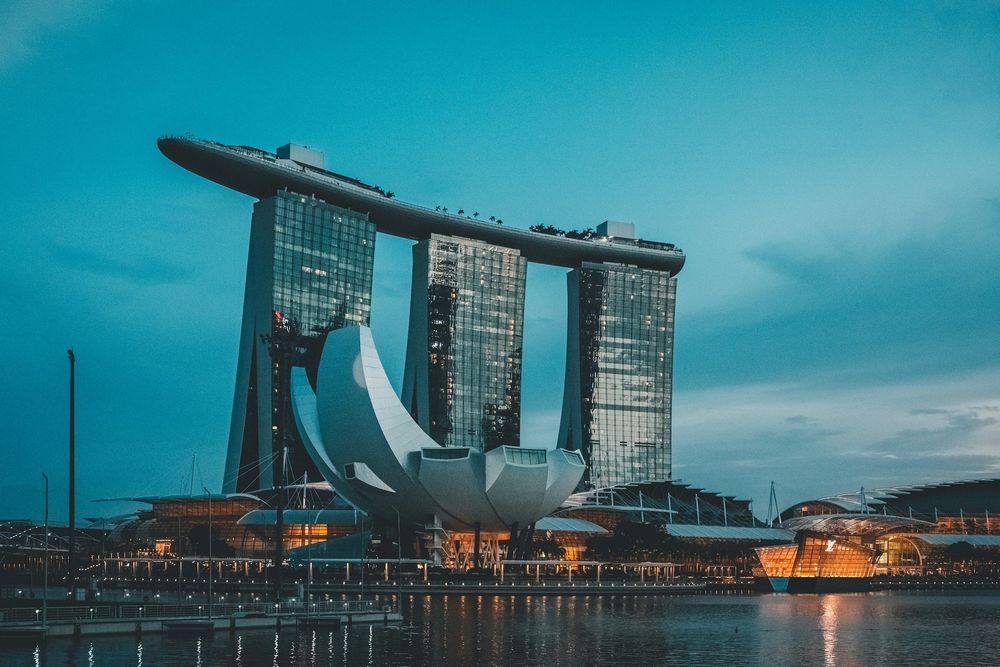
Cover photograph: Destination overview — Marina Bay Sands and the Singapore waterfront at dusk. Photo by Lily Banse on Unsplash
Frequently Asked Questions
How long should I allow for Singapore Chinatown?
Allow 3–4 hours for temples, nearby streets and one meal, or 2–3 hours for streets and food with optional interiors. These are editorial allowances, excluding travel to the neighbourhood and exceptional queues.
Is morning or evening better for visiting the temples?
Morning is the more convenient choice for combining Sri Mariamman with daytime visits elsewhere. Its published regular windows are 07:00–12:00 and 18:00–21:00, extending to 21:15 on Fridays. Check event arrangements before travelling.
Should I eat at both Maxwell and Chinatown Complex?
Choose one as the main meal. Maxwell fits a finish after the South Bridge Road temples; Chinatown Complex suits a food-browsing stop near Smith Street. Visit both only if you actively want a longer food outing.
Can I do this walk in the rain?
Shorten the exposed street sections and use a meal break. Singapore City Gallery is a possible indoor addition on its open days, subject to the partial closure from 1 December 2026. The route itself is not continuously sheltered.

Keep Exploring
Things to Do in Singapore: Choose Your Highlights
Choose Singapore highlights that earn their place: conservatories, neighbourhood meals, orchids, art and wildlife, with practical trade-offs and current access checks.
Things to Do in Oaxaca: Culture, Food and Day Trips
A practical guide to Oaxaca de Juárez: connect museums with food and living craft traditions, and choose a valley excursion that deserves your time.
Marrakech Souks: A First-Visit Guide
Explore Marrakech's souks with a clear starting point, a small craft shortlist and time to compare purchases, without turning your first visit into a shopping marathon.