
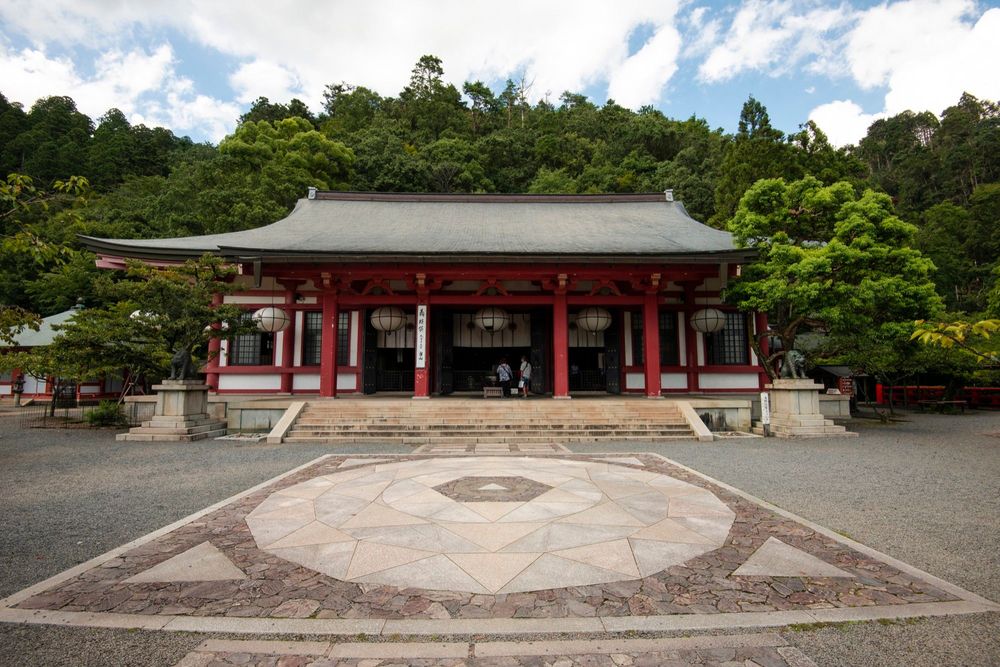
Kurama and Kibune: Plan a Day from Kyoto
Choose a temple visit, forest crossing or Kibune valley day, with current cable notices, shrine access and seasonal dining limits.
Kurama and Kibune offer two quite different days in northern Kyoto: a temple visit followed by a forest crossing, or a gentler trip to a river valley and shrine. Decide which you want before boarding the train. The mountain route involves climbing, descending and exposed tree roots; a photograph of lantern-lined steps or a riverside lunch does not convey that effort.
Access checked on 13 November 2026: Kurama-dera's website reports normal cable operation, but lists a morning inspection closure on 27 November and a winter inspection closure on 21–25 December. This does not confirm that the entire trail to Kibune is open. Check current temple notices and ask at the entrance before committing to the crossing. Summer dining platforms are a separate, seasonal experience, not a promised part of a November visit.
For the wider choice between northern mountains and Kyoto's city neighbourhoods, start with our guide to things to do in Kyoto. Give this excursion its own generous part of the day rather than adding it after a long temple circuit elsewhere.
Choose the day that fits your group
| Plan | Main reward | Main constraint |
|---|---|---|
| Kurama-dera and return to Kurama | Temple approach, main hall and mountain setting | Uphill access; cable service needs checking |
| Kurama to Kibune over the mountain | Temple visit followed by forest walking and a different valley | Uneven trail, descent, weather and daylight |
| Kibune and Kifune Shrine without the crossing | River setting, shrine and a possible reserved meal | Station is separate from the shrine; many shrine steps |
| Seasonal riverside dining | A meal on a platform above the water | Restaurant dates, weather policy, booking and budget |
A temple-only visit is a complete outing. Choose it if part of your group enjoys cultural sites but does not want a mountain walk. Equally, a Kibune visit does not require first climbing through Kurama. Connecting the two on foot is worthwhile when the walking itself is a reason for going, rather than an obstacle between photographs.
As an editorial planning allowance, reserve roughly half a day for one side and most of a day for the crossing with both religious sites and a meal. These are not operator journey times. Your hotel location, transfers, queues, walking pace and chosen lunch all change the total.
Getting there: choose the Kurama branch
Eizan Railway's official route information is the clearest starting point. Its trains leave Demachiyanagi, then the lines divide at Takaragaike. You want the branch towards Kibuneguchi and Kurama, not the one towards Yase-Hieizanguchi. Plan the journey from your accommodation to Demachiyanagi as well as the scenic section beyond it.
For the temple-first walk, travel to Kurama. For a shrine-focused visit, use Kibuneguchi and arrange the onward connection towards Kibune. These are different stations: getting off at Kibuneguchi does not put you beside the famous shrine steps. The shrine's access page links the relevant Kyoto Bus timetables; check the direction and date, including the return service, before leaving the station.
The large-window Kirara train is an appealing bonus, but do not make an otherwise suitable departure depend on catching that particular vehicle. Check its separate timetable if it matters to you. Nor should a rail pass be assumed to cover every part of the outing: Eizan, a local bus and the temple cable are distinct services. Compare the actual journeys you plan with the conditions of any ticket you buy.
On the return, leave room for a bus queue or a slower walk to the station. A restaurant reservation in central Kyoto immediately after an optimistic mountain itinerary creates unnecessary pressure. Public transport also avoids relying on the shrine's very limited parking, for which the shrine itself recommends alternatives.
Kurama-dera: decide about the crossing at the temple
The temple approach is part of the visit. Walk at a pace that lets you notice the buildings and forest rather than treating the climb as a timed approach to the main hall. If you use the cable, you still need to consider the remaining temple paths and any later mountain section separately; a cable ride does not convert the whole outing into an accessible route.
The current Kurama-dera homepage lists the first uphill cable at 08:40, last downhill at 16:25 and main-hall opening from 09:00 to 16:15. At the check on 13 November 2026, it also announced cable inspections on the morning of 27 November and throughout 21–25 December. Recheck these details close to your date, especially if you need the cable to manage the ascent or descent.
The main hall and its broad foreground give the temple-only visitor a clear destination. Allow time there before deciding whether to continue. If anyone is already tired on the approach, return on the Kurama side rather than assuming the far side will be easier. A long descent can be as uncomfortable as a climb for someone with knee problems.
Kurama's association with the warrior Yoshitsune and the tengu belongs to its legends, which Kyoto's official area guide explains. That context helps make sense of the imagery without presenting folklore as historical evidence or promising spiritual effects from a walk.
The forest crossing: roots, pace and a real exit decision
The connection between Kurama-dera and Kibune is a mountain trail. Kyoto's guide identifies the cedar-root section known as Ki-no-ne Michi; the roots are part of the footing, not merely a scenic backdrop. Wear shoes with reliable grip and keep your hands free enough to manage uneven ground. Smooth city shoes and an umbrella-only rain plan are poor matches for a wet descent.
The Japan National Tourism Organization's Kurama guide describes the crossing, but a general tourism description is not a live trail-status bulletin. Before entering the forest section, check posted restrictions and ask temple staff whether the route through to Kibune is usable that day. Respect a closure even when an older map still draws a continuous line.
Starting on the Kurama side puts the temple before the forest and Kibune after it. That is a useful sequence if you want to visit the hall before lunch or later transport becomes pressing. It does not make the route all downhill. Reversing the walk changes the climbing and descending but does not remove either from the day.
Bring water and something small to eat, and choose a turnaround point before your energy or daylight becomes marginal. Do not count on finding a café halfway through the forest. Families should judge the youngest walker's ability on uneven steps and roots, including the descent, rather than on the distance they manage on a pavement. A stroller is not a solution for this crossing.
If the weather deteriorates or the trail is closed, keep the temple visit and travel separately to the valley only if the remaining transport and time work. You do not need to recover every item from the original plan. Staying on one side can produce a much better day than rushing between two incomplete visits.
Kibune and Kifune Shrine: leave time beyond the photograph
Kibune is the place name; Kifune is the shrine's official English spelling. The shrine's visitor information describes three shrine areas: the main shrine, Yui no Yashiro and the rear shrine. If you want to explore beyond the familiar lantern-lined approach, leave time for the valley itself instead of treating the entrance steps as the whole visit.
The same official page currently lists main-shrine access from 06:00 to 20:00 for 1 May–30 November, with the goods shop from 09:00 to 17:00. Grounds access and staffed services are different. An evening arrival should not be planned around buying an amulet or receiving a seal after the shop's hours. Confirm the winter schedule for December onwards.
The shrine is free to enter, but its stone stairs are a significant limitation: the shrine explicitly says it cannot be visited with wheelchairs or strollers. A valley outing may still interest some travellers with limited mobility, but do not describe the shrine visit as step-free or assume that a roadside arrival solves the access problem.
Keep the steps and prayer areas clear while taking pictures. If you linger for evening lanterns, plan the return connection first. An illumination listing without a clear current year should not be treated as confirmation of a special event on your travel date.
Riverside lunch: book an experience, not a picture
Kibune's kawadoko are platforms over the river, associated with summer dining in Kyoto's official area guide. A restaurant may serve meals outside that season without operating its river platform. A booking for an indoor meal and a booking for the photographed waterside setting are therefore different promises.
Before committing, ask the restaurant about the platform's operating dates, the weather arrangement, the menu, dietary requests and the total price. Check whether a delay after the hike would affect your booking. If the meal is the main purpose of the day, visiting Kibune directly gives you more control over arrival than making it depend on an uncertain trail crossing.
For a November outing, plan around the shrine, river valley and whatever dining service the restaurant actually confirms. Do not assume summer platforms, flowing-noodle service or a walk-in table from a photograph shared in another season. Carry a small snack so that a missed lunch sitting does not turn into a rushed return.
How to fit it into a Kyoto stay
On a short first visit, compare this excursion with the priorities in our three-day Kyoto itinerary. Kurama and Kibune are especially rewarding when you want forest and mountain scenery between days of city sightseeing. They are a weaker fit when your remaining priorities are all on the opposite side of Kyoto or when everyone needs a low-effort, step-free day.
Keep one clear purpose: temple, hike or meal. Then let the other elements fit around it. Check the train and bus plans, temple notices, forecast and any restaurant reservation the evening before; review the trail decision again on arrival. That small amount of flexibility protects the part of the day you actually came for.
Cover photograph: Kurama-dera main hall above a stone forecourt, backed by green forest — Maarten Heerlien from Voorschoten, The Netherlands, CC BY 2.0.
Frequently Asked Questions
Can you visit Kurama and Kibune without hiking between them?
Yes. Visit Kurama-dera and return on the Kurama side, or reach Kibune via Kibuneguchi and the onward transport connection. Combining separate visits requires extra time; neither depends on completing the forest crossing.
Is the Kurama–Kibune trail suitable for everyone?
No. It includes climbing, descending and uneven roots, and its suitability changes with weather and current restrictions. Check the route locally before starting. The cable does not bypass the entire mountain walk.
Is the Kurama-dera cable running?
On 13 November 2026 the temple reported normal operation, with planned closure on the morning of 27 November and on 21–25 December for inspections. Recheck the temple's current notice for your date; cable operation does not confirm trail access.
Can you eat on Kibune's river platforms in November?
Do not assume so. Kawadoko are a seasonal summer dining experience. Confirm the specific restaurant's dates, seating location and weather policy; an available indoor meal does not guarantee a river-platform table.


Keep Exploring
Imlil from Marrakech: Plan a Valley Day Trip
Choose a village visit, a guided valley walk or an overnight stay in Imlil, with practical questions about transport, terrain, meals and mountain conditions.
Pulau Ubin: Plan a Nature Day from Singapore
Plan Pulau Ubin with on-demand boats, walking or cycling choices, Chek Jawa boardwalk access and a flexible return to Singapore.
ANIMA Garden from Marrakech: Plan Your Visit
Plan ANIMA as a garden outing from Marrakech, with the official shuttle, ticket categories, café time and clear limits on access and onward travel.