
Tenryu-ji Kyoto: Garden, Tickets and Cloud Dragon
Choose Tenryu-ji garden, buildings and Cloud Dragon tickets, with current hours, autumn 2026 openings and practical Arashiyama planning.
Choose Tenryu-ji for a garden-led visit in Arashiyama, then decide whether the temple buildings and Cloud Dragon painting deserve extra time and separate admission. The pond garden is a complete experience in its own right. Buying every available ticket makes sense only if you want the different viewpoints and the painting, and those spaces are open on your date.
Allow about 60–90 minutes for the garden and selected buildings, or roughly two hours with the Dharma Hall and a slower pace. These are editorial planning estimates, excluding transport, queues and lunch. Our Kyoto highlights guide helps place the temple within your wider choices; our Arashiyama guide covers the surrounding bamboo and riverside outing.
Fast facts: three admissions to understand
| Choice | Published adult price | Practical distinction |
|---|---|---|
| Garden | ¥500 | Sogen Pond and the garden route |
| Garden and temple buildings | ¥800 total | Garden admission plus ¥300; buildings can close for ceremonies |
| Cloud Dragon in the Hatto | ¥500 separately | Its own calendar and earlier closing time |
| Garden hours | 08:30–17:00 | Last admission 16:50 |
| Hatto hours when open | 09:00–16:30 | Last admission 16:20 |
Information was checked on 12 November 2026 against the official admission page and the separate painting schedule. Prices are published tariffs, not a booking quote. The garden rate above applies from high-school age; younger visitors have different categories. Recheck the current notices for your travel date.
Decide which ticket matches your interest
Choose the garden ticket if your main interest is landscape. You can look at the water, rocks, planting and mountain backdrop without turning the visit into a sequence of interiors. This is the simplest choice for someone pairing one paid attraction with an outdoor Arashiyama walk.
Add the buildings if you enjoy the relationship between architecture and a garden: how a roof edge frames a view, how a veranda changes your position, and how looking from a building differs from walking outside. That is a meaningful additional experience, but it should not be an automatic purchase made from fear of missing something.
Treat the Hatto as a third decision. Its ceiling painting has a different focus from the garden. Someone interested in visual art may prioritise it; someone primarily seeking a landscape walk may prefer to spend that time outside. A ticket for garden and buildings does not include the separate Dharma Hall admission.
For a standard adult buying all three components, the published amounts add up to ¥1,300. Check availability before paying for the combination. The temple warns that buildings can close without notice for ceremonies or other activities. A general opening time is not a guarantee that every interior is accessible.
Read the garden from the pond outward
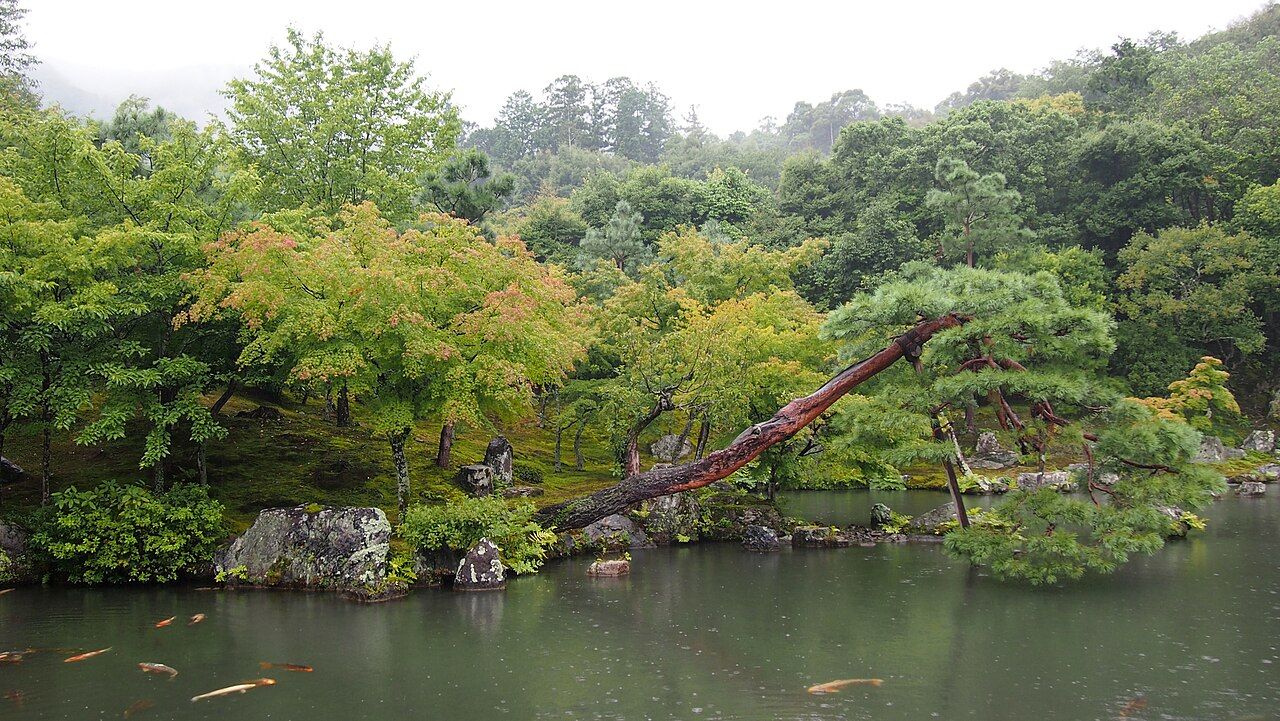
The temple's grounds guide identifies Sogenchi as a strolling pond garden associated with Muso Soseki. Its mountain backdrop is part of the composition, a technique often called borrowed scenery. Begin by looking at the full relationship between water, planting and the land beyond rather than searching immediately for one famous detail.
A useful first exercise is to distinguish the near, middle and distant view. The pond gives you a foreground; rocks and planted banks shape the middle distance; the hills carry the eye beyond the garden's immediate boundaries. Notice which elements change as you move a short distance along the permitted path.
Then choose a detail: a rock grouping, a branch extending over the water or a reflection. Compare it from two positions. This makes a garden visit more active than simply waiting for a photograph with no other visitors in it. Reflections depend on light and weather, so a picture seen online is not a promise of the conditions you will find.
You do not need to know the name of every plant or the symbolism of every stone. The museum-like urge to identify everything can work against the pleasure of seeing the space. Read a little interpretation, look again, then leave room for what catches your own attention.
Buildings: look at the frame as well as the view
If you buy the additional building admission, give that part a purpose. Look at how the garden is presented from the permitted viewing areas, then compare it with your view from the outdoor route. The same pond can feel different when a building supplies a clear edge and a place to pause.
The Kuri's white plaster and timber façade is a recognisable architectural feature, while the Hojo relates closely to the pond. Use the current on-site route to understand which spaces you may enter. A name on a precinct map does not mean every room is available for casual exploration.
Tenryu-ji is also a working religious institution. The temple's historical account dates its foundation to 1339 and explains repeated destruction and rebuilding. Do not assume that the age of the institution is the age of every visible building. The continuity of the place and the dates of its structures are different kinds of history.
Follow shoe-removal instructions and keep passageways clear. If taking photographs would obstruct others, step aside and let the group pass. A considered visit does not require occupying one viewing position indefinitely; there is often more to notice by moving and returning your attention to the garden.
Cloud Dragon: check the date before making it essential
The official Cloud Dragon page identifies the present ceiling painting as a 1997 work by Kayama Matazo. It is designed so that the dragon appears to look toward the viewer from different positions in the hall. That makes it an experience of looking within a particular room, rather than just another picture to collect.
Ordinary access is on Saturdays, Sundays and public holidays, with additional seasonal exhibition periods. For autumn 2026, the temple lists 19 September–6 December as a special opening period. The hall's published hours are 09:00–16:30, with final admission at 16:20. Do not use the garden's later cutoff to plan this visit.
Ceremonies can interrupt access. The current notice also lists 2 January 2027 as a Hatto closure. A future visit should be checked against the latest schedule, not inferred from the autumn dates in this guide. The separate ¥500 charge is another reason to decide whether the painting itself matters to you.
If it is your priority, organise the day around the hall's confirmed opening, leaving the garden as the more flexible part. Follow the photography instructions displayed inside; the ability to visit an artwork does not automatically permit photographing it.
Choose a station, not just the name Arashiyama
The temple's admission and access page distinguishes three railway arrivals. It gives approximately five minutes on foot from Randen/Keifuku Arashiyama, 13 minutes from JR Saga-Arashiyama, and 15 minutes from Hankyu Arashiyama. These are the temple's walking estimates; add station navigation and your own pace.
Choose the railway route that fits your starting point in Kyoto. The shortest final walk does not necessarily mean the simplest overall journey if reaching that line requires extra changes. Use the complete station name in your transport planner, particularly when arranging to meet someone.
Before entering the paid garden, decide what comes afterwards. If you want to continue toward the bamboo area, ask staff about the current north-gate route and your ticket's exit arrangements. Do not assume an exit permits re-entry. If you are returning to the main approach for the Hatto or a meeting, avoid leaving the garden prematurely.
A sensible day gives Tenryu-ji a substantial block of attention, followed by one contrasting walk or a meal. Connecting every nearby attraction can turn a compact area into a tiring itinerary, especially when queues and photography stops slow movement.
A meal at Shigetsu changes the timetable
The temple operates Shigetsu, its Zen vegetarian restaurant. The published lunch window is 11:00–14:00, with Thursday listed as the regular closing day. Treat it as a planned meal with its own reservation arrangements, rather than a café guaranteed to accept you whenever you finish the garden.
The restaurant page requires garden admission in addition to the meal. It also publishes different advance-booking requirements for its menus. Check the menu, date, party size and reservation instructions directly; the restaurant's opening hours do not demonstrate that a table is available.
If dietary needs matter, discuss them with the restaurant before reserving instead of assuming that vegetarian cuisine answers every allergy or ingredient question. Once a meal is confirmed, place the garden and any building visit around it. Leave some margin so that looking at the pond does not become a race to lunch.
Weather, mobility and a manageable route
Expect the garden to be an outdoor visit. Rain can change the appearance of water and foliage, but it also changes comfort on the paths and the practicality of umbrellas around other people. Wear footwear appropriate for walking and, if entering buildings, for any required removal.
Do not interpret the description of a level pond path as confirmation that the whole temple is step-free. Entrances, interior thresholds and routes toward other parts of the grounds require separate consideration. Contact the temple about the exact garden or building route if you need wheelchair access, have difficulty with steps or are bringing a stroller.
For children, a simple observation task can help: find one reflection, one rock arrangement and one view where the mountains become part of the garden. Stop before the task becomes a demand to complete everything. For adults too, one remembered comparison can be more satisfying than a checklist of halls.
Seasonal photographs are useful for atmosphere, not for predicting the colour on a particular day. Choose Tenryu-ji because the garden interests you even if the foliage differs from the image. Leave an optional stop genuinely optional, especially after a long journey or in poor weather.
Cover photograph: Leaning pine, rocks and koi around Sogen Pond at Tenryu-ji — Archive photograph from June 2013; Wikimedia thumbnail, no further edits — Andrew Kehoe (Easydistance), CC BY-SA 3.0.
Frequently Asked Questions
Does the garden ticket include the Cloud Dragon?
No. Garden admission is ¥500 for the standard adult category, buildings add ¥300, and the Hatto painting costs ¥500 separately. Confirm that your chosen spaces are open before buying.
How much time should I allow at Tenryu-ji?
Allow roughly 60–90 minutes for the garden and selected buildings, or around two hours with the Hatto and a slower pace. These editorial estimates exclude transport, queues and lunch.
Is the Cloud Dragon open every day?
Ordinarily it opens on weekends and public holidays, with additional seasonal periods. The published autumn 2026 period runs from 19 September to 6 December. Ceremonies can interrupt access; 2 January 2027 is listed as a closure.
Can I combine Tenryu-ji with the bamboo grove?
Yes, as part of a wider Arashiyama outing. Check the current north-gate exit arrangements before leaving the garden and do not assume re-entry. Give the temple time of its own instead of treating it only as a shortcut.


Keep Exploring
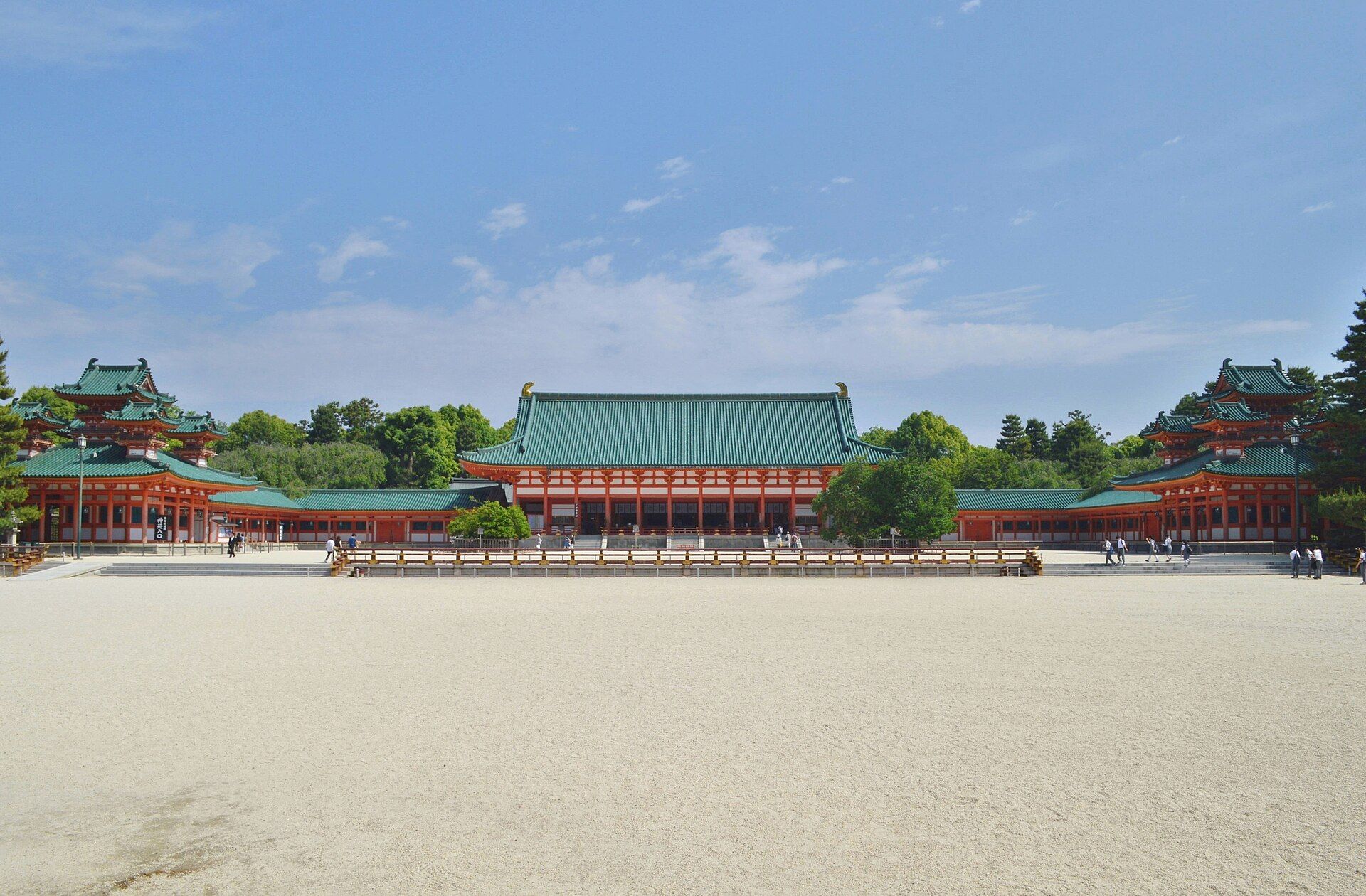
Heian Shrine Kyoto: Courtyard, Garden and Current Works
Visit Heian Shrine and Shin’en in Kyoto: garden hours, admission, subway access and the November 2026 building-work notice.
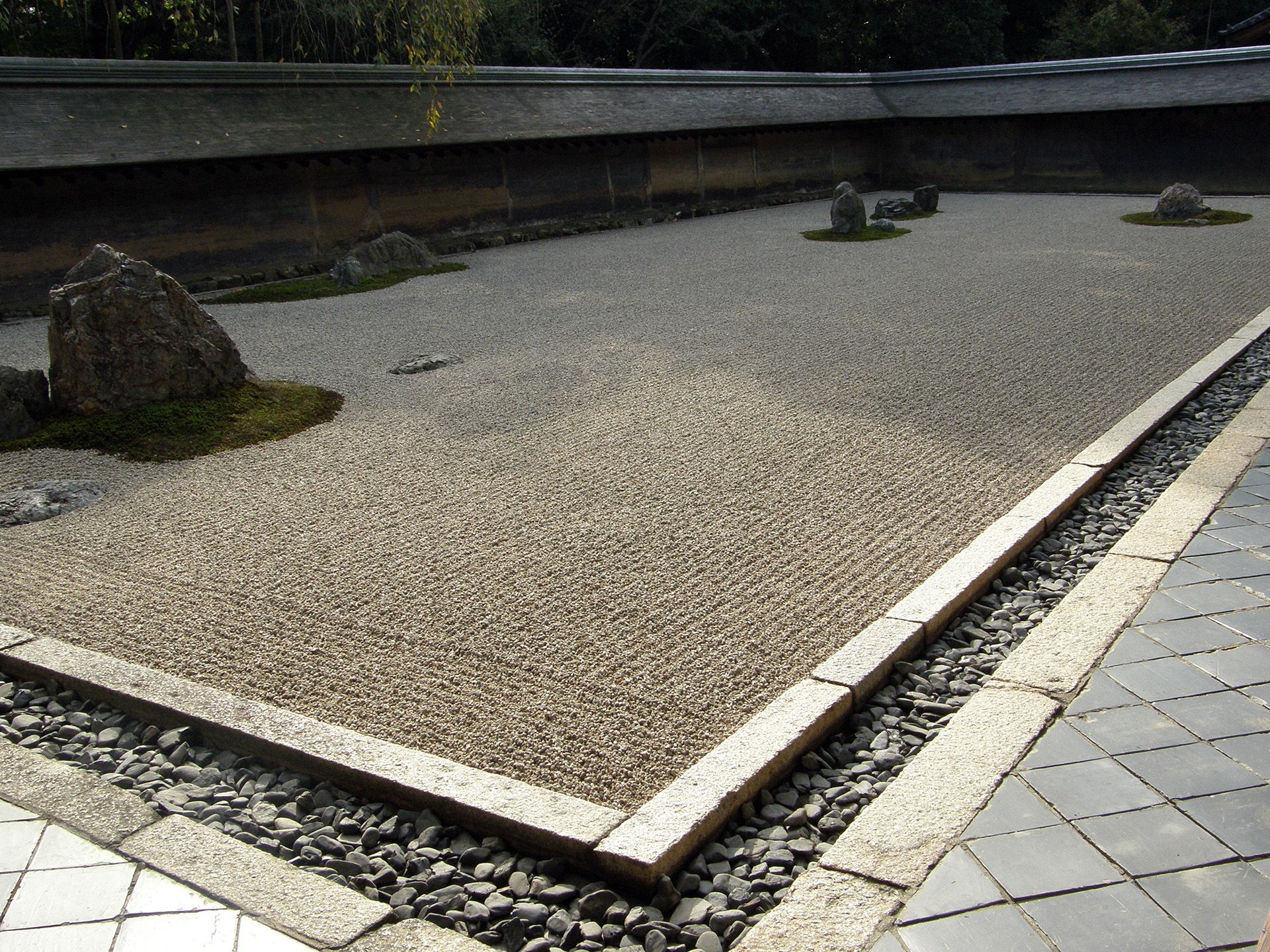
Ryoan-ji Kyoto: Rock Garden and Temple Visit
Plan Ryoan-ji’s rock garden and pond walk, with current admission, winter hours and the separate autumn 2026 evening programme.
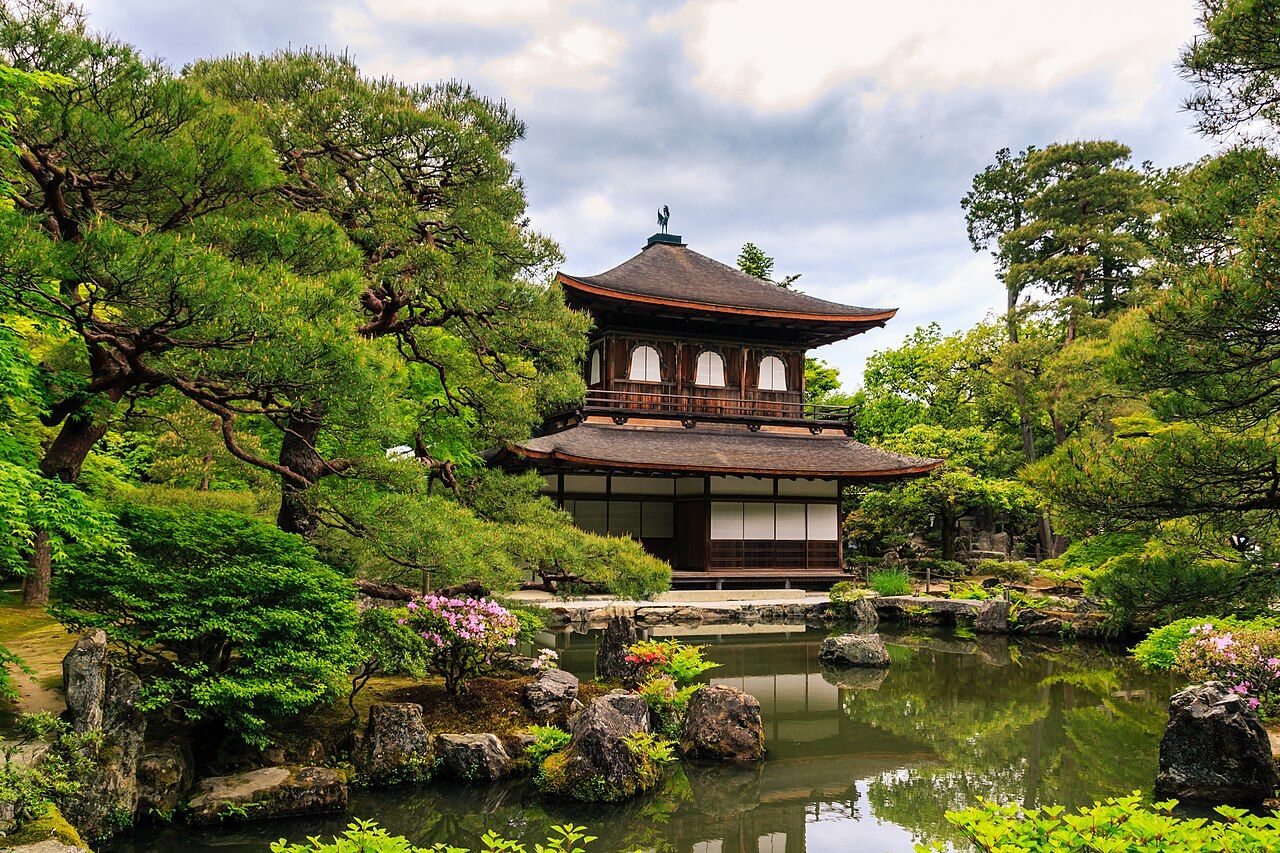
Ginkaku-ji: Plan Your Kyoto Garden Visit
Plan Ginkaku-ji with current admission, seasonal hours, garden highlights, stepped paths and a realistic Philosopher’s Path extension.