
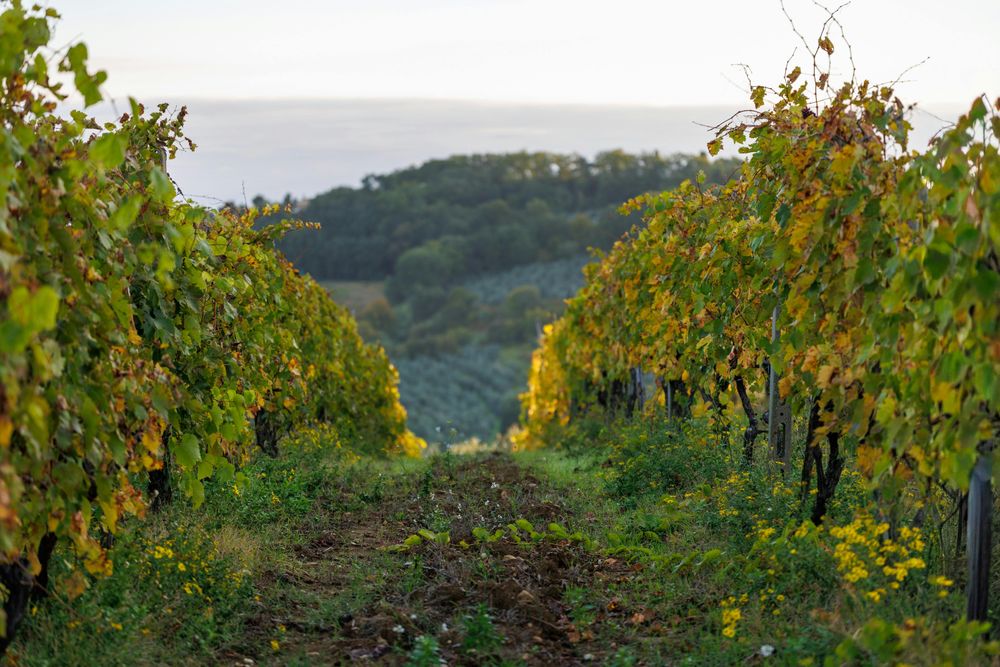
Plan European autumn around three peaks: vindima mid-September to mid-October, foliage mid-October to mid-November, and white-truffle markets in Alba. EUR prices, named regions, exact weeks.
European autumn is not one season but three overlapping ones, and the difference between a good trip and a great one is timing the calendar to the week. Vineyards cut grapes from mid-September to mid-October; deciduous forests turn from mid-October to mid-November; and white-truffle markets open in early October and run to early December. Here is how to plan around each peak — with exact 2026 weeks, named regions, and what an autumn trip actually costs.
Fast Facts
| Detail | Info |
|---|---|
| Peak vindima dates | Douro & Bordeaux: ~15 Sep–10 Oct 2026; Tuscany/Piedmont: ~20 Sep–15 Oct; Tokaj late-harvest: late Oct–mid Nov |
| Peak foliage weeks | Dolomites larches: 20 Oct–5 Nov; Black Forest & Wachau: 15 Oct–10 Nov; Tatras: 5–25 Oct |
| Peak white-truffle market | Fiera del Tartufo, Alba: 11 October – 7 December 2025 model; 2026 dates mid-Oct to early Dec (weekends) |
| Average daily budget | €180–€320/day in harvest weeks — lodging €120–€220, tastings €25–€60, truffle dish €30–€100, transport €15–€30 |
| Don't miss | Alba's Saturday/Sunday Mercato Mondiale del Tartufo for shaved Tuber magnatum at €30–€100 per serving |
Wine harvest: vindima, vendemmia, vendanges
The European grape harvest crosses borders on roughly the same schedule, drifting earlier each decade as the climate warms. The window now runs mid-September to mid-October for still wines in most regions, with later dates for late-harvest sweet wines and earlier dates for sparkling base wines in the south.
Douro Valley — Portugal's lagarada
The Alto Douro Wine Region hosts the most photogenic harvest in Europe. Pickers work the schist terraces by hand because no machine can climb them, and a handful of premium quintas still finish the day with lagarada — the foot-treading of grapes in granite lagares. According to the IVDP, the regional body, the 2026 vindima will run roughly 15 September to 10 October, peaking in the Cima Corgo around Pinhão in the final week of September.
For visitors, the catch is that vindima is working time — the quintas that open to the public during harvest do so with limited slots and premium pricing. Quinta do Bomfim, Quinta do Seixo, Quinta da Pacheca, and Quinta do Crasto all run harvest experiences with grape-picking, lagarada participation, and three-course lunches at €120–€280 per person. Book by July; the prime dates sell out by August. For the full producer breakdown and year-round visiting, see our Portugal wine tourism guide.
Tuscany, Piedmont, Veneto — Italian vendemmia
Italy's harvest splits by region. Piedmont (Barolo, Barbaresco) starts Nebbiolo picking in early October and runs to mid-month — the latest in the country because Nebbiolo needs full ripeness. Tuscany picks Sangiovese for Chianti Classico and Brunello di Montalcino from late September into mid-October. Veneto's Valpolicella starts Corvina around 15 September; the bunches destined for Amarone go on drying racks (appassimento) for 100–120 days, so the visible harvest action ends earlier than the wine cycle.
What visitors should expect during vendemmia: most cantine open for tastings, but the cellar floor is closed during fermentation. Tour prices climb 20–40% against shoulder season. Restaurants in Alba, Montalcino, and Verona book out for Saturday lunch six weeks ahead. For year-round visiting and producer maps, our Italian wine regions guide covers the named estates open to the public.
Bordeaux, Burgundy, Champagne — French vendanges
France picks south-to-north. Bordeaux starts whites (Sauvignon, Sémillon) in late August and finishes Cabernet on the Left Bank by mid-October; the 2026 reds will peak around the Médoc in the final week of September. Burgundy's Côte d'Or picks Pinot Noir and Chardonnay together from roughly 15 to 30 September. Champagne is the earliest and most regulated — the CIVC sets specific picking dates per village; 2026 will likely open around 5 September for the earliest crus.
Walk-in tastings during vendanges are nearly impossible in the top châteaux; book official tours through the Bordeaux Wine Council (CIVB) and Champagne maison websites at least eight weeks ahead. Tasting fees during harvest run €35–€80 in Bordeaux Grand Cru Classé châteaux, €40–€120 in Champagne grandes maisons. For named producers and rail routes, see our France wine tourism guide.
Tokaj, Hungary — UNESCO 1063 and aszú
The Tokaj Wine Region Historic Cultural Landscape was inscribed by UNESCO in 2002 — 88,124 hectares of vineyards across 27 villages, the source of the world's oldest classified sweet wine (the 1700 royal classification preceded Bordeaux by 155 years). Tokaj's harvest is the latest of the major regions because aszú wines depend on noble rot (Botrytis cinerea) developing on the Furmint grapes; the aszú berries are picked one by one from late October to mid-November. The base dry wines come off earlier, in late September. Cellar visits run €20–€60 with tastings, with classic six-glass aszú flights (3, 4, 5, 6 puttonyos, plus Eszencia) at the higher end. Direct trains from Budapest Keleti to Tokaj-Mád take roughly 2h 50m.
Rioja, Spain
The Rioja harvest runs mid-September to mid-October across the three subzones (Alta, Oriental, Alavesa), with the Alavesa highlands picking last. Most major bodegas around Haro, Logroño, and Laguardia open for harvest tours with tastings at €25–€80; landmark architecture estates like Marqués de Riscal (Frank Gehry hotel) and Bodegas Ysios (Calatrava cellar) sell out months ahead for harvest weekends.
Foliage: where Europe turns gold
Forget New England — Europe's autumn colour is just as varied and considerably easier to combine with food and wine. Peak weeks shift by latitude and altitude, so the smart move is to chase the front rather than fix a destination.
Italian Dolomites — UNESCO 1237
The Dolomites UNESCO World Heritage property, inscribed in 2009, covers nine mountain groups and 141,902 hectares of pale-rock pinnacles. What makes Dolomite autumn special is the larch — Europe's only deciduous conifer, which turns brilliant gold against the pink limestone before dropping needles in late October. Peak gold runs 20 October to 5 November in classic spots like Val di Funes (Santa Maddalena church), Lago di Braies, Seceda, and the Tre Cime di Lavaredo. Cable cars typically close by 3 November, so plan around the last operating week.
High-season prices have dropped by 30–50% by mid-October but accommodation in Cortina d'Ampezzo, Ortisei, and San Cassiano still runs €140–€280/night for mid-range hotels. The SAD bus network covers the main passes; some passes (Sella, Gardena, Pordoi) close to private cars on autumn Wednesdays — check Alto Adige tourism dates. For combining foliage with proper trail planning, our European national parks guide covers permits and routes.
Black Forest and Bavaria's Romantic Road
The Schwarzwald in Baden-Württemberg turns from mid-October to early November — beech and oak red, larch gold, with the dark fir background staying green to provide contrast. The Schluchsee, Titisee, and Triberg waterfall corridor work as a three-day loop with rental car. Hotels in towns like Triberg, Hinterzarten, and Schiltach run €90–€160/night in October.
Bavaria's Romantic Road (Romantische Straße) is the postcard route — 460 km from Würzburg to Füssen via Rothenburg ob der Tauber, Dinkelsbühl, and Nördlingen, ending at Neuschwanstein. Late October pairs medieval town walls with vine-covered Franconian hills turning amber. Direct ICE trains from Frankfurt to Würzburg in 1h 10m; bus and regional rail down the route.
Wachau Valley, Austria — Danube curve and Riesling slopes
The Wachau is a 36 km stretch of the Danube between Melk and Krems, a UNESCO cultural landscape since 2000, where steep terraced vineyards (Grüner Veltliner, Riesling) climb above the river. Per Niederösterreich Wein, the regional wine body, the late-harvest Smaragd-category Rieslings come off in mid- to late October, exactly when the riverside birch and vine leaves turn gold. The river cruise from Krems to Melk takes 1h 45m and runs through late October — book the morning slot for golden-hour light. Heuriger (wine tavern) lunches in Spitz, Weißenkirchen, and Dürnstein cost €25–€45 with a glass of estate wine. Combine with our France wine tourism guide if you are linking by rail via Munich.
Slovenia's Julian Alps, Czech Bohemian Switzerland, Polish Tatras
Three under-rated foliage circuits worth knowing:
- Slovenian Julian Alps around Lake Bohinj and Triglav National Park — beech forests on the western flank turn deep amber from 15–30 October. Bohinj feels half-empty against Bled's crowds. Direct buses from Ljubljana; mid-range guesthouses €60–€110/night.
- Bohemian Switzerland (České Švýcarsko), 130 km north of Prague — sandstone pinnacles wrapped in beech and pine, with hiking circuits around Pravčická brána (Europe's largest natural sandstone arch). Best 15 October–5 November. Direct buses from Prague Florenc to Hřensko in 2 hours.
- High Tatras, straddling Poland and Slovakia — the larch belt above 1,200 m peaks 5–25 October, earlier than the Dolomites. Zakopane (Poland) and Štrbské Pleso (Slovakia) are the staging towns. Polish pension rooms €40–€80/night; cable cars on Kasprowy Wierch and Lomnický štít give the best aerial colour.
Cinque Terre and Burgundy in autumn
Two final foliage notes for travellers chasing wine:
- Cinque Terre in mid- to late October sees the terraced vineyards above Vernazza, Manarola, and Riomaggiore shift from green to amber. Trail card €7.50/day; trains between villages every 20 minutes.
- Burgundy's Côte d'Or vineyards turn russet from late October — the colours along the Route des Grands Crus from Dijon to Beaune are at their best on a bicycle from 25 October to 5 November. Bike rentals €20–€35/day.
Truffles: festivals, markets, and what to pay
Autumn is white-truffle season — and the European calendar revolves around one event in northern Italy.
Fiera del Tartufo, Alba — Piedmont's main event
The International Alba White Truffle Fair (Fiera Internazionale del Tartufo Bianco d'Alba) is the world capital of Tuber magnatum, the rare white truffle that grows only between September and December in symbiosis with oak, hazel, poplar, and lime roots. According to the official fair organisation, the 2026 edition will run roughly mid-October to early December, with the Mercato Mondiale del Tartufo (World Truffle Market) open on weekends only inside the Cortile della Maddalena in central Alba.
What to expect at the market: a covered hall with several dozen trifolau (truffle hunters) and licensed dealers presenting individual truffles weighed before your eyes. Wholesale white-truffle prices in 2025 ran €2,000–€4,000 per kilogram depending on size, aroma intensity, and seasonal supply — exceptional 200 g+ specimens have sold for €6,000–€10,000/kg in poor-yield years. Restaurant servings of shaved white truffle on tagliatelle or fonduta cost €30–€100 per dish, with high-end Michelin spots in Alba and the surrounding Langhe charging €70–€150 for generous shavings.
Entry to the market hall costs around €10 for the standard daily ticket. Surrounding Langhe villages — Barolo, La Morra, Treiso, Neive — host parallel food events, vintage tractor parades, and the Palio degli Asini (donkey race) on the first Sunday in October. Hotel rates in Alba and nearby Bra triple on fair weekends: expect €220–€450/night for mid-range three-star rooms that sell for €80 in shoulder season. Book by July or stay 30+ km away in Asti or Acqui Terme.
San Miniato, Tuscany — November white truffle
The Mostra Mercato Nazionale del Tartufo Bianco di San Miniato in Pisa province runs the last three weekends of November. Smaller and more local than Alba — and prices for the bianchetto (Tuscan white truffle, Tuber borchii) are notably lower at €600–€1,800/kg wholesale. The town itself, perched on a hill between Pisa and Florence, makes a good base; rooms run €90–€180/night during the festival.
Périgord and Provence — black truffle territory
The black truffle (Tuber melanosporum), aromatically distinct from white and a different commodity entirely, runs December to February. Some Périgord markets begin tasting events in late October as the first immature black truffles appear, but the proper black-truffle markets at Lalbenque, Sarlat, Sainte-Alvère, and Carpentras peak in January. Wholesale Périgord black truffles ran €800–€1,500/kg in 2025.
Istrian truffles, Croatia
The Mirna River valley around Motovun and Buzet in inland Istria produces both white and black truffles. The Tuberfest circuit runs September through November with weekend events in Motovun, Livade, and Buzet. Istrian white truffles sell at 40–60% of Alba prices — a credible alternative if Alba is sold out. Pula or Trieste are the nearest airports; rental car essential.
How to combine wine, foliage, and truffles in one trip
The single best combined autumn destination in Europe is Piedmont in late October. Within 90 minutes of Turin you can hit Barolo vendemmia in the first week, larch foliage in the Western Alps at Sestriere and Valle d'Aosta in week two, and the Alba truffle fair every weekend through November. The Langhe hills themselves turn gold in late October.
A workable seven-day Piedmont autumn loop: two nights in Alba for the truffle market and Barolo tastings; one night in La Morra for the vineyard views; two nights in Aosta for larch hikes around Lago di Beauregard; two nights in Turin for the Egyptian Museum and Caffè Mulassano. Total budget for two people, mid-range, in late October 2026: €2,800–€4,200 including rental car, festival entries, three serious truffle dinners, and wine purchases.
The alternative — a wine-then-foliage swing from Bordeaux to the Dolomites — covers more variety but eats two travel days at each transition. Better suited to ten days than seven.
What to skip and what to expect
Don't expect summer prices. Harvest-week and fair-week accommodation runs 2–3× shoulder-season rates in Alba, Pinhão, Beaune, and Cortina. The pricing is set by demand, not negotiation.
Don't expect summer weather. October in central Europe averages 8–16°C with 8–12 rainy days per month. Wachau and the Dolomites can drop to freezing overnight by late October. Pack layers and a proper rain shell.
Don't expect to walk into top restaurants. Piazza Duomo (3 Michelin stars) in Alba, Enoteca Pinchiorri in Florence are booked six months ahead for autumn weekends. Mid-tier truffle restaurants in Alba (Osteria dei Sognatori, La Libera) need at least two weeks.
Don't try to drive after a tasting flight. Wine-country police checks intensify during harvest. Most regions have 0.5 g/L blood-alcohol limits (0.3 g/L in Sweden, 0.0 g/L in Hungary). Hire drivers, take trains where they reach, or stay at the estate.
Don't buy a whole white truffle on impulse. A walnut-sized white truffle weighs 20–30 g and costs €60–€120 at the Alba market; it loses aroma within four days. Better to taste it shaved on tagliatelle at a restaurant than to bring one home that will be a shadow of itself by the time you eat it.
Frequently Asked Questions
When exactly is the grape harvest in Europe?
The core European grape harvest runs mid-September to mid-October, drifting earlier each decade. Champagne picks earliest (around 5 September 2026), then Bordeaux and Burgundy from mid- to late September, then Tuscany and Piedmont late September into mid-October. Nebbiolo in Piedmont and Riesling in the Wachau finish last in mid-October. Late-harvest sweet wines — Tokaji aszú, Sauternes — go on through November.
Which foliage region is best for a first-time autumn visit?
The Italian Dolomites between 20 October and 5 November. The combination of larches turning gold against pink limestone, Alpine lakes (Braies, Misurina), and accessible cable cars (until ~3 November) is unmatched and well-served by rail to Bolzano + bus. If you want something less crowded, the Wachau Valley in Austria or Bohemian Switzerland in Czechia deliver 80% of the experience at half the price and a third of the visitors.
Are the Alba and San Miniato truffle festivals worth the cost?
For anyone seriously interested in food, Alba is worth one weekend in a lifetime — the Cortile della Maddalena market is the only place in the world where you can see, smell, and buy dozens of fresh white truffles side by side. Budget €500–€800 per person for the weekend all-in including one serious truffle dinner. San Miniato is a credible cheaper alternative in late November. If you mainly want to eat white truffle, any decent Piedmont or Florence restaurant in October–November shaves it on tagliatelle for €30–€100 without needing the festival ticket.
What weather should I expect in October and November?
Central and northern Europe in October averages 8–16°C with 8–12 rainy days, dropping to 2–10°C by mid-November with first snowfall above 1,500 m. The Mediterranean stays warmer — Tuscany and Provence average 12–22°C through mid-October. Pack layers, waterproofs, and grippy shoes; vineyard rows and forest trails are muddy. The Dolomites and Tatras can see overnight frost by 20 October.
Can I combine wine, foliage, and truffles in one trip?
Yes — and Piedmont in late October is the single best base in Europe to do all three. Barolo vendemmia finishes early October; Alba's truffle market opens weekends from mid-October; the Langhe hills and nearby Western Alps turn gold from 20 October. A seven-day Turin–Alba–La Morra–Aosta loop hits all three peaks. The alternative — combining French Burgundy vendanges with Dolomite larches and Alba truffles — needs ten days and burns travel time on transitions.

Keep Exploring
Best Time to Visit Oaxaca: Weather and Festivals
Choose Oaxaca dates around comfortable sightseeing or a specific celebration. Compare the seasons, festival commitments and alternatives for rainy days.
Best Time to Visit Kyoto: Seasons and Tradeoffs
Compare Kyoto's seasons by walking comfort, crowds and seasonal scenery. Plan around uncertain blossom dates, summer heat and shorter winter days.
When to Visit Los Angeles: Seasons and Trip Plans
Match Los Angeles to your trip: coastal mornings, inland sightseeing, shorter winter days and event calendars need different seasonal decisions.