
Summer in Europe: Where to Go to Beat the Crowds
Skip the Mediterranean meltdown. Twelve Northern, Atlantic, Alpine and Eastern European summer alternatives with fares, EUR budgets and named operators.
Europe's summer crowd problem has tipped from inconvenient to genuinely hostile in 2025-2026. Venice's day-tripper access fee is now a permanent fixture — €5 with advance booking, €10 last-minute, charged on selected peak days announced annually. Barcelona's city council voted in 2024 to end all short-term tourist apartment licences by November 2028, and Mallorca declared a tourism emergency after the summer 2024 protests. The good news: Europe has a wide alternative summer that most travellers never see. Here are twelve regions where July and August are spectacular precisely because they are not Mallorca.
Fast Facts
| Detail | Info |
|---|---|
| Average summer temps (Jul–Aug) | Bergen 14–18°C, Stockholm 18–23°C, Tallinn 17–22°C, Reykjavik 11–14°C, Edinburgh 15–19°C, Galicia 18–25°C, Dolomites 12–22°C (1,500m), Engadin 12–22°C, Vilnius 18–24°C, Plovdiv 22–30°C |
| Accommodation premium July–August | Mediterranean coast 2–3× shoulder rates; Northern Europe + Alps typically 1.3–1.8×; Eastern Europe 1.2–1.5× |
| Best value-cool-uncrowded combo | Estonian islands (Saaremaa) and Galicia — sub-€100 doubles, 20°C days, sub-Schengen visa logistics |
| Must-skip in summer | Venice, Barcelona, Dubrovnik, Mallorca beach resorts, Santorini, Mykonos — peak crowds, peak prices, peak heat |
| Getting there | Bergen Airport BGO (Norwegian, SAS); Stockholm Arlanda ARN; Tallinn TLL; Reykjavik KEF; Edinburgh EDI; Santiago SCQ; Ljubljana LJU; Bolzano BZO/Verona VRN; Zurich ZRH for Engadin; Vilnius VNO; Plovdiv PDV/Sofia SOF |
The 2025–2026 overtourism context: why the Med is breaking
Three shifts have made summer 2026 different from any summer before it. First, access controls. Venice's Contributo di Accesso applies on roughly 54 peak days in 2025 (extended for 2026) — day-trippers without an overnight booking pay €5 if registered four days ahead, €10 if not, between 8:30 and 16:00. The QR code is checked at chokepoints around Piazzale Roma and the station. Venezia Unica publishes the calendar each spring.
Second, housing pushback. Barcelona is phasing out the city's roughly 10,100 short-term tourist licences by late 2028 — a measure local government justified by housing pressure, and one that the European Court of Justice upheld jurisdiction over in 2024. Mallorca and Ibiza announced moratoria on new tourist licences in 2024-2025, and the Balearic government has expanded street alcohol bans in specific resort zones (Magaluf, Playa de Palma, Sant Antoni de Portmany) since 2024.
Third, the heat dome itself. Summers across the western Mediterranean now routinely deliver 40–45°C peaks. The 2024 European State of the Climate report from Copernicus confirmed that southern Europe has warmed roughly twice the global average since 1990 — Andalusia, Sicily, mainland Greece and southern Portugal are demonstrably hotter than their travel-brochure averages.
Non-EU visitors should also note ETIAS: the European Travel Information and Authorisation System for visa-exempt nationals (US, UK, Canada, Australia, etc.) is currently expected to go live in late 2026, with a €20 fee (free for under-18s and over-70s). Travel Europe hosts the official updates — check the application status before booking, because the timeline has slipped twice already.
Northern summer: midnight light at 18–22°C
1. Bergen and the Norwegian fjords
Bergen averages 14–18°C in July with 19 hours of daylight at solstice. The city is the gateway to UNESCO-listed Bryggen and to the fjord rail network. The famous Bergen Railway (Vy operates the standard line; Flåm Line is run by Flåmsbana) crosses the Hardangervidda plateau from Oslo in about 6h 30m — second-class fares from around NOK 599 (€52) if booked early. The classic loop Norway in a Nutshell combines Bergen Line + Flåmsbana + Nærøyfjord cruise + Stalheim bus from around €240 booked direct via Fjord Tours.
For the Sognefjord — Norway's longest at 205 km — base in Balestrand or Flåm. Daily car-ferry services and the year-round Bergen-Sognefjord express boat (about 5h 30m to Flåm) run reliably May to September. Daily budget: €180–€260, with hostel beds at €40, mid-range hotels €130–€180, the legendary Flåm-Myrdal funicular ride at NOK 660 (€57) return. If chasing the white-night phenomenon is the whole point of a northern trip, our guide to Scandinavia's midnight-sun summer maps where the light lasts longest.
2. Stockholm and the archipelago
Stockholm sits at around 18–23°C in summer with the legendary Stockholm archipelago — around 30,000 islands within ferry reach. Waxholmsbolaget runs the public ferry network — single tickets typically SEK 70–195 (€6–€17) depending on zones, with a 30-day archipelago pass at SEK 825 (€72). Day-trip targets: Vaxholm (1h, fortress town); Grinda (2h, dedicated swimming island with hostel + cabins); Sandhamn (2h 30m, sailing village made famous by the eponymous Swedish crime series); Utö (south archipelago, bike-friendly).
The city itself is a summer city — outdoor swimming at Långholmen, Djurgården's open-air Skansen museum, free entry to most major art museums. Daily budget: €150–€220 in Stockholm; €100–€160 on the islands (hostel/STF lodge €40–€80, restaurant mains €15–€25). Beats Barcelona on every axis: cooler, no anti-tourism graffiti, no apartment-licence moratorium.
3. Tallinn and the Estonian islands
Tallinn averages 17–22°C in July, has UNESCO Old Town walls older than most of central Europe, and direct ferry connections to Helsinki (2h) and Stockholm (overnight). The under-explored payoff is offshore: Saaremaa (Estonia's largest island at 2,673 km²) and Hiiumaa (the second-largest) sit in the cool, low-tourist Baltic. Visit Estonia maintains the island-hopping resources, and TS Laevad runs the year-round Virtsu–Kuivastu ferry to Saaremaa (35 minutes, €3–€10 for foot passengers, €11–€19 for cars).
Kuressaare (Saaremaa's main town) has a 14th-century bishop's castle and August spa-town rates of €70–€110/night — half what Tallinn charges in peak season. Daily budget: €90–€140. The visa-positive angle: Estonia issues digital nomad and short-stay visas more flexibly than most Schengen states, and post-ETIAS the e-residency-tied processes are well-documented.
4. Reykjavik and Iceland's quiet quarter
Reykjavik runs 11–14°C in July with near-24-hour daylight at solstice. The catch: the Golden Circle (Þingvellir + Geysir + Gullfoss) is now an iconic three-hour bus loop with summer queues that rival Iceland's pre-pandemic 2018 peak. The fix is the Westfjords — the remote northwestern peninsula reached via the Brjánslækur ferry (Baldur ship, 2h 30m crossing, around ISK 8,000 / €52) or a 5-hour drive from Reykjavik. The region has no Ring Road traffic, some of Europe's tallest bird cliffs at Látrabjarg, and consistently 60% lower hotel rates than the South Coast.
Daily budget: €180–€270 in Iceland — high but not Med-summer peak premium. Hotels in Ísafjörður (Westfjords capital) run €130–€200, vs €250–€400 in summer Reykjavik. Hertz and Lotus rent 4×4s from KEF airport at €90–€150/day — necessary north of the Ring Road.
5. Edinburgh and the Highlands
Edinburgh runs 15–19°C in summer but turns into Europe's largest cultural pile-on during the Fringe Festival (1–25 August 2026) and the Royal Edinburgh Military Tattoo overlapping. Use that as a feature, not a bug: stay in Edinburgh for 2–3 nights at peak (book by January for tolerable rates, expect £180–£280 / €210–€330/night), then escape north. VisitScotland covers the inland alternatives: the Cairngorms National Park (4,528 km², the UK's largest) at 800–1,300m elevation runs 8–12°C cooler than the coast in heatwaves; the Isle of Skye is busier but the Outer Hebrides (Lewis, Harris, North Uist) remain genuinely uncrowded.
Daily budget: €130–€200 (€110–€280 in Edinburgh during the Fringe). ScotRail's Highland Main Line Inverness–Kyle of Lochalsh runs at around £30 (€35) one-way; the Caledonian Sleeper London–Fort William starts around £55 (€65) in a seat, £200+ (€235) in a private cabin.
Atlantic alternatives to the Mediterranean
6. Galicia: green Spain on the Atlantic
Galicia is the answer to anyone telling you Spain is unbearable in August. The northwest corner runs 18–25°C in summer thanks to Atlantic Ocean cooling — coastal towns like Combarro and A Coruña routinely sit 12–15°C below Seville or Cordoba in the same week. Turismo de Galicia details the four provinces; the standouts are Rías Baixas (the four fjord-like inlets producing Albariño wine) and the Camino de Santiago terminus in Santiago de Compostela itself — UNESCO Old Town, July–August pilgrim mass at the cathedral.
Seafood season peaks July–September: percebes (goose barnacles, around €70–€120/kg in markets), navajas (razor clams), centollo (spider crab) at Lonja markets in Vigo or A Coruña. Renfe runs Madrid–Santiago in 3h 10m on the high-speed AVE for around €40–€85 advance fare. Daily budget: €90–€140 — meaningfully below Barcelona or Costa Brava rates.
7. Northern Portugal: the Porto-Douro spillover
Porto and the Douro Valley are the cooler, less-pressured alternative to Lisbon and the Algarve in summer. Average July temps in Porto sit at 18–25°C — Atlantic-moderated and 8–12°C cooler than Faro or Lisbon's worst days. The Douro Valley itself runs hotter (mid-30s inland), but riverside towns like Pinhão and Régua are tolerable in the morning and after 18:00.
For a structured introduction, our European Christmas Markets 2026 guide covers the winter counterpoint for the same author voice and the same audience that hates crowds. Daily budget: €100–€160 in Porto, €130–€220 in the Douro quintas.
Mountain refuges: 1,500m higher = 10°C cooler
8. Slovenia's Julian Alps — Lake Bohinj over Lake Bled
Lake Bled is on every short-list and increasingly miserable for it. Lake Bohinj — 30 minutes further by car or bus, larger, sitting inside Triglav National Park — is what Bled was 20 years ago. Summer surface temps reach a swimmable 20–22°C; air sits at 16–24°C around the lake; the surrounding peaks deliver alpine air at 8–14°C. I Feel Slovenia maintains transport and trail data; the 7-min Vogel cable car (around €25 return) lifts you to 1,535m for the Julian Alps panorama.
Ljubljana Airport (LJU) connects to Lake Bohinj by direct bus in about 2h. Daily budget: €100–€150. Lake Bohinj guesthouses run €80–€140 in July vs €180–€280 on Lake Bled. For other quiet Slovene alternatives, see our hidden gems of Eastern Europe pillar.
9. The Italian Dolomites — UNESCO 1237
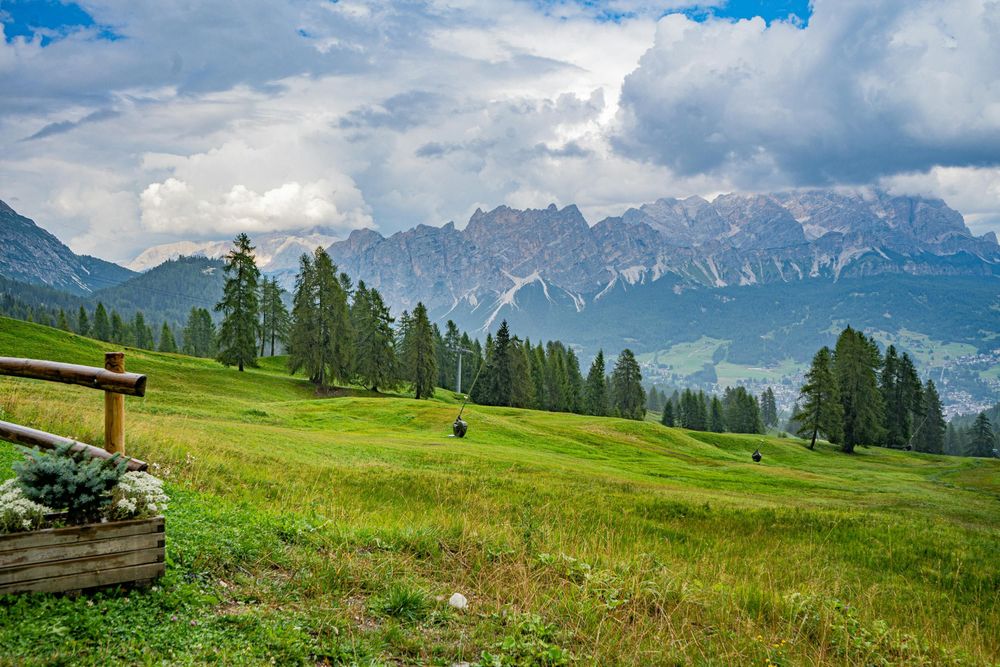
The Dolomites are inscribed as UNESCO World Heritage no. 1237 — 141,903 hectares across nine systems in Belluno, South Tyrol and Trentino. At 1,500–2,500m, July temperatures sit at 12–22°C — cooler than Milan by 15°C and cooler than Venice by 18°C in peak heatwaves. The signature trails: Alta Via 1 (north-south, 120 km, 8–11 days, rifugi €60–€85/night including dinner); Tre Cime di Lavaredo loop (10 km, 4h, refuge access by car or shuttle from Auronzo).
The rifugio network operated by CAI (Club Alpino Italiano) and private operators is what makes high-altitude summer accessible — hut-to-hut hiking with breakfast and dinner included. Bolzano (BZO) and Verona (VRN) are the nearest airports; Trenitalia from Verona to Bolzano takes 1h 30m at €13–€25. Daily budget: €120–€180 hut-based, €160–€240 hotel-based in towns like Cortina d'Ampezzo or Ortisei. For more elevation context, our European national parks guide compares all the major systems.
10. Engadin Valley, Switzerland
The Engadin sits at 1,800m in eastern Switzerland — St. Moritz at the centre — with July averages of 12–22°C and exceptionally clean dry air. The Bernina Express runs from Chur via the UNESCO-listed Rhaetian Railway to Tirano in Italy, 4 hours, around CHF 66 (€70) one-way without reservation supplement, panoramic carriages from CHF 89 (€95). Engadin Tourism lists the practicalities: included Mountain Railways Inclusive card for guests of partner hotels gives free cable cars and trains valley-wide (a meaningful €30–€60/day saving).
High summer in St. Moritz precedes the August Festival da Jazz (typically 9 days mid-July to mid-August) and the polo on snow that defines winter — so July is the genuine quiet window. Daily budget: €180–€280 (Switzerland is expensive; the bridge is the Mountain Railways card eliminating most internal transport).
Eastern Europe's quiet zones
11. Vilnius and the Curonian Spit
Vilnius averages 18–24°C in July with UNESCO Old Town status (834). The real prize is the Curonian Spit — UNESCO 994 — a 98-km sand dune peninsula shared with Russia's Kaliningrad enclave (Lithuanian side only is reachable; the border closed to general crossings in 2022 has not reopened). Reach the Lithuanian section via Klaipėda ferry to Smiltynė (continuous, foot passenger €1.20, car €13), then drive or bus south through Nida and Juodkrantė.
The spit's signature is the Parnidis dune — Europe's largest moving sand-dune field still active — and the entire peninsula was inscribed by UNESCO in 2000 specifically for the centuries-old human effort to stabilise the dunes through reforestation. Daily budget: €70–€110, one of Europe's best value coastal experiences. Visit Lithuania has booking links for the small fishing-village guesthouses in Nida (€60–€110/night).
12. Plovdiv, Bulgaria
Plovdiv runs warmer at 22–30°C in summer, but the open-air Ancient Theatre of Philippopolis — Roman, 1st century AD, 6,000 capacity, still in active use — hosts the international Opera Open festival each July, plus rock and classical concerts under the stars. Visit Plovdiv publishes the seasonal calendar; tickets typically run €20–€50, less than a single beer in Mykonos. The city was European Capital of Culture in 2019 and the centre — Kapana craft quarter, Old Town with 19th-century Bulgarian Revival houses — has held its character.
Sofia Airport (SOF) is 2h by car or 2h 30m by bus to Plovdiv. Daily budget: €60–€100 — the lowest on this list. Plovdiv on a Friday night during Opera Open is the best counter-argument to anyone insisting Europe in summer means crowds and €15 beers.
How to plan: timing, fares, and what to skip
Book Northern Europe early. Bergen, Stockholm and Reykjavik hotels release summer inventory by January and prices rise weekly thereafter. SAS, Norwegian and Icelandair publish summer schedules in October — book direct, not through aggregators which charge change fees.
Use rail for transalpine connections. The Eurail Global Pass (continuous, 5–22 days valid) makes Bergen-Oslo-Copenhagen-Berlin or Zurich-Tirano-Verona-Bolzano single-purchase. ÖBB Nightjet sleepers (Vienna-Venice, Zurich-Hamburg) sell out 60 days ahead in July-August — set alerts.
Skip these cities entirely in July-August: Venice (€10 access fee + 40°C + crowds); Barcelona (active protests, fewer rentals, peak-season prices without peak-season pleasantness); Dubrovnik (cruise ships dump 8,000+ passengers some days); Santorini and Mykonos (40°C, sold-out flights, €400 average hotel rate — if Greece is non-negotiable, our guide to which Greek island is right for you points you to quieter alternatives); the Mallorca/Magaluf coast strip (alcohol restrictions + protest signs).
Pack for cool. Bergen, Reykjavik and Edinburgh in July routinely deliver 12°C and rain; the Dolomites and Engadin can drop below 10°C overnight at altitude. Pack a waterproof shell, mid-layer fleece and proper hiking shoes — not the beach gear that fills luggage for the Med.
Eat shoulder hours. Even at the best northern destinations, the 19:00–21:00 dinner window fills with the same travellers. Take Spanish or Bulgarian dinner timing (21:00–23:00) and tables open up. In Stockholm, the late-summer sun setting around 22:00 makes the timing natural anyway.
Frequently Asked Questions
Which Mediterranean cities should I skip in July and August?
Venice, Barcelona, Dubrovnik, Mallorca's resort strip and the most-photographed Cyclades (Santorini, Mykonos) are the worst combinations of heat, crowds and price in summer 2026. Venice charges day-trippers €5–€10 on selected peak days, Barcelona is in the middle of phasing out short-term tourist licences by 2028, Mallorca expanded its street alcohol ban and tourist licence moratorium, and Santorini's hotel rates averaged over €400/night in July 2024 according to INSETE Greek tourism research. Push the trip to May or late September if the destination is non-negotiable.
Where is actually cooler in summer (not just less hot)?
Reykjavik (11–14°C), Bergen (14–18°C), Edinburgh (15–19°C) and the Estonian islands (17–22°C) deliver genuinely cool weather where you'll want layers. Mountain alternatives — the Dolomites, Engadin and Slovenian Julian Alps above 1,500m — sit at 12–22°C even when the cities below are 40°C. Galicia at 18–25°C is the Atlantic Spanish answer to inland 45°C peaks.
What are the best family-friendly summer alternatives to the Med?
The Stockholm archipelago is the strongest family pick — Waxholmsbolaget ferries are stroller-accessible, islands like Grinda have safe swimming, and Sweden has excellent paediatric care if needed. Slovenia's Lake Bohinj has flat lake-edge paths, cable car access to Vogel and warm shallow swimming. The Estonian island of Saaremaa offers cycling-friendly flat terrain, kid-priced museum admissions and €70-€110 family-room rates well below Mediterranean equivalents.
Where can I find beach destinations without summer crowds?
Galicia's Rías Baixas (Sanxenxo, Combarro), Estonia's Saaremaa coast and Lithuania's Curonian Spit (Nida) all offer Atlantic or Baltic beaches at 18–22°C sea temperatures with a fraction of Mediterranean crowd densities. The Westfjords of Iceland have empty black-sand and pebble beaches if you don't mind a 5-hour drive from Reykjavik. The trade-off is colder water; the upside is no €40 sunbed rentals and no queues for parking.
Should I plan around hiking or city breaks in summer 2026?
Hiking wins for July and August in the heat-dome years. The Dolomites, Slovenian Julian Alps, Cairngorms, Norwegian fjords and Engadin all deliver 5–8 hours of comfortable trail walking with 12–22°C temperatures and infrastructure (CAI rifugi, Norwegian DNT cabins, Scottish bothies) that makes multi-day routes accessible without camping. Save city breaks (Vilnius, Plovdiv, Edinburgh between festivals) for shoulder seasons or evenings after the trail. For comparable nature-focused planning, our European national parks guide covers the full system.

Keep Exploring
Best Time to Visit Oaxaca: Weather and Festivals
Choose Oaxaca dates around comfortable sightseeing or a specific celebration. Compare the seasons, festival commitments and alternatives for rainy days.
Best Time to Visit Kyoto: Seasons and Tradeoffs
Compare Kyoto's seasons by walking comfort, crowds and seasonal scenery. Plan around uncertain blossom dates, summer heat and shorter winter days.

When to Visit Los Angeles: Seasons and Trip Plans
Match Los Angeles to your trip: coastal mornings, inland sightseeing, shorter winter days and event calendars need different seasonal decisions.