
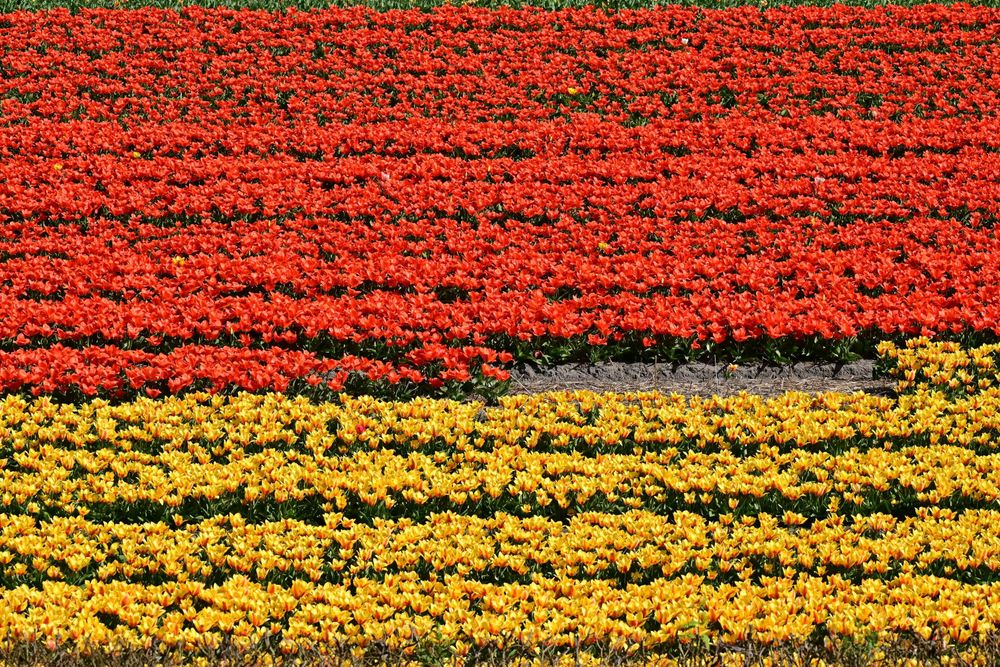
Twelve European cities at their seasonal peak between March and May 2027: Keukenhof tulips, Seville's Feria, Paris cherry blossoms, Roman wisteria and more, with EUR budgets and bloom calendars.
Spring in Europe is the narrow window when northern gardens explode, Mediterranean cities are warm but not yet brutal, and most major museums and palaces are open without the August queue. The catch is that "spring" means very different things between Andalusia and Edinburgh — peak bloom on the Aventine wisteria in Rome runs late March to mid-April, while Edinburgh's Royal Botanic Garden does not properly flower until late April. The 2027 calendar is now confirmed for several of the headline events, including Keukenhof's 18 March to 9 May 2027 season, and this guide gives you the dates, EUR budgets, school-holiday spikes and signature spring experience for twelve cities worth the trip.
Fast Facts
| Detail | Info |
|---|---|
| Peak spring weeks | North (Amsterdam, Brussels, Edinburgh): mid-April to mid-May; Central (Paris, Prague, Vienna): early to late April; South (Lisbon, Seville, Rome, Madrid, Barcelona): late March to late April; Bruges: late April to mid-May |
| EUR daily budget range | €60-€90/day Lisbon, Madrid, Prague; €80-€120/day Amsterdam, Rome, Barcelona, Vienna, Bruges; €100-€150/day Paris, Edinburgh; Seville spikes 2-3x normal during Feria |
| School-holiday spike (Easter) | UK/Ireland: ~27 March-12 April 2027; France: rolling zones late March to early May; Italy: 25 March-5 April 2027; Spain: 25 March-4 April 2027; expect +30-60% on hotels in week before and after Easter Sunday (28 March 2027) |
| Don't-miss city | Amsterdam for Keukenhof if peak tulip bloom is the trip's purpose; Seville for atmosphere and culture during Semana Santa + Feria back-to-back |
| Free spring experience | Sant Jordi book and rose day in Barcelona (23 April); Vondelpark blossom walks in Amsterdam; wisteria on Via di San Sabina, Rome |
Amsterdam: Keukenhof and city blossom
Keukenhof opens 18 March to 9 May 2027, daily 8am-7pm with last entrance at 6.15pm, on 32 hectares of formal gardens at Lisse, about 40 km southwest of Amsterdam. The park plants roughly 7 million flower bulbs every autumn — tulips dominate but daffodils, hyacinths and crocuses fill the cooler weeks. The bloom window is not uniform: crocuses and daffodils carry the first ten days, mid-season tulips peak from mid-April to early May, and late tulips and lilies close the show. Adult tickets for 2027 will go on sale mid-October 2026 via the official site; prices and transport combinations have not yet been published.
For transport choices, bloom timing, cycling rules and a realistic one-day itinerary, use our dedicated Keukenhof 2027 day-trip guide.
For city-only spring, Vondelpark is the obvious first walk — 47 hectares with cherry blossoms peaking in the second week of April, especially the cluster near the Vondelkerk. The smaller Bloesempark in Amsterdamse Bos has 400 Japanese cherry trees, a 2000 gift from the Japan Women's Club, with peak bloom typically the first ten days of April. The flower market on Singel (Bloemenmarkt) is open year-round but most photogenic in spring when the bulb stalls switch to cut tulips.
Where to stay and budget
Centre canal-side hotels run €170-€280/night in spring; Jordaan and De Pijp boutiques €130-€210; further out around Westerpark €90-€150. Daily food budget €40-€70 for cafés and brown-bar dinners. The GVB 24-hour transit pass is €9 and includes trams to museum quarter; tram 5 plus the Keukenhof Express bus 858 is the easiest park route from Schiphol or RAI station (combo tickets recommended).
Brussels: the Royal Greenhouses' three-week window
The Royal Greenhouses of Laeken are the most exclusive spring access in Europe: nineteenth-century iron-and-glass palaces designed by Alphonse Balat (Victor Horta's teacher), with a 30,000 m2 footprint of camellia houses, palm halls and tropical conservatories, open to the public only three weeks a year in April-May by royal decision. According to the official Belgian Monarchy site, the 2027 opening window will be announced in early spring; recent years have run mid-April to early May, with timed tickets at around €5-€7 (children free) and evening openings particularly atmospheric. Tickets sell out the day they release — set a calendar reminder for the announcement.
Beyond the greenhouses, Parc de Bruxelles and Bois de la Cambre carry the spring blossom; the Grand-Place flower market replaces the August carpet for the rest of the year. Brussels in spring also means Iris Festival (around 8 May 2027) for the Brussels-Capital Region's anniversary — free concerts and museum openings across the city. For a planned weekend, hotels around Saint-Géry or Sablon run €110-€180/night, daily budget €80-€130 before any restaurant splurge.
Lisbon: jacaranda blue and crisp air
Lisbon's signature spring image — the avenues turned violet-blue under jacaranda canopies — peaks mid-May to mid-June, slightly later than the technical "spring" window but still firmly within school-term travel. The densest jacaranda clusters run Avenida da Liberdade, Largo do Carmo, Praça do Príncipe Real and the slopes of Estrela below the basilica. The trees are not native — they were brought from South America in the 19th century — but no city in Europe owns them more visibly.
March and April themselves are quieter and arguably better travel weeks: temperatures between 15°C and 22°C, intermittent rain but mostly clear skies, miradouro evenings without the August crush. The Jardim Botânico da Ajuda above Belém is at its most planted out, the Estufa Fria greenhouse in Parque Eduardo VII is worth €3.10 entrance, and the 25 April anniversary of the Carnation Revolution brings free concerts and historical walks across the city. Hotel rates in Chiado and Príncipe Real spring shoulder run €110-€180/night; daily budget excluding accommodation €50-€80 for pastéis, tasca lunches and tram day passes (€6.80).
Seville: Semana Santa, Feria and orange-blossom heat
Seville delivers the most theatrical week of European spring: Semana Santa (Holy Week) followed two weeks later by the Feria de Abril. In 2027, Holy Week runs 21-28 March, with the famous brotherhoods (hermandades) processing massive carved pasos through the old town from Palm Sunday to Easter Sunday. The madrugá — the all-night procession from Holy Thursday to Good Friday — is the cultural peak; expect crowds five-deep on the Carrera Oficial through Avenida de la Constitución.
Two weeks later, the city pivots from sombre to ecstatic for the Feria de Abril, the April Fair, held on the Real de la Feria across the Guadalquivir from Triana. The 2027 Feria is expected to open the night of 17 April (alumbrao, the official lighting) and run through 24 April, with around 1,000 casetas (private and public tents), nightly sevillanas dancing, fino and manzanilla sherry, and horse-drawn carriages in the daytime paseo. Most casetas are private — friends-of-friends access is the polite route in. Public casetas exist but are smaller; arrive early evening.
The other reason to come is orange blossom — the azahar perfume that fills the streets of Santa Cruz and around the Catedral in late March and early April. Hotel rates triple during Semana Santa and Feria; book by January or shift dates a week either side. Outside fair weeks expect €90-€160/night Santa Cruz, €110-€190 with a Plaza Nueva view. Daily budget €55-€95 for tapas, transport and the Real Alcázar (€14.50).
Rome: wisteria, mild light, no August heat
Rome's spring is March to mid-May and it is the cleanest window of the year — temperatures 14-22°C, longer daylight than autumn, low rainfall. The signature bloom is wisteria, peaking late March to mid-April: the Aventine garden walls (Via di San Sabina and around the Giardino degli Aranci) are draped in purple cascades, Via Margutta behind Piazza del Popolo has the most photographed climbers, and the Quirinale gardens open free on 2 June but the wisteria there is best seen from Via XXIV Maggio in April. According to Italia.it, the Rome Spring Festival also brings street performances and free outdoor opera through April.
A practical advantage: the Vatican Museums and Colosseum are open longer, mid-April through autumn, with last entry around 5pm — book online for the 9am slot to avoid the worst queues. Easter Sunday (28 March 2027) brings the Pope's Urbi et Orbi blessing from St Peter's; Easter Monday (Pasquetta, 29 March) is a public holiday and many Romans head out for gite fuori porta picnics, so the centre is briefly quieter. Hotels in Trastevere and Monti run €140-€240/night in spring shoulder; daily budget €80-€140 for trattorias and museum tickets. For more on the calendar, our European festivals calendar tracks the major spring dates city by city.
Paris: cherry blossoms and chestnuts
Paris hits two distinct blossom waves. The earlier is cherry blossoms (sakura) at the Parc de Sceaux in the southern suburb — about 200 trees in two groves on the Plaine de la Patte d'Oie and Plaine de Châtenay, peak typically first week of April, free entrance, RER B to Bourg-la-Reine then a short walk. The second is horse chestnuts in white-and-pink candle bloom, late April to early May, along the Champs-Élysées, Place des Vosges, and around the Trocadéro.
For a more curated walk, the Jardin du Luxembourg carpets its parterres with tulips, pansies and forget-me-nots from mid-March, and the Jardin des Plantes behind the Natural History Museum gets the most diverse spring planting — alpine garden, iris collection, the historic Cèdre du Liban dating from 1734. The Bagatelle gardens in the Bois de Boulogne, free in spring before the rose season starts, are the city's quietest spring corner.
A budget warning: Paris in spring sits at the higher end of European pricing. Boutique hotels in the Marais and Saint-Germain run €180-€350/night April-May; mid-range chains in the 11th and 12th arrondissements €130-€210. Daily budget €100-€150 including transport (Navigo Easy at €2.50/single trip, day pass €8.65). For cherry blossom timing across Europe, our guide to Europe's best cherry blossom spots compares Paris to Hamburg, Bonn and Stockholm in detail.
Bruges: canals before the cruise-ship summer
Bruges is one of the most weather-sensitive Belgian destinations — December and July are crowded, but late April through May is the calm sweet spot. The UNESCO-listed historic centre with its canals, the Markt square with the 83m Belfort tower, and the Begijnhof courtyard get their best light and the lowest cruise-passenger volume of the year. Average highs 13-17°C in April-May, light drizzle expected. The Beguinage (Begijnhof) courtyard fills with daffodils in late March and is genuinely worth crossing the city for in those two weeks.
Climb the Belfort tower (366 steps, €15 adult), take a canal boat from one of the five official jetties (around €12 for 30 minutes), and walk the ring canal between the Minnewater Park and the windmills on Kruisvest — both at their best when the chestnuts begin to bloom in late April. Hotel rates in spring shoulder run €120-€220/night for canal-side boutiques; daily food and transport €55-€90. Trains from Brussels are 60-75 minutes (€16.30 one-way Standard fare).
Prague: Petřín blossoms and gothic spires
The spring tipping point in Prague is mid-April when Petřín Hill turns into one of the densest cherry-blossom canopies in Central Europe — a free public park five minutes from Malá Strana on the funicular tram (covered by a regular 40 CZK / €1.65 transit ticket). The Strahov Monastery gardens above Petřín and the Vrtba Garden below it (a UNESCO baroque garden, €4 entrance) are typically planted out by the second week of April.
The other reason to visit in spring is reduced crowds at Prague Castle (€15 standard circuit) and the Astronomical Clock — by mid-May Old Town Square is already busy, but late March through April is calm. According to Prague City Tourism, the Prague Spring International Music Festival runs from 12 May 2027 and brings world-class classical concerts to the Rudolfinum and Smetana Hall for three weeks. Hotel rates spring shoulder €90-€170/night in the centre, drinks and dinner €30-€55/day, day transit pass 120 CZK / €4.90.
Vienna: Schönbrunn gardens and rose openings
Vienna's spring is structured around two reopenings. The Schönbrunn Palace gardens are technically open year-round, but the maze, labyrinth and rose hill reopen with full planting from late March, and the Gloriette terraces are at their best in April. According to the Vienna Tourist Board, the Volksgarten roses below the Hofburg — over 3,000 plants of more than 200 varieties — peak from early May, slightly earlier than Northern European rose gardens.
The Belvedere gardens are free to walk and arguably better than the palace interior in May (Klimt's The Kiss still costs €17.50 inside). The Naschmarkt food market is at its strongest in April-May as Marchfeld asparagus and Wachau apricot blossoms make their first appearances. Vienna's spring hotel rates run €140-€240/night in the 1st district, €100-€170 in the 7th (Spittelberg/Neubau). Daily budget €80-€130. Vienna Card 24-hour transit pass €17. For the winter equivalent of this guide, our European Christmas markets guide maps the December-January season city by city.
Madrid: Retiro Park and San Isidro
Madrid's spring window is shorter than the Mediterranean cities further south — March is still cool (10-18°C), April hits the sweet spot (14-22°C), May can reach 28°C by mid-month. The Retiro Park is the central spring stage: the Rosaleda (rose garden, free) begins flowering early May, the Crystal Palace (Palacio de Cristal, free) hosts rotating Reina Sofía exhibitions in the trees, and the rowing-boat lake is at its busiest weekend afternoons in April.
The cultural calendar peaks at Fiestas de San Isidro (around 15 May 2027) — the patron saint festival that fills the Pradera de San Isidro (across the Manzanares) with picnic blankets, chotis dancing in the central squares, free concerts at Plaza Mayor and the largest bullfighting fair of the year at Las Ventas. According to the official ESMadrid tourism site, most concerts are free; the chulapo dress (men in flat caps and waistcoats, women in polka-dot dresses) appears in earnest. Hotels around Sol and Salamanca run €110-€190/night spring shoulder; daily budget €70-€115 including transit and tapas crawls.
Edinburgh: Botanic Garden and long northern light
Edinburgh is the latest-blooming city on this list — significant flower coverage at the Royal Botanic Garden Edinburgh does not arrive until late April, with the Chinese Hillside rhododendrons and azaleas peaking first two weeks of May. According to VisitScotland, the Botanic is free to enter (the four glasshouses are ticketed at around £8 / €9.50), and the views back to the city from Inverleith are some of the best in any European botanic garden.
The other reason to come in spring is light. By the third week of April, Edinburgh enjoys roughly 14 hours of daylight, climbing to 16 hours by mid-May — long Holyrood Park walks and Arthur's Seat sunset hikes (251m, 45 minutes up) become possible after dinner. Rainfall remains a factor: pack waterproofs even in May. Hotels in the Old Town and West End run €130-€220/night; daily budget €90-€140 including Castle entry (£21.50 / €25.50) and bus day-tickets (£5.50 / €6.50).
Barcelona: Sant Jordi books and roses
Sant Jordi (23 April) is the cultural high point of the Catalan calendar and one of Europe's most distinctive spring days. According to Barcelona Turisme, publishers and bookshops set up stalls the full length of Passeig de Gràcia, Rambla de Catalunya and La Rambla, selling discounted books — by tradition, men give women books and women give men roses (the custom is increasingly fluid). Author signings run all day, Catalan flags fly, and city-centre bookshops report a quarter of their annual sales in those 12 hours. It is free, open to all, and one of the warmest cultural experiences in any European capital.
Beyond Sant Jordi, Park Güell (timed entry €18) and Parc de la Ciutadella are at their best with mild temperatures and full planting. The Gaudí buildings — La Sagrada Família, Casa Batlló, Casa Milà — see slightly shorter queues in early April than in May or June; book online with timed entry regardless. Hotels in Eixample and Gòtic run €140-€230/night in spring shoulder; €180-€280 during Mobile World Congress (early March) and Easter week. Daily budget €80-€130.
How to plan: choosing your spring city
The right spring city depends on three variables.
Your dates. If you can only travel between 15 March and 5 April, prioritise the Mediterranean — Lisbon, Seville, Rome, Madrid — where the southern bloom is fully out and northern gardens are still bare. If your window is 15 April to 15 May, the north opens up: Keukenhof peaks, Brussels' Royal Greenhouses are accessible, Paris cherry trees finish their wave, Edinburgh's gardens begin. If you can only travel last week of April to mid-May, Bruges, Edinburgh and Vienna are the strongest picks.
Your Easter strategy. Easter Sunday 2027 falls on 28 March — early in the European spring window. Hotels in the Mediterranean cities (especially Seville, Rome and Lisbon) spike 30-60% for the seven days around it. School holidays in the UK, France, Italy and Spain also cluster around Easter, so museum queues are longer. The two cleanest weeks for value-conscious spring travel are typically early March (cooler, no flowers north of Lisbon) and mid-to-late April after Easter (warmer, blossoms peaking, prices recovering).
Your tolerance for crowds. Seville's Feria and Semana Santa, Amsterdam during Easter weekend, and Paris in April school-holiday weeks are the year's three biggest spring crowd peaks. Bruges, Edinburgh, Vienna and Prague stay manageable through most of the season. The dependable rule: weekday mornings, off-Easter weeks, and book gardens and palaces online with timed slots.
A practical two-week itinerary
If you have ten days and want one northern and one southern stop, the strongest pairing is Amsterdam + Lisbon (cheap budget airlines, 3h flight, Keukenhof tulips plus Lisbon jacaranda before the late-spring heat). Alternatively, Paris + Barcelona by TGV/AVE works the spring blossom window in Sceaux first, then Sant Jordi. For one country and one slower trip, our Iberian road trips guide covers Spain-Portugal spring loops.
What to skip and common mistakes
Do not assume one bloom calendar fits all of Europe. The tulips at Keukenhof open three to four weeks later than the magnolias in Lisbon. Northern Europe in early March is still winter, and Mediterranean cities in late May are already at proto-summer heat. Match your dates to the specific bloom you want to see, not to the abstract idea of "spring".
Do not visit Keukenhof on a public holiday. Dutch Easter Monday, King's Day (27 April) and Liberation Day (5 May) are the three worst Keukenhof crowd days of the season. Tuesdays through Thursdays are noticeably calmer; arrive at 8am for the first hour with the park almost to yourself.
Do not assume Mediterranean April means swim weather. Sea temperatures off the Costa del Sol, the Algarve and Sicily stay around 16-18°C through early May — pleasant for walking, not yet pleasant for swimming. June is the earliest realistic swim month in southern Europe.
Do not book Seville for the week of Feria without reserved accommodation. Hotel rates triple and most reasonable options sell out by January for the following April. The same applies to Florence and Rome during the week of Easter, and Amsterdam during King's Day weekend.
Do not ignore pollen if you have hay fever. Plane-tree pollen in Paris, Madrid and Barcelona is at its strongest mid-April to mid-May; olive pollen in Andalusia peaks in May; cypress in central Italy can reach severe levels in March. If you have known allergies, Edinburgh, Bruges, Amsterdam coastal districts and Lisbon riverside are the most reliably low-pollen alternatives.
Frequently Asked Questions
When is the best week to see tulips at Keukenhof in Amsterdam?
The peak window is typically the third and fourth weeks of April — mid-season tulips are open, late-season varieties are emerging, and weather is usually mild. The 2027 Keukenhof season runs 18 March to 9 May 2027; if you want guaranteed mid-season tulip coverage, target 17-30 April 2027, avoiding King's Day (27 April) and the weekend either side for crowd reasons. Crocuses and daffodils dominate the first ten days, lilies and late tulips the final fortnight.
How do I avoid Easter crowds when travelling in spring 2027?
Easter Sunday 2027 falls on 28 March, so the hot week is roughly 22 March to 5 April. The cleanest workaround is to travel either the first three weeks of March (cooler, no school holidays, lowest hotel rates of the year) or mid-April to mid-May (after Easter, blossoms still peaking, rates 30-50% lower than the holiday week). Mediterranean cities spike most sharply — Seville, Rome, Lisbon and Florence triple their typical March rates during Holy Week.
Is European spring weather reliable enough to plan a trip around?
Mostly yes, with one caveat: northern Europe in March is still effectively winter (Edinburgh, Brussels, Amsterdam can drop to 4-8°C with rain showers) while the Mediterranean is mild and reliable. The reliable Mediterranean window opens mid-March (Seville, Lisbon) and the reliable northern window opens mid-April (Amsterdam, Brussels, Edinburgh). Pack layers regardless — Paris in late April can swing from 7°C at dawn to 22°C by mid-afternoon, and Rome's spring evenings still cool sharply.
Which European city is best for a first spring trip?
For a first European spring trip, choose Amsterdam in late April if Keukenhof tulips are the goal, or Lisbon in early April if mild weather and food are the priority. Amsterdam offers the highest-impact single experience (Keukenhof's 7 million bulbs, a 40-minute bus from the city); Lisbon offers the warmest reliable weather, the easiest budget (€60-€90/day), and excellent flight connectivity from across Europe. Both are friendly to first-time European travellers with strong English-language infrastructure.
Which spring destinations should I avoid if I have hay fever or pollen allergies?
The highest-pollen European cities in April-May are Madrid, Seville and the rest of Andalusia (plane tree, olive and grass pollen overlap), Florence and Rome (cypress in March, plane tree in April), and Paris (plane tree late April-early May). The most reliably low-pollen spring destinations are Edinburgh and the Scottish Lowlands, Bruges and the Flemish coast, Amsterdam's coastal districts (Zandvoort, IJmuiden), and Lisbon along the Tagus. Sea air dilutes pollen significantly; choose coastal over inland if you are sensitive.

Keep Exploring
Best Time to Visit Oaxaca: Weather and Festivals
Choose Oaxaca dates around comfortable sightseeing or a specific celebration. Compare the seasons, festival commitments and alternatives for rainy days.

Best Time to Visit Kyoto: Seasons and Tradeoffs
Compare Kyoto's seasons by walking comfort, crowds and seasonal scenery. Plan around uncertain blossom dates, summer heat and shorter winter days.

When to Visit Los Angeles: Seasons and Trip Plans
Match Los Angeles to your trip: coastal mornings, inland sightseeing, shorter winter days and event calendars need different seasonal decisions.