
Twelve underrated cities from the Baltics to the Adriatic — UNESCO old towns, Habsburg cafés, Ottoman bazaars and Soviet-era curiosities. Concrete fares, named neighborhoods, EUR prices.
Western European city breaks have a price tag and a queue. Eastern Europe still rewards travellers willing to ride a regional train and a few extra kilometres east — UNESCO old towns at a quarter of the entry fees, Habsburg coffee houses without the Vienna crowds, Ottoman bazaars where the bread is still being baked in front of you. This twelve-city tour stitches together Baltic medieval capitals, Central European river towns, Romanian Saxon citadels and Western Balkan bays. Concrete fares, named neighborhoods, and the timing that actually matters.
Fast Facts
| Detail | Info |
|---|---|
| Best time to visit | May–June (mild, festivals) or September (warm Adriatic, harvest in Romania/Bulgaria); avoid August on the Balkan coast and February in the Baltics |
| Getting there | Hub airports: Vienna (Central Europe + Baltics), Bucharest (Romania), Sofia (Bulgaria), Tirana (Western Balkans). Rail across Schengen Baltics + Visegrád is fast; coach is the realistic option south of the Sava |
| Where to stay | Old-town boutiques €60–€140/night in Sibiu, Plovdiv, Ljubljana; €80–€180 in Tallinn, Riga, Vilnius; €40–€90 in Tirana and Sarajevo |
| Average daily budget | €70–€140/day mid-range across the region — food €20–€40, transit €5–€15, museums €5–€15, lodging €40–€90. Tallinn, Ljubljana and Riga cost roughly 25% more than Sibiu, Plovdiv and Sarajevo |
| Don't miss | Riga's Alberta iela Art Nouveau quarter; Plovdiv's 2nd-century Roman Theatre; Sibiu's Bridge of Lies; Sarajevo's Vijećnica; Kotor's bay walls at dawn |
Why these twelve, and how to think about the region
The twelve cities here split naturally into four sub-regions. The Baltic capitals — Tallinn, Riga, Vilnius — sit inside Schengen, share a fast bus corridor (the Lux Express line), and feel more Nordic than Slavic. Romania and Bulgaria — Sibiu, Cluj-Napoca, Plovdiv — combine Saxon medieval citadels with Roman antiquity and prices that still surprise Western Europeans. Central Europe — Bratislava and Ljubljana — work as easy day-trips from Vienna and entry points to the wider region. The Western Balkans — Sarajevo, Kotor, Ohrid, Tirana — sit largely outside Schengen and the EU; budget extra time at borders, and don't underestimate how much terrain has changed in the past decade.
A practical note on Schengen: all twelve countries except Bosnia and Herzegovina, Montenegro, North Macedonia and Albania are in the Schengen Area as of late 2024 (Romania and Bulgaria joined full Schengen for land borders in 2025). EU citizens move freely; non-EU passports get one stamp on entry, one on exit, and the 90-in-180-days rule applies across all Schengen states combined. The four Western Balkan countries on this list have their own visa regimes — most Western passports get 90 days visa-free, but check before booking.
The Baltic capitals: Tallinn, Riga, Vilnius
Tallinn, Estonia — medieval Old Town
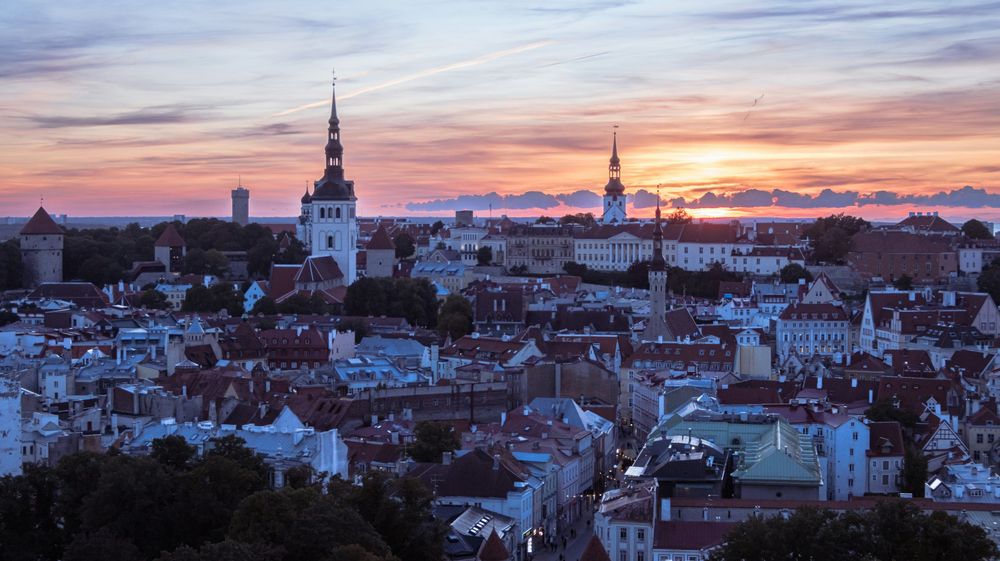
Tallinn's Old Town has been on the UNESCO list since 1997 and remains one of the most intact medieval ensembles in northern Europe — limestone walls almost complete, a working merchants' square (Raekoja plats) since the 13th century, and a Hanseatic street grid that lets you walk from the lower town up to Toompea Hill in under fifteen minutes. The set pieces are Raekoja plats with the Town Hall and its Renaissance pharmacy (Raeapteek, operating since 1422), the Alexander Nevsky Cathedral on Toompea, and St. Olaf's Church (Oleviste), whose 124-metre spire was the tallest building in the world from 1549 to 1625. Climb it for the best free panorama in the Baltics. Tickets to most museums run €5–€12; the Old Town itself is free to wander. Tallinn Airport sits 4 km from the centre and the Lux Express bus links to Riga (4h 30m, from around €15) and St Petersburg (closed at time of writing). Best months: late May to early September.
Riga, Latvia — Art Nouveau quarter
Riga has one of the largest concentrations of Art Nouveau architecture in Europe — more than 700 buildings, roughly a third of the city centre's housing stock. The dense block to walk is the Quiet Centre (Klusais centrs), specifically Alberta iela and Elizabetes iela, lined with Mikhail Eisenstein's lavishly ornamented façades from 1903–1906. The Art Nouveau Museum at Alberta iela 12 (entry around €9) recreates a 1903 apartment of architect Konstantīns Pēkšēns and is the best primer if the style is new to you. Beyond the Quiet Centre, the medieval Old Town (Vecrīga) holds the House of the Blackheads, Riga Cathedral, and the wooden warehouse district along Spīķeri. Riga's central market — five enormous Zeppelin hangars repurposed in 1930 — is the best food stop in the Baltics. Trains and buses to Vilnius take 4 hours (from around €15–€20).
Vilnius, Lithuania — Baroque Old Town
Vilnius's Old Town is the largest surviving medieval old town in Northern Europe — 360 hectares of cobbled streets, 1,500 listed buildings, and one of the densest Baroque ensembles east of Rome. Walk Pilies gatvė from the Cathedral Square to the Gates of Dawn (Aušros vartai), detour into the courtyards of Vilnius University (founded 1579), and don't miss the brick-Gothic St. Anne's Church — supposedly so beautiful Napoleon wanted to take it back to Paris in his pocket. Cross the Vilnia River into Užupis, the self-declared artists' republic with its own constitution (translated into more than thirty languages on a wall on Paupio street). Climb Gediminas Castle Tower for the panorama (entry around €6). Vilnius was European Green Capital 2025; 61% of the city is green space. Best season: May–September; the Old Town café culture relocates outdoors.
Romania and Bulgaria: Sibiu, Cluj-Napoca, Plovdiv
Sibiu, Romania — UNESCO Saxon centre
Sibiu is the cultural capital of Transylvania and the best-preserved Saxon city in Romania. The medieval centre splits into Upper Town (Orașul de Sus) and Lower Town (Orașul de Jos), linked by stone stairways and the cast-iron Bridge of Lies (Podul Minciunilor, 1859). The set pieces are the Great Square (Piața Mare), the Council Tower (Turnul Sfatului) with its observation deck, and the Brukenthal Museum — one of the finest art collections in Eastern Europe, housed in an 18th-century palace and free with the standard €5 city ticket. Climb the Evangelical Cathedral tower for 5 lei (about €1) for views over the famous "eyes" — dormer windows in the steep red-tiled roofs that make the whole city look like it is watching you. Get there: Sibiu International Airport is 45 minutes from Bucharest by air, or 5.5 hours direct by train. Best season: April–October. If you have an extra day, take the train 90 km east to Sighișoara — also UNESCO listed and one of the few inhabited medieval citadels in Europe.
Cluj-Napoca, Romania — Transylvanian regional capital
Cluj is Transylvania's other capital — younger, louder, and the centre of Romanian university life, with seven universities and a population that swells with 100,000 students in term. The medieval core is Piața Unirii, anchored by the Gothic St. Michael's Church (1350–1487) and the equestrian statue of Matthias Corvinus. Next door, Bánffy Palace holds the Cluj National Art Museum and is the city's best example of Transylvanian Baroque. Walk twenty minutes west to the Alexandru Borza Botanical Garden — 10,000 plant species spread over 14 hectares, one of the largest in southeast Europe (entry around €3). Cluj is also where Romania's craft-coffee scene started: cafés cluster on Iuliu Maniu and Eroilor. Untold Festival in August draws 400,000 people; book six months out or come in May. Cluj-Napoca International Airport sits 6 km east; direct trains from Bucharest take 8.5 hours, so fly.
Plovdiv, Bulgaria — Roman theatre and revival houses
Plovdiv is older than Rome — the modern city sits on layers going back to Thracian, Roman, Byzantine and Ottoman occupation, all of them visible if you know where to look. The 2nd-century Roman Theatre above Old Town is still in use today for concerts and opera; the Roman Stadium, partially excavated under the modern pedestrian street, lies right under Knyaz Aleksandar Boulevard. The Old Town itself is a hillside of preserved 19th-century Bulgarian Revival houses — painted timber bays cantilevered over cobbled streets — many open as museums. The Kuyumdzhioglu House Ethnographic Museum is the most spectacular interior. Below the old town, Kapana ("the trap") is the creative-arts district — narrow lanes, independent galleries, and Bulgaria's most concentrated café scene. Plovdiv is two hours from Sofia by train (around €6 second class); the Tourist Information Centre at Dr. Stoyan Chomakov 1 runs walking tours in English. Best season: April–June or September–October.
Central Europe: Bratislava and Ljubljana
Bratislava, Slovakia — Old Town and Devín Castle
Bratislava is the easiest day-trip in Central Europe — Vienna's REX train runs the 65 km to Bratislava-Petržalka station in about 65 minutes for around €10–€16 one-way. The compact Old Town is walkable in three hours: Michael's Gate (Michalská brána), the last surviving medieval gate; the Baroque Primate's Palace where Napoleon signed the 1805 Peace of Pressburg; and Bratislava Castle on the bluff above the Danube, white-walled and reconstructed, with views over the river to the Petržalka Soviet-era housing estates. Walk along the riverfront 9 km west to Devín Castle, a ruined fortress dramatically perched at the confluence of the Danube and Morava — the symbolic edge of the old Iron Curtain. Bratislava is cheap by Central European standards: lunch €10–€15, beer €2–€3. The Slovenian Carpathians' edge cuts right through the city, so summer hiking starts at the city limits.
Ljubljana, Slovenia — Plečnik architecture
Ljubljana is a small city — 280,000 people — but the architect Jože Plečnik gave it a stage-set quality that punches well above its weight. Plečnik designed the Triple Bridge, the National and University Library, the Central Market colonnade, and the riverside terraces of the Ljubljanica between the wars; his work is now a single UNESCO inscription (added 2021). The medieval Ljubljana Castle, perched 900 years on a hill above the Old Town, is reached by funicular (around €4 return) or a 15-minute walk; the tower and the prison museum cost about €10 combined. The Metelkova former-army-barracks district is one of Europe's longest-running squatted art spaces — bars, galleries, and graffiti, walking distance from the centre. Ljubljana sits 130 km south of Vienna; the through-train (Lake Bled in between) takes about 6 hours, so most travellers fly into Ljubljana Jože Pučnik Airport. Pair with Lake Bled (50 minutes by train, around €6) for a four-day base — see our Ljubljana and Lake Bled four-day escape for the logistics.
The Western Balkans: Sarajevo, Kotor, Ohrid, Tirana
Sarajevo, Bosnia and Herzegovina — Ottoman-Habsburg blend
Nowhere in Europe stacks four civilisations in one walk like Sarajevo. From the Sebilj fountain in Baščaršija — the Ottoman-era bazaar with its copper-smiths still hammering on Kazandžiluk street — you can walk twelve minutes west and stand under the Habsburg neo-Moorish arches of the Vijećnica city hall, the building Austria-Hungary built in 1894 to assert its presence in newly annexed Bosnia. In between: the 1530s Gazi Husrev-beg Mosque (the largest Ottoman mosque in Bosnia, free to enter outside prayer times, modest dress required); the Latin Bridge where Gavrilo Princip shot Franz Ferdinand in 1914; and the Sarajevo Roses — red-resin-filled mortar craters from the 1992–95 siege left as memorials. The Tunnel of Hope museum (12 KM, around €6) at the airport perimeter is essential context. Best season: May–June or September. We've covered a focused city stay in our 48 hours in Sarajevo guide.
Kotor, Montenegro — medieval Bay walls
Kotor's old town sits inside intact Venetian walls that climb 1,200 metres up Mount Lovćen to the Fortress of San Giovanni. The 1,355-step climb takes 90 minutes and costs €15 in season (free between November and March); start at dawn for the light and to beat the cruise crowds. Inside the walls, St. Tryphon's Cathedral (1166) and the Maritime Museum anchor the four main squares of a town small enough to lose orientation in deliberately. The Bay of Kotor itself — Europe's southernmost fjord-like ria — is best seen from the water: small-boat tours to Our Lady of the Rocks church and the abandoned Mamula Fortress run from the harbour for €20–€40. Day-trip inland to Lovćen National Park and the Njegoš Mausoleum. Detail in our Kotor medieval bay escape.
Ohrid, North Macedonia — lake of saints
Ohrid is the spiritual centre of the Slavic Orthodox world and one of only 28 UNESCO mixed sites (cultural and natural) in the world — a 3-million-year-old lake plus a town with, legend says, 365 churches, one for every day of the year. The Church of Sveti Jovan at Kaneo perched on a cliff above the lake is the postcard, but go inside the 11th-century Sveta Sofija for the Byzantine frescoes and climb up to Samuel's Fortress for the panorama. Lake swimming is good from June to early October — try the beaches at Gradište and Lagadin on the eastern shore. The Ohrid trout (a protected endemic species) and ajvar pepper paste are the local specialities; expect €15 dinner with wine. Read our full guide: Ohrid, Europe's hidden lake paradise.
Tirana, Albania — pyramid and Blloku
Tirana has changed more than any capital in Europe in the past decade. Around Skanderbeg Square, the 19th-century Et'hem Bey Mosque (free) sits opposite the Soviet-era National Historical Museum and the Italian-built clock tower; the recently re-opened Pyramid of Tirana — Enver Hoxha's brutalist mausoleum-turned-tech-hub — is now climbable from the outside and free. Walk fifteen minutes south to the Blloku district, formerly off-limits Communist Party residential zone, now Tirana's bar-and-café quarter. The two Bunk'Art museums (the giant nuclear bunker on the city outskirts, around €10; the smaller Bunk'Art 2 by Skanderbeg Square, around €5) are the most powerful Cold War sites in the Balkans. Take the Dajti Express cable car (€10 return) up to 1,613 metres for sunset. Tirana International Airport sits 17 km north — €5 by bus, €20 by taxi.
How to plan the tour: logistics and timing
Two weeks gives you one sub-region. A serious three-week trip can cover two: typically Baltics + Central Europe, or Romania-Bulgaria + Western Balkans. Trying to chain all four into a single trip means flying internally three or four times and treating each city as a stopover — not the way to see places like Plovdiv or Sarajevo that reward staying.
Suggested routing
- Baltic loop (7–10 days): Vilnius → Riga → Tallinn by Lux Express bus (4h legs, around €15–€20 each), fly out of Tallinn. Pair with Helsinki by ferry (2h from Tallinn) if you have extra days.
- Romania-Bulgaria (7 days): Fly into Bucharest, train or rental car to Sibiu (5h), Sibiu to Cluj-Napoca by train (5h), fly Cluj → Sofia, train Sofia → Plovdiv (2h). Total budget: €700–€1,000.
- Central Europe (5 days): Vienna base, day-trip to Bratislava (1h train), three nights in Ljubljana (overnight train or fly). Easy and Schengen-only.
- Western Balkans (10 days): Fly into Tirana, bus/private transfer to Ohrid (3h), Ohrid to Kotor via the Albanian coast (6h, private transfer recommended), Kotor to Sarajevo by bus (7h, scenic via Mostar). Fly home from Sarajevo. Allow buffer at borders.
For a cross-regional Balkan route, our week in the Balkans guide covers the lakes-mountains-medieval-towns combination in detail.
Money and ATMs
Five different currencies among the twelve: euro (Estonia, Latvia, Lithuania, Slovakia, Slovenia, Montenegro — uses euro without being in the eurozone), Romanian leu (RON), Bulgarian lev (BGN — pegged to euro at ~1.96), Bosnian convertible mark (BAM — pegged to euro at ~1.96), and Albanian lek (ALL — floating). Cards work in cities; carry cash for rural Romania, Bosnia and Albania. ATM fees vary wildly — withdraw the largest amount you'll use rather than topping up.
What to skip and common mistakes
Don't overpack the itinerary. Eight cities in fourteen days means seeing none of them — and the regional trains and buses are slower than the kilometres suggest. Three or four cities per week is the right pace.
Don't expect Schengen rules to apply universally. Romania and Bulgaria joined full Schengen for land borders only in March 2025. Bosnia, Montenegro, Albania and North Macedonia are outside — you'll get separate passport stamps and your Schengen 90/180 clock pauses while you're there (which is actually useful for long trips). Border crossings between non-Schengen Balkan states can be 1–3 hours by bus.
Don't rent a car for the Baltics or city stays. Tallinn, Riga and Vilnius are best walked; intercity buses are faster than driving. Rent only for the Albanian coast, the Romanian countryside, or to chase Saxon citadels around Sibiu.
Don't underestimate the Baltic winters. Tallinn and Riga get four hours of daylight in December and routinely hit -15°C in January. The cities are gorgeous in the snow, but pack accordingly. The Western Balkans coast is mild year-round but Sarajevo and Ohrid (mountain elevations) get heavy snow.
Don't skip the second cities. Cluj-Napoca, Plovdiv and Sibiu are not consolation prizes — they are the trip. The reason this region rewards travel is that the second cities still have the workshops, the bakeries and the family-run hotels that the capitals have largely lost to international chains. If second cities are your thing, add Pécs, Hungary's sun-warmed hidden city to the same list — a university town with an early-Christian UNESCO necropolis and a Mediterranean feel rare this far north. Hungary's far south hides another such stop in Szeged, the country's sunshine city, a riverside university town of open squares and Art Nouveau facades.
Frequently Asked Questions
Which of these twelve cities should I visit first?
Plovdiv in Bulgaria or Sibiu in Romania. Both deliver the highest density of named heritage per euro spent — Plovdiv stacks Thracian, Roman, Bulgarian Revival and Ottoman in a single afternoon walk; Sibiu is the most photogenic Saxon citadel in the Carpathians. Both are affordable (€70–€100/day mid-range), well-connected by train, and small enough to know in two days. If you prefer northern climates, start with Tallinn.
Is it safe to travel in the Western Balkans?
Yes. Bosnia and Herzegovina, Montenegro, North Macedonia and Albania are politically stable, EU-aspiring countries with low violent-crime rates relative to most of Western Europe. Standard urban precautions apply (pickpockets in Sarajevo's Baščaršija, drink-spiking risks in nightlife districts), but tourism infrastructure is well-developed. Note that Ukraine remains at war and Lviv is not safely accessible to travellers; we have written about it for when conditions change but do not currently recommend visiting.
Can I do this trip by train only?
Mostly yes within the Baltics (Vilnius–Riga–Tallinn by Lux Express bus is the fastest option, not actually rail), Central Europe (Vienna–Bratislava, Vienna–Ljubljana), and Romania (Bucharest–Sibiu–Cluj-Napoca all by direct trains). Bulgaria has acceptable trains. The Western Balkans rail network is patchy — buses are universally faster than trains, and the Bar–Belgrade line through Montenegro and Serbia is the one rail journey worth doing for the scenery itself (around 12 hours, but legendary).
What's the budget for a two-week trip across one sub-region?
Budget €100/day × 14 days = €1,400 for in-country costs (lodging, food, transit, museums), plus flights. The Baltics and Slovenia push toward €130–€150/day; Romania, Bulgaria, Bosnia and Albania are €70–€100/day for the same standard. Add €200–€400 for flights from Western Europe. A two-week solo trip costs €2,000–€3,000 all-in mid-range; couples can save on lodging.
Are Romania and Bulgaria now in full Schengen?
Yes, since 31 March 2025 — full Schengen including land borders. EU citizens cross without checks; non-EU passports still get one entry stamp and one exit stamp at the Schengen perimeter, and the 90-in-180-days rule applies as a single budget across all Schengen states. The four Western Balkan countries on this list remain outside Schengen and the EU; they have their own visa policies (most Western passports get 90 days visa-free).

Keep Exploring
Hidden Gems of Iberia: Portugal, Galicia, Asturias
Atlantic Iberia at half the Barcelona price — Braga's UNESCO sanctuary, Santiago's cathedral, Oviedo's pre-Romanesque monuments, Roman walls in Lugo. Concrete fares, named towns, EUR prices.
Porto's Hidden Corners: Foz, Miragaia & Gardens
Beyond the Ribeira and wine cellars: where to find Porto’s quieter neighborhoods, gardens, galleries and local eateries — with practical tips, prices and timings.
Underrated European Capitals: 12 You Should Visit
Twelve European capitals worth picking over London or Paris — Ljubljana, Riga, Tirana, Sarajevo and beyond. EUR daily budgets, named neighborhoods, transport from major hubs.