
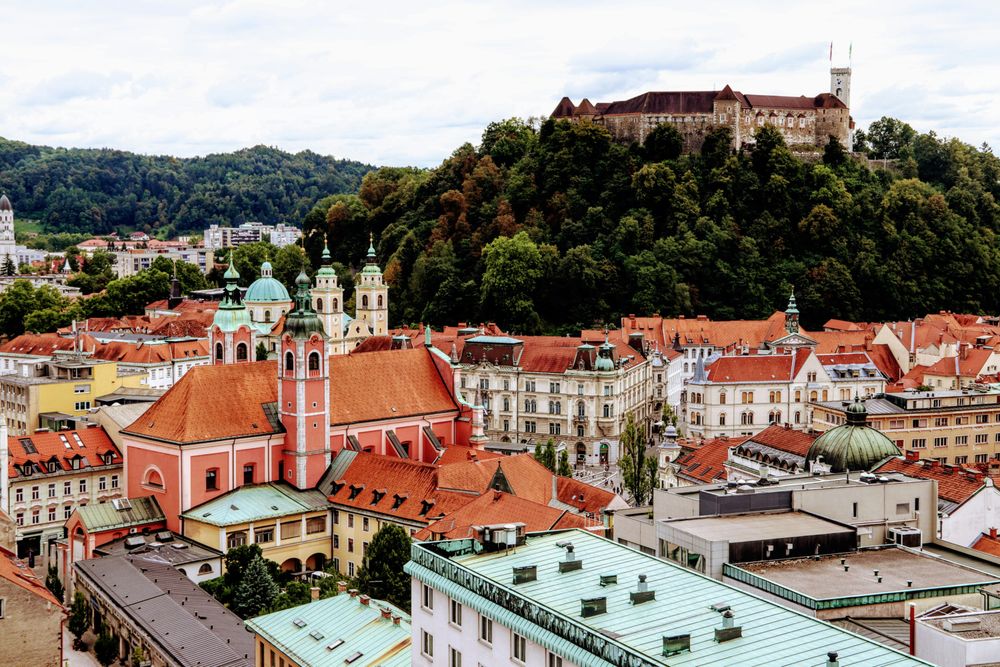
Underrated European Capitals: 12 You Should Visit
Twelve European capitals worth picking over London or Paris — Ljubljana, Riga, Tirana, Sarajevo and beyond. EUR daily budgets, named neighborhoods, transport from major hubs.
Everyone "does" Paris, Rome and Amsterdam. But Europe has a second tier of capital cities that quietly out-perform the headliners on the things that actually make a trip good: walkable centres you can cross on foot, dinner for the price of a museum ticket back home, and old towns you can wander without queueing behind a tour flag. These are the underrated European capitals, and most of them sit a single short-haul flight from the major hubs.
This guide skips the obvious heavyweights and focuses on capitals that travellers consistently overlook, mostly in the Baltics, the Balkans and Central Europe. For each one you get the honest reason it flies under the radar, two or three specific sights worth your time, a signature dish or drink, a rough idea of cost, and how long to actually stay. The aim is to help you build a real itinerary, not to admire a list. If you only have 48–72 hours, see our companion guide to the best European city breaks for a weekend.
Fast Facts
| Capital | Country | Cost level | Walkable centre | Best for |
|---|---|---|---|---|
| Ljubljana | Slovenia | Mid | Excellent (car-free core) | Relaxed city break |
| Tirana | Albania | Very low | Good | Cheap, edgy weekend |
| Vilnius | Lithuania | Low–mid | Excellent | Baroque old town |
| Riga | Latvia | Low–mid | Good | Art Nouveau architecture |
| Tallinn | Estonia | Mid | Excellent (compact) | Medieval weekend |
| Bratislava | Slovakia | Mid | Excellent (tiny) | Day trip / quick stop |
| Sofia | Bulgaria | Very low | Good | Budget + mountains |
| Skopje | North Macedonia | Very low | Good | Quirky, offbeat |
| Valletta | Malta | Mid–high | Excellent (tiny) | Sun + history |
Quick picks from the table above:
- Cheapest: Tirana, Sofia and Skopje are the clear budget winners, where a sit-down meal often lands around €5–10.
- Most walkable: Ljubljana and Valletta both have compact, largely car-free historic centres you can cross in 15–20 minutes on foot.
- Best for a single weekend: Tallinn and Bratislava are small enough to enjoy fully in two or three days without rushing.
(Cost levels are relative bands, not fixed prices; actual costs vary by season, neighbourhood and exchange rate.)
Ljubljana, Slovenia
Why it's underrated: Slovenia's capital is small (under 300,000 people), green and often skipped by travellers racing between Venice and the Balkans. That is precisely its charm: a riverside old town that feels like a film set without the crowds of a film set.
What to see: The Ljubljanica river embankments and Triple Bridge designed by architect Jože Plečnik, whose work across the city is a UNESCO-listed achievement; Ljubljana Castle on the hill above the centre, reachable by funicular (return ticket around €4); and the lively Central Market, also a Plečnik design.
Signature food/drink: Try štruklji (rolled dumplings, sweet or savoury) and a glass of Slovenian wine from the Vipava or Brda regions.
Cost level: Mid. More affordable than Western Europe but pricier than the Balkans; a three-course dinner for two with wine runs roughly €50–70.
Getting there: Ljubljana Jože Pučnik Airport sits about 25 km north of the city; an airport shuttle bus into the centre costs around €4–6. The old town itself is fully pedestrianised.
How long to stay: 2 days, or use it as a base for day trips to Lake Bled and the Karst caves.
The Ljubljana Tourism board is a good first stop for opening hours and the Ljubljana Card.
Tirana, Albania
Why it's underrated: For decades Albania was effectively closed off, and Tirana still carries an unfair reputation. In reality it is one of Europe's most energetic and affordable capitals, with a pedestrianised core and a wave of colourful building facades that replaced grey communist-era blocks.
What to see: Skanderbeg Square, the vast pedestrian heart of the city; the Pyramid of Tirana, a former communist monument reborn as a tech and culture hub; and the Bunk'Art museums, Cold War bunkers turned into exhibitions on Albania's isolationist past (entry around €5–8).
Signature food/drink: Byrek (flaky filled pastry) and strong, cheap espresso — Albania has a serious café culture, and a coffee in the lively Blloku district rarely tops €1.50.
Cost level: Very low. Meals frequently land around €5–10 and coffee around €1–2.
Getting there: Tirana International Airport (Rinas) is about 17 km from the centre; the official Rinas Express bus runs to the city centre for around €4. Note that Albania uses the lek, though euros are widely accepted.
How long to stay: 2 days for the city; longer if you fan out to the coast or the mountains.
For a deeper look, see our full guide to Tirana, Albania's coolest underrated city.
Vilnius, Lithuania
Why it's underrated: Lithuania's capital has one of Europe's largest surviving Baroque old towns, inscribed on the UNESCO World Heritage List, yet it draws a fraction of the visitors of comparable historic centres further west.
What to see: The Cathedral Square and bell tower; the Gate of Dawn, a chapel-topped surviving city gate; and the bohemian Užupis district, a self-declared "republic" of artists with its own tongue-in-cheek constitution on the wall.
Signature food/drink: Cepelinai (potato dumplings stuffed with meat) and šaltibarščiai, the bright-pink cold beetroot soup served in summer.
Cost level: Low to mid; a sit-down dinner for two typically runs €30–45.
Getting there: Vilnius Airport is only about 6 km from the old town — roughly a 15-minute ride, and a single train into the central station costs under €1.
How long to stay: 2 days, easily paired with Riga by bus (about 4 hours).
The official Go Vilnius tourism site covers museums, viewpoints and seasonal events.
Riga, Latvia
Why it's underrated: Riga is the largest of the three Baltic capitals but somehow the least talked about. It holds one of Europe's densest collections of Art Nouveau architecture, and its medieval-rooted historic centre is on the UNESCO World Heritage List.
What to see: The Art Nouveau district around Alberta iela, with its ornate facades; the House of the Black Heads, a reconstructed Renaissance-era guildhall on the main square; and the sprawling Riga Central Market, housed in repurposed Zeppelin hangars and one of the largest markets in Europe.
Signature food/drink: Rye bread in many forms, and the herbal liqueur Riga Black Balsam, an acquired but iconic taste.
Cost level: Low to mid; a sit-down meal for two with drinks lands around €35–50.
Getting there: Riga International Airport is about 10 km southwest of the centre, with bus number 22 running into the old town for around €2. The historic core around the Daugava river is compact and easily walked.
How long to stay: 2 days.
The official LiveRiga tourism site is the place to check opening hours and current events.
Tallinn, Estonia
Why it's underrated: Tallinn's medieval Old Town is genuinely one of the best-preserved in Europe and a UNESCO World Heritage site. It does get cruise-day crowds in summer, but step a few streets back and into the creative Kalamaja and Telliskivi districts and the city empties out.
What to see: The walled Old Town with its towers and the Toompea upper-town viewpoints; Alexander Nevsky Cathedral; and the Telliskivi Creative City, a former industrial complex now full of studios, bars and street art.
Signature food/drink: Hearty black bread and dishes built around local game and fish; in winter, spiced mulled wine in the Town Hall Square.
Cost level: Mid — generally the priciest of the three Baltic capitals; expect €40–60 for dinner for two.
Getting there: Tallinn Airport is just 4 km from the centre, with tram line 4 reaching the Old Town in about 15 minutes for roughly €2.
How long to stay: 2 days, often paired with a short ferry hop to Helsinki (about 2 hours each way).
The Visit Tallinn site is useful for the Tallinn Card and opening times.
Bratislava, Slovakia
Why it's underrated: Frequently dismissed as a day trip from Vienna (it is barely an hour away), Bratislava rewards an overnight stay. Its compact old town is genuinely pretty, and prices drop noticeably the moment you cross the border from Austria.
What to see: Bratislava Castle on its hill above the Danube; the cobbled Old Town around Hlavné námestie (Main Square); and St Martin's Cathedral, where Hungarian kings were once crowned. Watch for the quirky bronze street statues, including the much-photographed "Čumil" peeking out of a manhole.
Signature food/drink: Bryndzové halušky — potato dumplings with sheep's cheese and bacon, the unofficial national dish, usually around €7–9 a plate.
Cost level: Mid — cheaper than neighbouring Austria, pricier than the Balkans; a dinner for two runs about €35–50.
Getting there: Bratislava is roughly an hour from Vienna by train or bus (around €10–15), and a 20-minute ride from its own airport. The cobbled centre is so small you can cross it on foot in 10–15 minutes.
How long to stay: 1–2 days; an easy add-on to a Vienna trip but worth a night of its own.
The official Visit Bratislava site lists opening hours, tours and the Bratislava Card.
Sofia, Bulgaria
Why it's underrated: Bulgaria's capital layers Roman ruins, Ottoman mosques, Orthodox cathedrals and communist-era architecture within a few walkable blocks, and it sits at the foot of a mountain you can reach by public transport. It remains one of the most affordable capitals in the EU.
What to see: The gold-domed Alexander Nevsky Cathedral; the Roman ruins of Serdica, visible in and around the central metro stations; and Vitosha Mountain, a hiking and skiing area on the city's doorstep.
Signature food/drink: Shopska salad (tomato, cucumber, pepper and grated white cheese) and a glass of Bulgarian wine or rakia.
Cost level: Very low; a sit-down meal for two with drinks often comes in under €25.
Getting there: Sofia Airport is about 10 km from the centre and connected directly by metro line 1, with a single ticket around €0.80 — one of the cheapest airport links in Europe.
How long to stay: 2 days, plus a day for Vitosha or the Rila Monastery.
See the official Visit Sofia site for current details.
Skopje, North Macedonia
Why it's underrated: North Macedonia's capital is one of Europe's most unusual cityscapes — a historic Ottoman quarter sitting across the river from a controversial 2010s building spree of giant neoclassical monuments and statues. Love it or find it kitsch, there is nowhere else quite like it.
What to see: The Old Bazaar (Stara Čaršija), one of the largest Ottoman-era marketplaces in the Balkans; the Stone Bridge linking old and new; and nearby Matka Canyon, a short 15 km trip from the city for boats and caves.
Signature food/drink: Grilled meats and ajvar (red pepper relish), washed down with local Tikveš wine.
Cost level: Very low; expect to pay around €5–8 for a generous grilled-meat dinner.
Getting there: Skopje International Airport is about 20 km from the centre, with the official Vardar Express shuttle running into town for around €3.50.
How long to stay: 1–2 days, plus a half-day at Matka Canyon.
For more, read our guide to Skopje, the quirky capital of North Macedonia.
Valletta, Malta
Why it's underrated: Tiny Valletta is a fortress city built by the Knights of St John, and the entire capital is a UNESCO World Heritage site. Many visitors treat Malta purely as a beach destination and underrate the capital itself, which is dense with Baroque architecture and harbour views.
What to see: St John's Co-Cathedral, home to two Caravaggio paintings (entry around €15); the Upper Barrakka Gardens overlooking the Grand Harbour; and Fort St Elmo with the National War Museum.
Signature food/drink: Pastizzi (savoury ricotta or pea pastries, often under €1 each) and rabbit stew (fenkata), the island's signature dish.
Cost level: Mid to high by regional standards, especially in peak summer; dinner for two runs around €45–65.
Getting there: Malta International Airport is just 8 km from Valletta, with the X4 bus running into the capital for around €2 (€2.50 in summer). The peninsula city is best explored entirely on foot.
How long to stay: 1–2 days in the city, more for the wider island.
The official Visit Malta site covers museum hours, ferries and events across the islands.
Off the Beaten Path Beyond the Capitals
If these capitals whet your appetite for overlooked corners of Europe, the same regions hide smaller towns worth the detour. The Balkans in particular reward going slow — for example, Prizren, the Ottoman jewel of the Balkans in Kosovo, with its cobbled lanes, mosques and lively riverside cafés.
A practical word of caution when planning a multi-capital trip: do not try to cram four cities into one week. The Balkans and Baltics are easy to underestimate, and bus journeys between them can be long. Two capitals plus a day trip each is a far more enjoyable pace than a checklist sprint. For more weekend-length pairings, our roundup of the best European city breaks shows which of these capitals work well together.
Frequently Asked Questions
What is the most underrated capital in Europe?
There is no single answer, but Ljubljana, Tirana and Vilnius are perennial favourites among travellers looking for capitals that deliver big-city culture without big-city crowds. Ljubljana stands out for its walkable, car-free centre, while Tirana wins on affordability and energy.
Which European capital is cheapest?
Among the capitals in this guide, Tirana (Albania), Sofia (Bulgaria) and Skopje (North Macedonia) are consistently the most affordable, with sit-down meals often around €5–10. Exact costs vary by season and venue, so treat these as rough bands rather than fixed prices.
What are the best off-the-beaten-path European cities?
Beyond the capitals, the Balkans offer some of Europe's most rewarding lesser-known cities, including Prizren in Kosovo and the towns around Matka Canyon near Skopje. The Baltic region and smaller Central European cities also stay quiet outside peak summer.
Which underrated capital is best for a weekend?
Tallinn and Bratislava are ideal for a two- or three-day trip because their historic centres are compact enough to explore on foot without rushing. Ljubljana is another strong weekend choice and pairs well with a day trip to Lake Bled.
When is the best time to visit these capitals?
Late spring (May–June) and early autumn (September) are the sweet spot: the weather is mild, prices are lower than peak summer, and the cruise-day and August crowds in places like Tallinn and Valletta have thinned out. The Baltic and Balkan capitals are quietest of all on shoulder-season weekends.
Is Tirana worth visiting?
Yes. Tirana is one of Europe's most affordable and fast-changing capitals, with a pedestrianised centre, distinctive Cold War history at the Bunk'Art museums, and a strong café culture. It works well as a standalone short break or as the start of a wider Albania trip.
Is Ljubljana worth visiting?
Absolutely. Slovenia's capital offers a green, largely car-free old town, the UNESCO-recognised architecture of Jože Plečnik, and easy access to Lake Bled and the Karst region — all at a relaxed pace and a more reasonable cost than Western European capitals.

Keep Exploring
Hidden Gems of Iberia: Portugal, Galicia, Asturias
Atlantic Iberia at half the Barcelona price — Braga's UNESCO sanctuary, Santiago's cathedral, Oviedo's pre-Romanesque monuments, Roman walls in Lugo. Concrete fares, named towns, EUR prices.
Hidden Gems of Eastern Europe: A 12-City Tour
Twelve underrated cities from the Baltics to the Adriatic — UNESCO old towns, Habsburg cafés, Ottoman bazaars and Soviet-era curiosities. Concrete fares, named neighborhoods, EUR prices.
Kotor: Montenegro’s Medieval Bay Escape
Walled medieval streets, a dramatic bay and steep fortress trails: Kotor is Montenegro’s most atmospheric coastal town. Practical tips, where to stay, prices and must-dos.