
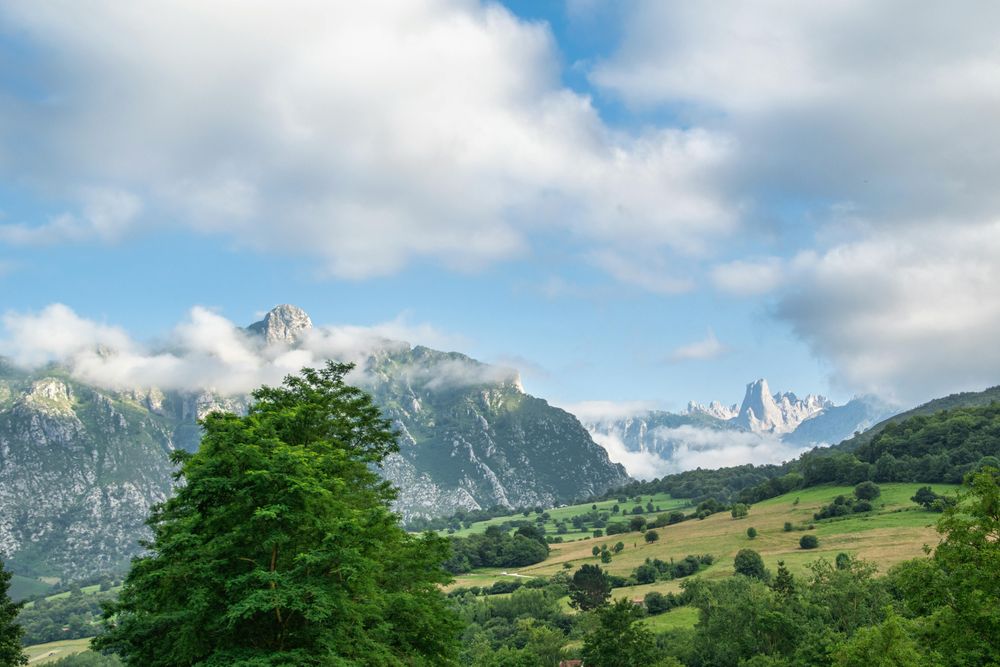
Atlantic Iberia at half the Barcelona price — Braga's UNESCO sanctuary, Santiago's cathedral, Oviedo's pre-Romanesque monuments, Roman walls in Lugo. Concrete fares, named towns, EUR prices.
Iberia in the travel imagination is sun-bleached: Andalusia, the Costa Brava, the Algarve. The other Iberia — wet, green, granite, Celtic-influenced — sits along the Atlantic from the Minho river up through Galicia to the Cantabrian coast of Asturias. Here, six UNESCO World Heritage sites cluster within a 500 km arc, dinner with wine still costs €15–€25, and the rain that scares off summer crowds is exactly what keeps the hillsides emerald in July. This guide stitches together three regions that share more with each other than with Madrid or Lisbon — and how to visit them with concrete train fares, named towns, and the timing that actually matters.
Fast Facts
| Detail | Info |
|---|---|
| Best time to visit | Late April to mid-October — May–June or September deliver mild temperatures (18–24°C), green landscapes, and far fewer crowds than the Mediterranean coast; avoid November–February (rain, short days) |
| Getting there | Hub airports: Porto (OPO) for Northern Portugal, Santiago de Compostela (SCQ) for Galicia, Asturias-Oviedo (OVD) for the Cantabrian coast. Porto–Vigo by Celta train ~2h 15m (€16); Santiago–Oviedo by ALSA bus ~6h (€40) |
| Where to stay | Braga and Guimarães: €60–€110/night for historic-centre boutiques; Santiago de Compostela: €70–€130 near Praza do Obradoiro; Oviedo and Gijón: €60–€110 in walkable old quarters |
| Average daily budget | €60–€90/day mid-range — food €20–€35 (menú del día €12–€16, dinner with wine €18–€28), transit €5–€12, museums €3–€8, lodging €30–€60 per person |
| Don't miss | Bom Jesus do Monte funicular sanctuary in Braga; Santiago Cathedral and a dinner of polbo á feira in Pontevedra; Pre-Romanesque churches above Oviedo; the Lakes of Covadonga in Picos de Europa |
Why this corner of Iberia, and how to think about the three regions
Northern Portugal, Galicia, and Asturias share a green Atlantic identity that distinguishes them sharply from the Mediterranean cliché of Iberia. Geographically, the Minho river is the only meaningful divider — and even that boundary is more administrative than cultural. The Galego language, spoken in Galicia, is closer to Portuguese than to Castilian Spanish; Asturianu, the Romance language of Asturias, sits in the same Iberian-Romance family. The food on both sides of the border leans on Atlantic seafood, white wine, slow-braised pork, and cabbage broths — caldo verde in Minho, caldo galego in Galicia, fabada in Asturias. The architecture stacks Roman walls, Romanesque churches, Gothic cathedrals, and Baroque sanctuaries in towns small enough to walk in a morning.
The three regions also share an under-tourism that makes them feel like a different Europe. Spanish Mediterranean coastal cities saw record crowds in 2025; in Galicia, Lugo's Roman walls and Pontevedra's old town stay walkable in August. The Camino de Santiago is the one obvious exception — Santiago de Compostela gets crowded between June and September — but step 50 km off the Camino Francés and you have entire valleys to yourself.
A practical note on transport. All three regions are inside Schengen and the eurozone, so border crossings between Portugal and Spain are effortless: no passport check, same currency, same plug. Renfe trains run inside Spain, CP inside Portugal, and the Celta service (operated jointly) connects Porto and Vigo with two daily trains. Buses fill the gaps — particularly for the Asturian and Galician coast, where rail is patchy.
Northern Portugal: Braga, Guimarães, the Minho
Braga — Bom Jesus and the oldest Portuguese city
Braga is the oldest continuously inhabited city in Portugal, founded by the Romans as Bracara Augusta in 16 BC. Today it serves as the religious capital of the country, anchored by the Sé de Braga cathedral — begun in 1071, the oldest in Portugal — and the show-stopping Bom Jesus do Monte sanctuary, a UNESCO World Heritage Site since 2019. Bom Jesus is a 5 km uphill walk from the city centre or a quick bus from Avenida da Liberdade (€2.10 one-way on the TUB urban bus). The 116 m-long Baroque granite stairway — five terraces of sculpted allegorical fountains representing the senses and the virtues — leads to the 18th-century church at the top. Climb on foot, or take the 1882 water-balance funicular (the oldest of its kind still in operation in the world, around €2 each way; €3 return).
Down in the city, browse the Mercado Municipal for bolinhol almond cakes and Minho-grown produce, and pause for a coffee at A Brasileira, on Largo do Barão de São Martinho since 1907. Most museums and monuments in Braga charge €2–€5; the Museu dos Biscainhos in an 18th-century palace is the best small museum (€3). Lunch in a traditional tasca runs €10–€15 with wine. Braga is 50 minutes from Porto on the Comboios de Portugal urban line (€3.55 one-way, two trains an hour).
Guimarães — the birthplace of Portugal
No Portuguese town carries more symbolic weight than Guimarães, where Afonso Henriques was born around 1109 and where he declared Portuguese independence in 1139. The historic centre was inscribed by UNESCO in 2001 as one of the best-preserved medieval cores in Europe — five hectares of late-Gothic and Manueline buildings, narrow stone streets, and the iconic painted wall reading Aqui nasceu Portugal ("Portugal was born here"). The walk from Largo do Toural up to the Castelo de Guimarães (10th century) and the adjacent Paço dos Duques de Bragança takes 20 minutes; the combined ticket is €8. The 13th-century Igreja de São Miguel do Castelo in between, where Afonso Henriques was reportedly baptised, is free.
For lunch, sit at the long benches at A Cozinha por António Loureiro for a Michelin-starred take on Minho cuisine (around €60), or eat at one of the tascas around Praça de Santiago for €12–€15. Guimarães is 1 hour from Porto by train (€3.55, Linha de Guimarães). The cable car up to Penha (€5 return) gives you the best aerial view of the city and the Penha sanctuary on top.
Viana do Castelo and Ponte de Lima
Viana do Castelo, on the Lima river estuary, is the prettiest of the Minho coastal towns — a 16th-century centre dominated by the Praça da República with its Renaissance fountain, and the Santuário de Santa Luzia on the hill above (free, funicular €3 return). The town's signature dish is arroz de marisco, a soupy seafood rice; Casa d'Armas does it well for around €18 per person. The Atlantic beach Praia do Cabedelo, reached by a 10-minute ferry across the Lima (€2), is one of Portugal's best surf beaches.
Upriver, Ponte de Lima claims to be Portugal's oldest village and the cradle of Vinho Verde. The Roman bridge across the Lima — 277 metres long with 32 arches, parts dating to the 1st century AD — is the photogenic anchor. The Wednesday market (the oldest in Portugal, granted a royal charter in 1125) takes over the riverbank. For a Vinho Verde tasting, head to Quinta do Ameal outside town (€20–€40 by appointment) or pair this leg with our Portugal wine tourism guide for the full Minho circuit.
Peneda-Gerês National Park
Portugal's only national park — and one of the wettest places in Europe — Peneda-Gerês covers 70,290 hectares along the Spanish border. Highlights for a one-day visit from Braga: the Mata da Albergaria Atlantic oak forest, the Cascata do Arado waterfall near Caldas do Gerês, and the Pedra Bela viewpoint over the Caniçada reservoir. Garranos (semi-wild ponies) and the long-haired Cachena cattle still graze the high pastures. Rent a car in Braga (€40–€60/day); public transport into the park is limited.
Galicia: Santiago, A Coruña, Lugo, the Rías
Santiago de Compostela — the pilgrimage capital
Santiago has been Christendom's third great pilgrimage destination since the 9th century, when a hermit named Pelagius reportedly discovered the tomb of the Apostle James. The medieval old town and the Cathedral of Santiago were inscribed by UNESCO in 1985 — the first Spanish site on the list. The cathedral's Baroque western façade dominating the Praza do Obradoiro is the postcard, but the original 12th-century Pórtico da Gloria by Master Mateo (now restored to its polychrome glory and visible by booking €18 timed tickets through the cathedral foundation) is the masterpiece. The Pilgrim's Mass is held daily at noon; the famous Botafumeiro censer swings only on major feast days and by paid request (€450, group-split).
Around the cathedral, the four praces — Obradoiro, Quintana, Praterías, Inmaculada — define the old town. Eat at the Mercado de Abastos (the second-most-visited site in the city after the cathedral) where vendors will cook seafood you buy at the next stall (€10–€18). For polbo á feira — Galician octopus boiled in copper pots, dressed with paprika and olive oil — try A Casa do Pulpo. A standard menú del día in the centre runs €12–€16.
A Coruña — the Tower of Hercules
A Coruña is Galicia's working port — bigger, scruffier, and less self-conscious than Santiago. The headline is the Tower of Hercules, inscribed by UNESCO in 2009 — the only Roman lighthouse still in operation, built in the 1st or 2nd century AD and renovated in 1791 to its current 55 m height. Climb the 234 steps for €3 (free Mondays); the views across the Atlantic and the city are unmatched. Walk along the Paseo Marítimo (Europe's longest seafront promenade at 13 km) to the Domus science museum and the glass-galleried façades of Praza de María Pita, the city's main square.
A Coruña is the home city of Zara — the headquarters and original store sit in nearby Arteixo. For seafood, Mesón do Pulpo and the tabernas on Calle de la Estrella do octopus, zamburiñas (small scallops), and Albariño glasses for €3–€5 a glass. The city is 30 minutes from Santiago by AVE high-speed train (€10–€15) and serves as the gateway to the Costa da Morte — the wild "coast of death" west of A Coruña, dotted with shipwrecks and the dramatic Cabo Fisterra cape, traditionally considered the western end of the medieval world.
Lugo — the Roman walls
Lugo's walls are a UNESCO World Heritage Site (inscribed 2000) for a single reason: they are the most complete surviving Roman fortification in the world. Built between 263 and 276 AD, the Roman walls of Lugo form an unbroken 2,117 m circuit around the city centre with all 71 of the original towers still standing. You can walk the entire wall top in 45 minutes — it is free, never closes, and has 10 access stairways. The view down into the medieval and modern city from the wall is the most interesting urban panorama in inland Galicia.
Inside the walls, the Cathedral of Lugo (begun 1129) is unusual in that the Blessed Sacrament has been exposed for perpetual adoration since at least the 14th century — the only Spanish coat of arms still includes the chalice symbol commemorating this privilege. Lugo's tapas culture is famous in Galicia: order a drink in the bars around Rúa Nova, Praza do Campo, or Rúa da Cruz, and a substantial free tapa arrives with each round. Three rounds equal dinner. Lugo is 1 hour from Santiago by ALSA bus (€11) and 1 hour from A Coruña by train.
Pontevedra and the Rías Baixas
Pontevedra has the best-preserved medieval old town in Galicia — and as of 1999 it is a fully pedestrianised city centre, often cited as a global model for urban design. Walk the Praza da Leña (the firewood square, with stone arcades) and the Praza da Verdura (the vegetable square) into the Basílica de Santa María a Maior (16th century). The Pontevedra Museum, spread across six historic buildings, is the best regional museum in Galicia and free.
Pontevedra is the gateway to the Rías Baixas — the four southern flooded river valleys (Vigo, Pontevedra, Arousa, Muros-Noia) that produce most of Galicia's Albariño wine. The Rías Baixas DO covers about 4,000 hectares across five sub-regions; Val do Salnés on the Arousa ría is the heartland. Estates worth visiting include Pazo de Señoráns in Meis (tastings from €12), Bodegas Martín Códax in Cambados, and Pazo Baión in Vilanova de Arousa. For boat trips to the bateas — the floating wooden platforms where Galician mussels are farmed — book from O Grove (€15–€25 with mussel-and-wine tasting included).
Asturias: Oviedo, Gijón, Picos de Europa
Oviedo — pre-Romanesque churches
Oviedo is the small, dignified capital of Asturias — and the home of one of UNESCO's most unusual inscriptions: the Monuments of Oviedo and the Kingdom of the Asturias, six pre-Romanesque buildings dating from the 8th and 9th centuries when the Asturian kingdom was the only Christian state surviving on the Iberian peninsula. Two of the six — Santa María del Naranco and San Miguel de Lillo — sit together on the Naranco hillside three kilometres above the city, easily reached on foot, by city bus, or by taxi (€6–€8 one-way). Combined ticket €4. The architecture is unlike anything else in Spain: barrel-vaulted halls, blind arcades, decorative roundels, and the distinctive sogueado rope-pattern columns.
In the city itself, the Cathedral of San Salvador (begun in the 14th century) holds the Cámara Santa — itself part of the UNESCO inscription — where the Cross of Victory and the Cross of the Angels, the symbols on the Asturian flag, are kept. Eat at the Calle Gascona sidrerías, where waiters pour Asturian cider (sidra) from arm's-length above the glass to aerate it. A bottle of cider (€3–€4) plus fabada stew and cachopo (breaded veal cutlet stuffed with ham and cheese) makes a full €20 meal. The Museo de Bellas Artes de Asturias (free) is one of Spain's finest provincial collections.
Gijón — the Atlantic working city
Gijón is bigger, more industrial, and more democratic than Oviedo — Asturias's port city with a long curved beach (Playa de San Lorenzo) running right along the city centre. The headland of Cimadevilla (the old fishermen's quarter) holds the Universidad Laboral — a vast Franco-era educational complex now repurposed as a cultural centre — and the Cerro de Santa Catalina sculpture park topped by Eduardo Chillida's massive Elogio del Horizonte. The free Museo del Pueblo de Asturias displays traditional Asturian architecture and hórreos (raised wooden granaries).
For cider, the sidrerías in Cimadevilla — particularly around Calle del Carmen — serve the freshest escanciado pours. Gijón is 30 minutes from Oviedo by Renfe Cercanías (€3.10), making it an easy day-trip if you base yourself in the capital.
Cangas de Onís, Covadonga, and Picos de Europa
The geographic heart of Asturias is the Picos de Europa National Park, Spain's oldest (founded 1918) and one of three Spanish national parks containing limestone karst peaks rising above 2,600 metres. The gateway town is Cangas de Onís, marked by its hump-backed medieval bridge over the Sella — the so-called Puente Romano, actually 14th-century. From Cangas, drive 11 km up to Covadonga, the symbolic birthplace of the Reconquista where the Christian king Pelagius defeated the Moors in 722. The Santa Cueva holy cave shrine and the 19th-century neo-Romanesque basilica are both free.
From Covadonga, a steep 12 km mountain road climbs to the Lagos de Covadonga (Lakes Enol and Ercina). Between July 24 and September 8 — and on Easter week — private cars are banned; you must park at the El Bobión-Cangas car park and take a shuttle bus (€9 round trip, includes shuttle plus parking). Walks around the lakes range from 30 minutes (the easy PR-PNPE 2 lakes loop) to a full day climbing Vega de Ario.
The coast east of Gijón holds two more gems. Cudillero, 50 km west of Gijón, is the most photographed fishing village on the Asturian coast — pastel houses tumbling down a steep cove. Llanes, 100 km east toward Cantabria, has a 13th-century walled centre, dramatic Atlantic cliffs at the Bufones de Pría blowholes, and the brightly painted Cubos de la Memoria by Basque artist Agustín Ibarrola at the harbour. Both are best reached by car or by FEVE narrow-gauge train (slow, scenic, around €5–€10).
How to plan the trip: logistics and routing
One week per region; two weeks for the full arc. A focused seven-day trip in Northern Portugal covers Porto, Braga, Guimarães, the Minho coast, and one day in Peneda-Gerês. A Galicia loop in seven days hits Santiago, A Coruña, Lugo, the Rías Baixas, and Cabo Fisterra. Asturias works as a six-day base trip from Oviedo with Gijón, Cudillero, Llanes, and two days in Picos de Europa. For a ready-made week that strings the Spanish half of this coast into one route, see our one-week Northern Spain itinerary from the Basque Country to Galicia.
Suggested 12-day Atlantic Iberia route
Fly into Porto. Day 1–2: Porto and the Douro; Day 3: Braga and Bom Jesus; Day 4: Guimarães; Day 5: cross into Galicia by Celta train to Vigo, transfer to Pontevedra; Day 6: Rías Baixas wineries; Day 7–8: Santiago de Compostela; Day 9: Lugo and the Roman walls; Day 10: ALSA bus to Oviedo (5h 30m, €40); Day 11: Lagos de Covadonga and Cangas de Onís; Day 12: Gijón and fly out from Asturias-Oviedo airport. Total in-country budget: €1,000–€1,400 per person mid-range, plus international flights.
For a slower, more relaxed Iberian alternative organised by car, our Iberian Road Trips pillar breaks down five multi-day driving routes across Spain and Portugal, including a Cantabrian coast loop that overlaps with the Asturian half of this guide.
When to go, by month
- April–May: Camellias in bloom in Galicia's pazo gardens, Easter processions in Braga (a serious week-long event, book accommodation 3 months ahead). Cool but mild (15–20°C).
- June: São João celebrations in Braga and Porto (23–24 June), Galician romerías begin. Long daylight, manageable crowds.
- July–August: Warmest (20–28°C) but rainfall returns in short bursts. Santiago is crowded with pilgrims; the Asturian coast is busy with Spanish domestic tourists.
- September: The sweet spot — warm seas, Albariño harvest in Rías Baixas, fewer crowds.
- October: Mushroom season in Asturias, magosto chestnut festivals in Galicia. Rainy but atmospheric.
Booking and money
Most regional museums and monuments charge €2–€8; cathedrals are usually free with paid extras (towers, crypts, special collections) at €3–€10. The standard menú del día — a fixed 3-course lunch with wine — runs €12–€16 in Galicia and Asturias, slightly less in Portugal. ATMs are universal and contactless cards work everywhere except in the smallest village tabernas; carry €40–€60 in cash as a buffer for rural Asturias and Peneda-Gerês.
For those combining this trip with a Camino approach to Santiago, our Hidden Gems of Eastern Europe pillar offers a parallel sub-region tour that pairs well as a second-week extension by flying from Santiago via Madrid or Lisbon.
What to skip and common mistakes
Don't expect Mediterranean weather. This is Atlantic Iberia: 1,100–1,800 mm of annual rainfall in the wettest valleys, more than London. Pack a real waterproof and accept that rain in May or September is not unusual — the green landscapes you came to see are produced by exactly this climate. The upside is that summer temperatures are mild (20–26°C versus 35°C+ in Seville), making the region one of the best summer escapes in Spain and Portugal.
Don't try to drive the Lagos de Covadonga road in private cars during peak summer. The shuttle bus system from El Bobión-Cangas exists because the road is dangerously narrow. Use the shuttle (€9 round trip), or visit in May, June, or late September when private access reopens.
Don't skip the small towns. Pontevedra, Lugo, Ponte de Lima, Cangas de Onís, and Cudillero are the trip. The capitals (Porto, Santiago, Oviedo) are excellent, but the second cities and villages preserve the rhythm — markets at 9 a.m., long lunches, sobremesa — that has been industrialised away in the bigger metros.
Don't ignore the language layer. Public signage in Galicia is bilingual Galego/Castilian — and Galego often dominates. Asturianu has co-official status. Portuguese in the Minho has a distinct accent. English is widely spoken in tourist-facing businesses but not in rural tascas and tabernas; basic Spanish and Portuguese phrases will dramatically improve your reception.
Don't overplan the Camino. If you walk the final 100 km from Sarria to Santiago to qualify for the Compostela certificate, expect company — the route receives over 300,000 pilgrims a year, with July to September accounting for nearly half. To find solitude, walk the Camino Primitivo from Oviedo or the Camino Inglés from Ferrol — both pass through Atlantic Iberia and average a fraction of the Francés foot traffic.
Frequently Asked Questions
Galicia or Asturias — which is better for a first-time Atlantic Iberia trip?
Galicia, narrowly. Santiago de Compostela is the most recognisable cultural anchor, the rail and bus network is denser, and the Rías Baixas offer a clearer wine-tourism angle. Galicia is also more international — restaurants and hotels expect non-Spanish guests. Asturias is smaller, more rural, and rewards travellers who already love mountains and cider; it works best as a second or third visit, or as the back half of a 10–14 day arc that starts in Porto and ends in Oviedo or Santander.
How much should I budget per day for hidden-gems Iberia?
Expect €60–€90 per day mid-range: lodging €30–€60 per person (double-occupancy boutique hotels in historic centres), food €20–€35 (a menú del día lunch at €12–€16 plus dinner at €18–€28 with wine), local transit €5–€12, museum entries €3–€8. That puts a 7-day trip in the €450–€700 in-country range, plus international flights. Higher-end options (Paradores in Spain, Pousadas in Portugal) push the lodging line to €120–€220 a night.
Will the Atlantic rain actually ruin a trip in summer?
No, but it changes the rhythm. July and August average 5–8 rainy days per month in Santiago and Oviedo (versus 1–2 in Madrid), but the rain typically comes in 1–2 hour bursts followed by sun. Plan museum and cathedral visits as rain refuges, eat long lunches indoors, and accept that the brilliant green hillsides are a year-round payoff for the climate. Pack a real waterproof jacket — not a poncho — and waterproof shoes. May, June, and September are statistically drier than the high summer.
Will I struggle with the language? What about Galego, Asturianu, and Portuguese?
Not really, if you speak basic Spanish or English. Public signage in Galicia is bilingual Galego/Castilian; Asturianu appears mostly in road signs and place names alongside Castilian. Portuguese in the Minho is fully understandable to anyone who speaks Spanish slowly, and Minho locals are used to switching. English is reliable in Santiago, Porto, Oviedo, and major hotels; in rural tascas and Lugo tapas bars, expect Spanish or Portuguese only. A pocket phrasebook plus a translation app covers every realistic gap.
Is the Camino de Santiago worth doing — or are the crowds unbearable?
It depends entirely on which route and when. The Camino Francés from Sarria (the minimum 100 km for the Compostela certificate) in July–August is the busiest pilgrimage corridor in Europe — 300,000+ pilgrims annually, most arriving at Santiago between June and September. For solitude, choose the Camino Primitivo from Oviedo (320 km, the original 9th-century route, mountainous and far quieter), the Camino Inglés from Ferrol (120 km, the shortest qualifying route), or the Camino Português da Costa from Porto. Walking in April, May, or October on any of these routes cuts the foot traffic by two-thirds.
What are the must-try regional foods across the three regions?
Four anchor dishes. In Galicia: polbo á feira — octopus boiled in copper pots, sliced on a wooden plate, dressed with paprika and Galician olive oil (€10–€16 a serving). In Asturias: fabada asturiana — a slow-cooked white bean stew with chorizo, morcilla, and pork shoulder (€12–€18), best at a sidrería with a bottle of natural cider. In Northern Portugal: francesinha — Porto's famous melted-cheese-and-meat sandwich in beer sauce (€10–€14), or bacalhau à Braga (salt cod with onions and potatoes). And shared between Galicia and Asturias: Albariño in a cuncas (small ceramic bowl) for €2–€4 a pour.

Keep Exploring
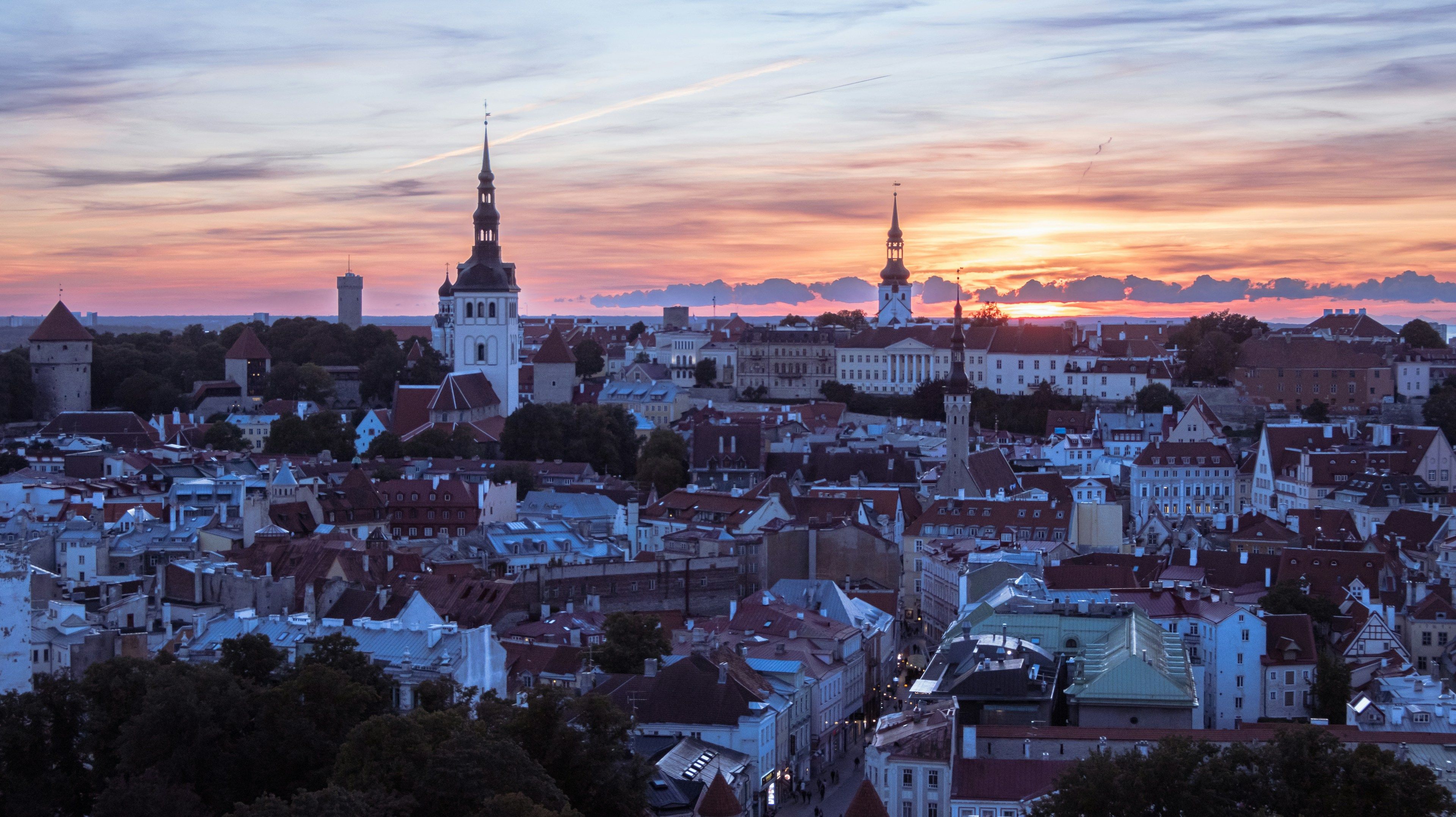
Hidden Gems of Eastern Europe: A 12-City Tour
Twelve underrated cities from the Baltics to the Adriatic — UNESCO old towns, Habsburg cafés, Ottoman bazaars and Soviet-era curiosities. Concrete fares, named neighborhoods, EUR prices.
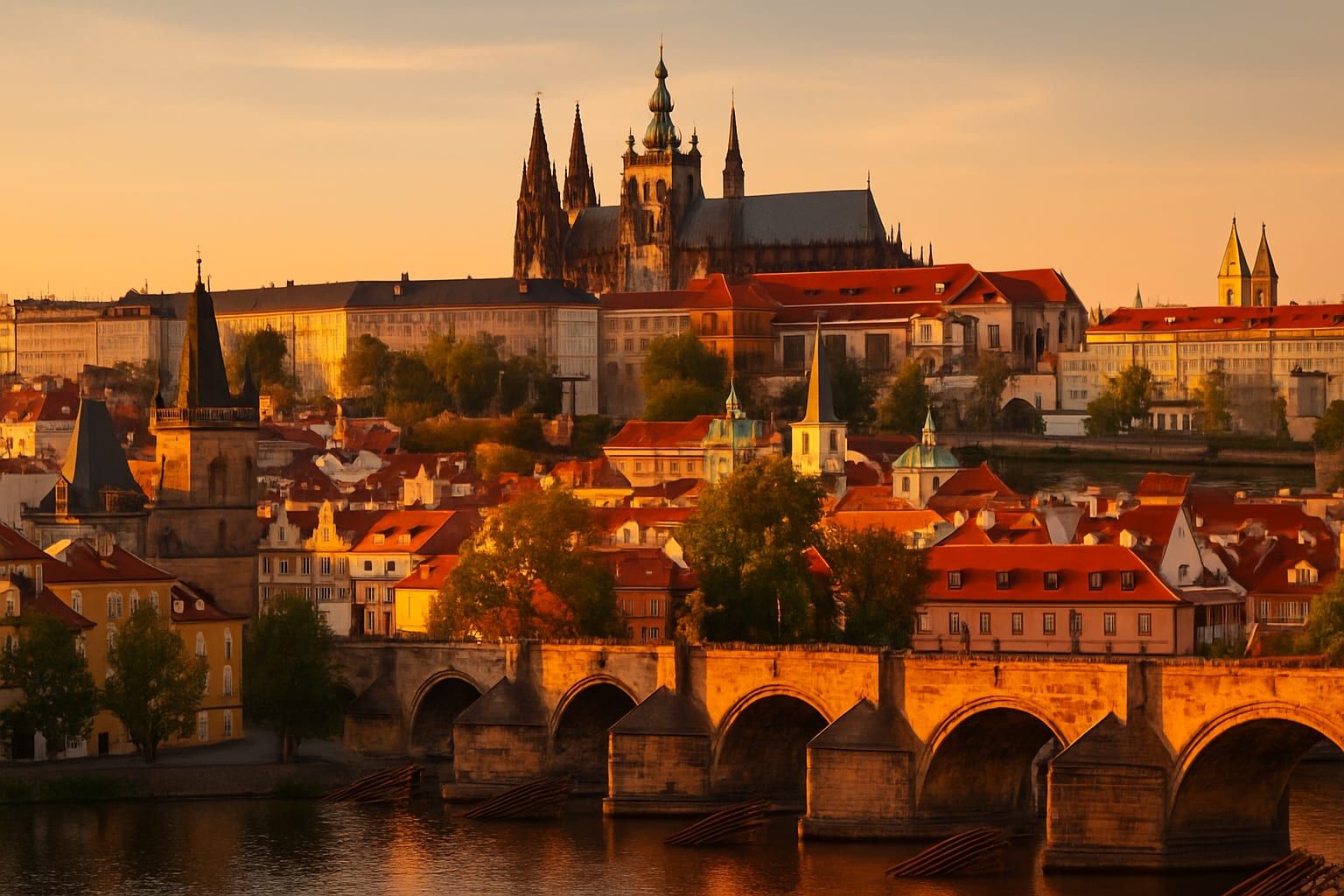
Porto's Hidden Corners: Foz, Miragaia & Gardens
Beyond the Ribeira and wine cellars: where to find Porto’s quieter neighborhoods, gardens, galleries and local eateries — with practical tips, prices and timings.
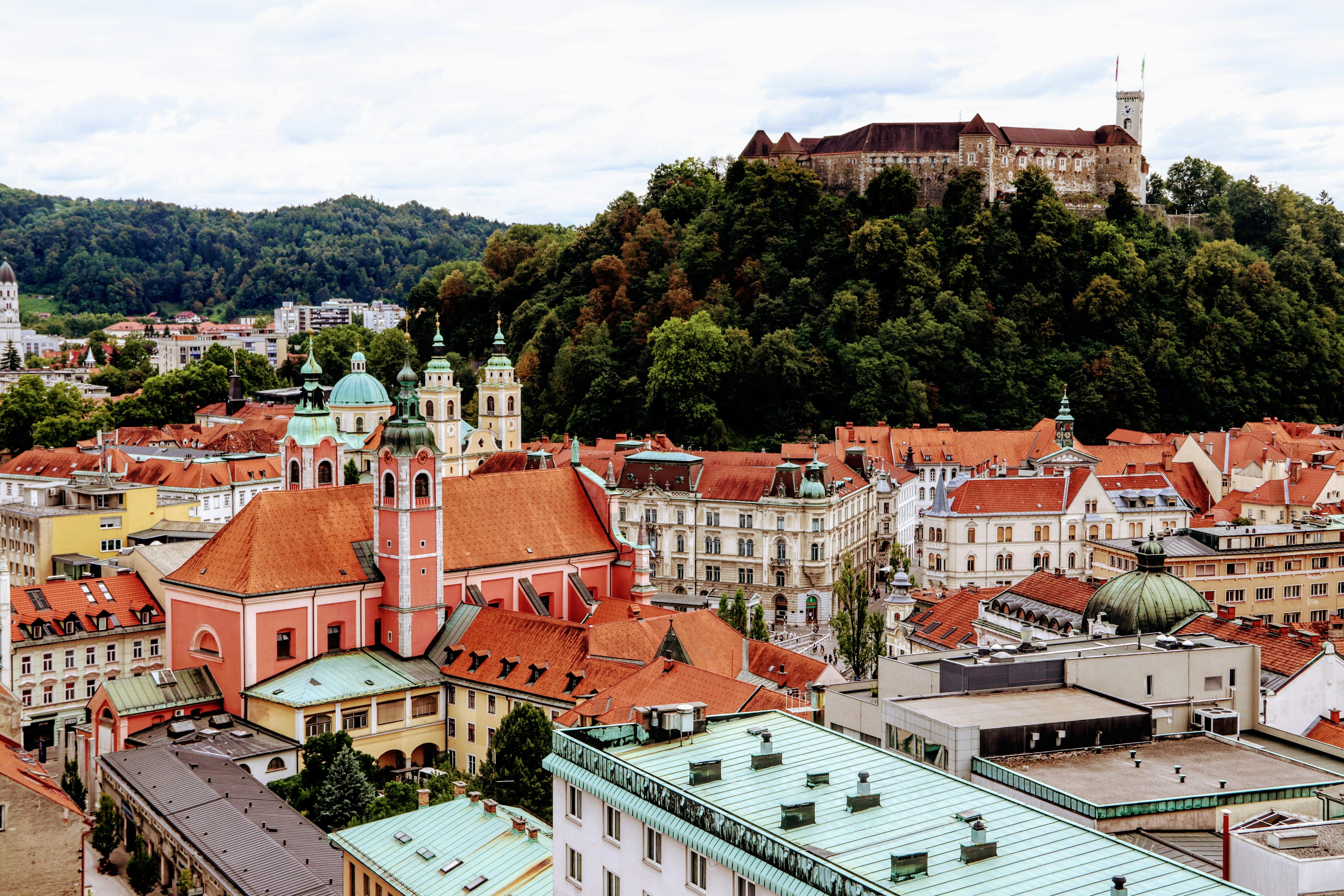
Underrated European Capitals: 12 You Should Visit
Twelve European capitals worth picking over London or Paris — Ljubljana, Riga, Tirana, Sarajevo and beyond. EUR daily budgets, named neighborhoods, transport from major hubs.