
European National Parks: A Complete Visitor Guide
Twelve iconic European national parks compared — Plitvice, Triglav, Hohe Tauern, Picos, Ordesa, Vanoise, Gran Paradiso, Sarek and more. Entry fees, signature trails, hut bookings, ranger contacts.
Europe's national parks are a category unto themselves: most are smaller than a single American park, but they pack vertical relief, refuge networks and waymarked trails into landscapes you can reach by train in an afternoon. Twelve of them, from UNESCO-listed Plitvice to the trackless Sarek in Swedish Lapland, set the 2026 bar — and the practical details (entry fees, hut prices, weather windows) matter more than the scenery descriptions.
Fast Facts
| Detail | Info |
|---|---|
| Best season | Alps & Pyrenees: late June to mid-September (high huts open, passes clear); Scandinavia: July–August; Plitvice/Triglav lowlands: April–October |
| Entry fees | Mostly free (Hohe Tauern, Berchtesgaden, Vanoise, Gran Paradiso, Picos, Sarek, Jotunheimen, Swiss NP); Plitvice €40 summer / €23 low season; Ordesa free but parking-restricted; Dolomiti Bellunesi free |
| Where to stay | CAI refuges (Italy) €25–€35 bed + €20–€28 half-board supplement; SAC huts (Switzerland) CHF 35–55 members / CHF 70–95 non-members + half-board; DNT cabins (Norway) NOK 350–700; STF stations (Sweden) SEK 450–700 |
| Signature multi-day | Alta Via 1 (Dolomites, 10 days), Tour des Écrins / GR54, Sentiero Roma, Kungsleden (Sweden, 440 km), Besseggen day-hike (Norway) |
| Don't miss | Plitvice's Veliki Slap waterfall (78 m); Naranjo de Bulnes in Picos; Lake Königssee electric-boat to St. Bartholomä; Galdhøpiggen summit (2,469 m) |
The Alps: the densest refuge network in Europe
The Alpine arc — France, Switzerland, Italy, Austria, Slovenia, Germany — holds seven of the twelve parks here. The reason is the refuge network: CAI in Italy, SAC in Switzerland, ÖAV in Austria. These aren't backcountry shelters but staffed mountain inns with bunks, dinner, breakfast and (usually) a beer. Knowing how the system works is the difference between a comfortable traverse and a frustrating one.
Triglav National Park (Slovenia)
Slovenia's only national park covers 838 km² in the Julian Alps. The headline summit is Triglav (2,864 m), and the local saying is that no Slovene is fully Slovene until they've climbed it once. The standard route from the Vrata valley goes via the Aljaž hut and the via-ferrata-protected ridge to the summit cross — two days minimum, with an overnight at Triglavski Dom (2,515 m). According to Triglav National Park management, the park is free to enter, but parking at Vrata, Pokljuka, and the Soča valley trailheads has been ticketed since 2023 (€5–€10/day). Refuge half-board runs €45–€60 per night, with PZS (Slovene Alpine Association) members getting roughly 30% off via UIAA reciprocity. Book Triglavski Dom and Kredarica two months ahead for July–August.
The Soča valley side of the park — Trenta, Bovec, Kobarid — is the quieter, river-focused half. The Soča Trail follows the turquoise river 25 km from its source to Bovec, in flat 4–6 hour sections that work for families.
Swiss National Park
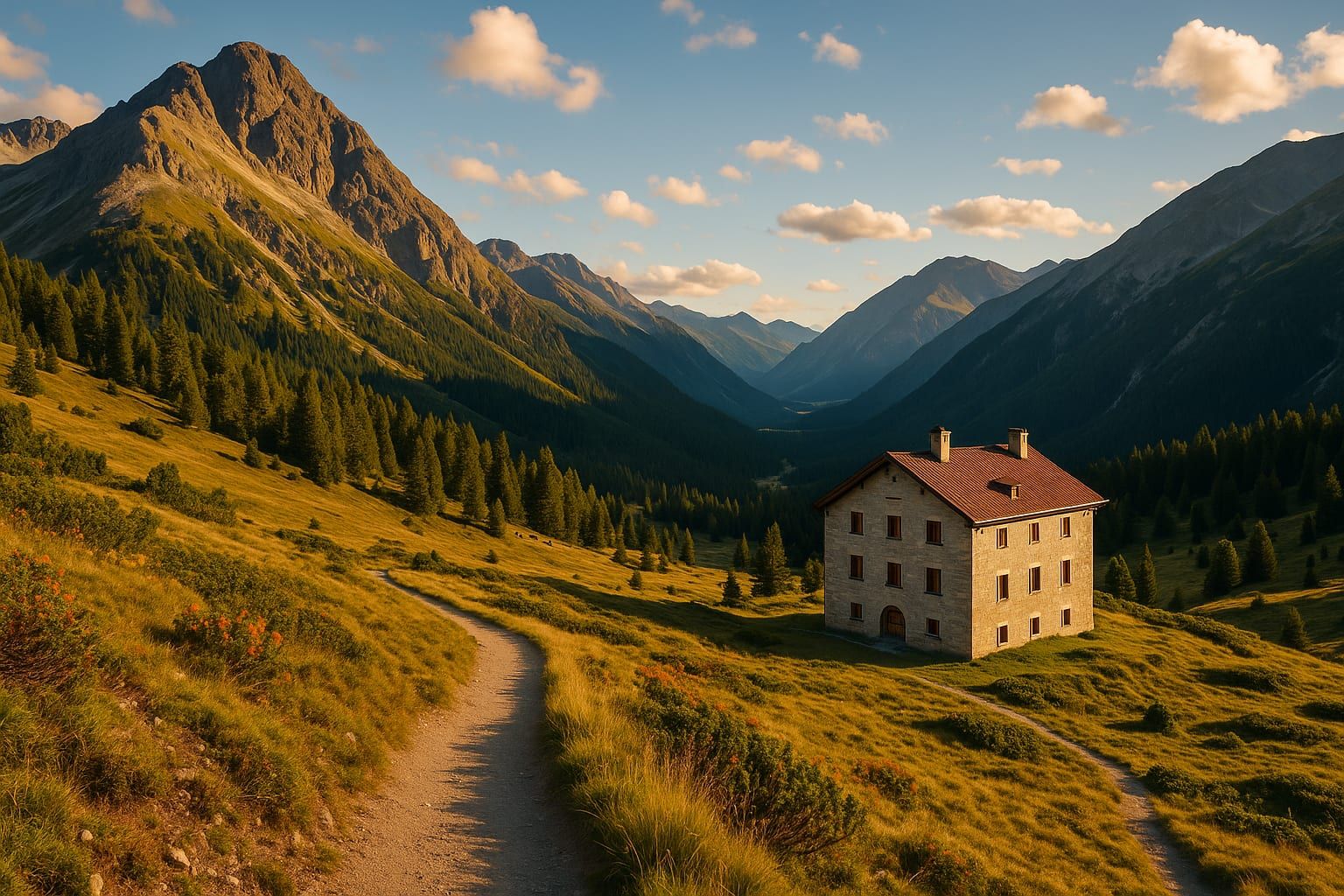
The oldest national park in the Alps (founded 1914) and the strictest. The 170 km² reserve in the Engadin allows no off-trail walking, no dogs, no cycling, no flowers picked, no fires. Twenty-one waymarked trails total roughly 80 km, and according to the Swiss National Park rules these are the only places you may set foot. Entry is free; the park has no through roads and no huts inside its boundary. Base in Zernez (where the visitor centre sits, free entry, open daily 8:30–18:00 in summer) or S-chanf. The Chamanna Cluozza (one private hut just outside the park) takes bookings up to a year ahead; half-board around CHF 95. Best sighting odds for ibex, marmots and bearded vultures are early morning on the Val Trupchun or Margunet trails.
Hohe Tauern National Park (Austria)
The largest protected area in the Alps at 1,856 km² across Salzburg, Tyrol and Carinthia. Grossglockner (3,798 m) is Austria's highest mountain; the Hohe Tauern park is free to enter, though the famous Grossglockner High Alpine Road that crosses the park charges €43.50 per car (2026 season). Krimml Falls, the highest waterfall in Austria at 380 m total drop in three tiers, costs €5 to access the path. For walkers, Kals am Großglockner is the classic launch point for the Stüdlhütte (2,801 m, half-board around €72) and a guided ascent of Grossglockner via the Normalweg. The Venediger Höhenweg, a five-day high-route across the Venediger group, links five staffed huts.
Berchtesgaden National Park (Germany)
Germany's only Alpine national park, 210 km² around the Watzmann (2,713 m) and Lake Königssee. Entry to the park is free. The Berchtesgaden National Park is best known for the silent electric boats that have crossed Königssee since 1909 — €22 return to St. Bartholomä, €25.50 to Salet at the far end (2026 fares; check current pricing). The Watzmann Crossing (Watzmannüberschreitung), one of the most famous ridge traverses in the eastern Alps, is a two-day proposition with an overnight at the Watzmannhaus (1,930 m, half-board €58). The Wimbachgries trail, by contrast, is a flat 8 km gravel walk into a wild glacial valley — appropriate for families and slower walkers.
Vanoise National Park (France)
France's first national park (decreed 1963), 530 km² of high tundra and 107 summits above 3,000 m, sharing a 14 km border with Italy's Gran Paradiso. The two together form the largest protected zone in Western Europe. Entry to Vanoise is free; there are no roads inside the core zone. The classic walk is the Tour des Glaciers de la Vanoise (5–7 days, hut-to-hut) or the shorter Refuge du Col de la Vanoise (2,517 m) approach from Pralognan. Refuges run by the Club Alpin Français charge €25–€35 per bed plus €22–€28 for half-board; CAF members get 50% off bed nights. Ibex (bouquetin) sightings are reliable on the Col de la Vanoise traverse — the park was created largely to save them.
Gran Paradiso National Park (Italy)
Italy's first national park (1922), founded on a former royal hunting reserve to protect the last Alpine ibex. Free entry, 703 km², with the Gran Paradiso summit (4,061 m) the only 4,000 m peak entirely within Italy. According to the Parco Nazionale Gran Paradiso authority, the park hosts roughly 4,000 ibex today — the densest population in the Alps. For non-climbers, the Cogne valley and the Valnontey side trails (Rifugio Vittorio Sella, 2,584 m) are the standard introduction: 3–4 hour ascent, CAI hut with half-board around €58. For Gran Paradiso itself, the standard route from Rifugio Vittorio Emanuele II (€60 half-board) takes one long alpine day with crampons and a rope-team. Guided ascents from Pont Valsavarenche run €350–€450 per person in a group of four. For a wider Italian hiking framework, our best day hikes in the Dolomites covers the eastern Alpine cousin.
Dolomiti Bellunesi National Park (Italy)
The quiet Dolomites park — most visitors who say "the Dolomites" mean the wider UNESCO area (inscribed 2009, UNESCO ref. 1237), but Dolomiti Bellunesi is the actual national park, 320 km² in the southern Belluno province. Free entry, fewer crowds, and a genuine via ferrata heaven: the Schiara group, the Talvena ridge, the Sentiero delle Cascate ("Waterfall Trail") around Rifugio Sommariva al Pramperet (1,857 m). CAI refuges here charge €25–€30 per bed and €22–€28 for half-board — book through the Club Alpino Italiano portal one to three months ahead for July–August.
The Iberian Peninsula: Pyrenees and Cantabrian limestone
Spain's mountain parks are higher than they look, wetter than people expect, and quieter than the Alps for most of the season — except August, when domestic tourism peaks.
Picos de Europa (Spain)
The Cantabrian limestone massif rises 2,648 m at Torrecerredo, just 20 km from the Atlantic — vertical relief that makes the Picos de Europa feel bigger than its 671 km². Free park entry. Two iconic walks anchor most visits. The Ruta del Cares (Cain–Caín) gorge, 12 km one-way, cut into vertical limestone walls between Asturias and León — a flat-ish 5–6 hour walk through tunnels and along ledges, doable in either direction with a taxi shuttle back. The Bulnes funicular climbs from Poncebos to the otherwise road-less village of Bulnes in 7 minutes (€22.93 return, €18 single; runs daily). From Bulnes the path to the Refugio de Urriellu (1,953 m, half-board €45) sits below the Naranjo de Bulnes (Picu Urriellu), the 2,519 m limestone tower that is the symbol of the range. Refuge bookings open in February for the summer; sold out by April for the August peak.
Ordesa y Monte Perdido (Spain)
The Spanish Pyrenees park, 156 km², part of the UNESCO Pyrénées – Mont Perdu trans-border site (ref. 773) shared with France. Free park entry but mandatory shuttle bus from Torla to the Pradera de Ordesa trailhead in high season (June–September); the road is closed to private cars and the shuttle runs every 15 minutes (€4.50 return). The signature walk is the Cola de Caballo loop — 18 km return up the Arazas valley to the Horsetail waterfall, 6–7 hours, 500 m gain. The Refugio de Góriz (2,200 m, half-board €43) is the only staffed hut and the launch for Monte Perdido (3,355 m) — bookings open in mid-January via the FEDME portal and sell out within hours for high summer.
Scandinavia: the wild end of European hiking
Northern Europe rewrites the rules. National parks here are larger, emptier, and stricter about leaving no trace. The free hut systems (DNT in Norway, STF in Sweden) make through-hiking economically possible without a tent.
Sarek National Park (Sweden)
Sweden's wildest park, 1,970 km² in northern Lapland, founded 1909. No marked trails, no bridges over major rivers, no huts inside the park, no cell service. The Sarek traverse is the most demanding multi-day walk in Europe that doesn't require alpine technique — typically 7–10 days from Kvikkjokk or Saltoluokta, with map, compass, food and shelter all carried. The neighbouring Kungsleden trail (the King's Trail, 440 km Abisko–Hemavan) is the gentler introduction: marked, with STF mountain stations every 10–25 km charging SEK 450–700 per bed (members 25% off) and meals SEK 150–250. Season is mid-June to mid-September, peak July–early August before the mosquitoes peak too.
Jotunheimen National Park (Norway)
Norway's highest mountains, 1,151 km² containing Galdhøpiggen (2,469 m, the country's tallest) and the Besseggen ridge — the most-walked single-day hike in Norway. According to Visit Norway the Besseggen route is a 14 km point-to-point above Lake Gjende, 6–8 hours with one Class 2 scramble; the M/S Gjende ferry from Gjendesheim to Memurubu (NOK 290 one-way) is the standard logistic. Park entry is free. DNT (Norwegian Trekking Association) cabins inside the park — Memurubu, Gjendesheim, Glitterheim, Spiterstulen — charge NOK 350 (members) to NOK 700 (non-members) per bed plus NOK 380–460 for dinner. UIAA members from other countries qualify for DNT rates. Self-service cabins (no staff, you cook from the cabin pantry and pay by trust) drop the per-night cost dramatically.
Eastern Europe: Plitvice and the Karst
The Balkans and Slovenia hold two of the most-photographed parks in Europe, both centred on water.
Plitvice Lakes National Park (Croatia)
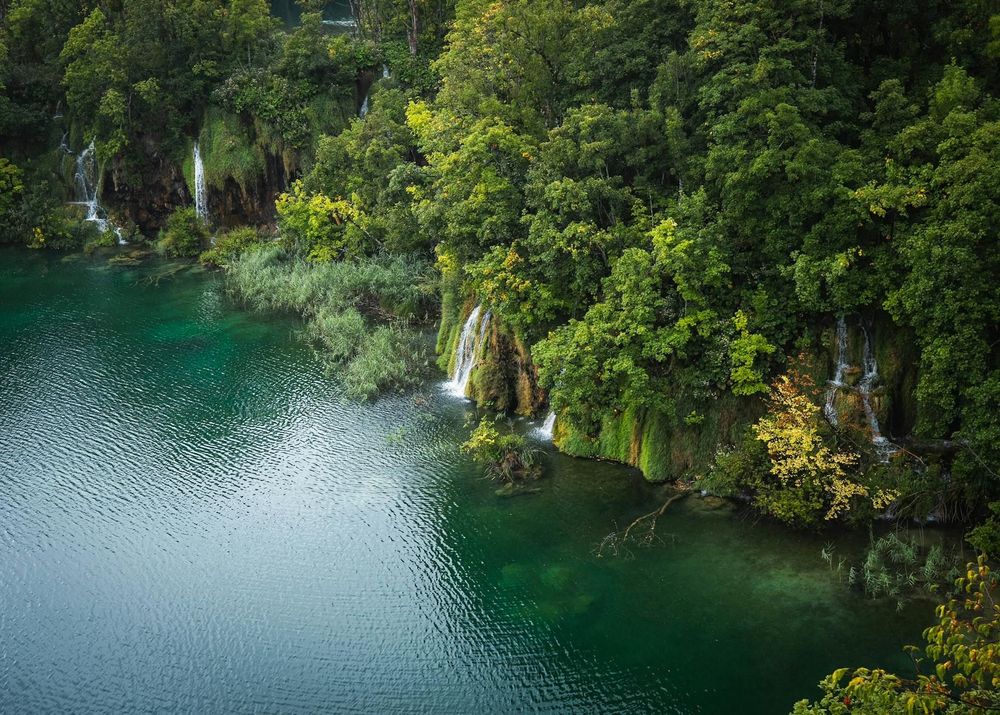
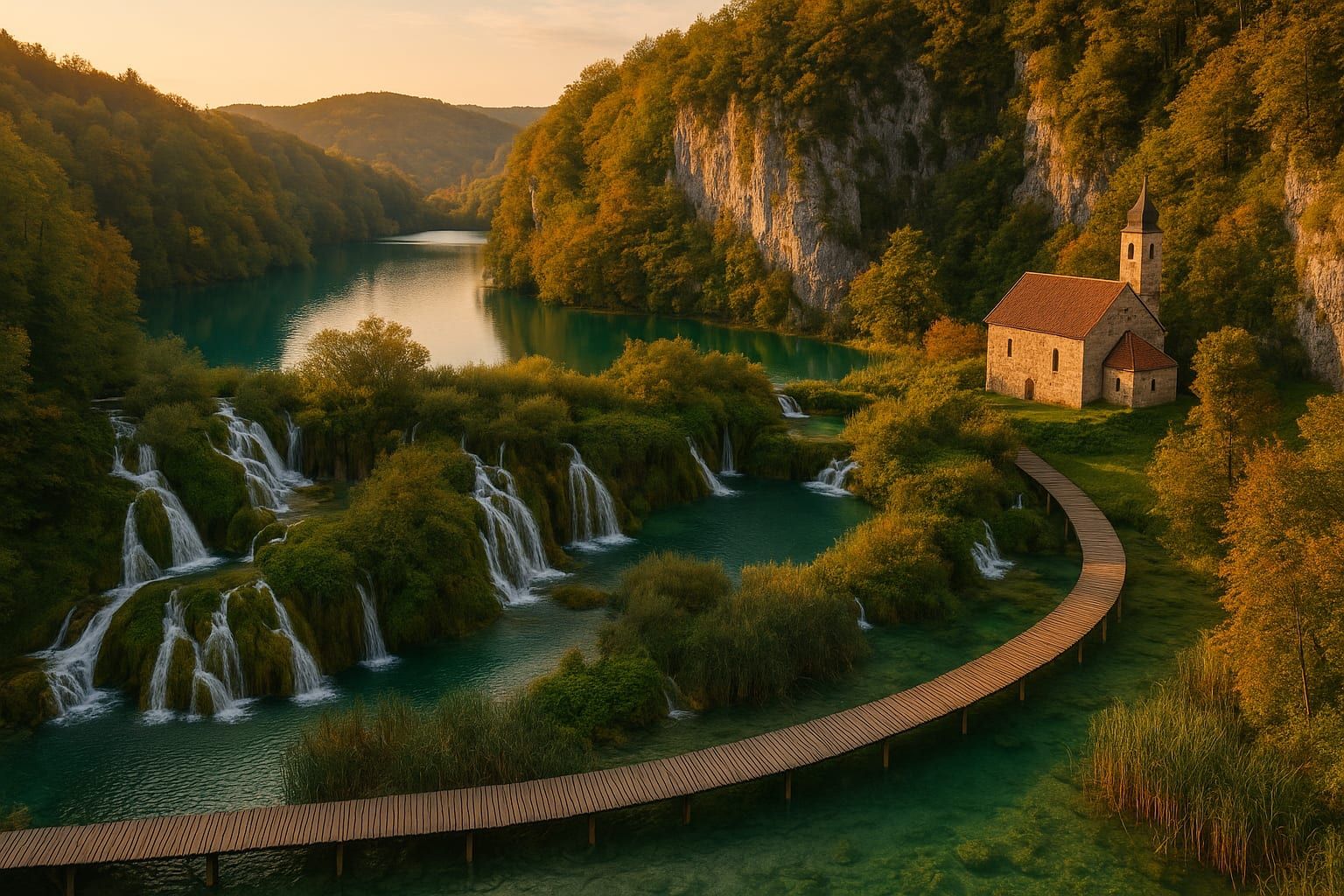
A UNESCO World Heritage Site since 1979 (UNESCO ref. 98), 296 km² of karst landscape with 16 cascading lakes connected by waterfalls — including the 78 m Veliki Slap, the tallest in Croatia. The official Plitvice park operates two main entrances (Entrance 1 near the lower lakes, Entrance 2 near the upper) and a network of wooden boardwalks. Entry fees changed for 2025–2026: €40 high season (June–September), €23 in April–May and October, €10 in November–March. Children 7–18 pay 50%; under-7 free. The eight signposted walking routes (A through K) range from 2 hours (Route A, lower lakes) to 8 hours (Route K, full circuit). Crucially, the park sometimes closes upper boardwalk sections after heavy rain or in freezing weather — check the live status page the morning of your visit. Our Plitvice Lakes complete visitor guide covers the route choice, parking and the Mukinje–Jezerce village stays in detail.
How to plan a hut-to-hut traverse
The Alpine club system is the single most valuable thing for European hikers to understand. The three big federations — CAI (Italy), SAC (Switzerland), ÖAV (Austria) — plus DAV (Germany), CAF (France), and PZS (Slovenia) operate roughly 1,800 staffed mountain refuges between them. UIAA reciprocity means a member of any one of these clubs gets the discounted rate at huts run by all the others. Annual membership runs €60–€90 depending on the federation; pays for itself in two nights at full discount.
Booking windows. CAI and SAC huts open booking 4–6 months ahead; popular huts on Alta Via 1 (Lagazuoi, Nuvolau), the Tour du Mont Blanc, or the Walker's Haute Route fill within weeks of opening. For July–August, book by late February. CAF refuges in Vanoise and Écrins open later but follow the same pattern.
What you carry. A sheet sleeping liner (mandatory in all federation huts), earplugs, headlamp, indoor slippers (most huts require them and may have a basket of shared ones), cash for the bar tab (cards are not universal at high huts), and a small pack since the staff provides bedding and meals. Half-board is the universal model: dinner around 18:30, breakfast 6:30–7:30, both included in the package price.
Weather windows. High passes in the Alps open progressively from mid-June (Vanoise, Gran Paradiso low passes) through early July (most Dolomites cols) to mid-July (Walker's Haute Route, Bernese Oberland 3,000 m passes). They start closing again with the first heavy autumn snow, typically late September. Most CAI/SAC huts close for the season between late September and early October. The Swiss National Park guide goes deeper on Engadin-specific timing.
Wild camping, permits, and rules that vary
The single most-asked question after "which park first?" is: can I pitch a tent? The answer varies sharply by country.
Free: Norway, Sweden, Finland, Scotland — all operate under the allemansrätten / right-to-roam tradition. You may camp one night per spot, 150 m from any house, in most natural areas; national parks add specific rules (some Norwegian parks ban camping above the tree line; Sarek allows it everywhere).
Bivouac only (one night, sunset to sunrise, no fire): Italy (in most parks above 2,500 m), France (in national parks, with the bivouac defined as a small tent pitched at sunset and packed at sunrise), Switzerland (above the tree line outside the reserve zones).
Forbidden: Croatia (Plitvice strictly), Austria's Hohe Tauern core zone, Germany's Berchtesgaden, Spain's Picos and Ordesa (except at the Góriz refuge campground, which is itself controlled).
For maps, the rule is national. The Italian Tabacco 1:25,000 series is the gold standard for the Dolomites and Eastern Alps; SwissTopo's 1:25,000 sheets for Switzerland; IGN TOP 25 in France; the Spanish CNIG Pyrenees 1:25,000 set covers Ordesa and the central Pyrenees. Buy paper before the trip — the village shops at the trailheads sell out by mid-July in busy years.
Frequently Asked Questions
Which European national park is best for first-timers?
Berchtesgaden in Germany or Triglav in Slovenia. Both are free to enter, well signposted in English, have a good range of half-day walks alongside multi-day options, and sit close to railway-connected base towns (Berchtesgaden has its own station from Munich; Bohinj-Bistrica in the Triglav area links to Ljubljana). The infrastructure is forgiving, the trail grades are progressive, and a single hut night at the Watzmannhaus or Triglavski Dom gives a real Alpine-refuge experience without committing to a week-long traverse.
When should I book mountain huts for July and August?
Book by late February at the latest for the busiest huts. CAI Italian huts open booking 4–6 months ahead and the famous nodes on Alta Via 1 (Rifugio Lagazuoi, Rifugio Nuvolau) sell out within two to three weeks. SAC Swiss huts on the Walker's Haute Route follow the same pattern. Refugio de Góriz in Ordesa opens January via the FEDME portal and disappears within hours. For Norway and Sweden, the DNT and STF cabin networks are usually bookable 1–2 months ahead, but the most popular Jotunheimen huts (Memurubu, Glitterheim) on Besseggen weekends are wise to book by April.
Is wild camping legal in European national parks?
It depends sharply on the country. Norway, Sweden and Finland allow it under right-to-roam laws — typically one night per spot, 150 m from any building. Italy and France permit bivouac in most national parks (a small tent, pitched at sunset, packed at sunrise, no fire), generally above 2,500 m. Switzerland allows it above the tree line outside reserves. Plitvice in Croatia, Hohe Tauern's core zone, Berchtesgaden, Picos and Ordesa explicitly forbid all wild camping; use the staffed refuges or designated campgrounds in the gateway villages instead.
What is the best national park for non-hikers or families with young children?
Berchtesgaden — the Königssee electric boat (€22 return to St. Bartholomä, about 35 minutes each way) gives an effortless way to enter a wild valley and walk the flat 2 km to the Ice Chapel from the Salet landing. Plitvice's lower-lake Route A (4 km, mostly boardwalk, 2–3 hours) is the second-best family option, though it gets very crowded mid-morning. The Bulnes funicular in Picos and the Pradera de Ordesa shuttle bus put non-hikers inside dramatic terrain without a long walk in. For the Dolomites, the network of cable cars (Faloria, Sass Pordoi, Lagazuoi) reaches 2,500–2,700 m with no effort beyond the ticket — refuges with terraces at the top serve lunch.
Where can I get permits, maps, and ranger contact details?
For permits, the relevant national authority's website (linked above for each park) is the official source — beware third-party booking sites that mark up prices. Maps: Tabacco for Italy, SwissTopo for Switzerland, IGN TOP 25 for France, CNIG for Spain, Lantmäteriet for Sweden, Statens Kartverk for Norway, all available as paper or digital downloads. Ranger contacts are listed on each park's visitor centre page; for safety, the Alpine countries share the 112 European emergency number with mountain rescue activation, and Italy's Soccorso Alpino, Switzerland's Air-Glaciers, and Austria's Bergrettung all dispatch from that single call. Save offline maps before you lose signal — most ridge routes have no coverage.

Keep Exploring
Swiss National Park: Hiking Paradise
Discover Swiss National Park — the Alps' first national park and a hiker's dream. Practical route picks, wildlife tips, rules, and how to plan an unforgettable visit.
Plitvice Lakes, Croatia: Complete Visitor Guide
A complete guide to visiting Plitvice Lakes National Park — how to get there, best trails and viewpoints, sample itineraries, seasonal tips, and practical advice.
Snorkeling in the Maldives: Choosing Your Base
Choose a Maldives snorkeling base around how you want to enter the water: compare resort house reefs, Dhigurah excursions and Hanifaru Bay access.