Wild Swimming in Europe: Lakes, Coves, Coastlines
Nature & Outdoors

Wild Swimming in Europe: Lakes, Coves, Coastlines

Inés Carbonell
May 21, 2026
21 min read

Europe's best wild swimming, region by region: Alpine lakes, Nordic fjords, UK ponds, Mediterranean coves and Atlantic tide-pools. Water temperatures, access, safety.

Wild swimming in Europe is a different sport in every region. The same week of July, water at Cala Goloritzé in Sardinia sits at 25°C while Lago di Braies in the Dolomites refuses to climb above 14°C, and the tarns of the Lake District barely reach 17°C. Knowing the temperature, the access (hike-in or roadside), and the local rules — bivouac bans, marine reserve permits, lifeguard hours — matters more than any aspirational drone shot. This guide goes region by region, with named coves, named lakes, and the safety calls that keep wild swims wild rather than miserable.

Fast Facts

Detail Info
Best regions Slovenia (Lake Bohinj), French Alps (Lac d'Annecy), Sardinia (Cala Goloritzé), Algarve (Praia da Marinha), Hampstead Heath (London ponds)
Water temperatures (peak) Alpine lakes 12–24°C; Nordic fjords 10–14°C; UK lakes 15–17°C; Mediterranean 22–26°C in August; Atlantic Iberia 18–21°C
Best months June and September — water still warm enough on the Med (20–23°C), crowds half what July–August brings; July–August only for Nordic and high Alpine
Best free vs paid spot Free: Cala Goloritzé approach hike from Su Porteddu (€6 parking, beach access free); Paid: Hampstead Heath Mixed Pond £4.50 day pass
Safety must-know Cold-water shock kicks in under 15°C — enter slowly, never alone in cold lakes; rip currents are the biggest killer on Atlantic coasts; Adriatic jellyfish (Pelagia noctiluca) peaks August

Alpine lakes: glacial cold, mountain frame

The Alps' lakes split into two distinct categories — large, warm, and lifeguarded (Annecy, Bohinj) versus high, glacial-fed, and bracing (Braies, Königssee). Knowing which you're walking into changes everything from kit list to how long you can stay in.

Lake Bohinj (Slovenia)

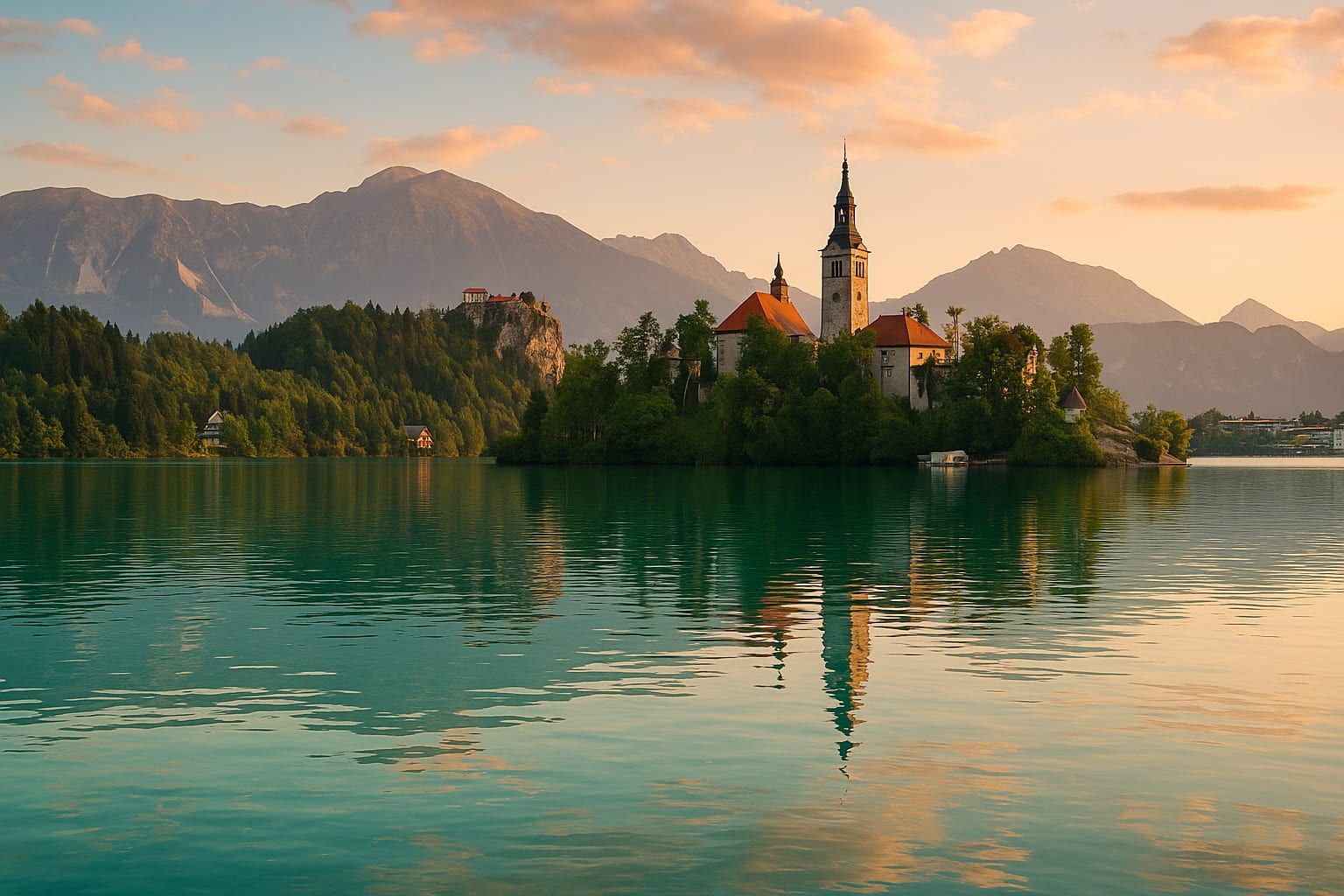
The quieter sister of overcrowded Lake Bled, Bohinj sits inside Triglav National Park at 525 m altitude. The lake stretches 4.2 km long and warms to a swim-friendly 20–23°C in July and August, dropping to 16–18°C in June and September. According to Triglav National Park management, the entire lake is within the park's protected zone — swimming is permitted, motorboats are not, and most camping requires designated sites. The standard entry is at Ukanc on the western shore (gravel beach, water shallow for 20 m out) or the wooden jetty near the Church of St. John the Baptist on the eastern side, where the water deepens immediately. Parking is €3/hour at the main lots from June to September; arrive before 9:30 for a place. For a longer day, the Mostnica Gorge trail starts a 30-minute walk from the lake and ends at the 21 m Mostnica waterfall, a second cold-water swim.

Lago di Braies / Pragser Wildsee (Italy)

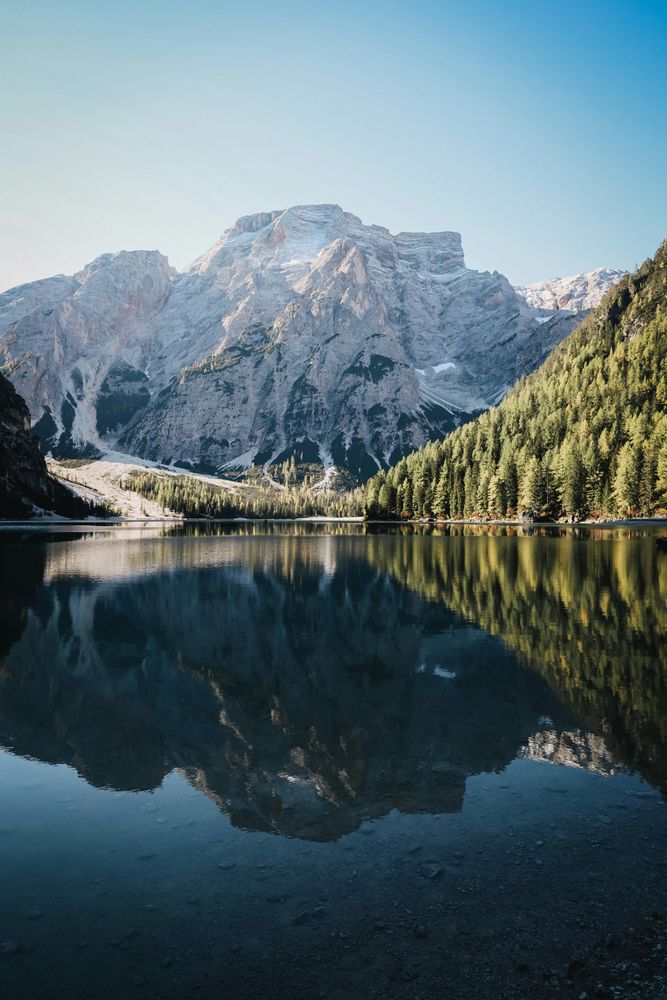
The most photographed lake in the Dolomites and one of the coldest — surface temperatures rarely exceed 12–15°C even in August because the lake sits at 1,496 m and is fed by snowmelt from the Croda del Becco. Swimming is permitted but cold-water rules apply: a 5–10 minute dip is the realistic ceiling for most swimmers without a wetsuit. According to Visit South Tyrol, access to the lake is now ticketed in high season — private cars are banned on the access road between 9:30 and 16:00 in July and August, and the SS49 shuttle bus from Villabassa station runs every 30 minutes (€8 return). Rowboats rent at €30/hour from the historic boathouse. The shoreline circuit is 3.5 km on flat boardwalk, doable in 1 hour, with several quiet swim entries on the southern shore away from the main jetty.

Lake Königssee (Germany)

Berchtesgaden National Park's signature lake is fjord-like — 8 km long, walled by 1,800 m cliffs, with crystalline water that never warms beyond about 15°C even in late summer. According to the Berchtesgaden National Park, the lake has carried only silent electric boats since 1909 to protect water quality — and that quality shows. Most swimmers enter from the small beach at Schönau (free, with a lifeguarded section in summer) or from St. Bartholomä, reachable only by the electric boat (€22 return, 35 minutes each way). The water is genuinely cold: limit first immersion to two or three minutes, exit, warm up, repeat. Diving into deep water from boats is prohibited inside the park.

Lac d'Annecy (French Alps)

Long claimed as the cleanest large lake in Europe — a 1960s anti-pollution programme produced bathing-grade water that remains a benchmark. The lake hits 22–24°C from mid-July to late August and is lifeguarded at the major beaches (Plage d'Albigny in Annecy itself, Plage de Talloires, Plage d'Angon). Most municipal beaches are free or charge a modest day fee (€3–€6); the smaller pebble coves between Talloires and Menthon-Saint-Bernard are roadside or short-hike access and unsupervised. The eastern shore between Talloires and Doussard is the quieter side and the standard for a guided wild-swim outing — operators run open-water swim sessions with a kayak escort from May to October, typically €40–€70 for a two-hour session.

Lago di Carezza (Italy)

The so-called Rainbow Lake at 1,520 m in the Dolomites is now strictly swim-prohibited for conservation reasons — the colour comes from the mineral sediment and Latemar reflection, both of which are degraded by entry. Visit for the walk and photos, not the swim. For a Dolomite swim within an hour's drive, Lago di Carezza disappoints, but Lago di Misurina at 1,754 m allows swimming on the northern shore (water 14–16°C in August, 1.5 km perimeter walk).

For the hut network around these lakes and how the Alpine refuge system actually books, see our European national parks visitor guide.

Nordic lakes and fjords: cold-water culture

Scandinavia treats cold water as a wellness practice, not a hardship. The sauna-and-plunge cycle is genuinely effective, and the infrastructure — wood-fired lakeside saunas, designated swim ladders at urban harbours — is built for it.

Norwegian fjords

The water in even southern Norwegian fjords rarely exceeds 12–14°C in July and August, and inland mountain lakes (Jotunheimen, Hardanger) sit at 8–12°C. The cultural norm is short — three to five minutes — and paired with a hot sauna or a hot drink within minutes of exit. Public swim ladders are installed on the Oslofjord at Sørenga and Tjuvholmen, both free, with floating saunas (Oslo Badstuforening, KOK Oslo) bookable at NOK 250–400 per person for 90-minute slots. Avoid swimming alone in the fjords: tidal currents at narrow points (Saltstraumen, near Bodø) reach 22 knots and have no margin for error.

Swedish lakes

Sweden's allemansrätten (right to roam) makes nearly every lakeshore legally swim-accessible — provided you stay 150 m from any house. The major lakes — Vänern (5,650 km², Europe's third-largest), Vättern (1,886 km²), and the Mälaren archipelago west of Stockholm — warm to 18–21°C in July. Stockholm itself has 30+ free swim beaches inside the city limits, with Långholmen and Smedsuddsbadet the closest to the centre. The Swedish Tourist Association (STF) operates affordable cabins at hundreds of lakeside locations across the country — book several months ahead for July weekends.

Finnish forest lakes and sauna culture

Finland's 188,000 lakes and the country's UNESCO-listed sauna tradition are inseparable. The classic cycle — 10 minutes hot sauna, three to five minutes in the lake, repeat — works in any season; in winter, this involves an avanto (ice hole) maintained at –1°C with the air at –20°C. Summer lake temperatures hit 18–22°C on smaller forest lakes; bigger ones (Saimaa, Päijänne) stay cooler. Public smoke saunas at Rauhalahti (Kuopio) and Kotiharjun (Helsinki) charge €15–€25 per session.

Iceland natural hot springs

Not wild swimming in the cold sense, but the cold–hot rhythm is similar. Reykjadalur (the "Steam Valley") near Hveragerði is a 45-minute hike from the trailhead car park to a geothermal river where temperatures vary along the flow from too-hot to a perfect 38–40°C; free entry, mixed bathing, no facilities so bring everything. Landmannalaugar in the central highlands has a natural hot pool at 36–40°C; access is via F-road and a 4x4 is required mid-June to mid-September only. Visit Iceland maintains an updated list of legal bathing spots — bathing in many smaller geothermal pools has been banned in recent years to protect fragile ecosystems.

UK swimming spots: ponds, tarns, and Cornish coves

The UK's wild-swimming revival has been organised largely by the Outdoor Swimming Society, which maintains a national map of swim spots, an event calendar, and a code of conduct. Their resources are the single most useful starting point for any UK trip.

Hampstead Heath ponds (London)

The most accessible legal wild swim in any European capital. Three ponds — the Men's, Women's, and Mixed — sit on Hampstead Heath in north London and are operated by the City of London Corporation year-round, including Christmas Day. Standard charge is £4.50 per session (concessions £2.70), with annual season tickets at £160. Water temperatures track the season: about 4°C in February, 20–22°C in July and August, dropping to 15°C by October. Lifeguards are on duty during opening hours (7:00 dawn to dusk); swimmers must demonstrate competence in cold water, no lessons given. The Men's and Women's ponds are open every day, the Mixed Pond from May to September.

Lake District (England)

The English Lake District has dozens of legal swim spots; the four that show up on every Outdoor Swimming Society shortlist are Buttermere, Crummock Water, Wast Water, and Rydal Water. Water temperatures peak at 15–17°C in late July and August, drop to 8–10°C by October. Buttermere is the friendliest — a flat shoreline path circles the lake in 7 km (about 2 hours) with multiple discreet shingle entries; parking at Buttermere village (£5 day rate) fills by 9:00 in summer. Crummock Water is the bigger, deeper neighbour: the eastern shore at Hause Point gives a swim across to a small wooded peninsula (about 200 m). Wast Water is the deepest and coldest lake in England at 79 m — beautiful but unforgiving. Cold-water shock is the most common cause of UK wild-swim incidents — enter slowly, never jump in, and never swim alone in upland water.

Cornwall coves

The south Cornish coast has dozens of small swim coves accessible from the South West Coast Path. The four worth a detour are Lantic Bay (10-minute steep descent from the National Trust car park at Pencarrow Head, sheltered south-facing arc), Porthcurno (white sand, lifeguarded May to September, water 17–19°C in August), Kynance Cove on the Lizard peninsula (turquoise water, restricted to wading at high tide), and Pedn Vounder below Treen (steep semi-scramble descent, naturist tradition, no lifeguard). The Cornish coast generates strong rip currents at every surf beach — swim between the red-and-yellow flags on lifeguarded beaches in summer, and check Visit Cornwall for tide-table and lifeguard hours.

River Cam (Cambridge)

The River Cam upstream of Cambridge city (the "Granta") has a long swim tradition — Grantchester Meadows and the Bathing Place at Sheep's Green are unmarked legal swim entries on the river. Water temperatures hit 18–20°C in July and August; the current is gentle but motor-boat punts use the same water — swim with a tow float and stay near the banks.

Mediterranean coves: turquoise water, hike-in access

The Mediterranean's standout swims are not the famous resort beaches but the coves that require a walk in. The reward is consistently smaller crowds, cleaner water, and the kind of postcard frame that the resort beaches lost decades ago.

Cala Goloritzé (Sardinia)

Declared an Italian Natural Monument in 1995, Cala Goloritzé is the most regulated wild-swim cove in Italy — and consistently among the most beautiful in the Mediterranean. The cove is reached only on foot: a 3.5 km descent from the Su Porteddu plateau, about 1 hour down and 1.5 hours back up, on a stony path with no shade. Access is limited to 250 people per day in July and August through a mandatory online booking (€6 per person, plus €6 parking at Su Porteddu). The cove itself is small — about 40 m of pebble beach — and rules are strict: no umbrellas, no fins, no creams, no entry before 7:30 or after 17:30. The water temperature in August sits at 24–26°C; the underwater scenery (limestone columns, Aguglie spires) is the reason most visitors come. Boat-only access from Cala Gonone is available for those who can't manage the hike: licensed operators run shuttle services at €30–€50 per person for a half-day.

Calanques National Park (France)

The limestone fjords between Marseille and Cassis form France's only urban national park. The classic swim coves are Calanque d'En-Vau (1 hour walk in from the Col de la Gardiole), Calanque de Sugiton (45 minutes from the Luminy campus parking), and Calanque de Sormiou (closest to road access). Water temperature peaks at 22–24°C in August. The park introduced mandatory reservations for Sugiton from late June to early September because foot traffic was eroding the calanque trail — book free via the Calanques National Park portal. Boat tours from Marseille's Vieux-Port run to all major calanques at €25–€40 per person; the catamarans operated by Croisières Marseille Calanques and GACM stop at three to five calanques on a half-day route, allowing 15–30 minute swims from the boat. Strong mistral wind closes the coast in spring and autumn; check the forecast the night before.

Cala Macarella (Menorca)

The Balearics have dozens of small coves; Cala Macarella and its smaller neighbour Cala Macarelleta are the postcard cliché made real. Both sit at the southern end of the Camí de Cavalls, the 185 km hiking trail that circles Menorca, and both have water at 23–25°C in July and August. Access from Cala Galdana is a 1.5 km coast-path walk through pine forest, about 25 minutes. Parking at Cala Galdana is paid (€4 day rate); Cala Macarella itself has no facilities beyond a single beach bar (May to October). The cove has been ferry-access controlled in past summers (2,000 daily cap during August peaks) — check the Menorca Tourism site before travel.

Algarve cliffs

The central Algarve coast between Lagos and Albufeira has two iconic cove zones. Praia da Marinha (a 10-minute walk down wooden stairs from the cliff parking) and Praia do Camilo (200 steps down from the headland) are the two most-photographed — small, sheltered, with water at 20–22°C in August. The Benagil Sea Cave is reached only by water — kayak rental (€20–€30 per person, 2-hour escorted tour) or SUP from Praia de Benagil; swimming inside the cave is currently restricted in high season due to crowding and falling-rock risk. Check the latest rules with Visit Algarve before booking; cave access was capped at small group tours during the 2024–2025 seasons.

Cinque Terre swims

The five Ligurian villages share a rocky coast with limited beach access. Monterosso al Mare has the only proper sand beach (paid umbrella sections, free zone at the western end); Vernazza's harbour and the small cove at the foot of the Sentiero Azzurro give clear deep-water swims off rocks. Water temperatures peak at 23–24°C in August, with strong sun and limited shade — most swimmers come early and leave by 13:00.

Eastern Europe and the Balkans: rivers, lakes, and the Adriatic

The Balkan coast and lakes have been Europe's quiet wild-swim revelation of the past five years. Water clarity is better than the western Med, costs are lower, and the regulation is lighter — with one major caveat about the Croatian national parks.

Krka National Park (Croatia)

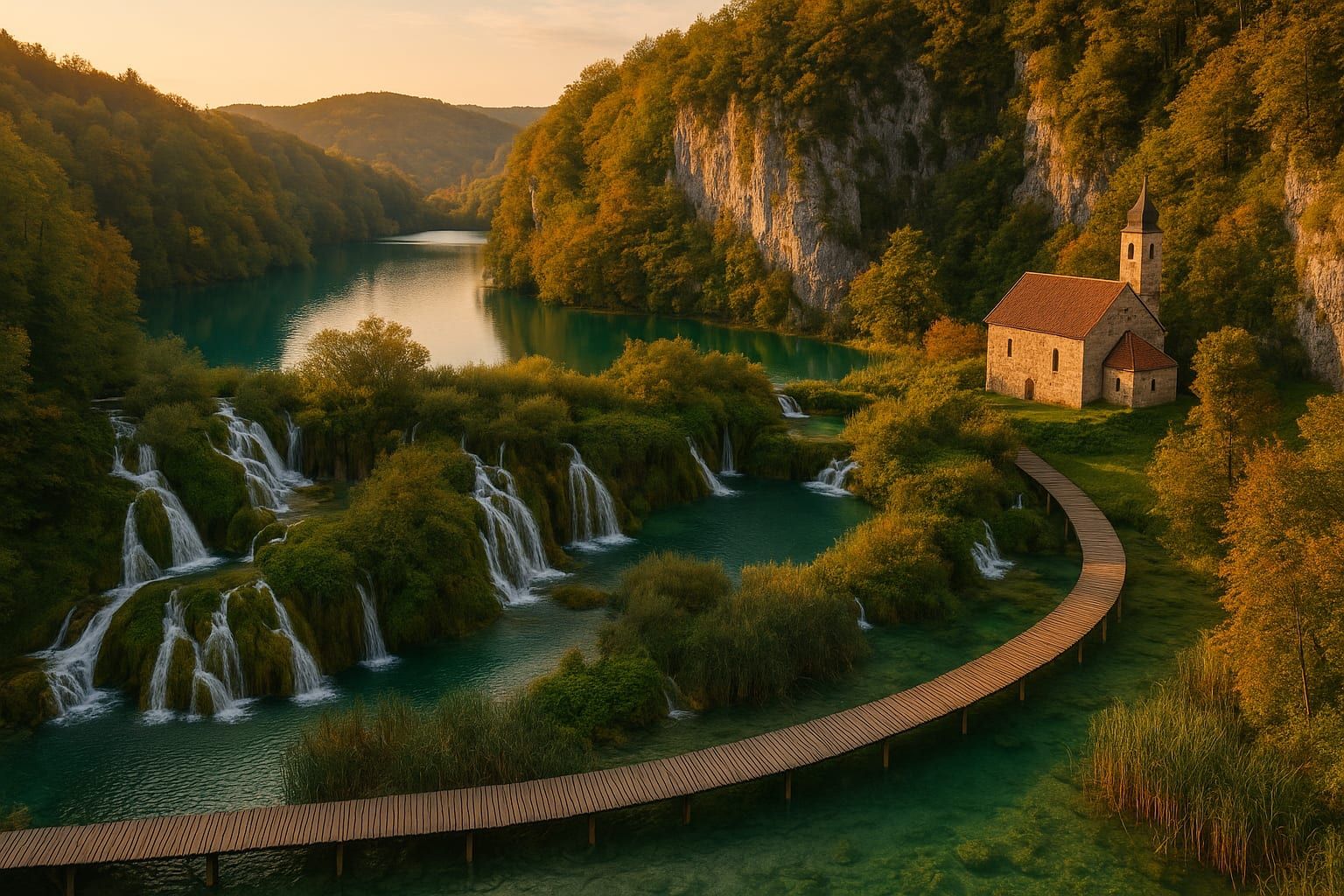
For decades, swimming at the foot of Skradinski Buk's main travertine cascade was the iconic Krka image. Swimming at the Skradinski Buk waterfall has been prohibited since 1 January 2021 for conservation reasons — the Krka National Park authority enforces this strictly with fines. Swimming inside the park is now permitted only at specific designated spots away from the falls: the river beach at Stinice (downstream of the falls in summer only) and the swimming zone at Roški Slap during the warmer months are the most accessible. Park entry is €40 in July and August, €20 in low season, and includes the boat shuttle. Water temperature in the river is 20–22°C in August. For a closer look at swim-legal cascades in the region, neighbouring Plitvice is fully off-limits to swimming.

Lake Skadar (Montenegro / Albania)

The largest lake in southern Europe by surface area (475 km²), shared between Montenegro and Albania. Water temperatures climb to 22–24°C in July and August, the lake is shallow (average 5 m depth), and motorboat traffic is concentrated near Virpazar. The northern shores in Lake Skadar National Park (Montenegro side) have multiple discreet swim entries at Murići, Rijeka Crnojevića, and the small beaches around the floating restaurants at Karuč. Standard guided trips from Virpazar combine a half-day boat tour with a swim stop at the Grmožur island fortress — €25–€40 per person.

Croatian Adriatic islands

Island-hopping the central Dalmatian islands is the canonical Adriatic wild-swim experience. Stiniva Cove on Vis is the standout — a narrow horseshoe of pebbles between two cliff walls, reachable only by a steep 20-minute descent path or by boat. The hike-in option is free, with parking at the top road; boat shuttles from Komiža harbour run €15–€25 per person. Hvar's north-coast coves around Jelsa and Pokrivenik are quieter than the Adriatic-facing south. Jellyfish warning: blooms of Pelagia noctiluca (mauve stinger) occur in late summer in the central Adriatic — stings are painful but not dangerous; check local beach reports before swimming after still-water days.

Atlantic and wild edges

The Atlantic coast — Galicia, Ireland, the wild west of Britain — gives the toughest, coldest, and most rewarding swims in Europe. Tides, swell, and water in the low teens demand more preparation than the Mediterranean.

Praia das Catedrais (Galicia, Spain)

The "Beach of the Cathedrals" on Spain's northwest coast is a tidal phenomenon: at low tide, the arches and sea caves carved into the cliffs are walkable; at high tide, the entire beach is underwater. Access between Easter and 30 September requires a free advance permit through the Xunta de Galicia portal — capacity is capped at 4,812 daily visitors. Water temperature in August reaches only 18–20°C thanks to the Atlantic; swimming is permitted but currents and tide change make this a swim-at-the-margins beach rather than a long-soak destination. Always check the tide table the night before — the low-tide window is roughly six hours.

Wild Atlantic Way (Ireland)

The 2,500 km coastal route along Ireland's western edge gives uncountable swim coves. Inchydoney in West Cork is a lifeguarded blue-flag beach with water at 15–17°C in August. Galway Bay has urban swim ladders at Salthill Promenade and the iconic Blackrock Diving Tower (free, year-round, no lifeguard). The cold-water swim community in Ireland is large and welcoming — local groups in Cork, Galway, and Dublin run free weekly meets that are open to visitors. Check Outdoor Swimming Society Ireland or local sea-swim Facebook groups before travelling.

Lake Mývatn (Iceland)

Northern Iceland's volcanic lake is the wild-swim alternative to the busy Blue Lagoon. The nearby Mývatn Nature Baths (Jarðböðin) are a geothermal pool at 36–40°C with admission ISK 6,300 (~€42); the lake itself is too cold for swimming except for brief cold-water dips. The combination of hot pool + cold dip is a classic Icelandic ritual.

How to plan and what to skip

Match the region to the season. June and September are the underrated months: the Mediterranean is still 20–23°C, crowds drop by half, and the cold-shock risk in Alpine and Nordic water is lower because the lakes have warmed (June) or haven't yet cooled (September). July–August is peak only for Nordic, Iceland, and the highest Alpine lakes — the Mediterranean in those months is hot, crowded, and increasingly heat-wave dangerous.

Know the cold-shock threshold. Below 15°C, the first 30 seconds of immersion trigger involuntary gasp reflex, hyperventilation, and a sharp rise in blood pressure. Enter slowly, breathe out as you submerge, and never enter cold water alone. Tow floats — the inflatable bright-coloured drag bags every UK swimmer uses — make you visible to boats and give a rest point.

Plan for jellyfish in the Adriatic. Pelagia noctiluca (mauve stinger) and Rhizostoma pulmo (barrel jellyfish) blooms peak in August–September. Stings are painful but not life-threatening for healthy adults; vinegar and warm-water immersion (40–45°C) deactivate the venom. Avoid swimming after days of still water and onshore wind.

Respect protected access rules. Cala Goloritzé's 250-person cap, Praia das Catedrais' tidal permit, Calanque de Sugiton's seasonal reservation, and Krka's swim ban exist because of measurable damage from earlier unmanaged access. The rules are enforced; the alternative to following them is loss of the spot altogether. For the broader regional context on managing crowds, see our summer Europe beat-the-crowds guide.

Skip the social-media-only spots. Lago di Carezza, the Marble Pools in Slovenia (Tolmin), and several Cyclades "hidden" coves have been closed to swimming, fined, or simply destroyed by the volume their viral fame brought. The Outdoor Swimming Society's curated map is the better starting point. For the Eastern European angle on quiet swim coves and rural rivers, our hidden gems of Eastern Europe pillar covers the wider regional picture.

Frequently Asked Questions

What water temperatures should I realistically expect across Europe in July and August?

Wide range. The Mediterranean — Sardinia, Algarve, Croatian Adriatic, Cyclades — sits at 22–26°C and is genuinely warm. Atlantic Iberia and the south Cornish coast reach 18–21°C. The English Lake District and Welsh tarns hit 15–17°C at their absolute summer peak. Alpine lakes split sharply: Annecy and Bohinj warm to 20–23°C, but Königssee, Braies, and most lakes above 1,200 m stay at 12–15°C even in August. Nordic fjords rarely exceed 14°C and inland mountain lakes in Norway and Iceland stay at 8–12°C year-round. Always check a recent local report before any cold-water swim.

Do I need a wetsuit for European wild swimming?

Not for Mediterranean summer (22°C+) or for warm Alpine lakes (Annecy, Bohinj, lower Swiss lakes) in July–August. For UK lakes, Atlantic Iberia, and Nordic summer water at 15–18°C, a wetsuit extends swim time from a brief dip to a real session and is widely used. For Norwegian fjords, Icelandic lakes, and any wild swim in the 8–12°C band, a wetsuit is the minimum and an experienced swimmer's call about whether even that is enough — many cold-water specialists in Scandinavia swim skin (without wetsuit) for only two to four minutes per session.

Is wild swimming legal everywhere in Europe?

Largely yes in unmarked natural water, but with sharp exceptions in protected zones. Norway, Sweden, Finland, and Scotland have right-to-roam traditions that make wild swimming default-legal in any natural water at least 150 m from a building. England, Wales, Ireland, France, Italy, Spain, Portugal, Slovenia, Croatia, and Montenegro permit it in most lakes, rivers, and on the open coast — but national park zones often have specific bans. Plitvice in Croatia is fully no-swim; Skradinski Buk in Krka has been no-swim since January 2021; Lago di Carezza is no-swim. Always check the relevant national park's official website before planning a swim inside protected zones.

Which spots are safest for families with young children?

Lac d'Annecy's lifeguarded municipal beaches (Plage d'Albigny, Plage de Talloires) — gentle entry, warm water, supervised. Lake Bohinj's Ukanc gravel beach — shallow for the first 20 m, water around 22°C in summer, no motorboats. Praia da Marinha and Praia do Camilo on the Algarve — sheltered coves with calm water, but check lifeguard hours. Hampstead Heath's Mixed Pond — only the Mixed pond admits children (over 8 years), and the lifeguard cover is full during opening hours. Avoid Atlantic surf beaches with rip currents (Cornish north coast, Portuguese west coast) with young children unless lifeguards are on duty and you swim between the flags.

Guided wild-swim tour or go solo?

Go guided for first trips into any cold-water region, for any open-water swim in unfamiliar terrain, and for technical access like the Calanques boat-shuttle routes or Cala Goloritzé's full hike-in. The Outdoor Swimming Society lists vetted UK operators; Croisières Marseille Calanques and GACM run regulated boat tours in the Calanques; licensed Sardinian operators run shuttle access to Cala Goloritzé from Cala Gonone. Solo is reasonable for lifeguarded urban water (Hampstead Heath, Oslo harbour ladders, Stockholm beaches) and for warm shallow Mediterranean coves — but never solo in cold water under 15°C, and never solo at any wild swim more than a 30-minute walk from help.