
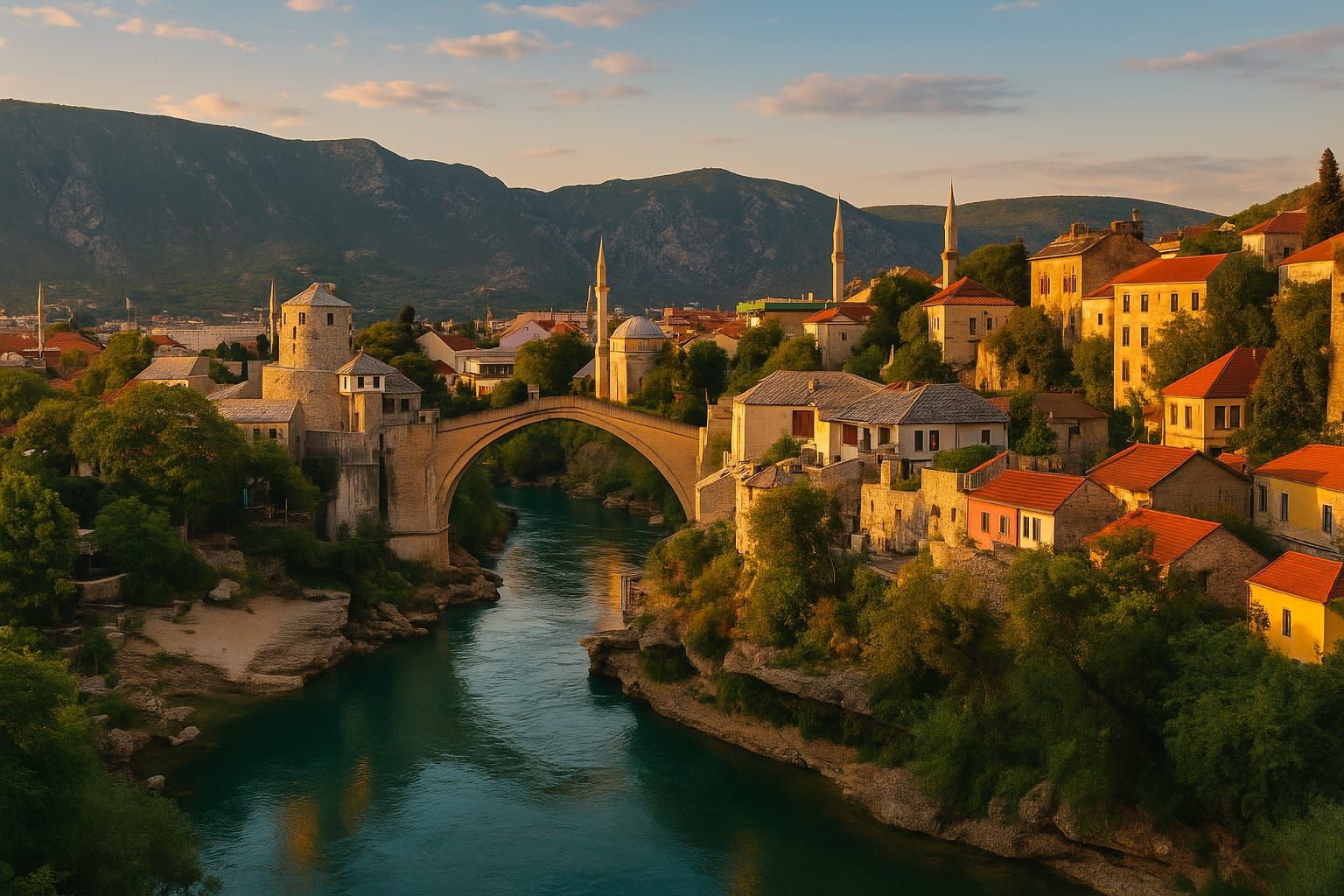
A day-by-day, practical 14-day road-trip through the Balkans — Slovenia, Croatia, Bosnia, Montenegro, Albania and North Macedonia — with driving times, must-sees and local tips.
Ultimate Balkans Road Trip — 2-Week Itinerary
Experience mountains, medieval towns, turquoise lakes and Adriatic coastlines on a 14-day road trip through the Balkans. This itinerary covers Slovenia, Croatia, Bosnia & Herzegovina, Montenegro, Albania and North Macedonia — a balanced mix of cities, national parks and coastal charms. Below you’ll find a day-by-day plan, driving times, must-see stops and practical tips to make your trip smooth and unforgettable.
Quick overview
- Duration: 14 days
- Countries: Slovenia, Croatia, Bosnia & Herzegovina, Montenegro, Albania, North Macedonia
- Best time to go: May–June or September–October (warm weather, fewer crowds)
- Start/End (suggested): Ljubljana (start) → Skopje (end). Reverseable.
Route at a glance (driving times approximate)
- Day 1: Ljubljana (arrive) — explore
- Day 2: Lake Bled — drive to Plitvice Lakes (approx. 3.5–4.5 hrs)
- Day 3: Plitvice Lakes — drive to Split (approx. 2.5–3.5 hrs)
- Day 4: Split — explore, coastal time
- Day 5: Split → Mostar (approx. 2.5–3.5 hrs)
- Day 6: Mostar → Dubrovnik (approx. 2.5–3 hrs)
- Day 7: Dubrovnik — full day
- Day 8: Dubrovnik → Kotor (Montenegro) (approx. 2–3 hrs)
- Day 9: Kotor → Shkodër → Tirana (Albania) (approx. 3.5–4.5 hrs)
- Day 10: Tirana — morning, drive to Ohrid (North Macedonia) (approx. 3.5–4 hrs)
- Day 11: Ohrid — full day on the lake
- Day 12: Ohrid → Skopje (approx. 3 hrs)
- Day 13: Skopje — explore
- Day 14: Departure from Skopje or continue onward
Total driving is moderate if you stick to the schedule; you’ll have more time in each major stop on longer days.
Day-by-day itinerary
Day 1 — Ljubljana: A relaxed start
Land in Ljubljana and settle into the compact, walkable capital. Stroll the riverfront, visit Tivoli Park and enjoy coffee culture in the old town. If you want a deeper local plan, see this 3-day Ljubljana guide for ideas and logistics: /en/itineraries/3-days-ljubljana-perfect-itinerary
Tips:
- Park centrally if your accommodation includes private parking (street parking can be limited).
- Try kremšnita (custard cake) at a riverside café.
Day 2 — Lake Bled, then head south to Plitvice
Morning: Drive 40–50 minutes to Lake Bled. Walk to Bled island, climb to the castle for views.
Afternoon: Drive to Plitvice Lakes National Park (3.5–4.5 hrs). Overnight near the park or in the nearby villages (offers more evening options).
Must-dos at Plitvice:
- Arrive early next morning to beat the crowds.
- Wear sturdy shoes; trails can be slippery.
Day 3 — Plitvice Lakes, then coastal Split
Morning at Plitvice: Spend 3–4 hours exploring the boardwalks, waterfalls and emerald lakes.
Afternoon/evening: Head to Split (2.5–3.5 hrs). Stroll Diocletian’s Palace and the Riva promenade.
Local tip: Try pašticada (Dalmatian beef stew) with gnocchi at a konoba (traditional tavern).
Day 4 — Split: history and islands
Use this day to relax in Split, take a short boat trip to nearby islands (Hvar/Brač) or explore the Marjan hill trails and beaches.
Driving note: If you plan island hopping, leave the car in Split and take ferries to avoid logistics.
Day 5 — Split to Mostar (Bosnia & Herzegovina)
Drive time: ~2.5–3.5 hours. Cross into Bosnia; the route brings you inland to Mostar’s UNESCO-listed old bridge (Stari Most).
Highlights in Mostar:
- Stari Most bridge and the Old Bazaar (Kujundziluk)
- Try ćevapi (grilled minced meat rolls) and local Bosnian coffee
- Walk the riverside at sunset
For a deeper read on Mostar’s charm and history, see: /en/hidden-gems/mostar-east-meets-west-neretva
Border note: Carry your passport. Border checks are straightforward but queues can appear during high season.
Day 6 — Mostar to Dubrovnik (Croatia)
Drive time: ~2.5–3 hours depending on border queues. The route takes you back toward the coast; be aware of the Neum corridor (Bosnian coastline dividing Croatia) and the different border exits.
Dubrovnik activities:
- Walk the city walls early or late to avoid midday heat
- Take the cable car to Mount Srd for panoramic views
- Sample seafood in the Old Town
Car note: Some rental companies charge cross-border or one-way fees for driving into Bosnia or Montenegro — check policies.
Day 7 — Dubrovnik: full day to explore
Spend a full day in Dubrovnik: explore museums, kayaks around the city walls, or take a nearby day trip (Elafiti Islands). Evening seafood and a stroll on the Stradun are essential.
Practical: Book city-wall tickets in the morning or after 4pm to avoid crowds.
Day 8 — Dubrovnik to Kotor (Montenegro)
Drive time: ~2–3 hours border-to-border (shorter driving distance but slow border crossings possible). The drive is scenic along the Bay of Kotor.
Perast stop: A small baroque town with tiny island churches — perfect for photos and a quick coffee.
Explore Kotor: Wander the Old Town, climb the fortress walls for spectacular views, and visit nearby Perast and the Bay’s villages. For an in-depth guide to this timeless town, see: /en/hidden-gems/kotor-fjord-town-time-forgot
Day 9 — Kotor to Tirana (via Shkodër, Albania)
Drive time: ~3.5–4.5 hours depending on stops. Cross from Montenegro into Albania at the Muriqan or Hani i Hotit crossings (both usually straightforward).
Shkodër detour: Visit Rozafa Castle for sweeping views over Lake Shkodër.
Tirana evening: Try local Albanian dishes (tavë kosi — baked lamb with yogurt) and explore Blloku neighborhood for nightlife.
Currency: Albania uses the lek; many places accept euros but have change in lek.
Day 10 — Tirana to Ohrid (North Macedonia)
Drive time: ~3.5–4 hours. The drive climbs into scenic highlands before descending to Lake Ohrid.
Ohrid highlights:
- St. John at Kaneo church for iconic lakeside views
- Old Bazaar, ancient theatre and boat trips on the lake
Local tip: Ohrid trout is a regional specialty — try it grilled.
Day 11 — Ohrid: relax on the lake
Spend a full day relaxing by the water. Rent a small boat, hike to viewpoints, or visit the nearby bay beaches. The town has a calm, historic vibe perfect for recharging.
Day 12 — Ohrid to Skopje
Drive time: ~3 hours. Arrive in Skopje and explore:
- Stone Bridge and Macedonia Square
- Old Bazaar and fortress
- Memorial House of Mother Teresa (if interested)
Skopje has an ambitious mix of classical and modern architecture — take time to wander local markets and sample burek and tavče gravče (bean stew).
Day 13 — Skopje: final day of exploration
Use this day for museums, day trips to Matka Canyon (30 minutes away) for kayaking/cave visits, or a relaxed final shopping and dining day.
Day 14 — Departure
Depart from Skopje or continue your journey. If you need a return to Ljubljana/Zagreb, consider a short flight rather than a long drive back.
Practical tips & local insights
Renting a car & border crossings
- Choose a rental company that explicitly allows multi-country travel. Some have blacklisted countries or charge hefty cross-border fees.
- One-way drop-off fees can be high; plan your start and end points to avoid them, or factor them into the budget.
- Always carry your passport, driver’s license (an International Driving Permit may be required by some companies), car rental contract, and green-card insurance documentation.
- Border waits: summer weekends can have longer queues; keep snacks and water handy.
Driving conditions & tolls
- Roads vary from modern highways in Slovenia/Croatia to narrower mountain roads in Albania and parts of Montenegro. Drive cautiously on winding coastal routes.
- Croatia has toll highways (pay at booths). Montenegro, Bosnia and North Macedonia have fewer tolls but more checkpoints.
- Fuel is broadly available but stations can be sparse in rural Albania and Macedonia — top up when you can.
Currency & payments
- Multiple currencies: euro is used in Montenegro and Kosovo; Croatia uses the euro (recently), Bosnia uses BAM (convertible marka), Albania uses lek, North Macedonia uses denar.
- ATMs are common in cities but less so in smaller towns. Carry some cash for rural tolls, small shops and market vendors.
- Cards: widely accepted in tourist areas but always have cash for remote spots and border crossings.
Food & drink — must-tries
- Slovenia: potica (nut roll) and local wines
- Croatia: fresh Adriatic seafood, pašticada, Peka (slow-cooked meat)
- Bosnia: ćevapi, burek, Bosnian coffee
- Montenegro: seafood, prosciutto, cheeses
- Albania: tavë kosi, byrek, fresh seafood along the coast
- North Macedonia: Ohrid trout, tavče gravče
Eat at konobas and family-run restaurants for authentic flavors and better prices.
Safety & common sense
- The Balkans are generally safe for travelers. Petty theft happens in tourist zones — use common precautions (lock the car, don’t leave valuables on display).
- Respect local sensitivities: many areas have recent histories; be mindful when discussing politics or history.
Where to stay
- Book at least your first and last night ahead. In high season (July–August) coastal towns like Dubrovnik, Split and Kotor fill up fast.
- Consider boutique guesthouses and family-run pensions for local flair and better value.
Phones & connectivity
- Buy a regional SIM (e.g., Vodafone/One/MTel options) or a local SIM in the first country you enter. Data coverage is generally good in cities and along main roads but patchy in mountains.
- Download offline maps (Google Maps or Maps.me) and a PDF of your rental agreement and passports.
Alternative route ideas & extensions
- If you prefer a quieter trip, skip Dubrovnik and linger longer in Montenegro (Kotor, Perast, Lovćen National Park, Durmitor in the north).
- Add Bosnia’s capital Sarajevo (between Split and Mostar or as a detour from Dubrovnik) for Ottoman-influenced bazaars, museums and cafés.
- Extend into Serbia (Niš, Belgrade) or Kosovo (Prizren) if you want deeper inland exploration.
Budgeting — rough estimates per person (mid-range)
- Car rental (2 weeks): $400–900 depending on company, model and cross-border fees
- Fuel: $200–350 depending on route and vehicle
- Accommodation: $40–120 per night (guesthouses cheaper, boutique hotels more)
- Food & activities: $25–70 per day
Total mid-range: $1,500–3,000 per person (excluding flights) depending on season and travel style.
Final local insights
- Slow down and soak in small towns: the Balkans reward unhurried itineraries. An extra hour in a café or a short hike off the main road often delivers the best memories.
- Festivals: If you time it right, local festivals and food fairs provide incredible cultural immersion — check local event calendars before travel.
- Language: English is common in tourist areas; learning a few phrases in local languages (hello, thank you) goes a long way.
This 14-day route blends iconic highlights with less-visited treasures. It’s ambitious but manageable if you’re comfortable driving and enjoy varied landscapes — from alpine lakes to ancient stone streets and warm Adriatic waters. Safe travels, and don’t forget your camera!
Related
- Sarajevo: Europe's Jerusalem You've Never Visited
- Ohrid: Europe's Hidden Lake Paradise
- Budget Balkans Route: 2 Weeks for €1000
- Sofia on a Budget: Complete Guide
- Bear Watching in Europe: Ethical Tours
- Durmitor, Montenegro: Mountains & Canyons
- Plitvice Lakes, Croatia: Complete Visitor Guide
- Understanding the Balkans: History & Culture
Keep Exploring
48 Hours in Dublin: Pubs, Literature & Georgian Beauty
Two days in Dublin: explore literary landmarks, lively pubs, and elegant Georgian squares. A relaxed, walkable 48-hour plan with local tips, transport notes and where to eat.
48 Hours in Brussels: Chocolate, Beer & Art Nouveau
Two days in Brussels: sample world-class chocolate, sip iconic Belgian beers and follow an Art Nouveau trail through elegant neighborhoods. A practical, walkable 48-hour plan.
3 Days in Edinburgh: Castle, Closes & Whisky
A practical, three-day Edinburgh itinerary that balances the castle and Royal Mile with hidden closes, whisky tastings and local tips for an unforgettable city break.