
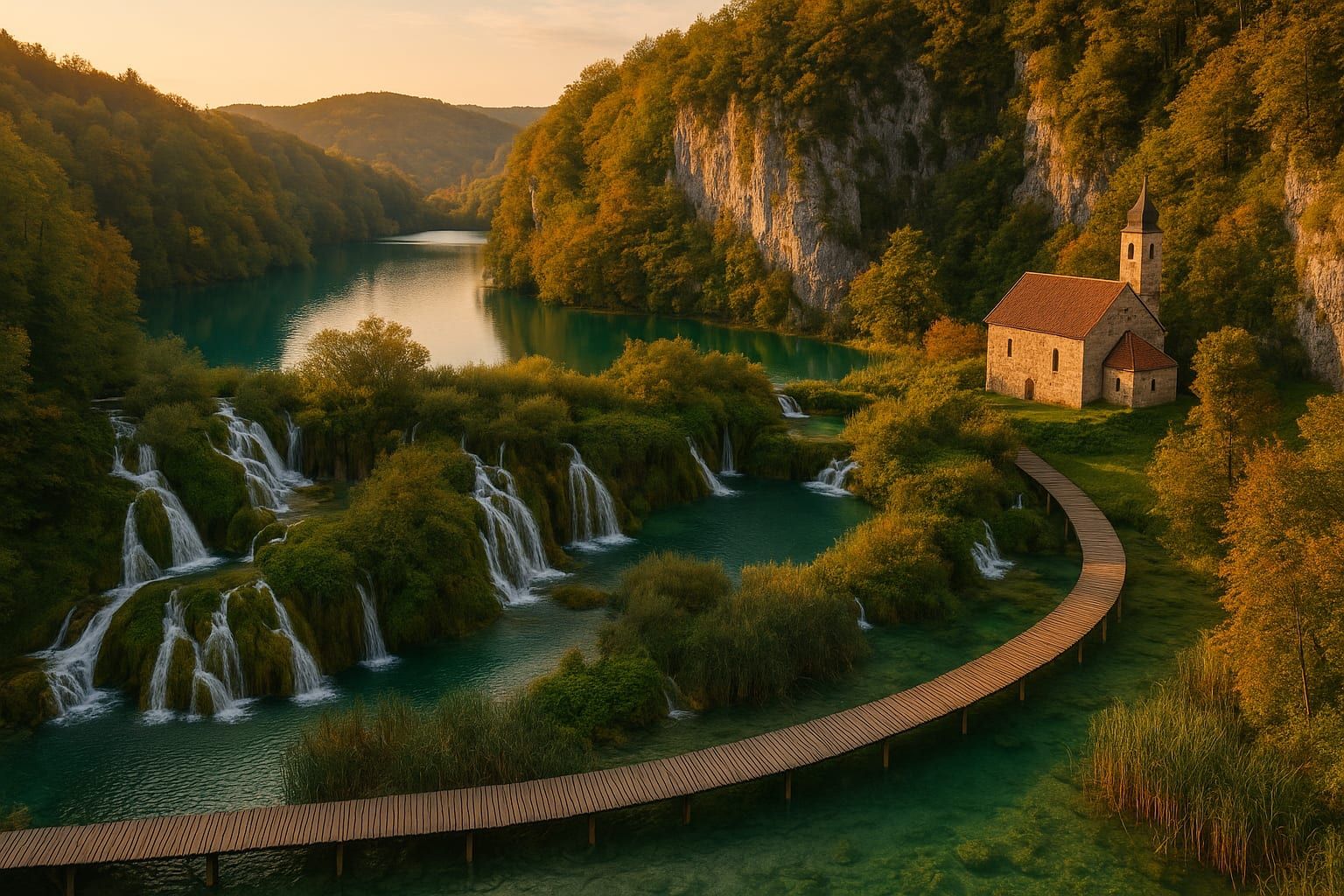
A complete guide to visiting Plitvice Lakes National Park — how to get there, best trails and viewpoints, sample itineraries, seasonal tips, and practical advice.
Plitvice Lakes, Croatia: Complete Visitor Guide
Nestled in central Croatia, Plitvice Lakes National Park is one of Europe’s most magical natural wonders: 16 terraced lakes linked by dozens of waterfalls, shimmering travertine cascades, emerald pools and centuries-old beech and fir forests. This guide covers everything you need to know to plan a memorable visit — the best times to go, how to get there, which trails to choose, sample itineraries, and practical local tips to help you travel responsibly and comfortably.
Quick facts
- Location: Central Croatia (between Zagreb and Zadar)
- Area: ~295 sq km (national park)
- Lakes: 16 terraced lakes joined by numerous waterfalls
- Biggest waterfall: Veliki Slap (Great Waterfall), ~78 meters
- UNESCO World Heritage Site: inscribed in 1979
- Open: year-round (some trails/paths may close in winter)
Why visit Plitvice?
Plitvice is not just a single sight but a living landscape. Travertine (calcium carbonate) continually builds natural barriers, creating new cascades and changing the park over time. The colors shift with light and season — turquoise and aquamarine in summer, thunderous torrents in spring, and jewel-like reflections in autumn and ice-carved shapes in winter. The park is compact enough to see its highlights in a day, yet rich enough to reward a longer stay.
Best time to visit
- Spring (April–June): Waterfalls are powerful from snowmelt; lush greenery and wildflowers. One of the best times for dramatic flows.
- Early autumn (September–October): Fewer crowds and spectacular fall color — ideal for photographers.
- Summer (July–August): Warm weather and full access to all routes, but expect large crowds and higher prices.
- Winter (November–March): Snow and ice transform the park into a crystalline landscape. Many boardwalks may close for safety, so check conditions before you go.
Tip: Arrive early (park opening) or late afternoon to avoid the busiest periods between 10:00–15:00.
Getting there
- From Zagreb: Roughly 2 hours by car (about 130 km) — the most convenient route for independent travelers.
- From Zadar or the Adriatic coast: About 1.5–2 hours by car depending on your starting point.
- By bus: Regular buses connect Zagreb, Zadar, Split and other cities to nearby towns (e.g., Korenica). From bus stops you can take a short taxi ride or local transfer to the park entrances.
- Organized day tours: Many tours run from Zagreb, Split and Zadar; they’re convenient but often feel rushed.
Parking is available at the main entrances; pay attention to signposting for Entrance 1 (north side) and Entrance 2 (south side).
Entrances, boats and shuttle trains
Plitvice operates multiple entrances and internal transport options to help you tailor your route:
- Entrance 1 (North side): Closest to the large waterfall (Veliki Slap). Good choice if you want upper lakes and the classic big-falls view.
- Entrance 2 (South side): Ideal for lower lakes and an easier circuit — frequently used by day visitors.
- Electric boat: Crosses Lake Kozjak and is included with your ticket for certain routes. A tranquil way to link upper and lower lakes.
- Panoramic shuttle train: Runs between key points and can shorten walking distances on longer routes.
Always confirm schedules at the park on the day — boats and trains run regularly in high season and less often in shoulder seasons.
Trails and choosing the right route
Boardwalks and marked footpaths wind through the park. Routes vary in length, scenery and difficulty. The park’s routes are typically labeled by letters (A–K) and provide clear directions. Here are popular options:
- Short visit (1.5–2.5 hours): Route A — Great for a quick look at the lower lakes and waterfalls; suitable for families with limited time.
- Classic half-day (3–4 hours): Route H or F — Includes a boat ride across Kozjak, highlights of both upper and lower lakes without the longest walks.
- Full day (4–6 hours): Route C (or K) — The most complete circuits; visits the upper and lower lakes, Veliki Slap, panoramic views and the longest boardwalks. Expect some stair sections.
- Adventurous/walking-focused: Combine trails for a 6–8 hour hike around the entire park’s main features.
Practical note: Boardwalks can be narrow and slippery when wet. If you’re trying to use a tripod or large equipment, be mindful of other visitors and park rules.
Sample itineraries
Hoping to fit Plitvice into your trip? Here are three realistic plans:
- Day trip from Zagreb (long day)
- Depart Zagreb early (6–7:00). Arrive at Entrance 2 just before opening time.
- Do Route H/F to get a mixture of lower and upper lakes with the Kozjak boat ride.
- Lunch at the park’s cafe or pack a picnic to enjoy at a designated area.
- Head back to Zagreb in the late afternoon.
- Relaxed one-night stay
- Arrive mid-afternoon and take a shorter route (A or H) to beat the crowds.
- Stay overnight in a nearby guesthouse or one of the hotels near the park to catch sunrise the next morning.
- Spend the next morning on a longer loop (C) for softer light and quieter boardwalks.
- Two full days (best pace)
- Day 1: Explore the lower lakes and major waterfalls, take your time photographing Veliki Slap.
- Day 2: Head to the upper lakes and less-visited trails; consider a longer hike into the park’s forested backcountry if you crave solitude.
If you’re road-tripping the region, you can combine Plitvice with coastal stops or inland highlights. For a wider Balkan itinerary, see our Ultimate Balkans Road Trip guide (/en/itineraries/ultimate-balkans-road-trip-2-weeks-itinerary). If you’re exploring neighboring Slovenia and want a multi-country nature tour, see One Week in Slovenia (/en/itineraries/one-week-in-slovenia-mountains-caves-coast).
Practical tips & local insights
- Tickets and booking: Plitvice uses seasonal/dynamic pricing. Buy tickets in advance online, especially in summer or if you need a specific entry time. Walk-up availability is limited at peak times.
- Arrival time: Aim for opening or late afternoon to avoid the busiest hours. Early morning gives the best light and fewer people for photos.
- What to wear: Waterproof hiking shoes with good grip, quick-dry layers, a light rain jacket (weather changes quickly), and a sun hat in summer.
- What to bring: Water, snacks (or bring a picnic to eat only in designated areas), insect repellent (late spring/summer), a small first-aid kit, and a portable phone charger — cell signal inside the park can be spotty.
- Food & drink: Cafes and restaurants operate near main entrances, but options are limited — bringing snacks is wise. Respect picnic rules and use bins; don’t feed wildlife.
- Photography: For silky-water shots use a neutral-density filter or slow shutter. Early morning or late afternoon offers softer light. Drones are prohibited — they disturb wildlife and other visitors.
- Safety & rules: Stay on marked trails and boardwalks — the travertine formations are fragile. Do not swim — it’s prohibited and dangerous. Dogs and pets are generally not allowed; check current rules if you plan to travel with a pet.
- Wildlife: The surrounding forests host deer, foxes and even brown bears, though sightings inside the main tourist areas are rare. Keep a respectful distance and do not leave food unattended.
Accessibility
Parts of Plitvice are accessible for visitors with limited mobility (some boardwalk sections and boat crossings), but many trails include stairs and uneven surfaces. If accessibility is a priority, contact park information in advance to confirm which routes and services are available on the day of your visit.
Where to stay
Options range from basic guesthouses to hotels and private apartments in villages around the park. Staying nearby gives you the chance to visit early and linger after day-trippers leave. If you prefer more nightlife or dining choices, consider basing yourself in towns like Korenica or the coast and plan a dedicated day for the park.
Recommended nearby stop: the village of Rastoke (near Slunj) — a charming cluster of old mills and small waterfalls, perfect for a photo stop en route to Plitvice.
Nearby attractions and extensions
- Rastoke (Slunj): Picturesque mill town with cascades and traditional wooden watermills.
- Karlovac and the Mrežnica River: Clear waters and rafting options.
- Dalmatian coast: Combine Plitvice with a coastal drive to Zadar or Split if you have more time.
For a multi-country nature and culture route across the region, check our broader Balkan road-trip planning article (/en/itineraries/ultimate-balkans-road-trip-2-weeks-itinerary).
Respecting the park: sustainable visiting
Plitvice’s travertine system is delicate and continually changing. As a visitor, you can protect it by:
- Staying on marked paths and boardwalks at all times.
- Taking your rubbish with you if bins are full; use bins and recycling where available.
- Avoiding any action that could alter the water chemistry (e.g., soaps, cosmetics, or feeding animals).
- Supporting local businesses — eat at local restaurants and book accommodation run by local hosts.
Final tips
- Plan for weather: conditions can change rapidly in the park, and some trails close in winter.
- Book ahead during high season and consider an overnight stay to enjoy quieter hours.
- Bring comfortable shoes and a flexible plan — part of Plitvice’s magic is how the light and water change the landscape.
Plitvice Lakes is a place to slow down. Whether you spend two hours or two days, let the sound of falling water set the pace. With careful planning you’ll be rewarded by one of Croatia’s most unforgettable natural spectacles.
If you found this guide useful, explore more regional trips and practical itineraries: try our Ultimate Balkans Road Trip guide (/en/itineraries/ultimate-balkans-road-trip-2-weeks-itinerary) or plan a nature-and-caves week next door with our One Week in Slovenia itinerary (/en/itineraries/one-week-in-slovenia-mountains-caves-coast).
Related
Keep Exploring
Bear Watching in Europe: Ethical Tours
A practical guide to ethical bear-watching in Europe: where to go, how to pick responsible tours, safety and photography tips, and local insights from Slovenia to the Carpathians.
Best Lakes for Swimming in Europe
A practical guide to Europe's best lakes for swimming — top spots, seasons, access tips, safety advice and nearby attractions to plan your perfect freshwater dip.
Tour du Mont Blanc: Complete Guide
Everything you need to plan, pack and hike the Tour du Mont Blanc: routes, huts, itineraries, logistics, safety tips and local insights for a successful 8–12 day circuit.