
A day-by-day, practical 14-day road-trip through the Balkans — Slovenia, Croatia, Bosnia, Montenegro, Albania and North Macedonia — with driving times, must-sees and local tips.
Experience mountains, medieval towns, turquoise lakes and Adriatic coastlines on a 14-day road trip through the Balkans. This itinerary covers Slovenia, Croatia, Bosnia & Herzegovina, Montenegro, Albania and North Macedonia — a balanced mix of cities, national parks and coastal charms. Below you’ll find a day-by-day plan, driving times, must-see stops and practical tips to make your trip smooth and unforgettable.
Quick overview
- Duration: 14 days
- Countries: Slovenia, Croatia, Bosnia & Herzegovina, Montenegro, Albania, North Macedonia
- Best time to go: May–June or September–October (warm weather, fewer crowds)
- Start/End (suggested): Ljubljana (start) → Skopje (end). Reverseable.
Route at a glance (driving times approximate)
- Day 1: Ljubljana (arrive) — explore
- Day 2: Lake Bled — drive to Plitvice Lakes (approx. 3.5–4.5 hrs)
- Day 3: Plitvice Lakes — drive to Split (approx. 2.5–3.5 hrs)
- Day 4: Split — explore, coastal time
- Day 5: Split → Mostar (approx. 2.5–3.5 hrs)
- Day 6: Mostar → Dubrovnik (approx. 2.5–3 hrs)
- Day 7: Dubrovnik — full day
- Day 8: Dubrovnik → Kotor (Montenegro) (approx. 2–3 hrs)
- Day 9: Kotor → Shkodër → Tirana (Albania) (approx. 3.5–4.5 hrs)
- Day 10: Tirana — morning, drive to Ohrid (North Macedonia) (approx. 3.5–4 hrs)
- Day 11: Ohrid — full day on the lake
- Day 12: Ohrid → Skopje (approx. 3 hrs)
- Day 13: Skopje — explore
- Day 14: Departure from Skopje or continue onward
Total driving is moderate if you stick to the schedule; you’ll have more time in each major stop on longer days.
Day-by-day itinerary
Day 1 — Ljubljana: A relaxed start
Land in Ljubljana and settle into the compact, walkable capital. Stroll the riverfront, visit Tivoli Park and enjoy coffee culture in the old town. If you want a deeper local plan, see this 3-day Ljubljana guide for ideas and logistics: /en/itineraries/3-days-ljubljana-perfect-itinerary/
Tips:
- Park centrally if your accommodation includes private parking (street parking can be limited).
- Try kremšnita (custard cake) at a riverside café.
Day 2 — Lake Bled, then head south to Plitvice
Morning: Drive 40–50 minutes to Lake Bled. Walk to Bled island, climb to the castle for views.
Afternoon: Drive to Plitvice Lakes National Park (3.5–4.5 hrs). Overnight near the park or in the nearby villages (offers more evening options).
Must-dos at Plitvice:
- Arrive early next morning to beat the crowds.
- Wear sturdy shoes; trails can be slippery.
Day 3 — Plitvice Lakes, then coastal Split
Morning at Plitvice: Spend 3–4 hours exploring the boardwalks, waterfalls and emerald lakes.
Afternoon/evening: Head to Split (2.5–3.5 hrs). Stroll Diocletian’s Palace and the Riva promenade.
Local tip: Try pašticada (Dalmatian beef stew) with gnocchi at a konoba (traditional tavern).
Day 4 — Split: history and islands
Use this day to relax in Split, take a short boat trip to nearby islands (Hvar/Brač) or explore the Marjan hill trails and beaches.
Driving note: If you plan island hopping, leave the car in Split and take ferries to avoid logistics.
Day 5 — Split to Mostar (Bosnia & Herzegovina)
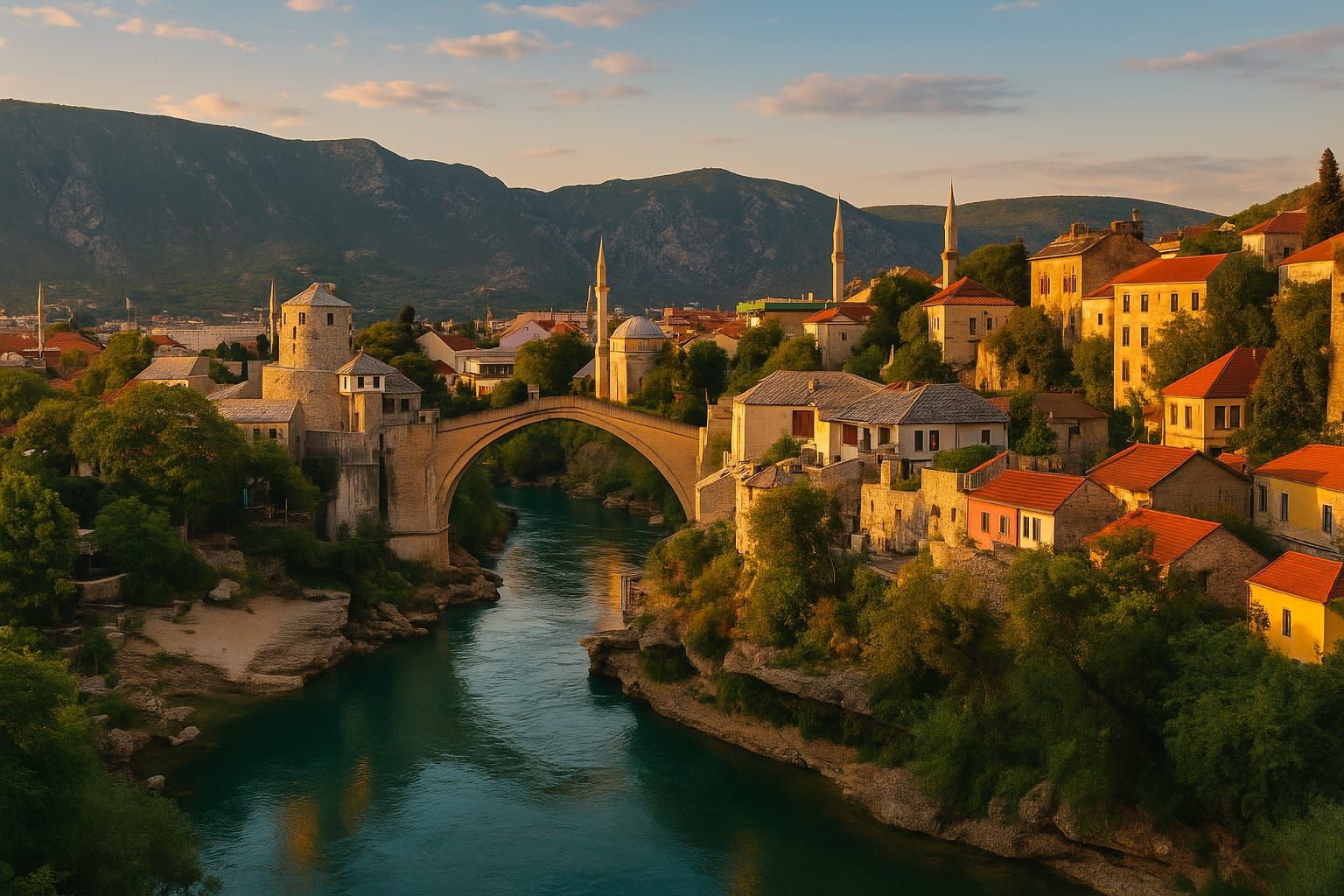
Drive time: ~2.5–3.5 hours. Cross into Bosnia; the route brings you inland to Mostar’s UNESCO-listed old bridge (Stari Most).
Highlights in Mostar:
- Stari Most bridge and the Old Bazaar (Kujundziluk)
- Try ćevapi (grilled minced meat rolls) and local Bosnian coffee
- Walk the riverside at sunset
For a deeper read on Mostar’s charm and history, see: /en/hidden-gems/mostar-east-meets-west-neretva/
Border note: Carry your passport. Border checks are straightforward but queues can appear during high season.
Day 6 — Mostar to Dubrovnik (Croatia)
Drive time: ~2.5–3 hours depending on border queues. The route takes you back toward the coast; be aware of the Neum corridor (Bosnian coastline dividing Croatia) and the different border exits.
Dubrovnik activities:
- Walk the city walls early or late to avoid midday heat
- Take the cable car to Mount Srd for panoramic views
- Sample seafood in the Old Town
Car note: Some rental companies charge cross-border or one-way fees for driving into Bosnia or Montenegro — check policies.
Day 7 — Dubrovnik: full day to explore
Spend a full day in Dubrovnik: explore museums, kayaks around the city walls, or take a nearby day trip (Elafiti Islands). Evening seafood and a stroll on the Stradun are essential.
Practical: Book city-wall tickets in the morning or after 4pm to avoid crowds.
Day 8 — Dubrovnik to Kotor (Montenegro)
Drive time: ~2–3 hours border-to-border (shorter driving distance but slow border crossings possible). The drive is scenic along the Bay of Kotor.
Perast stop: A small baroque town with tiny island churches — perfect for photos and a quick coffee.
Explore Kotor: Wander the Old Town, climb the fortress walls for spectacular views, and visit nearby Perast and the Bay’s villages. For an in-depth guide to this timeless town, see: /en/hidden-gems/kotor-fjord-town-time-forgot/
Day 9 — Kotor to Tirana (via Shkodër, Albania)
Drive time: ~3.5–4.5 hours depending on stops. Cross from Montenegro into Albania at the Muriqan or Hani i Hotit crossings (both usually straightforward).
Shkodër detour: Visit Rozafa Castle for sweeping views over Lake Shkodër.
Tirana evening: Try local Albanian dishes (tavë kosi — baked lamb with yogurt) and explore Blloku neighborhood for nightlife.
Currency: Albania uses the lek; many places accept euros but have change in lek.
Day 10 — Tirana to Ohrid (North Macedonia)
Drive time: ~3.5–4 hours. The drive climbs into scenic highlands before descending to Lake Ohrid.
Ohrid highlights:
- St. John at Kaneo church for iconic lakeside views
- Old Bazaar, ancient theatre and boat trips on the lake
Local tip: Ohrid trout is a regional specialty — try it grilled.
Day 11 — Ohrid: relax on the lake
Spend a full day relaxing by the water. Rent a small boat, hike to viewpoints, or visit the nearby bay beaches. The town has a calm, historic vibe perfect for recharging.
Day 12 — Ohrid to Skopje
Drive time: ~3 hours. Arrive in Skopje and explore:
- Stone Bridge and Macedonia Square
- Old Bazaar and fortress
- Memorial House of Mother Teresa (if interested)
Skopje has an ambitious mix of classical and modern architecture — take time to wander local markets and sample burek and tavče gravče (bean stew).
Day 13 — Skopje: final day of exploration
Use this day for museums, day trips to Matka Canyon (30 minutes away) for kayaking/cave visits, or a relaxed final shopping and dining day.
Day 14 — Departure
Depart from Skopje or continue your journey. If you need a return to Ljubljana/Zagreb, consider a short flight rather than a long drive back.
Practical tips & local insights
Renting a car & border crossings
- Choose a rental company that explicitly allows multi-country travel. Some have blacklisted countries or charge hefty cross-border fees.
- One-way drop-off fees can be high; plan your start and end points to avoid them, or factor them into the budget.
- Always carry your passport, driver’s license (an International Driving Permit may be required by some companies), car rental contract, and green-card insurance documentation.
- Border waits: summer weekends can have longer queues; keep snacks and water handy.
Driving conditions & tolls
- Roads vary from modern highways in Slovenia/Croatia to narrower mountain roads in Albania and parts of Montenegro. Drive cautiously on winding coastal routes.
- Croatia has toll highways (pay at booths). Montenegro, Bosnia and North Macedonia have fewer tolls but more checkpoints.
- Fuel is broadly available but stations can be sparse in rural Albania and Macedonia — top up when you can.
Currency & payments
- Multiple currencies: euro is used in Montenegro and Kosovo; Croatia uses the euro (recently), Bosnia uses BAM (convertible marka), Albania uses lek, North Macedonia uses denar.
- ATMs are common in cities but less so in smaller towns. Carry some cash for rural tolls, small shops and market vendors.
- Cards: widely accepted in tourist areas but always have cash for remote spots and border crossings.
Food & drink — must-tries
- Slovenia: potica (nut roll) and local wines
- Croatia: fresh Adriatic seafood, pašticada, Peka (slow-cooked meat)
- Bosnia: ćevapi, burek, Bosnian coffee
- Montenegro: seafood, prosciutto, cheeses
- Albania: tavë kosi, byrek, fresh seafood along the coast
- North Macedonia: Ohrid trout, tavče gravče
Eat at konobas and family-run restaurants for authentic flavors and better prices.
Safety & common sense
- The Balkans are generally safe for travelers. Petty theft happens in tourist zones — use common precautions (lock the car, don’t leave valuables on display).
- Respect local sensitivities: many areas have recent histories; be mindful when discussing politics or history.
Where to stay
- Book at least your first and last night ahead. In high season (July–August) coastal towns like Dubrovnik, Split and Kotor fill up fast.
- Consider boutique guesthouses and family-run pensions for local flair and better value.
Phones & connectivity
- Buy a regional SIM (e.g., Vodafone/One/MTel options) or a local SIM in the first country you enter. Data coverage is generally good in cities and along main roads but patchy in mountains.
- Download offline maps (Google Maps or Maps.me) and a PDF of your rental agreement and passports.
Alternative route ideas & extensions
- If you prefer a quieter trip, skip Dubrovnik and linger longer in Montenegro (Kotor, Perast, Lovćen National Park, Durmitor in the north).
- Add Bosnia’s capital Sarajevo (between Split and Mostar or as a detour from Dubrovnik) for Ottoman-influenced bazaars, museums and cafés.
- Extend into Serbia (Niš, Belgrade) or Kosovo (Prizren) if you want deeper inland exploration.
Budgeting — rough estimates per person (mid-range)
- Car rental (2 weeks): $400–900 depending on company, model and cross-border fees
- Fuel: $200–350 depending on route and vehicle
- Accommodation: $40–120 per night (guesthouses cheaper, boutique hotels more)
- Food & activities: $25–70 per day
Total mid-range: $1,500–3,000 per person (excluding flights) depending on season and travel style.
Final local insights
- Slow down and soak in small towns: the Balkans reward unhurried itineraries. An extra hour in a café or a short hike off the main road often delivers the best memories.
- Festivals: If you time it right, local festivals and food fairs provide incredible cultural immersion — check local event calendars before travel.
- Language: English is common in tourist areas; learning a few phrases in local languages (hello, thank you) goes a long way.
This 14-day route blends iconic highlights with less-visited treasures. It’s ambitious but manageable if you’re comfortable driving and enjoy varied landscapes — from alpine lakes to ancient stone streets and warm Adriatic waters. Safe travels, and don’t forget your camera!
Related
- A Week in the Balkans: Lakes, Mountains & Towns
- Belgrade Weekend Guide: Eat, Explore & Experience
- Skopje: North Macedonia's Quirky Capital
- Prizren: The Ottoman Jewel of the Balkans
- Sarajevo: Europe's Jerusalem You've Never Visited
- Ohrid: Europe's Hidden Lake Paradise
- Budget Balkans Route: 2 Weeks for €1000
- Sofia on a Budget: Complete Guide
- Bear Watching in Europe: Ethical Tours
- Durmitor, Montenegro: Mountains & Canyons
- Plitvice Lakes, Croatia: Complete Visitor Guide
- Understanding the Balkans: History & Culture
Frequently Asked Questions
How many days do you need for a Balkans road trip?
You need about 14 days for a well-rounded Balkans road trip. This two-week itinerary covers six countries, Slovenia, Croatia, Bosnia & Herzegovina, Montenegro, Albania and North Macedonia, balancing cities, national parks and Adriatic coastline. Driving times between stops are moderate, typically two to four-and-a-half hours, leaving ample time to explore highlights like Plitvice, Dubrovnik, Kotor and Lake Ohrid.
What is the best time to visit the Balkans for a road trip?
The best time for a Balkans road trip is May to June or September to October. These shoulder months bring warm weather and fewer crowds. Avoid July and August, when coastal towns like Dubrovnik, Split and Kotor fill up fast and border queues lengthen on summer weekends. Travelling in shoulder season also makes accommodation easier to find and often better value.
How much does a 2-week Balkans road trip cost?
A mid-range two-week Balkans road trip costs roughly $1,500 to $3,000 per person, excluding flights. Car rental runs about $400 to $900 for two weeks, fuel $200 to $350, accommodation $40 to $120 per night, and food and activities $25 to $70 daily. Costs vary with season, vehicle choice, cross-border fees and overall travel style.
Do you need a car to road trip the Balkans?
A car gives the most flexibility for a Balkans road trip, letting you reach mountain towns, national parks and coastal villages on your own schedule. Choose a rental company that explicitly allows multi-country travel, since some charge cross-border or one-way drop-off fees. Always carry your passport, license, rental contract and green-card insurance, and note an International Driving Permit may be required.
What currencies do you need for a Balkans road trip?
You will need several currencies across the Balkans. Montenegro, Kosovo and Croatia use the euro, Bosnia uses the convertible marka (BAM), Albania uses the lek, and North Macedonia uses the denar. Cards are widely accepted in tourist areas, but ATMs are scarcer in smaller towns, so carry cash for rural tolls, market vendors, small shops and border crossings.

Keep Exploring
The Ultimate Trans-European Train Itinerary
A concrete 14-day London-to-Rome rail trip on one Interrail Global Pass — exact journey times, named hotels, station-to-centre transfers, and what to book 90 days ahead.
Mexico City in 3 Days: A Neighborhood-Based Itinerary
A practical route through Centro Histórico, Chapultepec, Condesa and Coyoacán, with one main visit each day, flexible meals and clear choices when time runs short.
Singapore in 3 Days: A First-Timer’s Itinerary
A three-day Singapore itinerary balancing skyline sights, neighbourhood walks, gardens and food, with room for rain and a slower pace.