
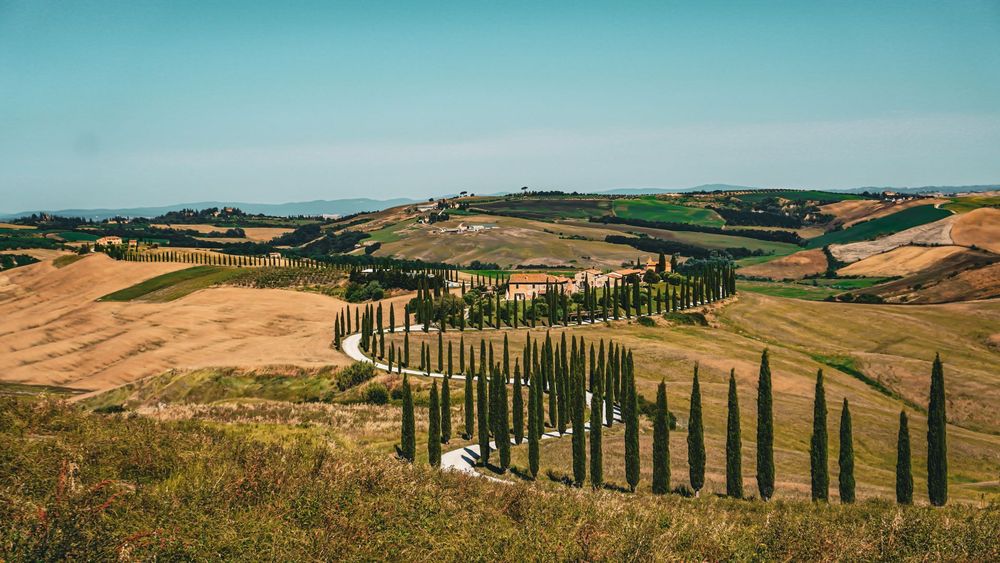
What to see in Tuscany: Florence, Siena, Chianti, the Val d'Orcia, San Gimignano, Pisa and Lucca, with prices, train times and a 6-day itinerary.
Tuscany rewards travelers who treat it as a region, not a city break. Florence's Renaissance galleries are only the opening chapter; the real depth lies in Siena's Gothic streets, the cypress-lined ridges of the Val d'Orcia, and the walled towers of San Gimignano, all within a 90-minute drive of each other. This guide lays out exactly what to see, when to go, and how to move between them — by regional train along the Florence–Pisa–Lucca line and by rental car through the hill country where the trains do not run.
Fast Facts
| Detail | Info |
|---|---|
| Best time to visit | Late April to mid-June and September to mid-October — warm days (20-27°C), thinner crowds than July-August, and the harvest light that defines the Val d'Orcia |
| Getting there | Fly into Florence (FLR) or Pisa (PSA); Trenitalia regional trains link Florence S.M.N. to Pisa Centrale in ~1h (€9-10) and to Lucca in ~1h20 (€8) |
| Where to stay | Florence: Oltrarno (€110-180/night for a 3-star double); Siena: inside the walls near Piazza del Campo (€90-150); Val d'Orcia agriturismo: Pienza/Montalcino (€100-160) |
| Average daily budget | €120-180 per person: lodging €60-90, food €35-50, museums/transport €25-40 |
| Don't miss | The Uffizi Galleries in Florence; Piazza del Campo in Siena; sunset over the cypresses of the Val d'Orcia near Pienza |
Florence: the Renaissance core in two focused days
Florence packs the densest concentration of Renaissance art in Europe into a centro storico small enough to cross on foot in 20 minutes. The entire historic centre has been a UNESCO World Heritage Site since 1982, recognised for the artistic legacy of figures from Giotto to Michelangelo (UNESCO World Heritage Centre).
Start at the Uffizi Galleries, home to Botticelli's Birth of Venus and Primavera, Leonardo, Raphael, and Caravaggio. The full-price ticket is €25 when bought on the day of entry, or €29 if reserved in advance to skip the line, and the galleries open Tuesday to Sunday, 8:15am to 6:30pm, closed on Mondays (Uffizi Galleries official site). Arrive at opening or book the first afternoon slot to avoid the midday crush; plan on three hours minimum.
A five-minute walk away, the Cathedral of Santa Maria del Fiore crowns the skyline with Brunelleschi's dome, the largest masonry dome ever built and engineered without a wooden centering frame. Entry to the cathedral itself is free, but the dome climb (463 steps), Giotto's bell tower, the baptistery, and the crypt are sold together as a combined Brunelleschi pass for around €30, with timed dome slots that sell out days ahead in peak season.
Cross the Ponte Vecchio, the only Florentine bridge the retreating army spared in 1944, into the Oltrarno — the left bank where artisan workshops, the Pitti Palace, and the Boboli Gardens (€10-16) sit below the panoramic terrace of Piazzale Michelangelo. The climb up to the piazzale takes about 20 minutes on foot and delivers the postcard view of the dome against the hills, best at dusk.
For sculpture, the Galleria dell'Accademia holds Michelangelo's original David (full ticket around €16); reserve ahead, because walk-up lines routinely exceed an hour. If you have a third half-day, the Bargello (€10) gathers Donatello's bronze David and works by Cellini and Giambologna in a former medieval prison, while the basilica of Santa Croce (€8) holds the tombs of Michelangelo, Galileo, and Machiavelli. Two focused days cover the essentials without rushing.
A word on Florentine food: this is the home of bistecca alla fiorentina, the thick T-bone steak grilled rare and sold by weight (expect €45-55 per kilo, enough for two), and of ribollita, a hearty bread-and-vegetable soup. Skip the restaurants ringing Piazza della Signoria, where prices climb and quality falls, and eat in the Oltrarno or near Sant'Ambrogio market instead. A standout coffee at a stand-up bar costs €1.20-1.50; sitting down at a table on a major piazza can triple that, so check whether a place charges servizio before you settle in.
Siena and the medieval hill towns
Forty-five minutes south of Florence by car, Siena preserves one of Europe's most complete Gothic townscapes, inscribed by UNESCO in 1995 for a medieval centre that has changed remarkably little since the 13th century (UNESCO World Heritage Centre). Its heart is the Piazza del Campo, the shell-shaped square that hosts the Palio horse race each July and August. Climb the Torre del Mangia (around €10, 400 steps) for a sweeping view, then visit the striped marble Duomo (cathedral complex tickets €8-16 depending on access to the Piccolomini Library frescoes and the panoramic "Gate of Heaven" rooftop walk).
West of Siena, San Gimignano is the "town of fine towers" — of the 72 tower-houses raised by competing medieval families, fourteen survive, giving the skyline its unmistakable silhouette and earning UNESCO listing in 1990 (UNESCO World Heritage Centre). Climb the Torre Grossa (€9) for the view across the Elsa valley, and note that the town is best at either end of the day; tour buses dominate the central Piazza della Cisterna from roughly 11am to 4pm.
Two more stops complete the Sienese hills: Monteriggioni, a tiny walled fortress town of 14 towers that Dante compared to a ring of giants in his Inferno, and Volterra, an Etruscan and Roman town with an intact 1st-century theatre, alabaster workshops, and a quieter, less touristed feel. Distances are short — Siena to San Gimignano is about 40 km (50 minutes), and Monteriggioni sits just 15 minutes off the Siena–Florence road — but the hill roads are slow, so plan one or two towns per day rather than a checklist sprint. None of these are well served by train, which is why the countryside leg of any Tuscany trip works best with a car.
Chianti and the Val d'Orcia
Between Florence and Siena lies Chianti, the cradle of Sangiovese and the Chianti Classico zone marked by the black-rooster seal. The scenic SR222 "Chiantigiana" road threads through Greve, Panzano, and Castellina; most estates around Radda and Gaiole offer cellar tours and tastings for €15-35, typically by reservation. Budget a full day to drive it slowly with one or two stops — this is not a region to rush past.
Further south, the Val d'Orcia is the landscape most people picture when they imagine Tuscany: rolling clay hills, solitary cypresses, and farmhouses on ridgelines. UNESCO inscribed it in 2004 as a cultural landscape that shaped Renaissance ideals of good governance and was painted into the backgrounds of Sienese-school art (UNESCO World Heritage Centre). Base yourself in or near Pienza, the "ideal city" rebuilt by Pope Pius II and itself a UNESCO site since 1996 (UNESCO World Heritage Centre), famous for its pecorino sheep's cheese.
From Pienza, day loops reach Montalcino (Brunello wine, tastings €20-40), Montepulciano (Vino Nobile, and a hilltop centre that doubled as a film location), and the thermal springs of Bagno Vignoni, where the village square is a steaming Renaissance bathing pool. The most photographed spots — the chapel of Vitaleta and the cypress cluster on the road to San Quirico — sit on minor roads that only a car can reach, ideally in the soft light of early morning or the hour before sunset.
Getting around: trains for cities, a car for the hills
Tuscany splits cleanly into two transport zones. The major cities are linked by Trenitalia regional trains, which are frequent, cheap, and need no advance booking — you buy a fixed-price ticket and validate it before boarding (Trenitalia official site). From Florence Santa Maria Novella, regional services reach Pisa Centrale in about an hour (€9-10) and Lucca in roughly 1h20 (€8); Siena is around 1h30 (€10) but the station sits below the old town, requiring a bus or escalator up the hill.
Pisa deserves a half-day: the Piazza dei Miracoli gathers the cathedral, baptistery, and the famous Leaning Tower, which leans about 5 degrees off vertical and rises 58.36 metres over 273 steps; climbing it costs around €20 with timed entry. Lucca, 30 minutes further, is encircled by intact Renaissance walls wide enough to cycle (bike rental €4-5/hour) — a flat, traffic-free 4.2 km loop above the rooftops.
For Chianti, the Val d'Orcia, and the hill towns, rent a car. Rentals from Florence or Pisa airports start around €35-50/day for a compact in shoulder season; note that historic centres are ZTL (limited-traffic zones) with camera-enforced fines, so park in signed lots outside the walls — Siena, San Gimignano, and Pienza all have clearly marked perimeter parking for €1.50-2/hour. Roads in the countryside are well surfaced but winding; allow more time than the map distance suggests.
When to go
The shoulder seasons are decisively better than high summer. Late April through mid-June brings warm, stable weather, green hills before the harvest browns them, and manageable crowds. September to mid-October is the connoisseur's window: the grape and olive harvests, golden light across the Val d'Orcia, and water still warm enough for the coast.
July and August are hot (often 33-35°C inland) and busy, though Siena's Palio (2 July and 16 August) is a spectacle if you can secure a spot. Winter is quiet and atmospheric in Florence and Siena, but many countryside agriturismi and restaurants in the Val d'Orcia close from November to March, so a winter trip should stay city-focused. For broader regional planning, the official board at Visit Tuscany maps events and seasonal openings by area.
How to plan it — and what to skip
Build the trip around the two-zone logic: do Florence first on foot while you have no car to park, pick up the rental as you head into the hills, then drop it before the Pisa–Lucca train leg. Reserve the Uffizi, the Accademia, and the Florence dome online before you arrive — these three routinely sell their timed slots days ahead in peak months, and walk-up lines can swallow half a day.
What to skip: do not try to "see everything" in a long weekend. Three days buys you Florence plus one hill town; a genuine regional tour needs five to seven. Skip driving into any historic centre — the ZTL cameras issue fines weeks later by mail. And resist San Gimignano and the Val d'Orcia viewpoints at midday; the same places that feel overrun at noon are nearly empty, and far more photogenic, in the first and last hours of light. For a complementary Italian city pairing, see City Voyager's 3 days in Bologna and, for travelers extending further down the peninsula, one week in Southern Italy from Naples to Sicily. Building a broader European trip around Tuscany? Our other multi-day itineraries run the gamut, from three days in Prague and a long weekend in Munich's beer halls and Bavaria to 48 hours in Dublin's pubs and Georgian streets, Edinburgh's castle, closes and whisky, the design and New Nordic dining of Copenhagen, and a scenic week across Slovenia's mountains, caves and coast.
Step-by-Step Itinerary
Day 1: Florence — Renaissance core
Begin at the Uffizi at the 8:15am opening (book the timed slot in advance, €29). Spend three hours, then walk to Piazza del Duomo for a pre-reserved dome climb. Lunch in the Mercato Centrale, cross the Ponte Vecchio into the Oltrarno in the afternoon, and end at Piazzale Michelangelo for sunset over the city.
Day 2: Florence — David and the Oltrarno
Reserve the first Accademia slot to see Michelangelo's David, then explore the artisan workshops of the Oltrarno and the Boboli Gardens. Use the afternoon for the Bargello sculpture museum or a free wander through Santa Croce. Collect a rental car late afternoon if you are driving south the next morning.
Day 3: Chianti to Siena
Drive the SR222 Chiantigiana south, stopping for a late-morning tasting near Panzano or Radda (reserve ahead, €15-35). Continue to Siena by mid-afternoon, park outside the walls, and walk down into Piazza del Campo. Climb the Torre del Mangia before dinner and stay the night inside the medieval centre.
Day 4: Siena and San Gimignano
Tour Siena's Duomo and Piccolomini Library in the morning. After lunch, drive 45 minutes to San Gimignano, arriving after 4pm when the buses leave; climb the Torre Grossa and watch the towers turn gold at dusk. Optionally detour through walled Monteriggioni en route.
Day 5: Val d'Orcia and Pienza
Drive south to Pienza, sampling pecorino in town, then loop the Val d'Orcia's minor roads — Vitaleta chapel, the cypresses near San Quirico, and the thermal pool at Bagno Vignoni. End with a Brunello tasting in Montalcino (€20-40) and an agriturismo dinner under the stars.
Day 6: Pisa and Lucca by train
Return the car and ride a regional train to Pisa Centrale (
1h, €9-10) for the Piazza dei Miracoli and the Leaning Tower climb. Continue to Lucca (30 min) in the afternoon to cycle the 4.2 km wall circuit, then take the evening train back to Florence (~1h20).
Frequently Asked Questions
How many days do you need in Tuscany?
Five to seven days is the sweet spot for a regional tour: two days in Florence, one in Chianti and Siena, one or two in the Val d'Orcia, and a day for Pisa and Lucca by train. A long weekend of three days realistically covers Florence plus a single hill town such as Siena.
Do you need a car to visit Tuscany?
Not for the cities — Trenitalia regional trains connect Florence, Pisa (1h, €9-10), and Lucca (1h20, €8) frequently and cheaply. But Chianti, the Val d'Orcia, San Gimignano, and the photogenic countryside viewpoints are poorly served by public transport, so a rental car (from ~€35-50/day) is essential for that leg.
When is the best time to visit Tuscany?
Late April to mid-June and September to mid-October offer warm days of 20-27°C, lighter crowds than July-August, and the golden harvest light the Val d'Orcia is famous for. July and August are hot (33-35°C inland) and crowded, while many countryside agriturismi close from November to March.
How much does the Uffizi cost and do I need to book?
The full-price ticket is €25 on the day of entry or €29 booked in advance; the galleries open Tuesday to Sunday 8:15am-6:30pm and close on Mondays, per the Uffizi Galleries official site. Advance booking is strongly recommended in peak season, when walk-up lines regularly exceed an hour.
Is Tuscany expensive?
Budget roughly €120-180 per person per day, covering lodging (€60-90), food (€35-50), and museums plus transport (€25-40). Costs drop in shoulder season and in the countryside, where an agriturismo double runs €100-160 a night versus €110-180 in central Florence.

Keep Exploring
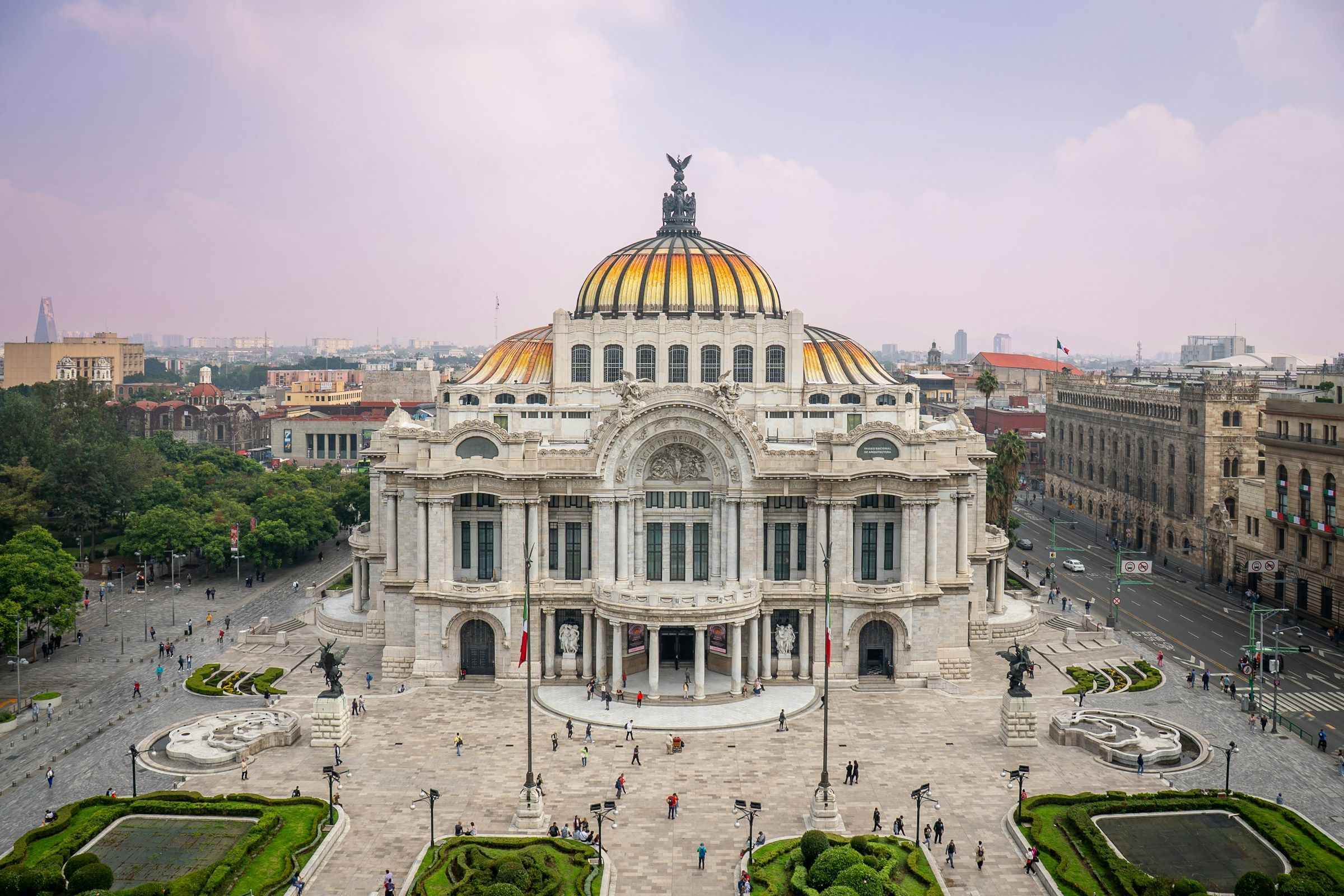
Mexico City in 3 Days: A Neighborhood-Based Itinerary
A practical route through Centro Histórico, Chapultepec, Condesa and Coyoacán, with one main visit each day, flexible meals and clear choices when time runs short.
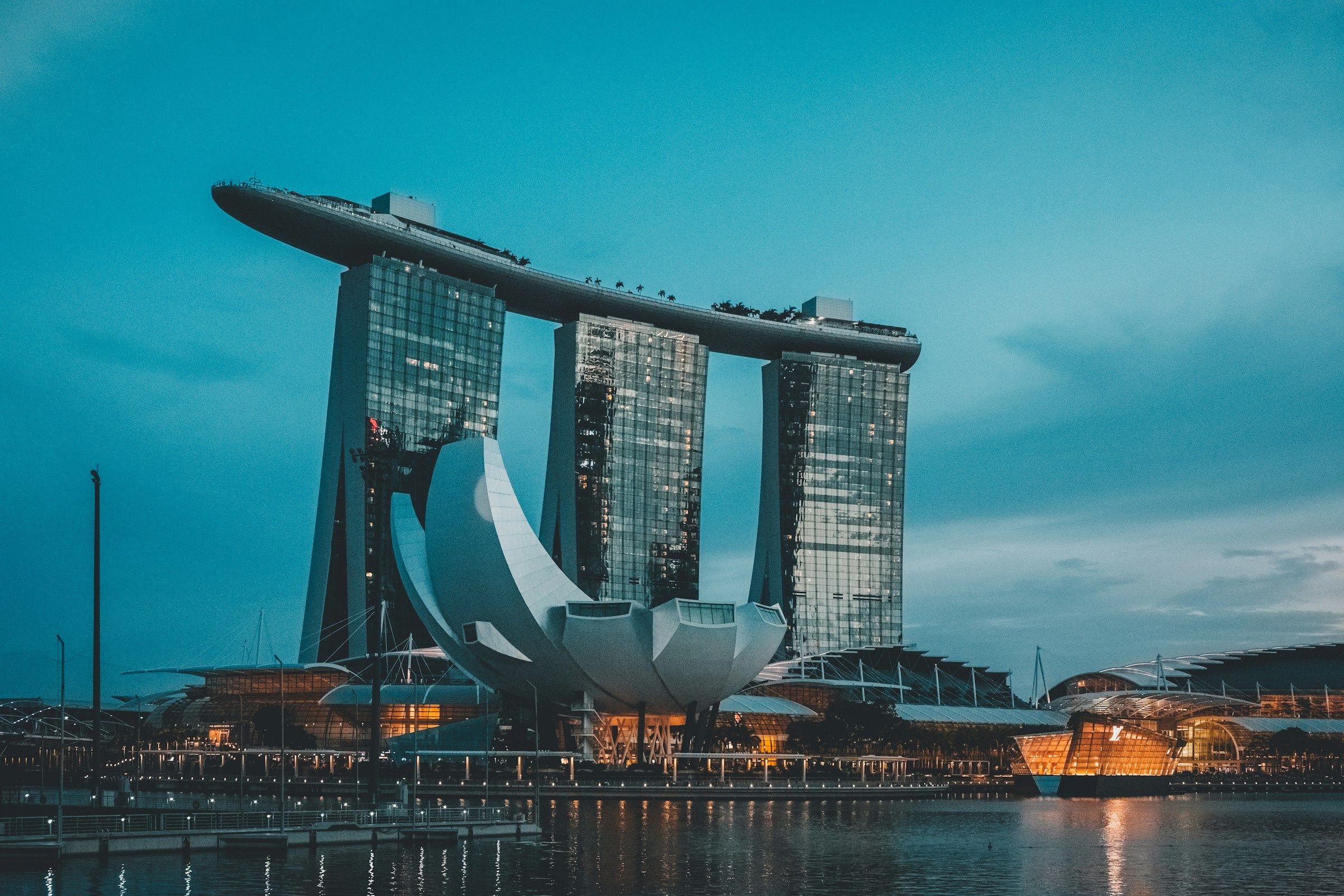
Singapore in 3 Days: A First-Timer’s Itinerary
A three-day Singapore itinerary balancing skyline sights, neighbourhood walks, gardens and food, with room for rain and a slower pace.
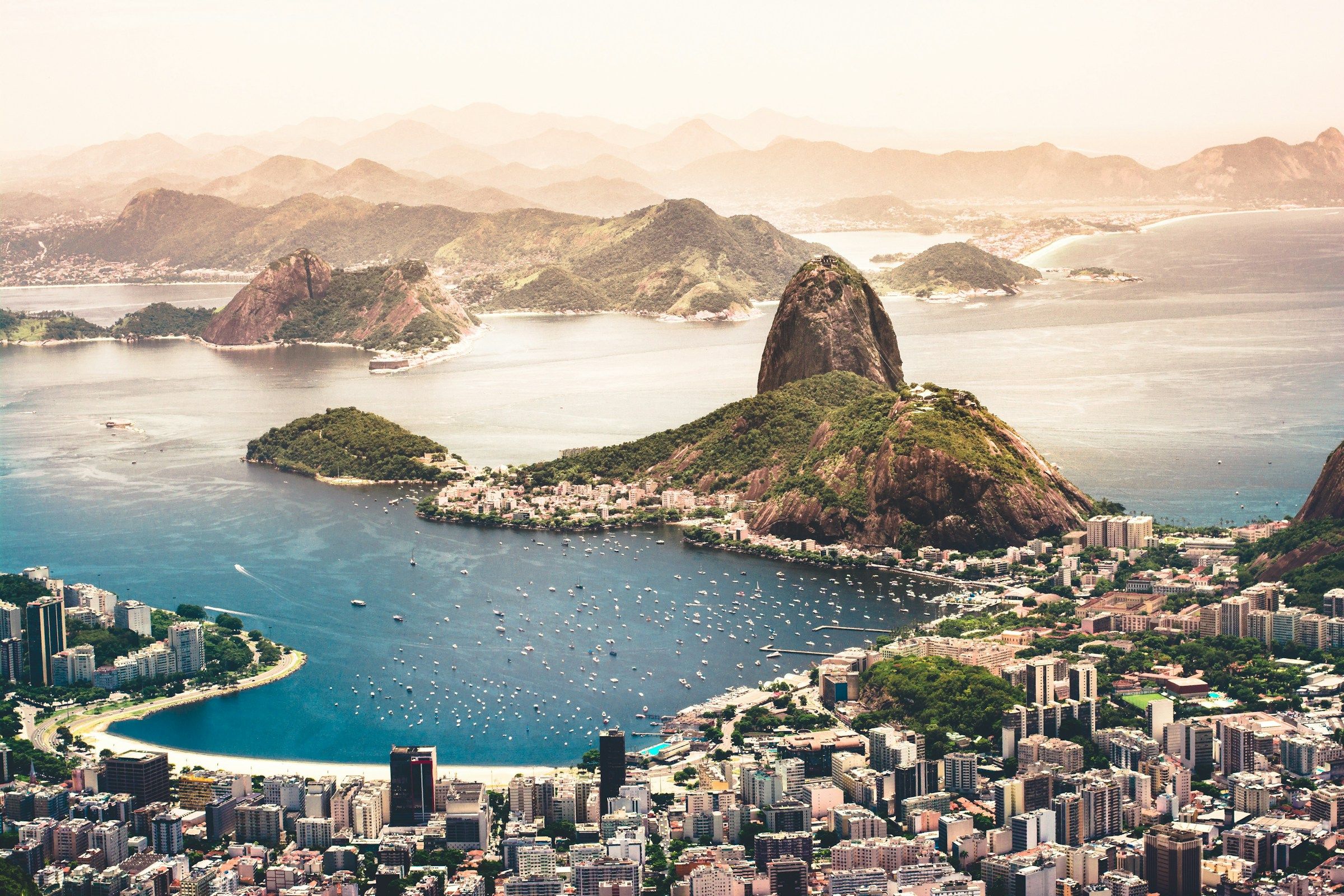
Rio de Janeiro in 3 Days: A Flexible Itinerary
A realistic Rio itinerary with separate summit days, a cultural afternoon and enough flexibility to change plans when clouds, closures or bookings intervene.