
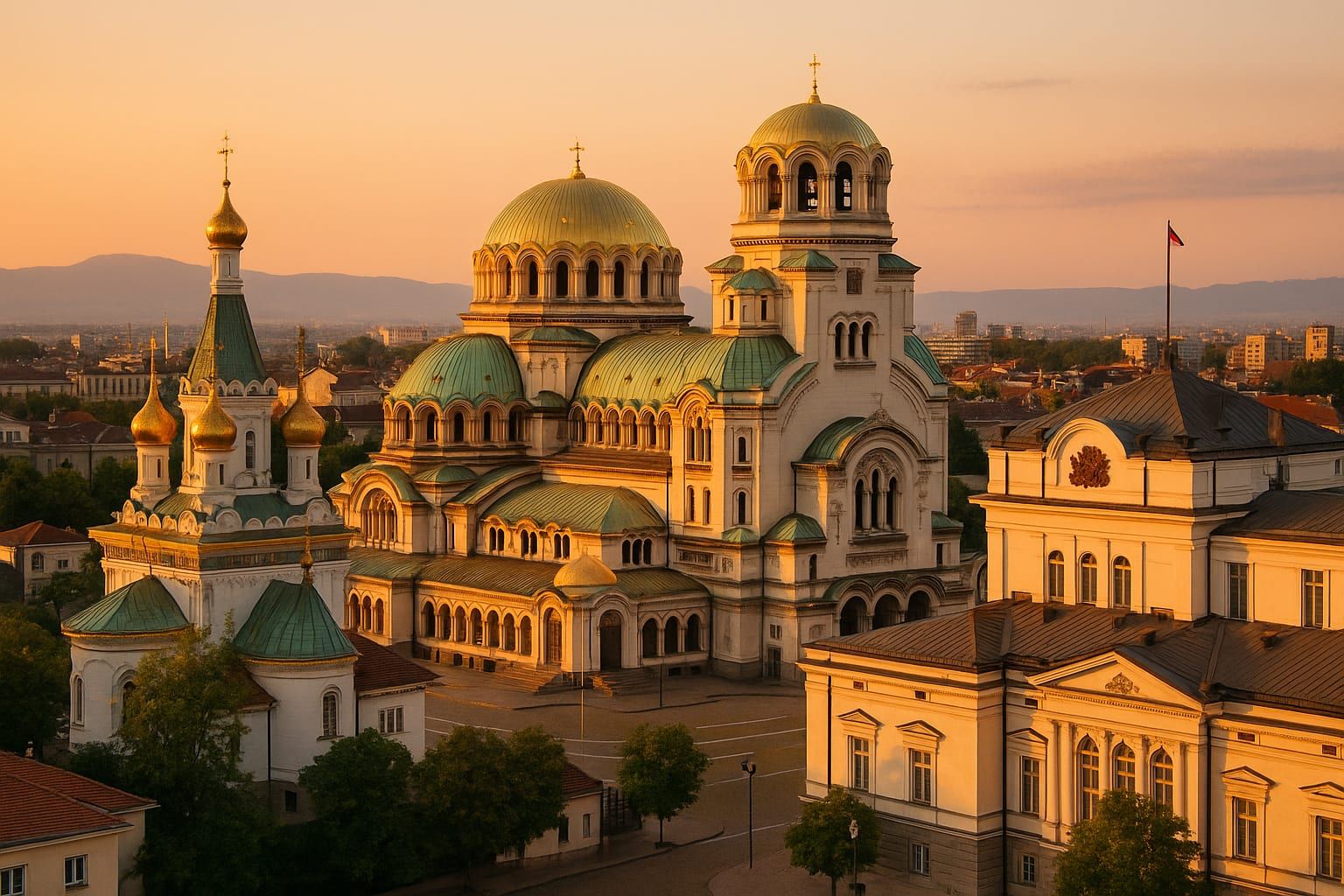
Explore Sofia without breaking the bank. This complete budget guide covers cheap eats, free sights, low-cost transport, smart accommodation choices, day trips and money-saving tips.
Sofia on a Budget: Complete Guide
Sofia is one of Europe’s most affordable capitals — rich in history, green space and easy access to mountains — and perfectly suited to travellers who want big-city culture on a small budget. This guide gives practical tips, local insights and sample budgets so you can experience the best of Bulgaria’s capital without overspending.
Why Sofia is great for budget travellers
- Low everyday costs: food, public transport and entry fees are generally cheaper than in most Western capitals.
- Lots of free attractions: churches, parks, historic streets and public monuments are free to visit.
- Compact centre: many highlights are walkable, saving on transport.
- Excellent day-trip options: beaches and mountains are reachable affordably.
Quick budgeting snapshot (approximate)
- Tight daily budget: 25–35 EUR (50–70 BGN) — hostel dorm, street food, free sights.
- Comfortable budget: 40–70 EUR (80–140 BGN) — private room, occasional restaurant meals, paid museums.
- Transport from airport to city: metro or bus for a single ticket (cheap). Always check current fares before travelling.
(Prices and conversions are approximate — BGN = Bulgarian lev.)
Getting to and around Sofia cheaply
From the airport
- Sofia Metro now connects the airport terminals to the city centre — the cheapest and fastest option during metro hours. Look for Line M2 to Serdika/Center.
- Airport buses and shuttle services are also available; fares are generally low compared with taxis.
Practical tip: buy a reusable public-transport card (if you plan several trips) or single tickets from machines. Contactless payment is increasingly common on metros and some buses.
Public transport and taxis
- Sofia has an extensive tram, bus and metro network. Single tickets are inexpensive; day passes are a good deal if you’ll use public transport a lot.
- Use rideshare apps (e.g., Bolt) or official taxis with meters. Always check the app price estimate and confirm the meter is running if you take a street taxi.
Local insight: the city centre is compact — once you’re based near Serdika or Vitosha Boulevard, you can walk to many sights and save money.
Where to stay: cheap and smart neighbourhoods
- City Centre / Serdika: walkable to main sights; many hostels and budget hotels.
- Studentski grad: lively and cheaper, great for nightlife and cheap eats (a little further out).
- Lozenets: quieter and still central; mid-range prices.
Saving tip: book hostels with kitchens or guesthouses with breakfast included. University dorms open to tourists in summer can be a very cheap option.
Eat well for less: cheap eats & markets
- Banitsa and bakeries: start your day with banitsa (cheese pastry) or a burek from a bakery — filling and cheap.
- Central Sofia Market Hall (Tsentralni Hali): great for sampling local foods at lower prices than sit-down restaurants.
- Fast local favourites: kebapche (grilled minced meat), shopska salad, and grilled cheese — inexpensive at small eateries.
- Street food & bakeries: a quick and affordable option for lunch.
Money-saving tip: many restaurants offer lunch menus (fixed price midday meals) at a significant discount. Also, ordering water from a tap or buying a 1.5L bottle at a supermarket saves on drink costs.
Local insight: Sofia has a growing café scene — coffee prices are modest compared with Western Europe. Spend time in neighbourhood cafés instead of pricier tourist spots.
Free and low-cost attractions
Free highlights
- Alexander Nevsky Cathedral: iconic exterior and many parts open free to visitors.
- Church of St George (Rotunda): small, atmospheric and free to enter.
- Sofia University and the Largo: stroll the historic Soviet-era ensemble and mosaics.
- Borisova Gradina and City Garden: leafy parks perfect for picnics and people-watching.
- Vitosha Boulevard: window-shop, watch street life and enjoy affordable cafés.
Cheap museums & ways to save
- Many museums have low admission fees; plan visits on free museum days. Sofia often waives museum fees during the Night of the Museums (mid-May) and on Sofia Day (September 17), and some galleries have free-entry periods — check ahead.
- Look for student or EU discounts.
Pro tip: Free walking tours operate daily or several times a week — they’re tip-based and an excellent way to get local history without a fixed fee. Tip your guide what you can.
Sample 3-day budget itinerary (economy-friendly)
Day 1: Historic centre
- Morning: Walk from Serdika square to Alexander Nevsky Cathedral, visit the Rotunda of St George.
- Lunch: Market-hall vendors or bakery.
- Afternoon: National Gallery courtyard (free areas), stroll Vitosha Boulevard.
- Evening: Cheap local dinner and a beer at a neighbourhood tavern.
Day 2: Culture & parks
- Morning: Free walking tour; explore the Largo and Russia Square.
- Lunch: Picnic in Borisova Gradina (buy supplies from a grocery store).
- Afternoon: Visit a low-fee museum or gallery; relax in a café.
- Evening: Look for student bars in Studentski grad for inexpensive nightlife.
Day 3: Day trip (budget)
- Option A: Plovdiv — frequent buses/trains; explore the Roman theatre and Old Town. For food-focused travellers, see our guide to Plovdiv food: /en/local-culture/plovdiv-food-guide-bulgarian-cuisine
- Option B: Rila Monastery — take an affordable bus; the site is free to view and the scenery is stunning.
- Longer option: Combine Sofia with an overland route using advice from our Balkans road-trip guide: /en/itineraries/ultimate-balkans-road-trip-2-weeks-itinerary
Budget note: day-trip transport often costs under 20–25 BGN one-way depending on destination and booking method — check schedules and book early for the best rates.
Practical tips, safety & local customs
- Currency and payments: BGN is the local currency. Cards are widely accepted, but carry cash for small stalls, markets and rural buses.
- Tap water: Sofia tap water is generally safe to drink, so bring a refill bottle to save money.
- Tipping: 5–10% in restaurants is appreciated but not obligatory on very cheap meals.
- Safety: Sofia is generally safe. Normal travel caution applies — watch out for pickpockets in crowded spots and keep an eye on belongings at night.
- Language: Learn a few Bulgarian words — “hello” (zdraveyte), “thank you” (blagodarya) and please (molya) go a long way. Many people in tourism and hospitality speak English.
Local insight: Bulgarians are proud of their hospitality. A few polite Bulgarian phrases often lead to friendlier service and occasional local advice on cheaper spots.
How to save on attractions and transport
- Walk whenever possible — central Sofia is compact and walkable.
- Use multi-day transport passes if you’ll be hopping on and off trams and metro multiple times.
- Check for museum free days and the Night of the Museums to time your visit and save entrance fees.
- Book buses and trains in advance for intercity travel to secure the cheapest fares.
Nightlife on a budget
- Studentski grad: cheap bars and student-friendly prices.
- Small neighbourhood bars: skip the tourist traps on Vitosha Boulevard and look for local taverns (mehanas) with live music nights and reasonable drinks.
- For a unique low-cost cultural night, look for free or inexpensive concerts at churches or small venues.
Day trips that won’t blow your budget
- Plovdiv: Bulgaria’s second city is an easy and cheap trip with rich history. Read our Plovdiv food guide for where to eat well without splurging: /en/local-culture/plovdiv-food-guide-bulgarian-cuisine
- Rila Monastery: a must-see and very affordable to reach by regional bus.
- Vitosha Mountain: free to hike — buses run from the city and the trails are perfect for a budget nature day.
- For multi-stop regional planning, consult our Balkans road-trip guide for ideas and routes: /en/itineraries/ultimate-balkans-road-trip-2-weeks-itinerary
Be smart with bookings
- Accommodation: book hostels or budget hotels with free cancellation. If travelling in shoulder season, you can often negotiate prices for longer stays.
- Flights and trains: look for mid-week travel which can reduce costs.
- Tours: favour local, small-group operators or tip-based walking tours rather than expensive packaged tours.
Final thoughts: squeeze the most from Sofia on a small budget
Sofia rewards curious travellers who want culture, mountains and hearty food without the high price tag. Walk the streets, eat where the locals eat, take advantage of free museum nights and hop on a local bus to the mountains — little choices like these add up fast. With a flexible attitude, a refillable water bottle and a willingness to try street food, you can enjoy an authentic Bulgarian experience for surprisingly little.
Happy travels — and remember, the best parts of Sofia are often the free ones: a cathedral dome catching the light, a park bench with a view of Vitosha, and the warm welcome of a local café.
Related
Keep Exploring
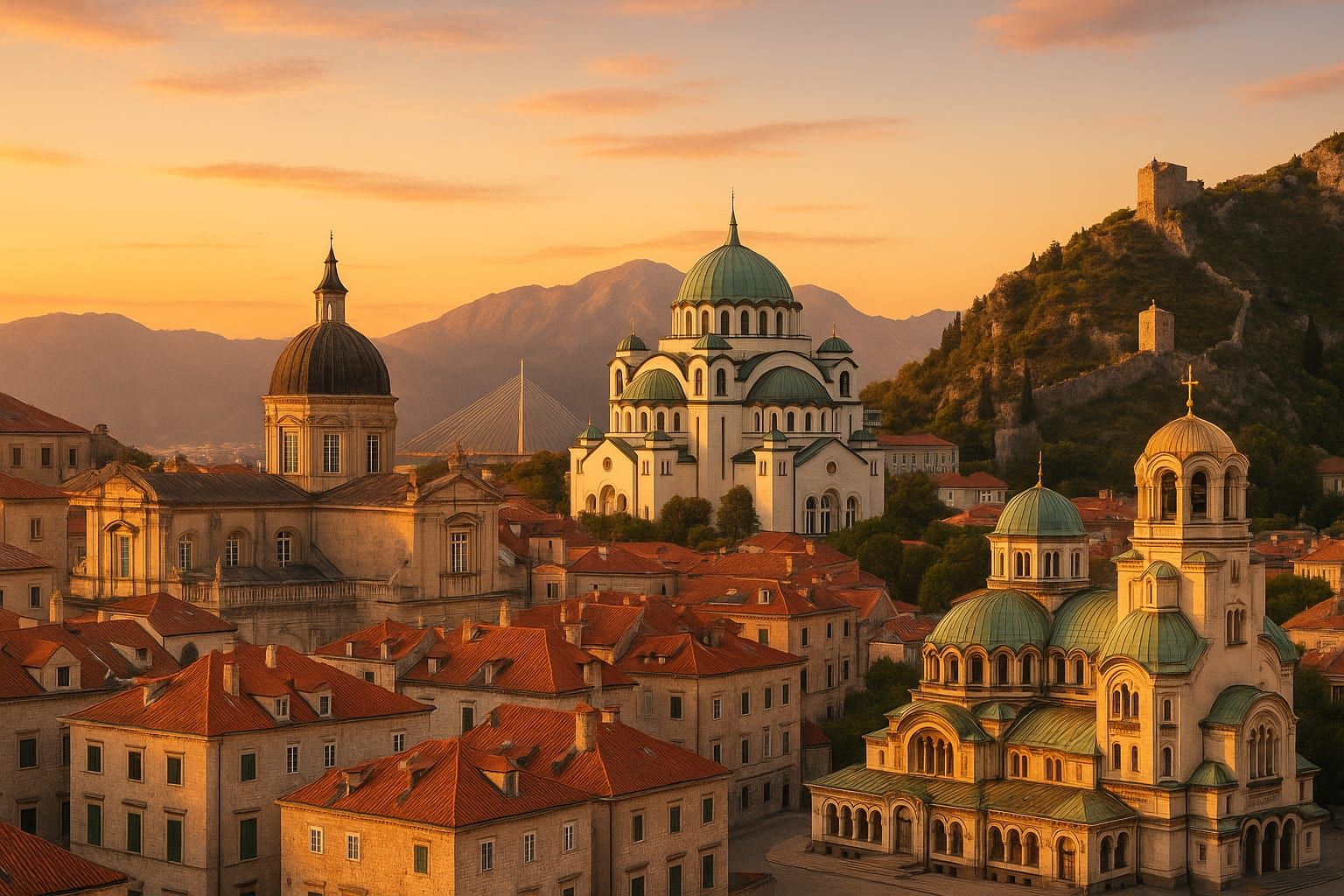
Budget Balkans Route: 2 Weeks for €1000
See the Balkans for two weeks on a €1000 budget. Practical day-by-day route, costs, transport tips and local insights from Sofia to Kotor — perfect for shoestring travellers.
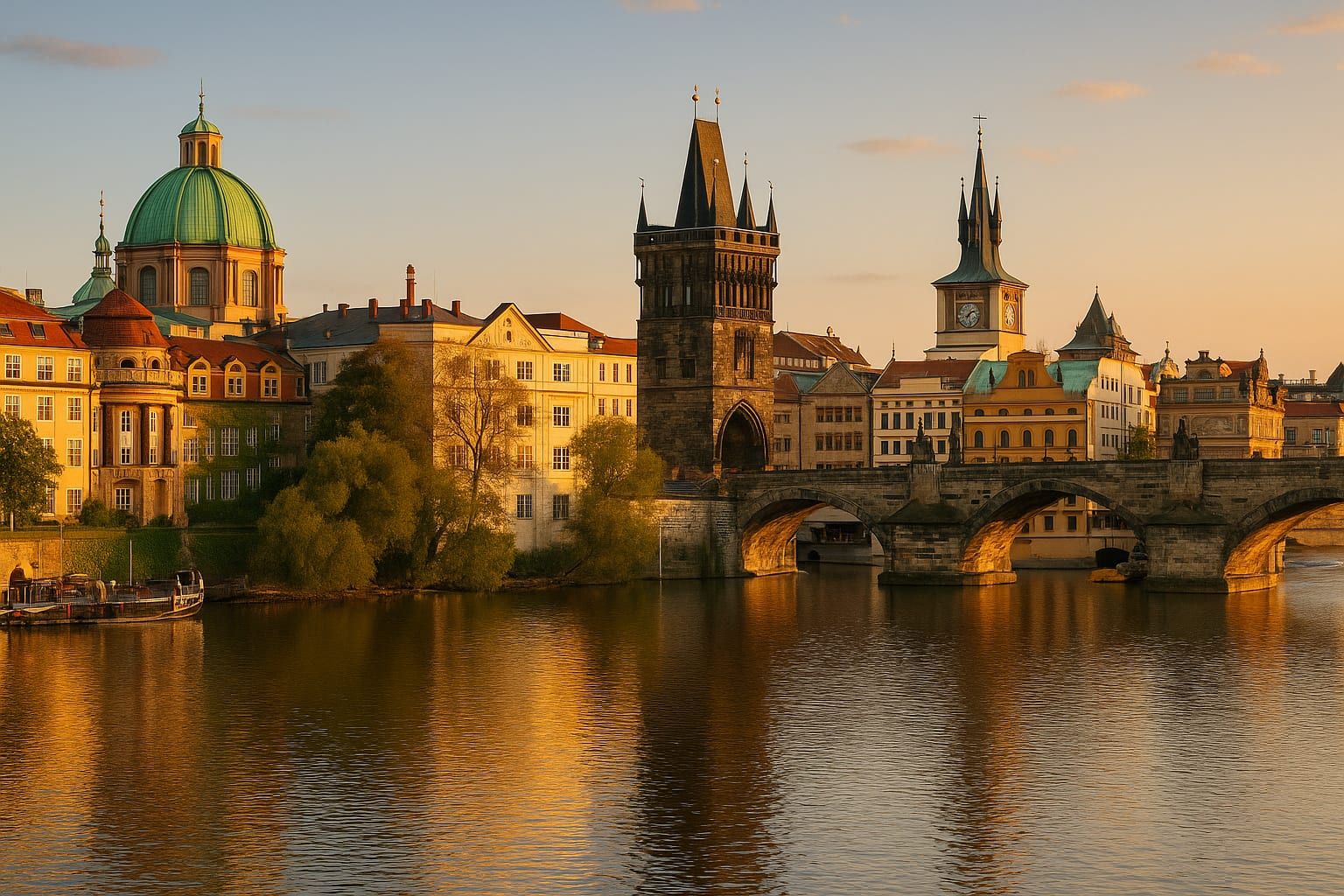
Best Hostels in Europe: Budget Accommodation Guide
A practical guide to Europe's best hostels: top picks by traveler type, city-by-city budget options, booking tips, safety advice and money-saving strategies for a smarter trip.
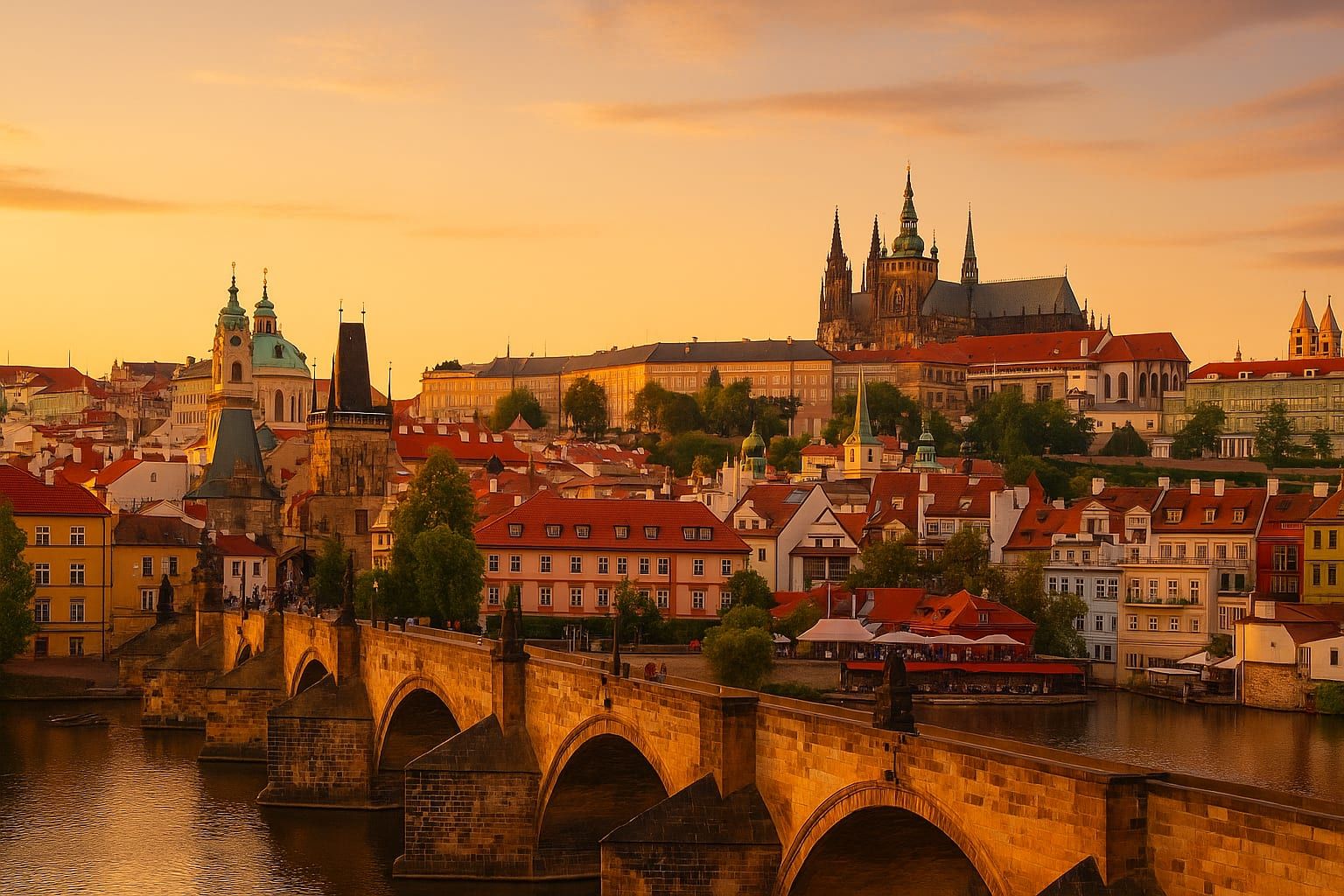
How to Travel Europe on €50 a Day
A practical, step-by-step guide to seeing Europe on €50 a day — budgets, routes, accommodation hacks, food tips and apps to stretch every euro.