
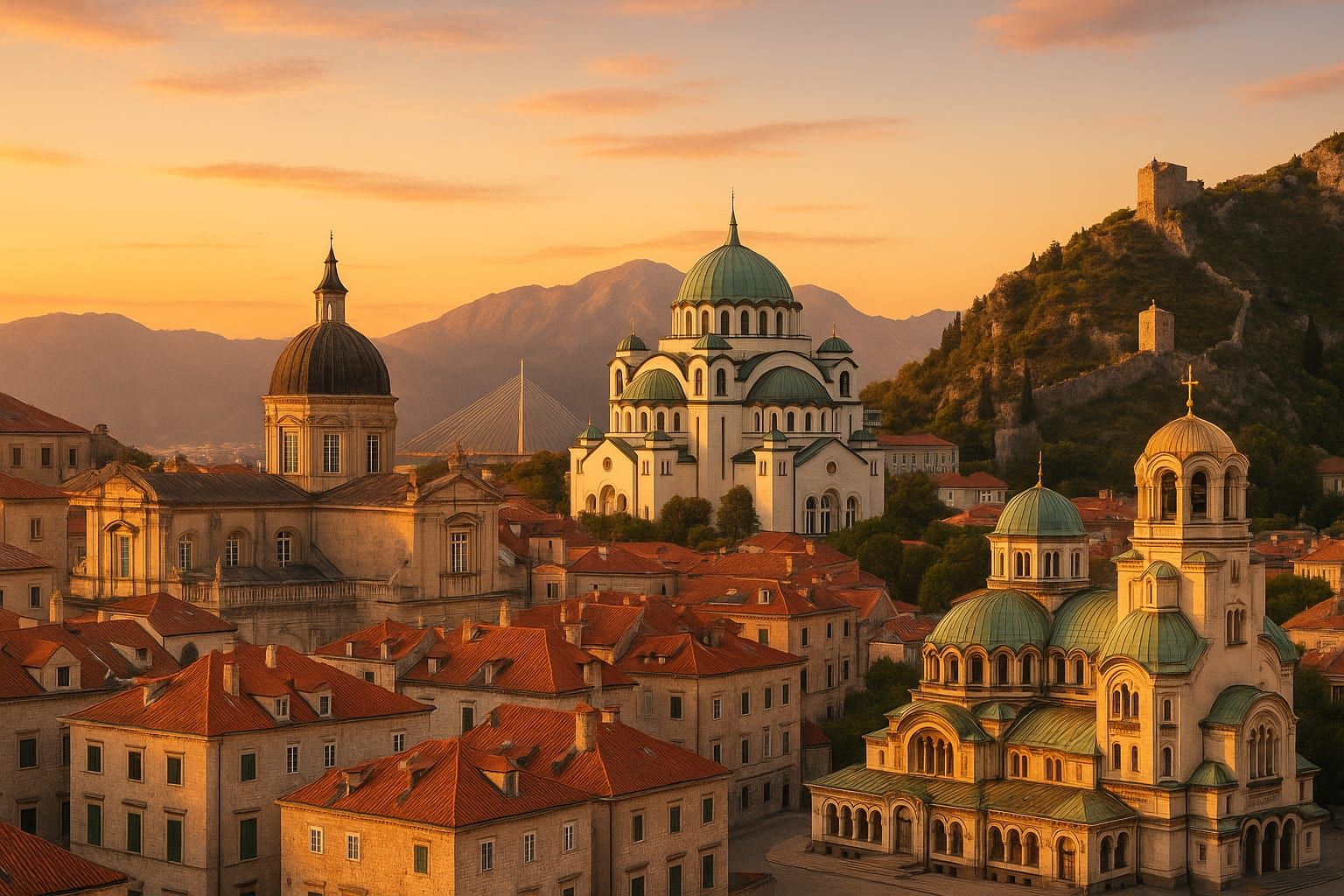
See the Balkans for two weeks on a €1000 budget. Practical day-by-day route, costs, transport tips and local insights from Sofia to Kotor — perfect for shoestring travellers.
Budget Balkans Route: 2 Weeks for €1000
Craving history, mountains, turquoise lakes and a vibrant food scene — all without blowing your budget? The Balkans deliver spectacular scenery and culture at wallet-friendly prices. This practical guide lays out a realistic two-week route designed to cost about €1,000 per person, with daily budgets, travel times, money-saving tactics and local tips so you can travel smarter, not harder.
Why the Balkans are perfect for budget travel
- Low daily costs compared with Western Europe: cheap accommodation, inexpensive public transport and affordable local food.
- Short distances between fascinating cities and nature spots — ideal for a compact 14-day itinerary.
- Rich cultural mix: Ottoman bazaars, Austro-Hungarian architecture, rugged coastline and dramatic mountains.
Keywords: Budget Balkans route, 2 weeks for €1000, cheap Balkans itinerary, Balkans budget travel.
Quick overview: the plan
14 days, roughly €70–75 per day. Route (flexible):
- Days 1–3: Sofia, Bulgaria (base & day trip to Plovdiv)
- Days 4–5: Skopje & Ohrid region, North Macedonia
- Days 6–7: Tirana, Albania
- Days 8–9: Kotor & Bay of Kotor, Montenegro
- Days 10–11: Mostar & Sarajevo, Bosnia & Herzegovina
- Days 12–14: Novi Sad & Belgrade, Serbia (or reverse depending on flights)
This loop keeps overland travel efficient and uses low-cost buses/minibuses and occasional trains or ferries.
Note: If you want a different variation (for example a Croatia-focused coastal loop), see our longer road-trip guide: /en/itineraries/ultimate-balkans-road-trip-2-weeks-itinerary
Budget breakdown (realistic targets)
Total budget: €1,000 per person for 14 days.
- Accommodation (hostels/cheap guesthouses): €12–20/night → €170–280
- Food & drink (local eateries, markets): €12–20/day → €168–280
- Transport between cities (buses/minibuses/trains/ferry): ~€120–180 total
- Activities & entrances (museums, national parks, small tours): €80–120
- Misc (SIM card, laundry, coffee, tips): €40–80
Target daily average: €70–75. Travel slower (more nights per city) and cook or eat market food to push costs down toward €50/day.
Day-by-day itinerary (with approximate costs)
Days 1–3: Sofia, Bulgaria — €60/day
- Why go: cheap, walkable capital with great markets, Roman ruins and lively bars. Sofia is a cheap gateway and often has low-cost flights.
- Stay: budget hostel €8–15/night.
- Must-dos: Alexander Nevsky Cathedral, free walking tour, Vitosha Boulevard, day trip to Plovdiv (see Plovdiv and regional tips in /en/itineraries/one-week-in-slovenia-mountains-caves-coast for inspiration on one-week loops).
- Transit to next stop: overnight bus or direct bus to Skopje (~4–5 hrs, €10–15).
Practical tip: Sofia has excellent markets and bakeries — fill up on banitsa and coffee for cheap breakfasts.
Days 4–5: Skopje & Ohrid region, North Macedonia — €55/day
- Why go: quirkily modern Skopje and the dreamlike Lake Ohrid (UNESCO) are affordable and unique.
- Stay: guesthouse in Ohrid or hostel in Skopje €10–20/night.
- Must-dos: Ohrid old town and lakeside swim, boat trip, Skopje's bazaar.
- Transit: bus Skopje→Ohrid (~3 hrs, €8–15).
Local insight: In small towns like Ohrid you can eat lakeside fish and salads for €5–8.
Days 6–7: Tirana, Albania — €60/day
- Why go: rising hotspot with low prices, great nightlife and easy buses connecting south and coast.
- Stay: central hostel €10–18/night.
- Must-dos: Skanderbeg Square, Bunk’Art museum, Day trip to Berat if you love Ottoman-era architecture.
- Transit: bus Tirana→Kotor (via Shkodër) or Tirana→Podgorica + bus to Kotor (~4–6 hrs, €10–20).
Insider tip: Albanians love coffee culture — a gelato or espresso is inexpensive and refreshing between sites.
Days 8–9: Kotor & Bay of Kotor, Montenegro — €70/day
- Why go: dramatic fjord-like bay, medieval towns and great hiking (mount Lovćen or Kotor walls).
- Stay: private rooms are pricier near the waterfront; choose a hostel or guesthouse in Kotor Old Town or nearby Dobrota €15–30/night.
- Must-dos: climb the city walls at sunrise, day trip to Perast and Our Lady of the Rocks, swim at local coves.
- Transit: local bus to Herceg Novi or ferry options depending on season. Consider the scenic Koman Ferry if you plan an Albania→Montenegro inland loop (ferry prices vary, budget €10–15).
Money saving tip: Eat where locals do—konobas (family taverns) offer hearty meals at better prices than tourist restaurants.
Days 10–11: Mostar & Sarajevo, Bosnia & Herzegovina — €65/day
- Why go: Mostar’s iconic bridge is a highlight; Sarajevo’s layers of history and affordable cafes make lingering worthwhile.
- Stay: guesthouse or hostel €12–20/night.
- Must-dos: Stari Most (Mostar), Baščaršija bazaar (Sarajevo), Tunnel of Hope museum, try ćevapi and Bosnian coffee.
- Transit: bus Mostar→Sarajevo (~2.5 hrs, €8–12).
Local insight: In Bosnia, small bakeries and burek shops will save you money and offer authentic eats for €1–3.
Days 12–14: Novi Sad & Belgrade, Serbia — €70/day
- Why go: Novi Sad’s youthful vibe and Belgrade’s nightlife and riverfront make a lively finish to the trip.
- Stay: hostels €8–18/night.
- Must-dos: Petrovaradin Fortress in Novi Sad, Belgrade’s Kalemegdan, Skadarlija bohemian quarter, optional day trip to Fruška Gora.
- Transit: bus Belgrade→home hub or onward flight. Buses between Belgrade and many European cities are cheap.
Pro tip: Belgrade has great budget dining options and late-night street food; it’s a cheap place to celebrate the trip’s end.
Transport tips to keep costs down
- Buses and private minibuses (known as “maršrutka”) are the cheapest cross-border option. Book some tickets in advance for longer routes but be flexible for short hops.
- Trains can be scenic but are slower and sometimes less reliable — use them when they fit the schedule cheaply.
- Overnight buses save on accommodation and maximize daytime exploration.
- Consider a one-way flight into Sofia and out of Belgrade (or vice versa) to avoid doubling back. Low-cost carriers often fly into Belgrade, Sofia, Tirana and Ljubljana.
Accommodation: where to save and where to splurge
- Hostels and family-run guesthouses are your best value. Look for places with communal kitchens to cook a few meals.
- In coastal or UNESCO hotspot towns (Kotor, Mostar), book a few nights in advance in high season.
- If travelling as two or more, a private apartment can be surprisingly affordable and easier on the wallet for cooking.
Resource: if you want a more budget-focused city primer, read /en/budget-travel/sofia-on-a-budget-complete-guide for Sofia-specific money-saving tips.
Food & drink — eat like a local
- Street food and local bakeries will keep daily food costs low: burek, ćevapi, pljeskavica, pita and fresh salads cost €1–5 each.
- Markets are great for cheap breakfasts and picnic supplies. A bottle of local wine can be affordable and excellent quality (€4–8).
- Splurge selectively: try one mid-range seafood meal on the coast or a traditional multi-course Bosnian dinner.
Local tip: Try Bosnian coffee, Turkish-influenced sweets, and Albanian byrek — regional variations are a highlight.
Money, SIMs and practicalities
- Currencies: The Euro is used in Montenegro and Kosovo; other countries use local currency (Serbian dinar RSD, Bulgarian lev BGN, Albanian lek ALL, Bosnia convertible mark BAM, Macedonian denar MKD). Keep small cash for buses and markets.
- ATM fees: Withdraw larger amounts to reduce fees, but avoid carrying too much cash.
- SIM cards: Local SIMs are cheap (around €5–10 with decent data). Get one in the first major city you arrive in.
- Safety: The Balkans are generally safe for travellers. Keep usual city-smart precautions (watch your belongings, avoid poorly lit areas at night). Politically sensitive sites: be respectful — this region has a complex recent history.
Packing essentials for the Balkans
- Lightweight layers: weather varies with elevation and coastlines.
- Good walking shoes for cobbled streets and hikes.
- Reusable water bottle, quick-dry towel, and a small first-aid kit.
- Universal adapter and power bank.
- Copies of travel documents and a printed list of hostel addresses for nights with limited connectivity.
How to shave costs further (if you need to go under €1,000)
- Cook more: buy local produce and make picnics or hostel dinners.
- Use overnight buses to save on accommodation.
- Travel shoulder season (spring or early autumn) for lower prices and fewer crowds.
- Prioritise free walking tours, public beaches and hiking over paid excursions.
Must-see extras and modest splurges
- Plitvice Lakes (Croatia) are a showstopper but can be the pricier day trip depending on season. If you add it, budget for entrance and transport — read the full visitor guide here: /en/nature-outdoors/plitvice-lakes-croatia-complete-visitor-guide
- Koman Ferry in northern Albania is a spectacular, low-cost scenic route if your route allows it — famous for dramatic fjord-like scenery.
- Local guided experiences (cooking class, wine tasting, rafting) are often affordable and very rewarding — pick one or two as treats.
Final thoughts: flexibility and the real cost of travel
The magic of the Balkans is that you can tailor a two-week trip to any pace and budget. €1,000 is realistic if you prioritise budget stays, local food and efficient overland travel. But remember a trip’s value is more than an expense sheet: spending a little more on a special meal, a guided hike or a cultural experience can be worth it.
If you want a slightly different route or a road-trip version, our longer two-week driving itinerary has maps and alternate stops: /en/itineraries/ultimate-balkans-road-trip-2-weeks-itinerary
Ready to plan? Start by checking flight deals into Sofia or Belgrade, pick your must-see towns from the itinerary above, and block your first three nights — once you have that base, the Balkans are easy and affordable to explore.
Safe travels — and bring an appetite for unexpected beauty and deliciously cheap food.
Practical checklist (one glance):
- Total budget target: €1,000 (14 days)
- Book: first 1–3 nights & any long-distance connections
- Pack: layers, walking shoes, adapter, power bank
- Money: mix of local cash and card, local SIM on arrival
- Must-try foods: burek, ćevapi, Bosnian coffee, fresh seafood on the coast
Enjoy the route, and don’t hesitate to tweak it to match your arrival/departure cities and travel style. The Balkans reward the curious and the frugal in equal measure.
Related
Keep Exploring
Best Hostels in Europe: Budget Accommodation Guide
A practical guide to Europe's best hostels: top picks by traveler type, city-by-city budget options, booking tips, safety advice and money-saving strategies for a smarter trip.
How to Travel Europe on €50 a Day
A practical, step-by-step guide to seeing Europe on €50 a day — budgets, routes, accommodation hacks, food tips and apps to stretch every euro.
Cheapest Countries to Visit in Europe 2025
Planning a budget-friendly European trip in 2025? Discover the top cheapest countries to visit, realistic daily budgets, travel tips, and local insights to stretch your euro.