
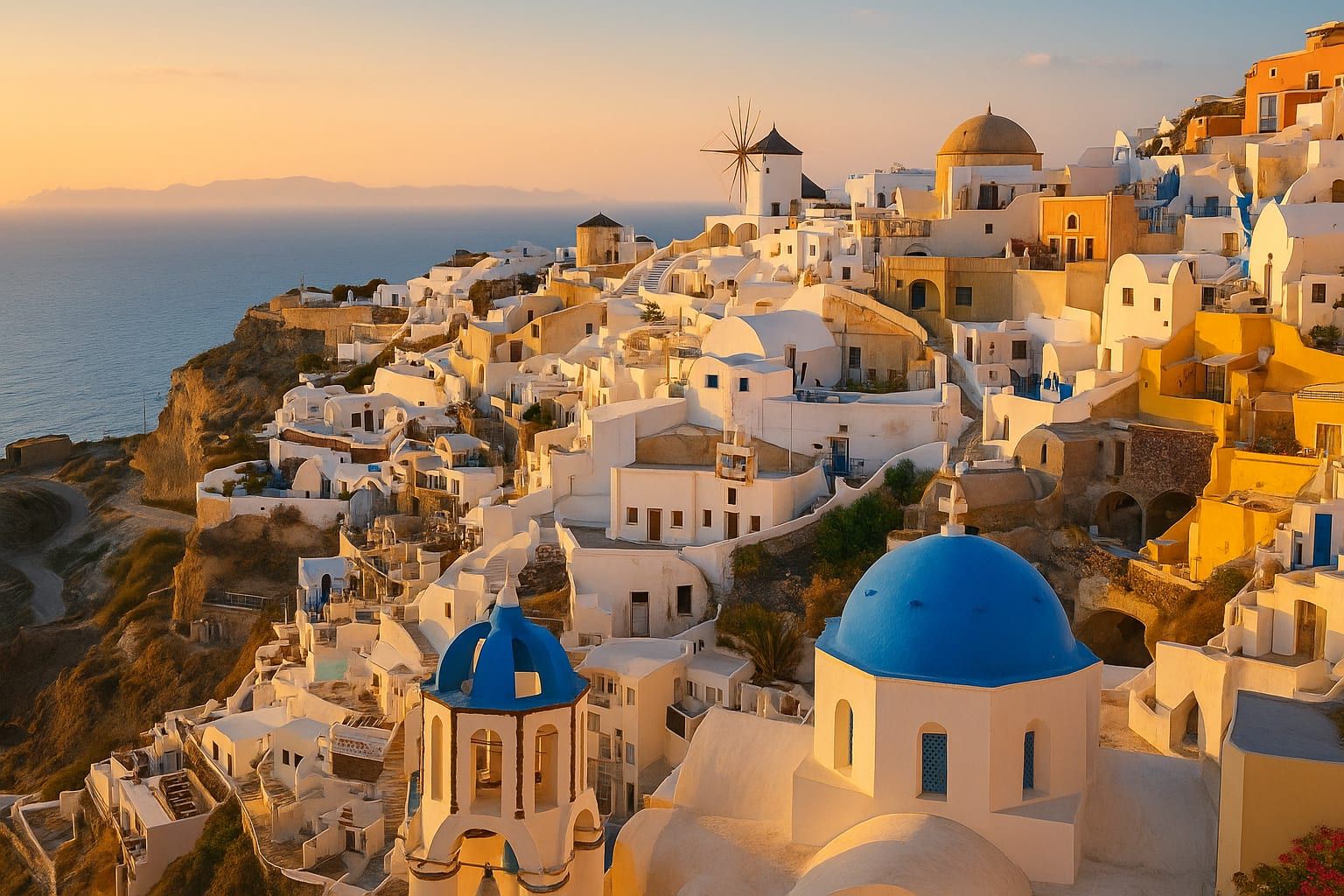
From party islands and luxury escapes to quiet villages and family-friendly beaches, this guide helps you match your travel style to the perfect Greek island — with practical tips and sample itiner...
Greek Islands: Which One Is Right for You?
Greece has more than 6,000 islands and islets (about 227 inhabited), each with its own personality. Choosing where to go can feel overwhelming — do you want nightlife and glitz, untouched beaches, family-friendly calm, or centuries of history? This guide breaks island personalities down by travel style, compares logistics and seasons, and gives practical tips and sample itineraries so you can pick the right island (or island combo) for your trip.
Quick Island Personality Map
- Party & nightlife: Mykonos, Ios
- Classic Cycladic vistas & romance: Santorini, Paros
- Local life & beaches: Naxos, Sifnos
- Dramatic landscapes & cliffs: Milos, Zakynthos
- Food & history: Crete, Corfu
- Quiet & authentic: Amorgos, Folegandros, Hydra
- Lush, green & family-friendly: Skopelos (Sporades), Corfu (Ionian)
- Archaeology & day trips: Delos (near Mykonos), Rhodes
Use these categories to narrow choices, then read on for deeper, practical advice.
Which island for your travel style
For night owls and party lovers
Pick: Mykonos, Ios
Why: Mykonos is the Greek equivalent of high-energy chic — famous beach clubs, celebrity sightings and upscale dining. Ios attracts younger crowds and budget partygoers with lively bars and a friendly backpacker scene. Both islands offer late-night DJs and easy bar-hopping between beaches and towns.
Local insight: Even on party islands, the mornings are peaceful. Rent a scooter and explore quiet coves at dawn for a different side of these islands.
Practical tip: Book clubs and beach parties in advance during July–August. Expect higher prices and crowded ferries.
For honeymooners and photographers
Pick: Santorini, Paros (selected villages), Folegandros
Why: Santorini’s caldera views and sunset-draped towns are iconic. Folegandros and parts of Paros offer dramatic cliffs, whitewashed villages and fewer tourists for romantic privacy.
Local insight: Santorini’s sunsets are stunning but crowded. For the best photos, head to less-famous viewpoints or visit in shoulder season (May–June or September–October).
Practical tip: Consider staying in Oia for views but spend time in quieter Pyrgos or Emporio to experience local daily life.
For beach lovers and families
Pick: Naxos, Paros, Skopelos, Crete
Why: Naxos and Paros have long, sandy beaches and shallow waters safe for kids. Skopelos is quieter and greener with family-friendly coves; Crete has an enormous variety of beaches and family activities.
Local insight: Many island beaches have tavernas and sunbeds run by family businesses — great for kids and relaxed meals.
Practical tip: If you travel with toddlers, look for accommodations with kitchenettes and avoid high summer crowds by visiting in early June or late September.
For foodies and history buffs
Pick: Crete, Rhodes, Corfu, Naxos
Why: Crete’s cuisine is rich and varied — explore Cretan cheeses, mountain villages and olive-oil centric dishes. Rhodes and Corfu mix Byzantine, Venetian and Ottoman influences for a rich culinary and historical tapestry.
Local insight: Food is regional. Ask locals for house specialties (ask for the taverna’s ‘specials’ rather than the tourist menu) and try simple dishes made from fresh, local ingredients.
Practical tip: Start your trip with a city food guide — if you’re stopping in Athens first, our Athens Food Guide is an excellent primer.
For nature lovers and hikers
Pick: Crete (Samaria Gorge), Ikaria, Amorgos, Tinos
Why: Crete and Ikaria have rugged interior landscapes with long hiking trails; Amorgos offers dramatic sea cliffs and trails between small mountain villages.
Local insight: Trails can be remote with limited water sources — carry sufficient water, sun protection and sturdy shoes.
Practical tip: Ask locals or visitor centers about trail conditions after wild weather; maps can be basic and signage inconsistent.
For slow travel and solitude
Pick: Hydra, Serifos, Antiparos, Anafi
Why: These islands favor relaxation: minimal cars (Hydra bans vehicles entirely), local-owned accommodations, and tranquil harbors.
Local insight: Islands with low tourism often have limited services (ATMs, medical) — plan accordingly and carry cash.
Practical tip: Embrace slow travel: read, swim, talk to cafe owners, and enjoy that time-suspending island rhythm.
Practical travel logistics
When to go
- Peak (July–August): Warmest weather, busiest waters, busiest restaurants and ferries. Book everything early.
- Shoulder (May–June, September–October): Best combination of good weather and fewer crowds. Many services still operate and prices are lower.
- Low (November–April): Many island businesses close, ferries are reduced, but some islands like Crete and Corfu are still worth visiting for culture and off-season rates.
Getting there and between islands
- By ferry: Most island-hopping happens via ferries. Larger islands have multiple daily links; smaller islands may be served less often. Use a mix of high-speed ferries and conventional ones — the latter are slower but often cheaper and more stable in rough seas.
- By plane: Domestic flights connect Athens to Crete, Rhodes, Corfu, and some Cyclades (e.g., Santorini, Mykonos) — faster but usually pricier in peak season.
Local insight: Ferries can be delayed — leave buffer days around important plans. If you have limited time, choose island clusters (Cyclades, Dodecanese, Ionian, Sporades) for shorter crossings.
Money, cards & costs
- Cards are widely accepted in tourist areas, but many small tavernas and remote spots prefer cash. Always carry some euros.
- Expect a big price range: Mykonos and Santorini are on the expensive side; islands like Sifnos, Naxos and Serifos are more budget-friendly.
- For tips on traveling Europe affordably before you go, read our budget guide: How to Travel Europe on €50 a Day.
Getting around the island
- Rent a car or ATV for maximum flexibility on larger islands; scooters are good for short distances but watch for narrow roads.
- Public buses are reliable on many islands (Naxos, Crete, Rhodes) and are a budget-friendly way to reach beaches and archaeological sites.
Local insight: Driving styles can be brisk; keep insurance and a basic understanding of local road rules.
Where to stay: neighborhoods by island type
- Mykonos: Stay near Mykonos Town (Chora) for nightlife; Ornos or Agios Ioannis for quieter beaches.
- Santorini: Oia for postcards and sunsets, Fira for nightlife and transport links, Pyrgos for slower pace.
- Naxos: Agios Prokopios/Agia Anna for beaches, Naxos Town for tavernas and evening life.
- Crete: Chania and Rethymno for Venetian charm; Elounda for luxury; Heraklion for archaeology and transport.
Practical tip: Check ferry arrival times when booking — staying in the port town on arrival day often saves time and stress.
Sample itineraries
7-day first-timer: Classic Cyclades loop
Day 1–2: Athens arrival and sunset in Plaka. Day 3–4: Mykonos — beaches and a night out. Day 5–6: Paros or Naxos — beaches and local tavernas. Day 7: Return to Athens via ferry/flight.
Why it works: Combines famous sights with relaxed beaches and short ferry hops.
6-day romance & relaxation
Day 1–3: Santorini — caldera views, winery tour, sunset in Oia. Day 4–6: Folegandros — quieter cliffs, beaches and intimate tavernas.
Why it works: Big views and private moments without constant crowds.
10-day family-friendly beach & culture
Days 1–3: Crete — family beaches, Palace of Knossos day trip. Days 4–6: Naxos — safe shallow beaches, village exploration. Days 7–10: Paros — water sports and easy island-hopping day trips.
Why it works: Offers variety—historic sites, easy beaches, and short crossings.
Packing list & local etiquette
Packing essentials:
- Lightweight layers (evening breezes can be cool)
- Swimwear and reef-safe sunscreen
- Comfortable walking shoes for cobbled streets and trails
- Reusable water bottle (tap water is safe in most islands)
Etiquette & local tips:
- Learn a few Greek phrases: Hello (Yasou), Thank you (Efharisto).
- Respect church rules when visiting (dress modestly for some chapels).
- Tipping is appreciated but not mandatory — 5–10% in good tavernas is common.
Local insight: Many islands are proud of sustainable tourism — avoid single-use plastic where possible and support family-run businesses.
Final tips for choosing the right island
- Match the island to your must-haves (party, quiet, beaches, food, hiking).
- Consider travel time — if you have under a week, stick to one island or a tightly grouped cluster.
- Book peak-season transport and accommodation early; use shoulder seasons for better value and fewer crowds.
- Talk to locals: tavern owners, guesthouse hosts and taxi drivers often give the best, up-to-date recommendations.
Greece’s islands are an invitation to tailor your own pace — whether you want glittering parties, slow meals at a seaside taverna, or a sunrise hike across volcanic cliffs. Pick a starting point based on your style, leave room for spontaneous discoveries, and let the islands do the rest.
Enjoy planning — and when in doubt, pick an island, take a ferry, and let the Aegean decide.
Related

Keep Exploring
Autumn in Europe: Harvest, Foliage, Truffles
Plan European autumn around three peaks: vindima mid-September to mid-October, foliage mid-October to mid-November, and white-truffle markets in Alba. EUR prices, named regions, exact weeks.
Summer in Europe: Where to Go to Beat the Crowds
Skip the Mediterranean meltdown. Twelve Northern, Atlantic, Alpine and Eastern European summer alternatives with fares, EUR budgets and named operators.
Best European Cities to Visit in Spring
Twelve European cities at their seasonal peak between March and May 2027: Keukenhof tulips, Seville's Feria, Paris cherry blossoms, Roman wisteria and more, with EUR budgets and bloom calendars.