
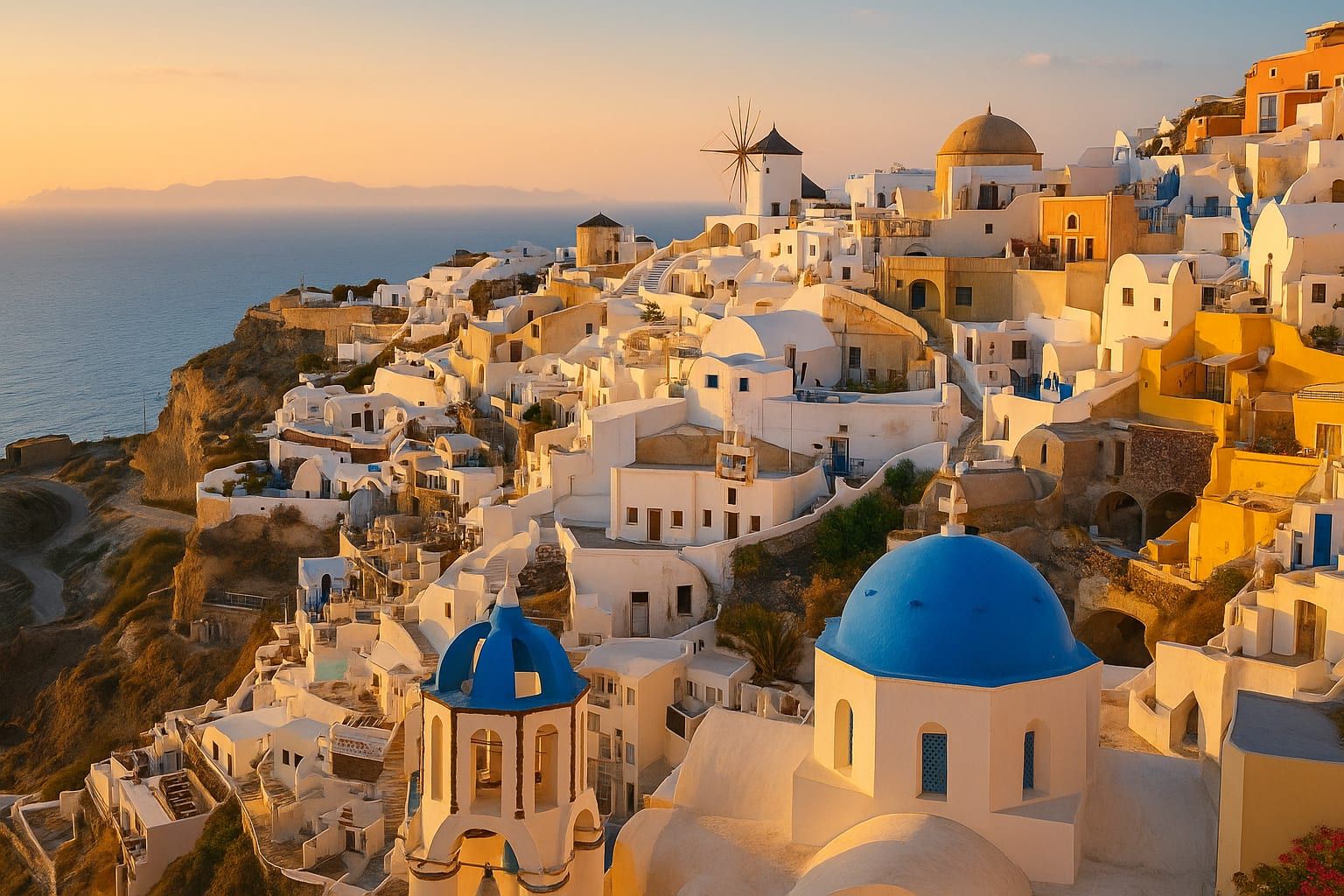
From party islands and luxury escapes to quiet villages and family-friendly beaches, this guide helps you match your travel style to the perfect Greek island — with practical tips and sample itiner...
Greece has more than 200 inhabited islands, and the single biggest mistake first-timers make is treating them as interchangeable. A honeymoon on party-loving Mykonos, a toddler on cliff-stacked Santorini, or a beach week on an island that turns out to need a hire car you never booked — the wrong match can quietly undo a trip. This guide cuts through it: the island groups decoded, the best island for your travel style, when to go, and exactly how to get there.
Fast Facts
| Detail | Info |
|---|---|
| Best time to visit | Late May–early October for swimming; May–June and September–October for the best balance of warm sea, value and fewer crowds |
| Getting there | Fly direct to island airports (Santorini, Mykonos, Crete, Rhodes, Corfu and more) or ferry from Athens' port of Piraeus (~2.5–8 hours depending on island and vessel) |
| Where to stay | Match the island to your trip: caldera villages on Santorini, beach towns on Naxos/Paros, Old Town on Rhodes or Corfu |
| Average daily budget | Tiered: Santorini and Mykonos are premium; Naxos, Paros and the Ionian/Dodecanese offer markedly better value |
| Don't miss | A UNESCO World Heritage site — the Medieval City of Rhodes, the Old Town of Corfu, or the sacred island of Delos beside Mykonos |
The island groups, decoded
Greece's islands fall into clusters, and knowing the clusters is the fastest way to narrow the field. The Cyclades are the postcard Greece — whitewashed villages and blue domes scattered across the Aegean. The Greek National Tourism Organisation describes them as "the most famous island group in the Aegean Sea," with "gorgeous sandy beaches, architecture in white and blue [and a] traditional lifestyle" across 33 islands and islets. This is where Santorini, Mykonos, Naxos, Paros and Milos sit.
The Dodecanese, in the southeastern Aegean near Turkey, trade some of that Cycladic gloss for history and greenery — Rhodes and Kos anchor the group. The Ionian islands off the west coast (Corfu, Kefalonia, Zakynthos) are lusher, greener and Venetian-influenced, with a softer, Italianate feel. Crete is a world of its own — the largest Greek island, big enough to combine Minoan ruins, mountain gorges and beach resorts in one trip. And the Saronic islands (Hydra, Aegina) sit close to Athens, perfect for a day trip or a short, car-free escape.
Which Greek island is right for you
For couples and a splurge: Santorini and Milos. Santorini's caldera — the flooded crater of an ancient volcano — gives it the most dramatic setting in Greece, with cliff-clinging villages and the sunsets that launched a thousand proposals. It is also crowded and pricey, so for the same romance with fewer cruise crowds, Milos rewards with otherworldly volcanic coves like Sarakiniko and Kleftiko.
For nightlife: Mykonos. The Cycladic Chora, the beach clubs and the late nights make Mykonos Greece's party capital. It is also the jumping-off point for Delos, the uninhabited sacred island that UNESCO calls "an exceptionally extensive and rich" archaeological site and the mythical birthplace of Apollo, inscribed on the World Heritage list in 1990.
For families and quieter beaches: Naxos, Kos and Corfu. Naxos is the largest Cyclade — long sandy beaches, a working agricultural interior and mountain villages below Mt Zas — and it is calmer and cheaper than its famous neighbours. Kos is flat and easy for cycling with family-friendly beaches, while Corfu pairs gentle Ionian beaches with the Venetian Old Town.
For history: Rhodes, Crete and Corfu. Rhodes' walled Medieval City — the fortified town of the Knights of St John — is UNESCO-listed (1988) and one of the best-preserved medieval towns in Europe. Crete adds the Minoan palace of Knossos and Europe's deepest gorges; Corfu's Old Town carries its own UNESCO inscription.
For nature and drivers: Kefalonia. Dramatic coastlines, the cinematic Myrtos beach and limestone caves reward those happy to hire a car and explore — Kefalonia is bigger and wilder than it looks.
For beaches and turtles: Zakynthos. The Ionian island is famous for Navagio (Shipwreck) Bay — a cove of impossible turquoise reached only by boat — and for the loggerhead turtles that nest on its southern shores, a protected Natura 2000 habitat. It suits beach-focused travellers and couples who want scenery over nightlife.
For a short, car-free escape: Hydra and Aegina. The Saronic islands sit barely an hour or two from Athens. Hydra bans cars entirely — goods move by donkey and the harbour town is preserved in stone — making it a uniquely peaceful base, while Aegina is close enough for a day trip with its temple of Aphaia and pistachio groves.
For a first trip or island-hopping base: Paros. Paros balances good beaches, windsurfing, a lively-but-not-overwhelming nightlife and a central position in the Cyclades that makes onward ferries easy — the ideal middle ground for a first-timer.
Where to base yourself on each island
Where you stay shapes the trip as much as which island you choose. On Santorini, the caldera-edge villages of Fira and Oia have the views and the price tags; for value and beaches, base in Kamari or Perissa on the flatter east coast. On Naxos, Naxos Town (Chora) puts you by the harbour and the Portara, while Agios Prokopios and Plaka deliver the best beach bases. Paros splits between buzzy Naoussa in the north and the ferry-hub town of Parikia. On Rhodes, sleeping inside the medieval walls of the Old Town is atmospheric but can be noisy in peak season — many families prefer the beach suburbs north of the city. On Crete, decide by region: Chania's Venetian harbour in the west, Heraklion for Knossos and transport links, or the quieter south coast for gorges and empty beaches. The rule everywhere is to match your base to your priority — sunset views, beach access, or old-town atmosphere — because island distances and summer traffic make "a bit of everything" harder than it sounds.
When to go
The swimming season runs from late May to early October, when Aegean sea temperatures climb above roughly 22°C. The smartest windows are the shoulder months — May–June and September–October — when the water is warm, prices ease and the crowds thin. Peak season is July and August, and it peaks hardest around 15 August (Dekapentavgoustos, the Assumption holiday), when Greeks themselves descend on the islands and ferries and rooms sell out weeks ahead. If your dates are flexible, travelling in the shoulder season is the single biggest upgrade you can make — the same logic we apply across the continent in our guide to beating the summer crowds in Europe. For a pre-summer trip, our roundup of the best European cities in spring pairs naturally with an early-season island stay.
Getting there and getting around
You reach the islands one of two ways: fly, or take a ferry from Athens' port of Piraeus. Many islands have their own airports and take direct flights — Santorini, Mykonos, Naxos, Paros, Milos, Rhodes, Kos, Corfu, Kefalonia, Zakynthos and Crete (Heraklion and Chania) — which lets you skip the sea crossing entirely. Others, like car-free Hydra and the smaller Cyclades, are ferry-only.
For ferries, two official operators cover most routes. Blue Star Ferries runs conventional car ferries from Piraeus across the Cyclades and Dodecanese, while Hellenic Seaways operates both conventional vessels and faster high-speed catamarans. As a rule of thumb, high-speed boats roughly halve the journey time of conventional ferries. Approximate sailing times from Piraeus are around 2.5–5 hours to Mykonos, 3–4 hours to Paros, 3.5–5 hours to Naxos, and 5–8 hours to Santorini depending on the vessel — always confirm exact times on the operator's schedule tool for your date, as they vary by boat and season.
Do you need a car? It depends entirely on the island. On large, spread-out islands — Crete, Naxos, Kefalonia, Corfu and Rhodes — a hire car transforms the trip and is strongly advised. On Paros, Milos and Kos a car is optional; buses and scooters cover the essentials. And on Santorini the compact size plus heavy summer traffic makes buses and ATVs easier than a car, while Hydra is entirely car-free — getting around means donkeys, water taxis and your own two feet.
How much it costs
Greece had a record-breaking 2025. According to the Bank of Greece, inbound traveller flows grew 6.4% on the previous year and travel receipts reached €23.6 billion, up 9.4%. Tellingly, the central bank notes that the Southern Aegean region — the Cyclades and Dodecanese — accounted for the largest share of both total receipts and overnight stays, confirming that the famous islands command premium prices. Average spend came to about €545 per trip over a 5.6-night stay.
In practice, that splits the islands into tiers. Santorini and Mykonos are the priciest, where caldera-view hotels and beach clubs push budgets up fast. Naxos and Paros deliver similar Cycladic beauty for noticeably less, thanks to larger local economies and a wider spread of accommodation. The Ionian islands and lesser-known Cyclades generally sit in the value bracket too. Wherever you land, booking ferries and rooms early for any July–August trip is non-negotiable.
Sample island-hopping routes
If you have a week and want more than one island, keep the hops short and logical. A classic first-timer's Cyclades loop pairs Paros (central, well-connected) with Naxos (beaches and villages) and a finale on Santorini for the sunsets — all linked by frequent ferries. Couples chasing quiet can combine Milos and Naxos for volcanic coves and long beaches without the crowds. History-minded travellers might base a longer trip on Crete, adding a few days in the Dodecanese for Rhodes' medieval Old Town. The golden rule: two or three islands in a week, not five — ferry days eat into beach days, and the joy of the islands is in slowing down.
Frequently Asked Questions
Which Greek island is best for first-time visitors?
Paros and Naxos are ideal first islands. Both are central in the Cyclades with frequent ferry connections, good beaches and a balance of nightlife and quiet, and they cost less than Santorini or Mykonos. They also make easy bases for adding a second island, so you get the classic Greek-island experience without overcommitting to one vibe.
What is the best time to visit the Greek islands?
Late May to early October is the swimming season, when sea temperatures rise above about 22°C. The best balance of warm water, lower prices and thinner crowds is the shoulder season — May–June and September–October. July and August are hottest and busiest, peaking around the 15 August holiday when ferries and accommodation book out well in advance.
Which Greek island is best for couples?
Santorini is the classic romantic choice for its caldera views and sunsets, though it is crowded and pricey. For similar romance with fewer crowds, Milos offers dramatic volcanic coves, while Naxos pairs long beaches with a slower pace. All three suit couples; the choice is between iconic scenery (Santorini) and quieter intimacy (Milos, Naxos).
Do you need a car on the Greek islands?
It depends on the island. On large islands — Crete, Naxos, Kefalonia, Corfu and Rhodes — a hire car is strongly advised to reach dispersed beaches and villages. On Paros, Milos and Kos a car is optional. Santorini is easier by bus or ATV, and Hydra is entirely car-free, navigated on foot, by donkey or water taxi.
How do you get from Athens to the Greek islands?
Either fly or take a ferry from Athens' port of Piraeus. Many islands — Santorini, Mykonos, Crete, Rhodes, Corfu and others — have airports for direct flights. Ferries with operators such as Blue Star Ferries and Hellenic Seaways run from Piraeus across the Cyclades and Dodecanese, taking roughly 2.5 to 8 hours depending on the island and whether you take a high-speed or conventional vessel.
Which Greek islands are the cheapest?
Naxos and Paros offer the best value among the popular Cyclades, with lower accommodation costs than Santorini and Mykonos thanks to larger local economies. The Ionian islands and lesser-known Cyclades are generally more affordable too. Santorini and Mykonos are the priciest, reflected in the Southern Aegean's leading share of national tourism revenue.

Keep Exploring

Best Time to Visit Oaxaca: Weather and Festivals
Choose Oaxaca dates around comfortable sightseeing or a specific celebration. Compare the seasons, festival commitments and alternatives for rainy days.
Best Time to Visit Kyoto: Seasons and Tradeoffs
Compare Kyoto's seasons by walking comfort, crowds and seasonal scenery. Plan around uncertain blossom dates, summer heat and shorter winter days.

When to Visit Los Angeles: Seasons and Trip Plans
Match Los Angeles to your trip: coastal mornings, inland sightseeing, shorter winter days and event calendars need different seasonal decisions.