
Plan a Tsukiji morning with shop-day checks, meal choices, Uogashi rules and practical shopping advice.
Tsukiji Outer Market works best as a morning built around one meal and a little purposeful shopping. Arrive after 09:00 on a day when your chosen businesses trade, decide what you want to eat before joining a queue, and leave time to browse ingredients or kitchenware. You do not need a dawn start or a succession of expensive seafood snacks to enjoy it.
The wholesale market and tuna auctions moved to Toyosu in 2018; the outer market stayed in Tsukiji, as Japan's national tourism organisation explains. This guide is for the surviving shopping and eating district. Our Tokyo highlights guide helps decide how a food morning fits alongside the city's cultural visits.
Quick planning facts
| Decision | Useful starting point |
|---|---|
| Visitor window | 09:00–14:00 is the association's public shopping period; individual hours vary |
| Suggested visit | About 2–3 hours for a meal and selective browsing; editorial estimate |
| Date check | Consult the wholesale calendar and the specific shop separately |
| Uogashi shopping | General visitors should arrive after 09:00 |
| Food | Eat at the business or in an authorised eating area, not while walking |
| Preparation | Small bag, comfortable shoes, yen and a flexible food shortlist |
Official information was checked on 28 October 2026. Tsukiji contains independent businesses, so there is no single ticket or timetable covering every restaurant, shop and facility. A planned morning is useful; a minute-by-minute circuit of guaranteed openings is not realistic.
Choose the date, then the arrival time
The association's calendar distinguishes professional buying from public shopping. It also warns that the displayed calendar belongs to the central wholesale market: individual outer-market businesses can keep different schedules. Many shops close on Sundays and some Wednesdays, but describing the entire district as closed would be misleading.
Start with the business you most want to visit. Check its own opening day, then use the market calendar to judge whether a broader browsing visit makes sense. If your only available morning is a closure day, make the outing depend on a confirmed restaurant rather than promising yourself a full market experience. Keep another neighbourhood plan available if that restaurant is unavailable too.
For a first visit, aim for a morning arrival after 09:00 and eat before your hunger makes every queue feel urgent. Arriving extremely early does not automatically improve the tourist experience: some activity is directed at professional buyers. Equally, a restaurant that serves later does not mean the surrounding ingredient shops will still be trading.
Understand the three different experiences
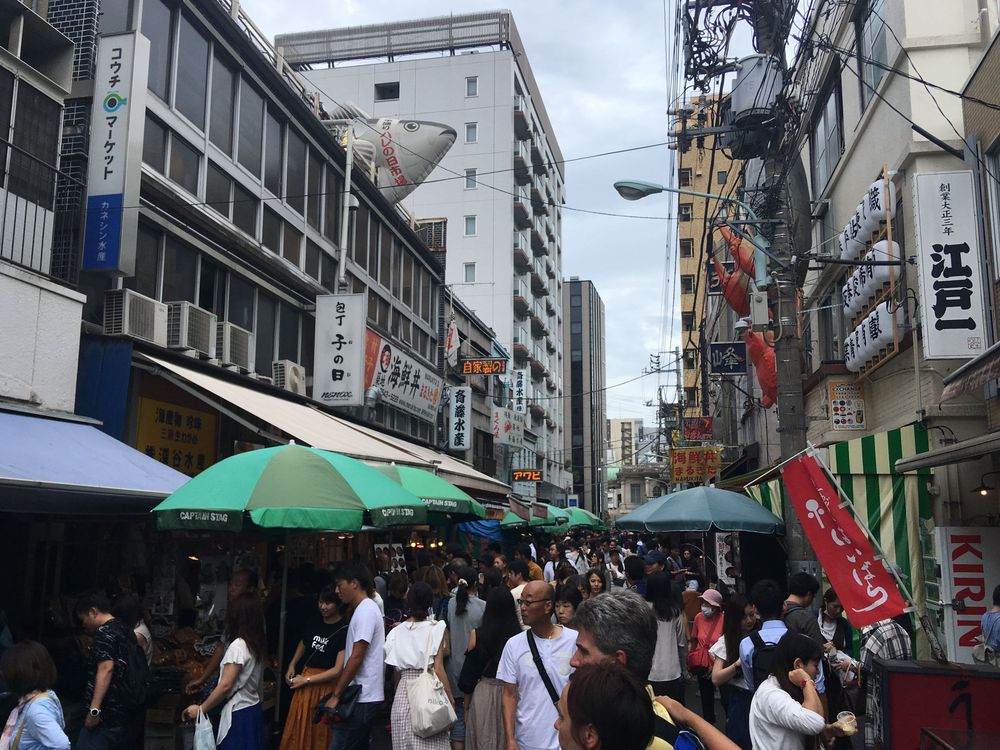
The street shops are the main reason to come for an informal food visit. You can compare menus, buy an item to eat where permitted and browse specialist goods. Treat each business as a working shop with its own customers and rules, rather than a station in an organised tasting tour.
Tsukiji Uogashi is a separate fresh-food facility within the area. The operator's floor and visitor information directs general shoppers to arrive after 09:00 and prohibits eating on its first floor. Use the designated upper-floor or rooftop rest areas instead. The food court's individual opening arrangements should be checked separately from the retail counters.
Toyosu is a different destination. If the auction is the experience you want, plan that visit through Toyosu's official visitor arrangements and transport information. Do not follow a map pin labelled simply “fish market” and assume that the activity will be there. Adding both places can consume a substantial part of a day, so first decide what the second visit contributes beyond another meal.
Build your morning around one main meal
Choose whether you want a seated meal or a lighter series of purchases. A seated meal is easier when resting, keeping a group together or reading a full menu matters. A lighter visit gives you more flexibility, but several small purchases can become a large bill without feeling like a proper meal.
Before queuing, look at the displayed price, portion and main ingredients. A sashimi rice bowl, a sushi set and a single premium seafood item are not equivalent purchases. Decide which is your main meal and which is an optional extra. If you cannot tell what a price applies to, ask before ordering rather than interpreting a photograph as a complete set.
The official food and merchandise directory includes options beyond raw seafood, from rolled omelette and prepared dishes to tea, sweets and ingredients. Use it to create a short list that matches your interests. It is a starting point for finding businesses, not a guarantee that every listed product is available at every hour.
Browse with a question, not a shopping quota
After eating, pick one category that interests you: tea, tableware, dried ingredients or a kitchen tool. Compare a few items and think about how you would actually use them. A souvenir becomes more meaningful when it connects with your cooking or dining habits rather than simply carrying a Japanese label.
For a utensil, consider size, care and storage before the appearance of the packaging. For food, check the ingredient label, expiry information and whether it needs refrigeration. Ask the seller about the product when language allows; a translation tool can help with a precise question, but it should not turn an unclear answer into certainty.
Do not assume every edible souvenir can enter your home country. Check your destination's customs rules before buying animal products, fresh produce or other restricted goods. Likewise, a kitchen knife needs appropriate transport and luggage planning. These are purchase decisions to settle before payment, not at the airport when your options are limited.
Use a flexible route through the lanes
Begin by checking the market map and locating your chosen meal. Walk a short section first if that helps you compare options, but avoid repeatedly crossing the busiest lanes while a group debates lunch. Agree one meeting point so a brief separation does not become a search through the entire district.
Allow your meal to anchor the middle of the visit. Afterwards, choose a nearby shopping category and, if it interests you, the Uogashi facility. Leave the final part of the morning open: a queue, a shop conversation or a proper seated break may be more worthwhile than an additional stop selected only to fill a route.
Our suggested 2–3 hours is a planning allowance, not a required duration. Someone who only wants breakfast can leave sooner; an enthusiastic cook may spend longer comparing goods. If you have a timed booking elsewhere, decide your departure time in advance and let the optional browsing shrink first.
Eat and photograph without obstructing trade
The official English market map sets out the practical rules: eat where permitted, give buyers room and respect photography restrictions. Ask before photographing a stall, its food preparation or its staff. A public street does not make every nearby counter an unrestricted photo subject.
Finish a purchase in the place the seller indicates, then move on. Do not carry an uncovered snack through a narrow stream of people while also handling a phone or shopping bag. Ask where to dispose of packaging rather than assuming that the next business accepts waste from another shop.
Stop at the edge of a lane when checking directions. Keep children close, move in a compact group and give delivery activity space. These habits also make the visit easier for you: fewer collisions, fewer lost companions and more opportunity to talk to a seller without blocking someone else's purchase.
Money, bags and practical comfort
The market's shopping guidance says payment acceptance varies by shop. Carry yen and ask about cards before ordering. Bring a manageable amount for your intended purchases rather than relying on one particular payment method everywhere. Keep money and your phone accessible without unpacking a large bag in a crowded passage.
The Plat Tsukiji information centre lists maps, visitor assistance, an ATM and coin lockers. Locker availability and facility opening are separate questions, so a suitcase-sized locker should not be the foundation of your day. Leaving luggage at your accommodation or a confirmed storage service is simpler when possible.
Wear shoes you can walk and stand in comfortably. Check the weather and keep rain protection compact; a large open umbrella is awkward in a tight queue. If mobility, sensory needs or a stroller affect your route, ask the information centre about the specific facilities you need. Do not treat a generally walkable district as a guarantee of an easy route through every shop.
Food preferences and a workable group plan
Agree dietary requirements before the first order. Ask about actual ingredients rather than assuming a dish is suitable from its name or photograph. If a seller cannot confidently answer a necessary question, choose another option instead of treating uncertainty as reassurance. This matters especially when several people share purchases without checking each component.
With different appetites, avoid building the morning around a single famous queue. Agree a maximum amount of waiting you are willing to accept, identify a second option and keep one seated break in the plan. A satisfying ordinary meal is a better outcome than spending most of the visit hungry while the group negotiates what to do.
For children, choose a small, understandable goal: one food they want to try and one thing to look for. Leave enough flexibility to stop before crowds become tiring. There is no need to make them complete every shopping category simply because the adults have a long list.
Continue towards Ginza, or finish after lunch
The Tokyo tourism board's Tsukiji overview places the district within walking reach of Ginza. A gentle continuation can work if you want a contrast between food shops and a different urban setting. Choose the next actual address and check the route rather than assuming every Ginza destination is equally close.
If the market has already filled your morning, finishing after lunch is a valid plan. Use our Tokyo three-day itinerary to distribute the rest of your sightseeing. Tsukiji is most rewarding when food and shopping receive real attention, not when it becomes a hurried transfer between distant attractions.
Cover photograph: Shop signs and visitors in a street of Tsukiji Outer Market — Photograph from 2018; resized for display. Shops and signs may change. — Christophe95, CC BY-SA 4.0.
Frequently Asked Questions
Is the tuna auction still at Tsukiji?
No. The wholesale market and tuna auctions moved to Toyosu in 2018. Tsukiji Outer Market remains a district of shops and places to eat; plan an auction visit separately.
What time should tourists arrive at Tsukiji?
For a broad first visit, arrive after 09:00 on a suitable trading day. The association lists public shopping until 14:00, but each business sets its own hours.
Is everything closed on Wednesday or Sunday?
No. Many businesses close on Sundays and some Wednesdays, but the wholesale calendar does not dictate every outer-market shop's schedule. Confirm the specific businesses that matter to you.
Can you eat while walking around the market?
No. Eat at the business or in a designated area, following staff instructions. Eating is also prohibited on Uogashi's first floor; use the authorised rest areas instead.


Keep Exploring
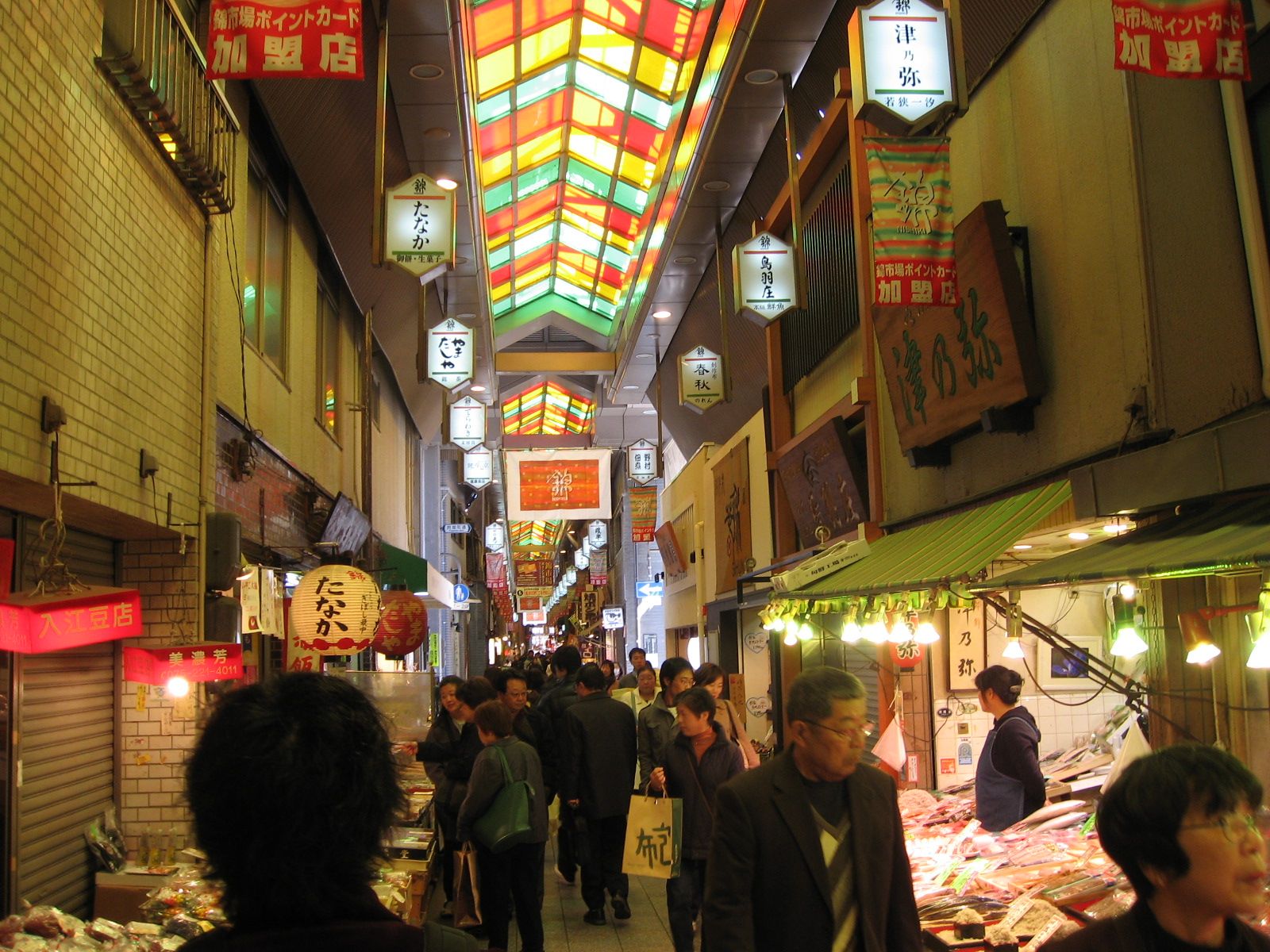
Nishiki Market Kyoto: Plan a Food Visit
Plan a focused Nishiki Market visit with named food specialists, shop hours, eating etiquette and a manageable route through central Kyoto.
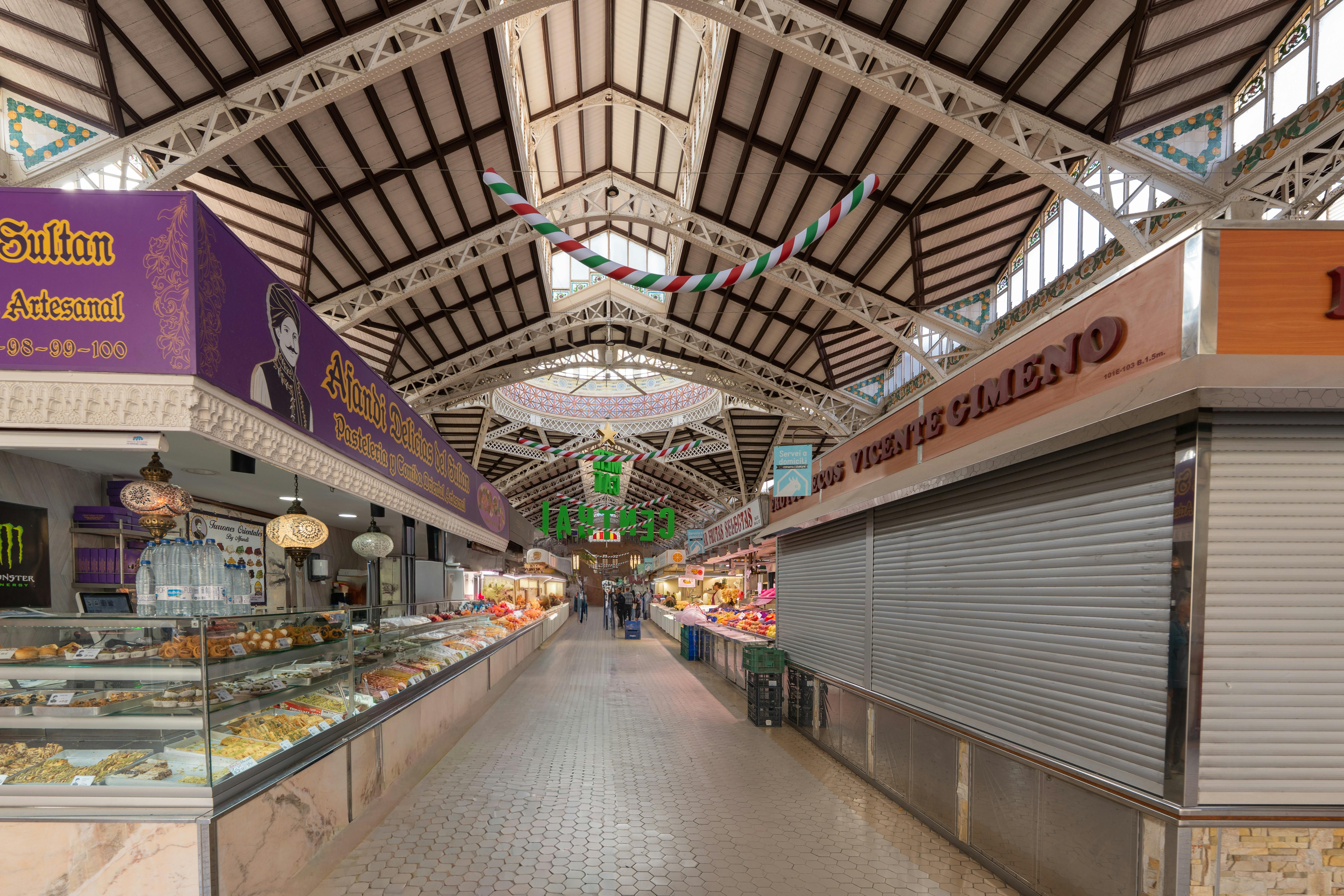
Best Food Markets in Europe: City Guide
Europe's 17 best food markets, city by city: opening hours, named stalls, signature dishes, EUR prices. Boqueria, San Miguel, Borough, Testaccio, Naschmarkt and more.
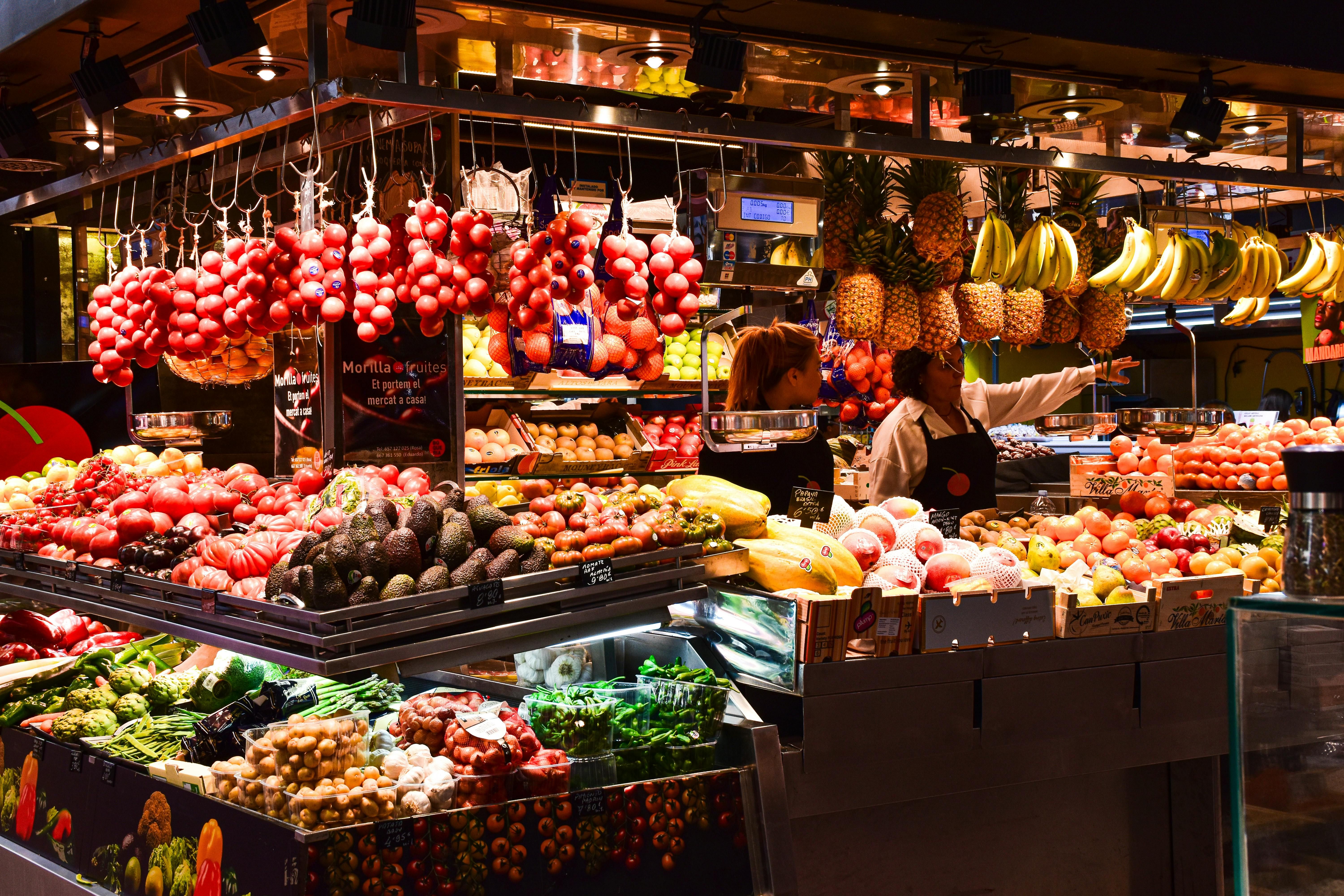
European Street Food: The Definitive Guide
Europe's best street food by region: named stalls, market hours, EUR prices. From Lisbon's pastéis de nata to Sarajevo's ćevapi and Copenhagen's smørrebrød.