
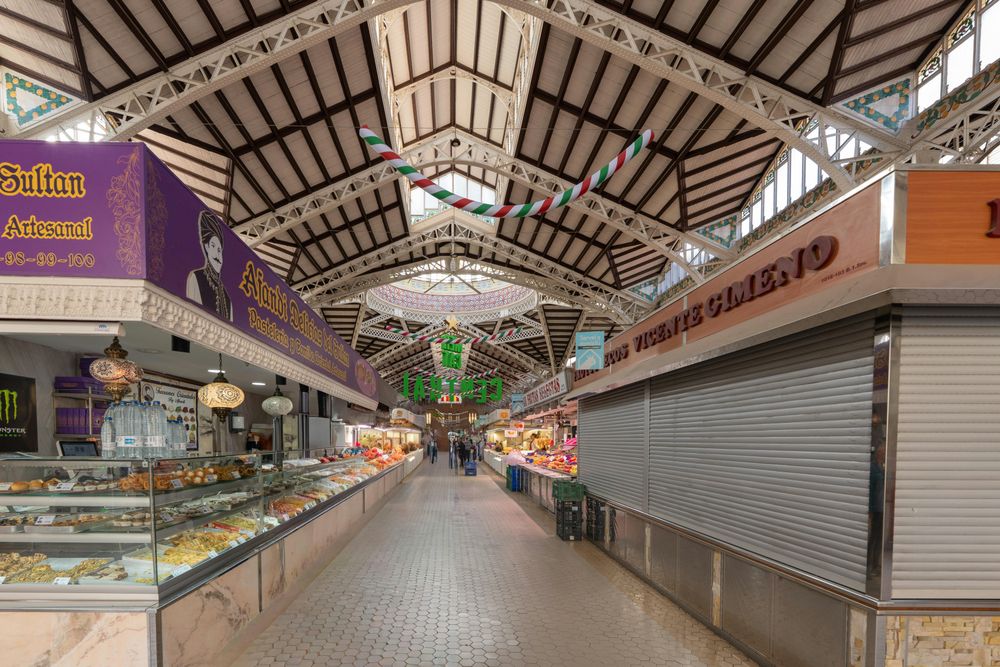
Europe's 17 best food markets, city by city: opening hours, named stalls, signature dishes, EUR prices. Boqueria, San Miguel, Borough, Testaccio, Naschmarkt and more.
Europe's food markets are where a city eats with its guard down. Long before the tasting menus and the rooftop bars, there were the halls and squares where fishmongers, cheesemongers and grandmothers haggled over the day's best produce. The good news for travellers is that the great ones are still working markets, not museums. You can wander in, point at something glistening on ice, and eat better than you would in half the restaurants nearby.
This guide covers thirteen of the best food markets in Europe, from a Catalan cathedral of jamón to a horseshoe-shaped Dutch hall painted top to bottom in fruit. For each, you will find what makes it special, what to eat, and the practical details that decide whether your visit is a feast or a closed shutter. A note on accuracy: markets keep their landmark buildings for decades, but the individual stalls inside them turn over constantly. We have named specific vendors only where we could verify they currently trade; everywhere else we point you to the type of counter to look for. Always double-check hours on the market's official site before you go, and bring cash.
Fast Facts
| Question | Answer |
|---|---|
| Most famous market | La Boqueria, Barcelona, just off La Rambla |
| Best for street food | Ballarò, Palermo, and Mercato Centrale, Florence |
| Typical market lunch | Roughly EUR 10-20 per person for a couple of dishes and a drink (varies by city and market) |
| Timing tip | Go mid-morning; produce stalls peak early and many close by mid-afternoon |
| Cash tip | Carry euros (or local currency); many small stalls are cash-only or have card minimums |
La Boqueria, Barcelona
Officially the Mercat de Sant Josep de la Boqueria, this is the market most travellers picture when they imagine eating their way through Europe. Pyramids of fruit, ribbons of Ibérico ham and tanks of live shellfish spill out under a wrought-iron roof a few steps off La Rambla. Head to the iberico ham counters for cured-meat cones, the fruit stalls for fresh juices, and the small bar-counters at the back, where cooks fry up whatever the fish stalls landed that morning. Sit at one of these tucked-away counters rather than the touristy front row.
Practical info: Open Monday to Saturday, roughly 8:00 to 20:30; closed Sundays. Many stalls wind down by mid-afternoon and fish counters are quietest on Mondays, so arrive in the morning for the full spread.
Mercado de San Miguel, Madrid
A few minutes from Plaza Mayor, San Miguel is a beautiful 1916 iron-and-glass hall that reinvented itself as a gourmet tapas bazaar. This is less a place to shop than to graze: counters serve croquetas, oysters, Iberico ham, vermouth on tap and small glasses of wine. It is touristy and prices reflect that, but the atmosphere under the glass is hard to beat. Come for an aperitivo-style crawl rather than a full meal, and brace for crowds at weekends. To eat beyond the market, our Madrid food guide digs into the tapas bars, neighbourhood markets and slow-cooked cocido across the Spanish capital.
Practical info: Open daily; roughly 10:00 to midnight Sunday to Thursday, and to 1:00 on Friday and Saturday. No weekly closing day, which makes it a reliable late-night option.
Borough Market, London
London's most celebrated food market sits in the railway arches near London Bridge and has traded on the site for centuries. The mix is part wholesale heritage, part destination food hall: cheesemongers, charcuterie, fresh produce, bakeries and a tight cluster of hot-food stalls. The one vendor we can name with confidence is Kappacasein, whose Montgomery-cheddar toastie and raclette are a Borough institution and listed on the market's own trader directory. Beyond it, follow the queues to the doughnut counters, the oyster bars and the grills.
Practical info: Open six days a week, closed Mondays. Roughly Monday to Friday 10:00 to 17:00, Saturday 9:00 to 17:00, Sunday 10:00 to 16:00. Not every trader is there every day; the fullest hot-food spread is midweek through Saturday.
Time Out Market, Lisbon
Inside the historic Mercado da Ribeira at Cais do Sodré, Time Out Market gathered some of Lisbon's best chefs and restaurants under one roof around long communal tables. You order at individual counters and eat wherever you can grab a seat. It is the easy, crowd-pleasing introduction to Portuguese food, from grilled fish to steak sandwiches (prego). For dessert, Manteigaria runs a counter here turning out custardy pastéis de nata, and it appears on the market's official eat-and-drink listing. The traditional produce market still trades under the same roof in the mornings.
Practical info: Time Out Market is open daily, roughly 10:00 to midnight Sunday to Wednesday and to 2:00 Thursday to Saturday. It gets very busy at peak lunch and dinner; go slightly off-peak for a table.
Mercato Centrale, Florence
The grand 19th-century iron hall by San Lorenzo works on two levels. The ground floor is a classic produce market of butchers, cheesemongers, fishmongers and greengrocers, open mornings. Upstairs, a modern food hall packs in artisan vendors serving Tuscan classics: this is the place to try lampredotto (the city's famous tripe sandwich), fresh pasta, pizza and Chianti by the glass. It is one of the most reliable spots in the city for an inexpensive, genuinely local lunch.
Practical info: The upstairs food hall is open daily, roughly 10:00 to midnight. The ground-floor produce stalls keep traditional morning hours, typically closing around 2:00pm.
Mercato di Testaccio, Rome
Tucked into the working-class Testaccio district, this is where Romans actually shop, and it doubles as one of the city's best casual lunch spots. Among the produce stalls sit a handful of hot-food kiosks slinging Roman street-food classics: the famous box-style panini stuffed with slow-cooked meats (think allesso di bollito), supplì (fried rice balls) and pizza al taglio sold by weight. Far less touristy than the city centre, and far better value.
Practical info: Open Monday to Saturday, roughly 7:00 to 14:30 (to about 15:30 on Saturday); closed Sundays. A few stalls close on Mondays, and most shut by early afternoon, so this is a morning-to-lunch market.
Ballarò and Vucciria, Palermo
Sicily's capital is arguably Europe's greatest street-food city, and its historic markets are the proof. Ballarò, in the Albergheria quarter, is the daytime engine room: vendors shout the abbanniata (their sing-song sales cry) over stalls of arancine, panelle and crocchè (chickpea fritters and potato croquettes), and the famously intense pane ca' meusa (spleen sandwich). Nearby Vucciria is quieter by day but transforms after dark into a raucous open-air party, with stigghiola (grilled offal skewers) cooked over open flames. For more, see our Palermo food guide.
Practical info: Ballarò trades roughly Monday to Saturday from early morning to around 19:00; mornings before noon are best for food and atmosphere. Vucciria comes alive in the evening, especially after 21:00.
Naschmarkt, Vienna
Vienna's sprawling open-air Naschmarkt stretches for nearly a mile between two roads, mixing produce stalls, spice and olive vendors, and a long run of sit-down restaurants serving everything from Austrian classics to Middle Eastern mezze. It is a browse-and-graze market: pick up dried fruit and cheese, then settle in at one of the seafood or falafel counters. On Saturdays a large flea market sets up at one end.
Practical info: Stalls open roughly Monday to Friday 6:00 to 21:00 and Saturday to 18:00, though many close by early evening. Market stalls are closed Sundays; only some restaurants and cafés open. The Saturday flea market runs morning to mid-afternoon.
Markthal, Rotterdam
The most architecturally jaw-dropping market on this list, Rotterdam's Markthal is a horseshoe-shaped arch of apartments wrapped over a covered food hall, designed by MVRDV and opened in 2014. The vaulted ceiling is covered in a giant, riotously colourful artwork of fruit, flowers and fish. Below it, stalls sell Dutch cheese, stroopwafels (caramel-filled waffles), herring, baked goods and global street food. It is as much a sightseeing stop as a place to eat.
Practical info: Open Monday to Saturday roughly 10:00 to 20:00 (Friday to 21:00) and Sunday 12:00 to 18:00. Weekday mornings are the calmest time to admire the ceiling.
Östermalms Saluhall, Stockholm
This handsome red-brick hall from 1888 is the most refined market on the list, a Stockholm institution for Nordic produce. Counters glisten with smoked salmon, cured and pickled fish, reindeer and elk charcuterie, shellfish and Swedish cheeses, alongside small seafood bars where you can sit for a plate of prawns or a bowl of fish soup. Prices are upmarket, matching the postcode, but the quality is exceptional.
Practical info: Open roughly Monday to Friday 9:30 to 19:00 and Saturday 9:30 to 17:00; closed Sundays. Some restaurants inside keep later evening hours.
Great Market Hall, Budapest
Budapest's Nagycsarnok, near the Danube at Fővám tér, is the city's largest and grandest covered market, crowned with a roof of colourful Zsolnay tiles. The ground floor is for produce, paprika, salami and pickles; the upper gallery is lined with food stalls serving Hungarian classics like lángos (deep-fried dough piled with sour cream and cheese) and goulash. The basement holds fishmongers and a supermarket. It is touristy upstairs but still a genuine local shopping hall below.
Practical info: Open roughly Monday 6:00 to 17:00, Tuesday to Friday 6:00 to 18:00, Saturday 6:00 to 15:00; closed Sundays. Go in the morning when it is freshest and least crowded.
Marché des Enfants Rouges, Paris
Tucked into the Haut Marais, this is the oldest covered market in Paris, dating to 1615. It is small and charmingly chaotic, with a cluster of food stalls cooking to order: Moroccan tagines, Japanese bento, Italian plates and French classics, eaten elbow-to-elbow at communal tables among the flower and produce stands. It is more lunch spot than grocery run, and a lovely escape from the Marais crowds.
Practical info: Open Tuesday to Saturday roughly 8:30 to 20:30 (later on Thursday) and Sunday 8:30 to 17:00; closed Mondays. Arrive a little before the lunch rush for a seat.
Mercat de Sant Josep and beyond: planning your market day
A few rules make any European market day better. First, go early. Produce markets are freshest in the morning and many stalls, especially fishmongers, pack up by early afternoon. Second, carry cash; plenty of small vendors are cash-only or set card minimums. Third, eat where locals queue and prices are posted, and treat the stalls flanking major tourist entrances with healthy skepticism. Fourth, look up the official opening hours before you travel, because hours shift seasonally and individual stalls keep their own schedules. For more on eating from a stall rather than a table, see our European street food guide, and for one city in depth, our Barcelona food guide. And if what is in the cup matters as much as what is on the plate, our guide to the best coffee cities in Europe maps where to break between market stops.
Sources and further reading
- La Boqueria official site: https://www.boqueria.barcelona/
- Mercado de San Miguel official site: https://www.mercadodesanmiguel.es/en/
- Borough Market official site: https://boroughmarket.org.uk/visit-us/
- Markthal Rotterdam opening hours: https://markthal.nl/en/visit-markthal/opening-hours/
- Mercato Centrale Florence info: https://www.mercatocentrale.com/florence/info/
- Östermalms Saluhall opening hours: https://en.ostermalmshallen.se/opening-hours/
- Marché des Enfants Rouges, Paris je t'aime (city tourism): https://parisjetaime.com/eng/shopping/marche-couvert-les-enfants-rouges-p2274
- Naschmarkt, vienna.info (city tourism): https://www.wien.info/en/dine-drink/markets/naschmarkt-353536
Frequently Asked Questions
What is the most famous food market in Europe?
La Boqueria in Barcelona is the best known, thanks to its location off La Rambla and its photogenic stalls of ham, fruit and seafood. Borough Market in London and Mercado de San Miguel in Madrid are close rivals for the title.
Which European market is best for street food?
For pure street food, Palermo's Ballarò and Florence's Mercato Centrale food hall are hard to beat, offering inexpensive local classics you can eat on the spot. Lisbon's Time Out Market is the easiest one-stop option for sampling many dishes at once.
Do I need cash to eat at European food markets?
Often, yes. Many individual stalls are cash-only or set minimum amounts for card payments, even in cities where cards are widely accepted. Carry some local currency to avoid missing out on a stall that does not take cards.
What time should I visit a food market?
Mid-to-late morning is usually best. Produce stalls are freshest early, hot-food counters open through lunch, and many markets, especially traditional ones like Testaccio in Rome or the Great Market Hall in Budapest, close by mid-afternoon.
Are European food markets open on Sundays?
It varies a lot. Some, like Mercado de San Miguel, Markthal and Marché des Enfants Rouges, open on Sundays, while many traditional halls such as La Boqueria, Testaccio, Östermalms Saluhall and Budapest's Great Market Hall close on Sundays. Always check the market's official site before planning a Sunday visit.
Can I eat a full meal at a food market or just snacks?
Both. Food halls like Lisbon's Time Out Market, Florence's Mercato Centrale and Vienna's Naschmarkt have sit-down counters where you can eat a proper meal, while traditional produce markets are better for grazing on snacks and picnic supplies.

Keep Exploring
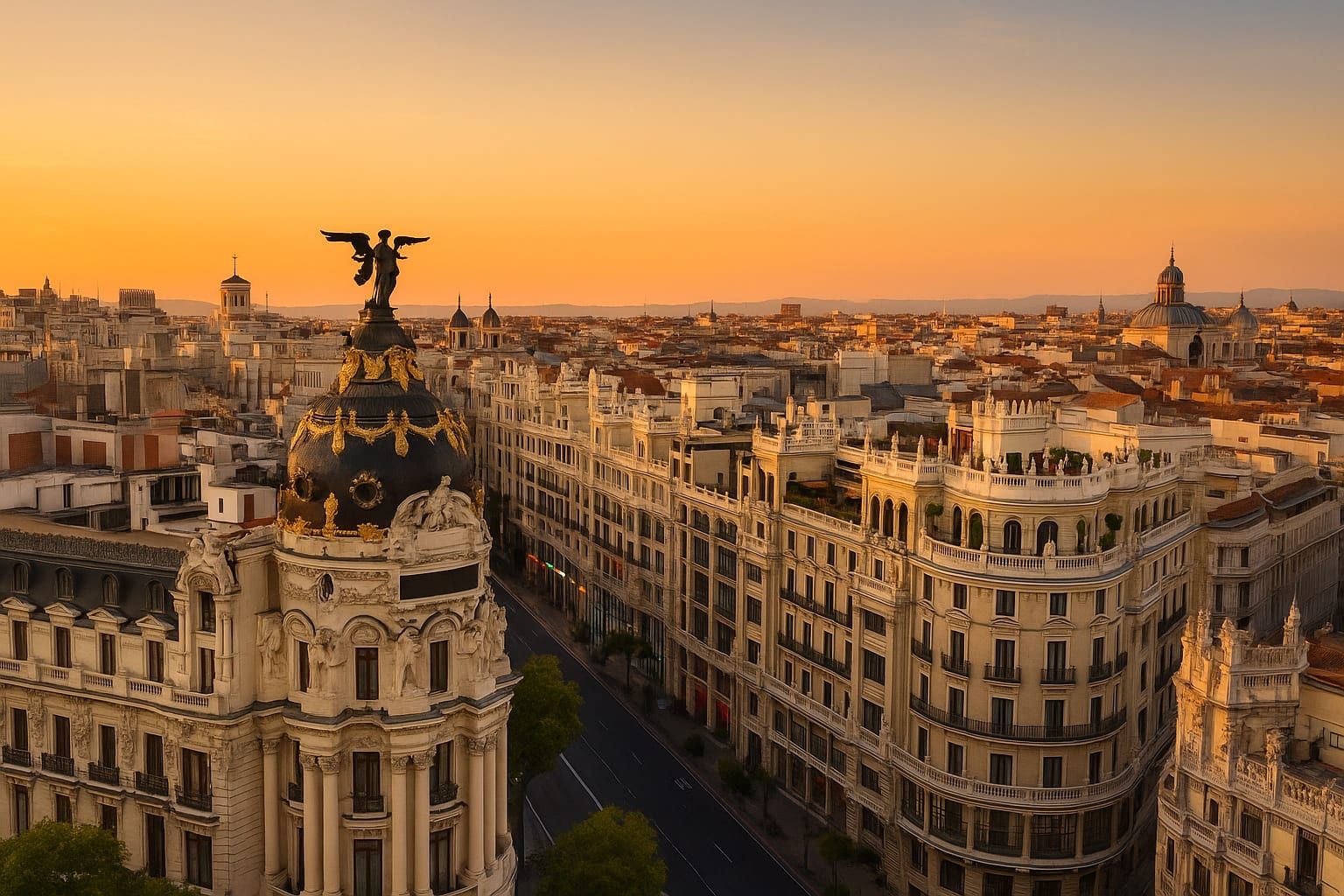
Madrid Food Guide: Tapas, Markets & Cocido
A complete Madrid food guide: where to eat tapas, how to order cocido madrileño, best markets and neighborhoods, plus local tips, drinks and dessert must-tries.
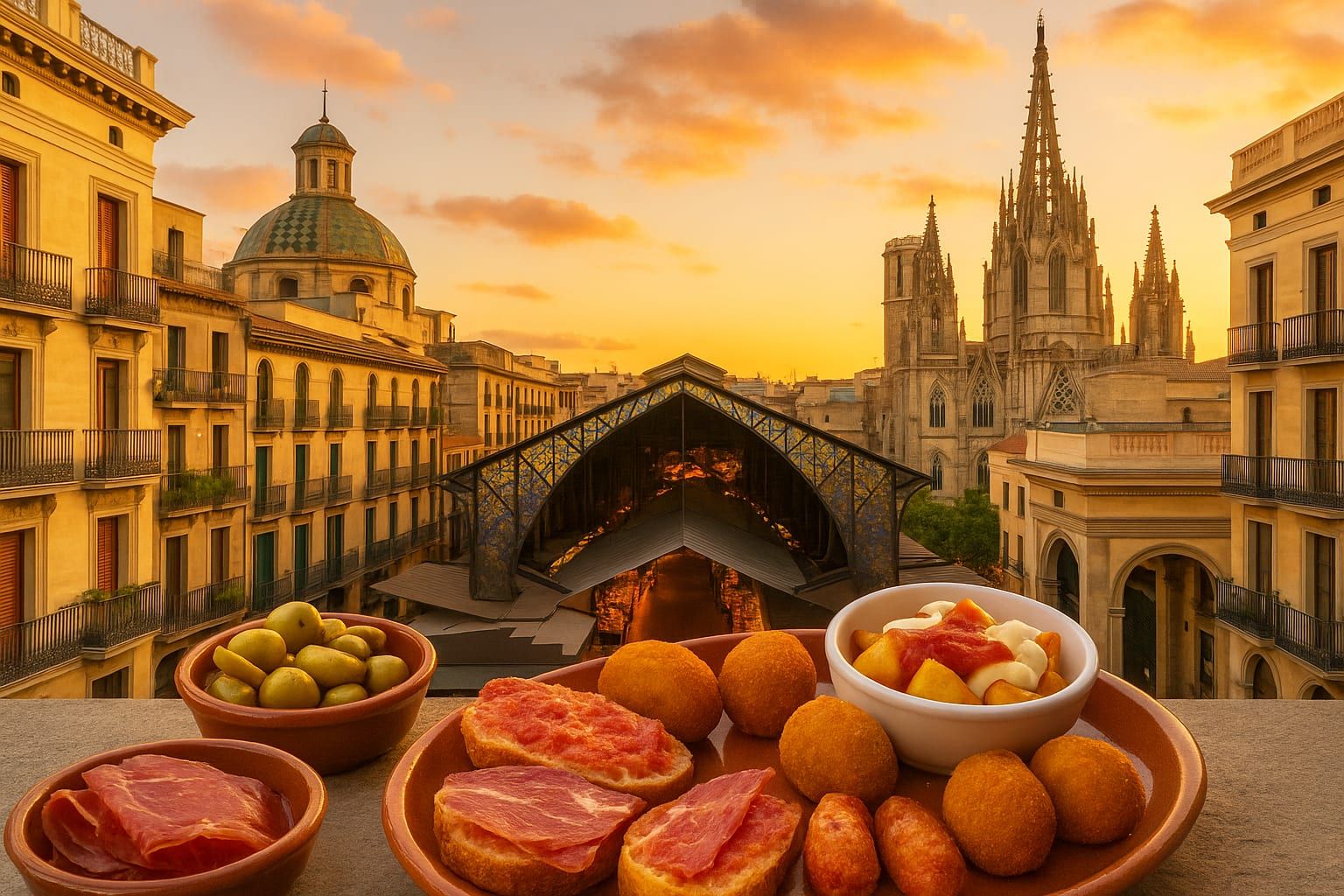
Barcelona Food Guide: Tapas, Markets & Michelin Stars
A complete Barcelona food guide: where to eat tapas, how to navigate the markets, and how to experience the city's Michelin-starred scene with local tips and practical advice.
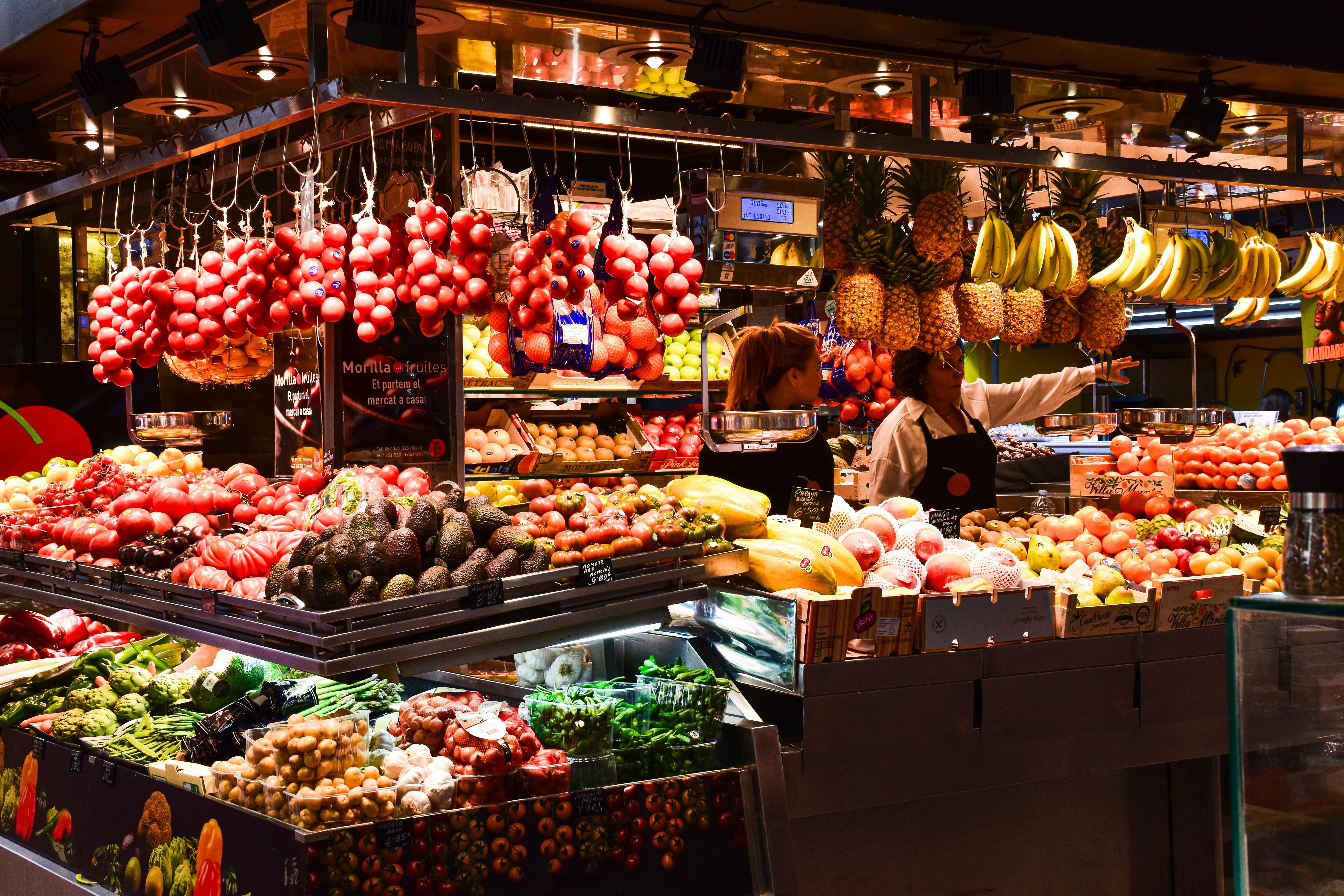
European Street Food: The Definitive Guide
Europe's best street food by region: named stalls, market hours, EUR prices. From Lisbon's pastéis de nata to Sarajevo's ćevapi and Copenhagen's smørrebrød.