
European Street Food: The Definitive Guide
Europe's best street food by region: named stalls, market hours, EUR prices. From Lisbon's pastéis de nata to Sarajevo's ćevapi and Copenhagen's smørrebrød.
Street food in Europe is rarely just a quick bite — it's a record of who came through a city, what they brought, and what stuck. A bifana in Lisbon, a döner in Berlin, a lángos in Budapest and a smørrebrød in Copenhagen each carry several centuries of trade, migration and working-class lunch logic. This guide maps the dishes worth crossing borders for, the named stalls and markets where they're done properly, and the timing that separates a real lunch queue from a tourist trap.
The best street food in Europe, in short: for the essential crawl, target Lisbon (bifana, pastéis de nata), Berlin (döner, currywurst), Budapest (lángos), Barcelona’s La Boqueria, Copenhagen (smørrebrød) and the Balkans (ćevapi). Eat where the lunch queue is local, not where the menu has photos.
Fast Facts
| Detail | Info |
|---|---|
| Best time to visit | Year-round (most markets and stalls operate daily); outdoor festivals concentrate May–September; Lisbon's Festas de Santo António 12–13 June; Vienna Naschmarkt buzz Saturdays |
| Getting there | Metro/tram passes typically €5–€10/day in Lisbon, Berlin, Vienna, Budapest, Athens; most central markets are walkable from old-town hotels |
| Where to stay | Choose old-town/working-class neighborhoods next to markets: Mouraria (Lisbon), Kreuzberg (Berlin), Kazimierz (Krakow), Sant Antoni (Barcelona) — typically €70–€180/night |
| Average daily budget | €25–€55/day for street-food eating alone (single items €2–€12); add €30–€60/day for sit-down restaurant dinners and drinks |
| Don't miss | Pastéis de Belém in Lisbon; Mustafa's Gemüse Kebap in Berlin; Karaván lángos trucks in Budapest; Kostas souvlaki in Athens; Reffen waterfront market in Copenhagen |
Mediterranean and Iberian street food: pastéis, tapas and pizza al taglio
The Mediterranean and Iberian coasts run on small plates eaten standing up. Three cities are essential.
Lisbon: bifana, pastel de nata, sardinha
Lisbon's defining bite is the pastel de nata — a custard tart fired at 280°C until the top blisters black. The original recipe traces to monks at the Jerónimos Monastery in the 1820s and has been baked since 1837 at the original shop near the monastery, where the recipe is a guarded secret known to a handful of pastry chefs. According to Visit Lisboa, the official tourism board, the tart is also sold across the city by independent bakeries; the Manteigaria flagship at Rua do Loreto 2 (Chiado) is the local favorite for a freshly torched version eaten standing at a marble counter — €1.30–€1.50 per tart. Expect to wait 5–10 minutes mid-afternoon.
Lisbon's savory street icon is the bifana — thin pork loin steeped in garlic, white wine and bay leaf, served in a crusty papo-seco roll with a slap of mustard. The classic dive is Casa das Bifanas at Praça da Figueira; for a quieter sit-down version look for the bifana stand near Costa do Castelo on the way up to the castle. Bifanas run €2.50–€4.50 and pair with a small Sagres beer for under €2.
In June, the city's streets fill with smoke from charcoal grills cooking sardinhas assadas — whole sardines salted and grilled, served on a slab of corn bread that catches the fat. The peak nights are 12–13 June for the Festas de Santo António in Alfama and Mouraria; sardines cost €1.50–€3 each from neighborhood stands, and the whole hillside smells of grilled fish for a week.
For a deeper city-level guide see our Lisbon food guide on bacalhau, pastéis and more.
Barcelona and Madrid: La Boqueria, Mercado de San Miguel, montaditos
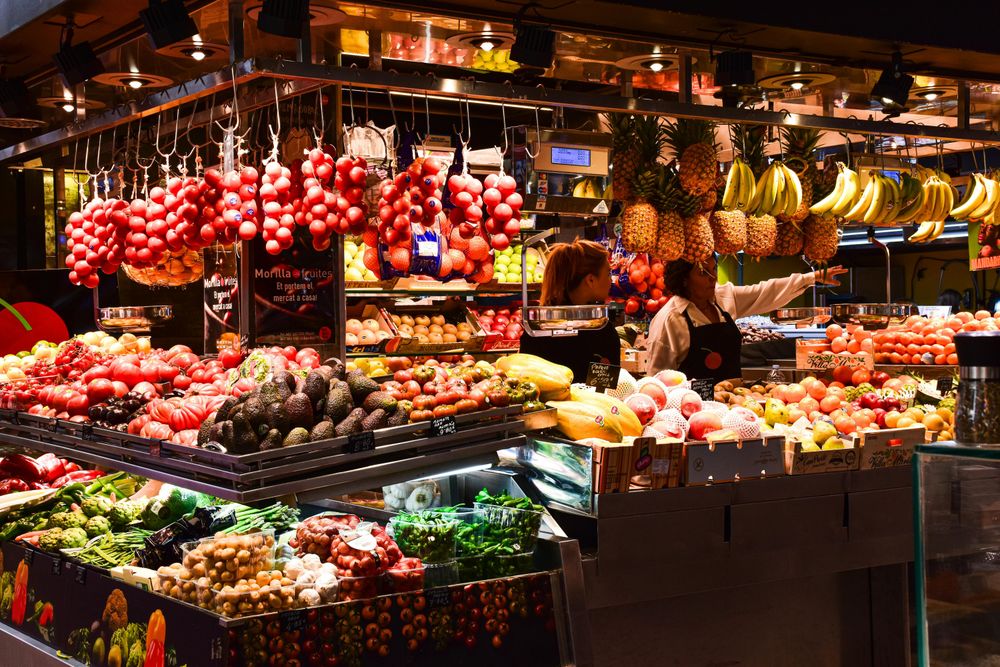
Barcelona's Mercat de la Boqueria on La Rambla has been a permanent market since 1840, with roots in a 13th-century pig market just outside the medieval walls. Inside, the cooked-food bars near the back are the ones to know: open from around 06:30 weekdays for esmorzar de forquilla (fork breakfast) — chickpeas with morcilla, baby squid (chipirones), tripe stew, all in plates around €8–€18. Old-school Catalan dock workers' food, eaten standing, washed down with a small beer or cava. Skip the empty stalls near the Rambla entrance selling pre-cut fruit at marked-up prices; the working market is in the back rows.
Madrid's equivalent showpiece is the Mercado de San Miguel just off Plaza Mayor — a restored 1916 iron-and-glass market converted in 2009 into a tapas hall. It's more bar-crawl than greengrocer now: 20+ stalls selling everything from Iberico ham (€4–€8/montadito) to oyster pintxos (€3 each) and croquetas. Open daily, generally 10:00–24:00 with extended weekend hours. It's touristy by Madrid standards but the quality is honest; for a quieter alternative walk fifteen minutes south to Mercado de Antón Martín. The Andalusian-style montadito — a small bite served on bread — anchors the menu at both markets and at countless neighborhood bars: typically €1.50–€3 per piece.
For the city-by-city build see our Barcelona food guide on tapas, markets and Michelin stars.
Naples: pizza al taglio, cuoppo fritto, fried pizza
Naples invented street pizza twice. The first form is the classic pizza a portafoglio — a folded round of Margherita or marinara eaten while walking, sold from windows along Via dei Tribunali in the centro storico for €1.50–€5. Pizzeria di Matteo, Via dei Tribunali 94, is the famous Bill Clinton stop (1994) and still does fritti and folded pizza out of a stand-up counter; expect a 10-minute queue at lunch. The second form is the cuoppo fritto — a paper cone of fried seafood (anchovies, calamari, baccalà) or fried vegetables (zucchini blossoms, panzerotti, arancini), priced €5–€10 per cone. Look for stands in Spaccanapoli and along Via Toledo.
Naples also gave Europe the pizza fritta — pizza dough stuffed with ricotta and pork-fat scraps then deep-fried, eaten especially around the Quartieri Spagnoli. Local prices run €3–€6.
For Italy's undisputed street-food capital further south, see our Palermo street-food guide, where arancine, pane con la milza and panelle are eaten standing at market stalls in Ballarò and Vucciria.
France and the Benelux: crêpes, frites, herring
Paris: crêpes, falafel, jambon-beurre
Paris's street-food map runs along two axes: Brittany's crêpes in Montparnasse, and the Marais's Pletzl Jewish quarter on Rue des Rosiers. For crêpes, Crêperie de Josselin (67 Rue du Montparnasse) is the heritage spot — buckwheat galettes (savory) at €8–€14 and sweet crêpes at €5–€9, with strong Breton cider in clay bowls. The street has half a dozen alternatives that all do the same job.
For falafel, L'As du Fallafel at 34 Rue des Rosiers is the cultural landmark — a fat pita stuffed with falafel balls, aubergine, cabbage, hummus, harissa and tahini for around €9–€12, sold from a takeaway window with reliably long queues at lunch. The Pletzl historically housed Paris's Ashkenazi and Sephardi Jewish communities; the falafel boom dates to North African Jewish immigration in the 1960s and 70s. Closed Saturdays.
The most Parisian sandwich is the jambon-beurre — a baguette split, buttered with proper unsalted Normandy butter and filled with thin slices of jambon de Paris. It is the country's best-selling sandwich (over 1 billion sold per year) and the workhorse lunch under €5 at any honest bakery. Skip the chains; find a boulangerie with a label noting baguette de tradition française (the legal designation requires flour, water, salt, yeast — no additives).
Brussels: frites with sauce andalouse
Frites are not French, they're Belgian, and Brussels takes this very seriously. The defining stand is Maison Antoine in Place Jourdan, Etterbeek — operating since 1948, with a cone of double-fried frites (cooked once at 130°C, drained, then fried again at 175°C, the way the Belgian Friet/Frites tradition codifies) at €4–€6 plus €1 per sauce. The local choice isn't ketchup but andalouse (mayo + tomato + pepper), samouraï (mayo + harissa) or mitraillette (a baguette filled with frites, meat and sauce — a one-handed €8 dinner). Friterie Tabora in central Brussels near Bourse is a useful late-night fallback.
Amsterdam: haring, bitterballen, stroopwafel
The Amsterdam herring stand is one of Europe's purest one-dish institutions. Look for Stubbe's Haring at the corner of Singel/Haarlemmersluis (near Centraal Station) — a green wooden hut selling Hollandse Nieuwe (the young herring of the year, fished from late May/early June, salted in barrels, eaten raw with chopped onion and pickles) at €4–€6 per fish. The technique is to lift the herring by the tail, lean back, and bite — though sit-down versions on a roll (broodje haring) are common for visitors. According to I amsterdam, the city's official tourism site, Hollandse Nieuwe season opens with auctions in mid-June and the freshest fish lands in the city the same week.
The city's other portable food is the bitterballen — crispy deep-fried balls of beef ragout with mustard, sold from brown-café windows for €5–€8 for six. Add a fresh stroopwafel (€2–€3) from the stand at the Albert Cuyp market in De Pijp and you've got a complete Amsterdam street-food afternoon under €15.
Germany and Central Europe: currywurst, döner, Würstel
Berlin: currywurst and Mustafa's döner
Berlin's two street-food icons both date to the 20th century. Currywurst — sliced pork sausage in tomato sauce dusted with curry powder — was invented in 1949 at a Charlottenburg stand by Herta Heuwer, who improvised the sauce from British Army ketchup, Worcestershire and curry powder. According to visitBerlin, the city sells around 70 million currywurst per year. The reigning temple is Konnopke's Imbiß at Schönhauser Allee 44a in Prenzlauer Berg — under the elevated U2 metro tracks since 1930 (currywurst added in 1960), still cash-only at the window. A sausage with sauce and a brötchen or fries runs €4–€6. Closed Sundays.
The other Berlin classic is döner kebab — Turkish meat shaved off a vertical spit into bread with salad and sauce. The dish's modern form (in bread with vegetables) was developed in Berlin in the 1970s by Turkish immigrants and is now the city's defining migrant food. The most-photographed stand is Mustafa's Gemüse Kebap on Mehringdamm in Kreuzberg — grilled vegetables added to the meat. The catch is the queue: 60–90 minutes is normal at lunch and dinner. For a queue-free equivalent, locals send visitors to Rüyam Gemüse Kebab 2 further south on Hauptstraße, where the formula is similar and the wait is 10 minutes. A loaded Gemüse Kebap costs €6–€8.
Vienna: Würstelstand and Naschmarkt
Vienna's Würstelstand culture is a civic ritual — small grilled-sausage kiosks open till 04:00, serving as both lunch break and post-opera dinner. The pillar is Bitzinger Würstelstand am Albertinaplatz, behind the Vienna State Opera — operating since 1968, open daily, where dressed-up theatergoers and shift workers share the same standing counter. Order a Käsekrainer (a smoked sausage with melted cheese pockets, nicknamed Eitrige in slang) with Buckerl (bread crust ends), Senf (mustard), Kren (horseradish) and a 16er Blech (a can of Ottakringer beer). Total around €7–€10. The local etiquette: ask for the Eitrige with a Buckerl and a 16er Blech and the staff will know you've done this before.
The Naschmarkt in central Vienna is the city's biggest open-air market — 120+ stalls along the Wienzeile selling Mediterranean groceries, Turkish baklava (€2–€5), Austrian cheese and snack food. The market runs Monday–Saturday roughly 06:00–18:00 (food stalls and restaurants later); Saturday mornings add a flea market and noticeably bigger crowds. According to vienna.info, the Vienna Tourist Board, the market dates from the 1780s. Avoid the front rows nearest the U-Bahn for fruit (tourist pricing); the back rows have working butchers and fishmongers.
Munich: Weißwurst before noon
Munich's defining sausage is the Weißwurst — a pale veal-and-pork sausage flavored with parsley and lemon, traditionally eaten before noon (the old rule: the sausage should not hear the church bells ring 12, because pre-refrigeration the morning batch had to be consumed quickly). Today it's served at any Bavarian Wirtshaus from 09:00 until early afternoon: peel the skin with knife and fork, dip in sweet Händlmaier mustard, eat with a Brezn (pretzel) and a half-liter of Weißbier. Try a working butcher chain like Vinzenzmurr or a beer-hall classic like Zum Augustiner. A pair of Weißwurst with Brezn and beer runs €8–€12.
Eastern Europe and the Balkans: lángos, zapiekanka, ćevapi, souvlaki
Budapest: lángos at Karaván
Lángos — deep-fried sourdough flatbread topped with sour cream and grated cheese, optionally garlic oil and extra toppings — is Budapest's defining junk-food joy. The reliable spot is the Karaván street-food court behind the Szimpla Kert ruin bar at Kazinczy utca 18, district VII. Open daily from around 11:30 to late, half a dozen food trucks parked under string lights with shared picnic tables; the lángos van does a classic sour-cream-and-cheese at around HUF 2,800–4,000 (€7–€10 in 2026 euros). Pair with a pohár of unicum or a craft beer at Szimpla itself.
The alternative, more traditional spot is the upper floor of the Great Market Hall (Nagyvásárcsarnok) at Vámház körút 1–3 — a 19th-century iron-and-brick market hall where the lángos counters are pure local fare at marginally lower prices, weekdays 06:00–18:00, Saturdays 06:00–15:00, closed Sunday.
Krakow: zapiekanka at Plac Nowy
Krakow's signature street food is the zapiekanka — a long open-faced baguette topped with mushrooms, cheese and ketchup, then sometimes loaded with caramelized onions, cabbage, meat, pickles. The neighborhood is Kazimierz, the historic Jewish quarter; the bullseye is Plac Nowy and its round 19th-century kosher poultry market building (the okrąglak) now ringed by zapiekanka windows. The classic price is around PLN 12–25 (€3–€6) for a basic version, more for loaded variants. Queues are biggest after midnight on weekends — students treat it as a meal-after-the-bars.
For wider context on Polish comfort food and where to find it, see our Krakow food guide on Polish comfort food.
Sarajevo: ćevapi at Baščaršija
Ćevapi — small skinless minced-beef sausages grilled over charcoal — are the regional Balkan dish, eaten from Belgrade to Mostar, but Sarajevo's old-town Baščaršija is where most travelers eat their first plate. The setup is consistent: 5 or 10 ćevapi inside a freshly baked somun (flatbread) split open and steamed in the meat juices, served with chopped raw onion and a bowl of kajmak (clotted cream). Wash down with Bosnian coffee or homemade yogurt. The two reference houses are Ćevabdžinica Mrkva and Petica Ferhatović (Bravadžiluk street, in the heart of the bazaar). A standard 10-piece portion runs BAM 12–18 (€6–€9). Grills are visible from the street; if you can't see charcoal smoke, walk on.
Athens: souvlaki at Kostas
Athens's souvlaki — small skewered pieces of pork or chicken grilled over charcoal and served in a pita with tomato, onion and tzatziki — is the country's defining quick lunch. The local institution is Kostas, Plateia Agias Eirinis 2, central Athens — open since 1950, a tiny counter that closes when the daily batch runs out (often by 14:00). One pita with two skewers comes in at around €4–€5. Lines start at 12:00 and the shop is closed Sundays.
For the city-wide framing of Greek food, our Athens food guide on ancient flavors and modern twists covers sit-down tavernas, fish markets and the wider neighborhood scene.
Nordic: smørrebrød, Reffen, kanelbullar
Copenhagen: smørrebrød and Reffen
The Danish smørrebrød is technically a sit-down lunch but functions as portable food when you order it from a take-away counter: rye bread layered with herring, eel, beef tartare or remoulade-coated shrimp. Aamanns 1921 (Niels Hemmingsens Gade 19–21) does refined contemporary smørrebrød at €8–€18 per piece; the older Schønnemann (Hauser Plads 16, established 1877) is a more formal sit-down version with the same vocabulary. A two-piece lunch + Danish beer is €30–€45.
For street-food-format Copenhagen, Reffen on Refshalevej is the city's flagship open-air market — a former industrial wharf with around 40 stalls, picnic tables and harbor views. According to Visit Copenhagen, the official tourist board, Reffen operates seasonally from mid-April through early October, generally 12:00–22:00. Item prices DKK 90–180 (€12–€24).
Stockholm: kanelbullar and herring at Östermalms
Swedish kanelbullar — cinnamon buns scattered with pearl sugar — are a national institution backed by an actual public holiday (Kanelbullens Dag, 4 October). The neighborhood place is any decent konditori; in central Stockholm, Sandys is a reliable bakery counter chain for a SEK 35–55 (€3–€5) bun and coffee. For pickled herring (matjessill, inlagd sill), the Östermalms Saluhall indoor food hall is the destination — open Monday–Saturday, smörgåsbord-style counters from SEK 90 (€8) upwards.
How much it costs and how to eat well: budget and timing
For street food specifically, €25–€55 per day is a realistic envelope for two or three named-stall meals plus snacks. Single items rarely cross €12, and a satisfying lunch (Berlin kebab + drink, Lisbon two bifanas + beer, Naples cuoppo + a slice + water) lands between €8 and €15. The exceptions are Copenhagen and Stockholm, where €12–€24 per item makes a Nordic street-food day closer to €40–€70.
Markets open early, often 06:00–08:00, and the freshest produce and least-touristed counters are there in the first two hours. Old-style butcher and seafood stalls close by mid-afternoon (Boqueria's cooked-food counters shut by mid-afternoon; Naschmarkt's grocers wind down by 17:00). Outdoor festivals concentrate June–September: Lisbon's sardine grills 12–13 June; Vienna's Wiener Wiesn in late September; Budapest's Sziget food village in August.
Real vs touristy: the simple tests
- Is the menu translated? Multilingual chalkboards at the front of any market signal tourist pricing. Look one row deeper.
- Is there a queue of locals? Office workers in a Berlin kebab line at 13:00 = real. A tour group with matching lanyards = skip.
- Cash-only or QR-code menu? Cash-only old-school stands (Konnopke's, Kostas, Stubbe's Haring) usually pre-date the tourist boom. QR-code menus in five languages usually post-date it.
- Smoke or no smoke? For ćevapi, sardines, currywurst, weißwurst — you should see charcoal or steam from the grill. If the meat looks pre-cooked under a heat lamp, walk on.
Food safety, allergies and what to avoid
Street food across the EU is regulated under EU Regulation 178/2002 and national food-safety laws; the bigger risks are not bacterial but practical. Watch for: raw fish (Amsterdam herring) needs to be flash-frozen at -20°C for at least 24 hours per EU Regulation 853/2004, which all licensed stands do — but ask if you're unsure. Pork in casual outdoor settings during 35°C August heat is a worse bet than in cooler months; pick fish, vegetables or fully-fried items. Allergies: hazelnut, sesame, mustard and gluten are nearly universal in European street food; carry your own translation card if you have a serious allergy. The labels you want to know are sans, senza, ohne, bez — "without".
Skip: photographed-menu paella in central Barcelona (frozen seafood, pre-cooked rice), Trevi Fountain pizza windows (€10 for a microwaved slice), and any "authentic" lángos van in central Pest that opens at 09:00 — real lángos is a lunch-and-after-dark food.
Frequently Asked Questions
What's the single most iconic European street food I should try?
If you only get one bite, make it the pastel de nata — the Portuguese custard tart fired at 280°C. The Manteigaria flagship at Rua do Loreto 2 in Lisbon Chiado does the most spectacular version (€1.30–€1.50, eaten standing at the marble counter). It's the most distinctively European thing you can buy for under €2 anywhere on the continent, and the technique — egg yolks, caramelized custard, blistered top — is hard to find done well outside Portugal.
How much should I budget per day for street food in Europe?
Plan on €25–€55 per day for two or three street-food meals plus snacks across most of Europe. Single items mostly land in the €2–€12 range: bifana €3, pastel de nata €1.50, currywurst with fries €5, kebab €6–€8, lángos €7–€10, ćevapi portion €6–€9, souvlaki pita €4–€5. Copenhagen and Stockholm run higher (€40–€70/day) because of Nordic pricing — single items often €12–€24.
When do the major markets open and close?
Most central markets open 06:00–08:00 and close by 17:00–18:00 — La Boqueria Mon–Sat 08:00–20:30, Vienna Naschmarkt Mon–Sat 06:00–18:00 (food court later), Budapest Great Market Hall Mon 06:00–17:00, Tue–Fri 06:00–18:00, Sat 06:00–15:00, closed Sunday. Late-night options are Vienna's Würstelstände (until ~04:00) and Reffen in Copenhagen (12:00–22:00 mid-April through early October). Plan late dinners around fixed locations like Berlin's 24-hour kebab shops, Lisbon's bifana joints, and any Würstelstand in central Vienna.
Is European street food safe with allergies?
Generally yes — EU food-safety regulations require allergen labeling on packaged products, and most regulated market stalls will know their main ingredients. The high-risk allergens in European street food are gluten (almost universal), mustard (currywurst sauces, French sandwiches), sesame (Berlin kebabs, falafel), and hazelnut (chocolate and gelato). Carry a translation card if you have serious allergies; the words for "without" are sans (FR), senza (IT), ohne (DE), sin (ES), bez (PL/HR/SR). Raw fish in licensed stands (Amsterdam herring) is flash-frozen per EU Regulation 853/2004.
How do I tell a real street-food stall from a tourist trap?
Four quick tests. One: check for a queue of locals at lunch (13:00–14:00 in southern Europe, 12:00–13:00 in Germanic countries) — office workers in line is a real stand. Two: cash-only counters with no QR-code menus usually pre-date the tourist economy. Three: visible smoke from the grill or steam from the fryer means food is cooked to order — if you only see heat lamps, walk on. Four: avoid front-of-market stalls with menus translated into five languages; the working counters are usually one row back.

Keep Exploring
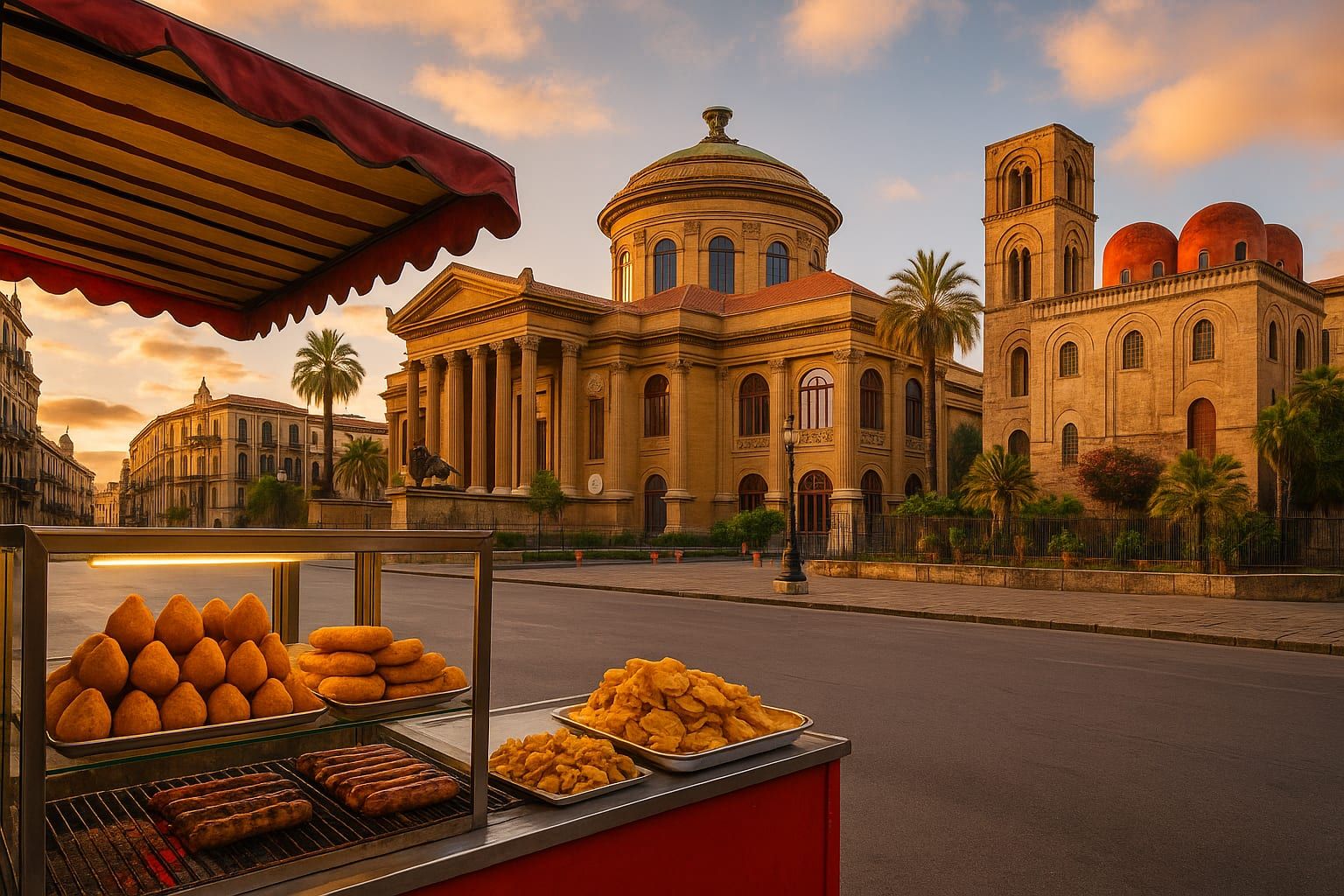
Palermo Food Guide: Sicily's Street Food Capital
A hands-on guide to Palermo's legendary street food: markets, must-try dishes, price and ordering tips, and local insights to eat like a Palermitano.
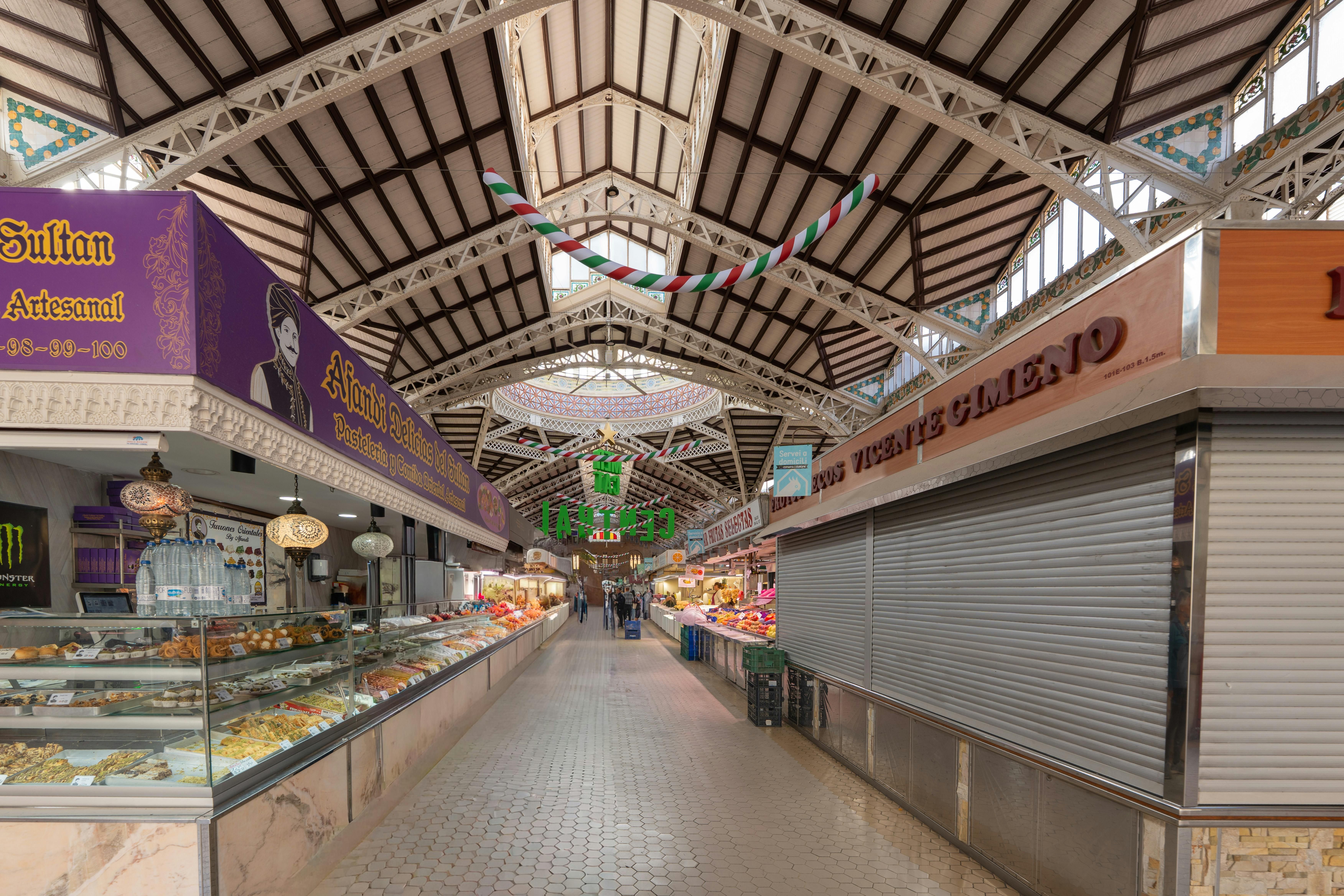
Best Food Markets in Europe: City Guide
Europe's 17 best food markets, city by city: opening hours, named stalls, signature dishes, EUR prices. Boqueria, San Miguel, Borough, Testaccio, Naschmarkt and more.
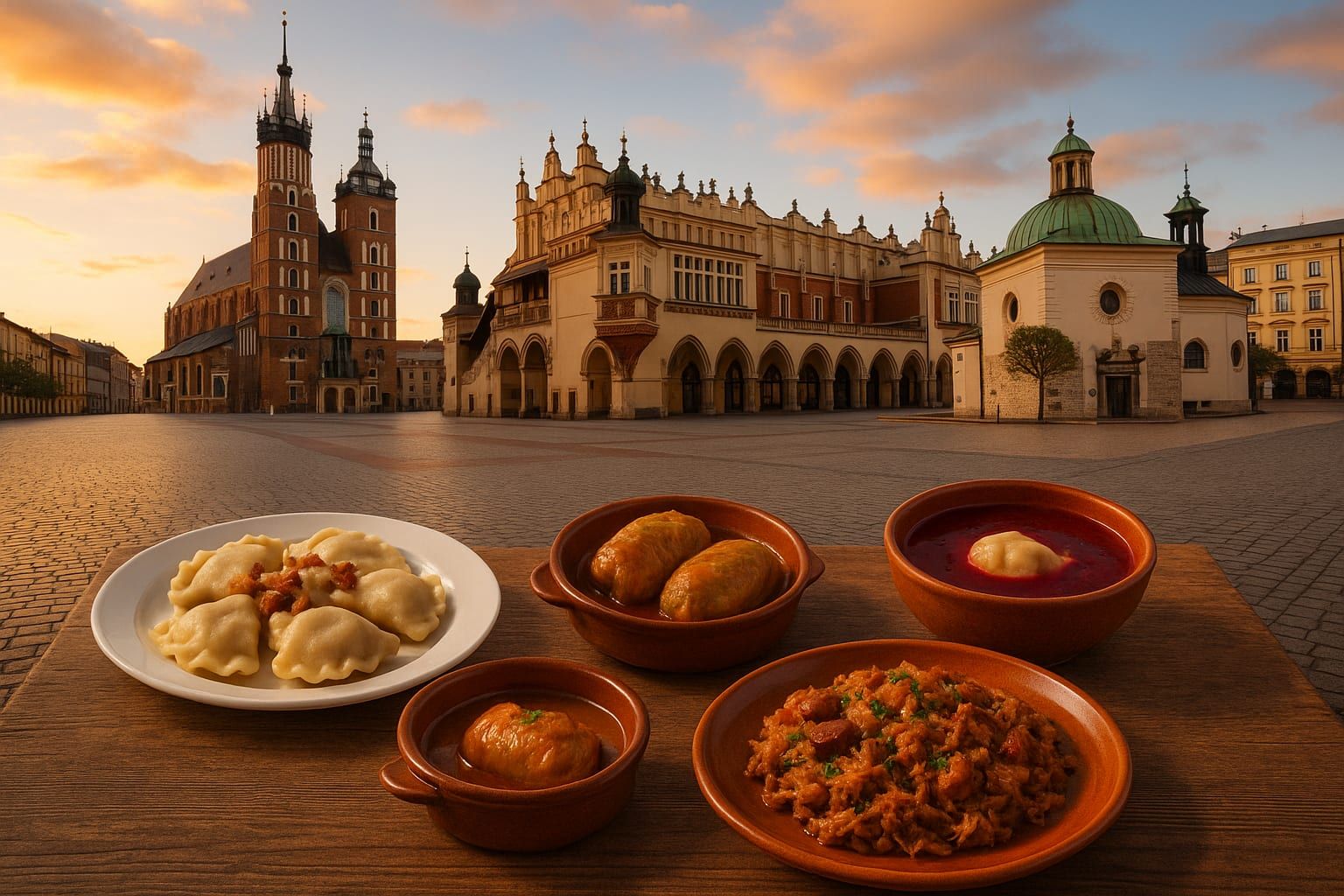
Krakow Food Guide: Polish Comfort Food
A practical, mouthwatering guide to Kraków’s best Polish comfort foods — from pierogi and żurek to milk bars, markets and street snacks, plus tips for where and how to eat like a local.