
Best Time to Visit Oaxaca: Weather and Festivals
Choose Oaxaca dates around comfortable sightseeing or a specific celebration. Compare the seasons, festival commitments and alternatives for rainy days.
For a first visit to Oaxaca City, start by comparing January–February with mid-November–early December. These are our editorial picks for a trip built around walking, museums and central-valley excursions, outside the main festival dates. Choose July for Guelaguetza, or late October–early November for Day of the Dead, when the celebration itself is your reason for travelling.
The distinction matters: the month with the most convenient sightseeing weather may not contain the event you want. This guide covers Oaxaca de Juárez and the central valleys, including Monte Albán and nearby craft villages. Puerto Escondido, Huatulco and the rest of the coast require a separate weather and transport decision.
Choose your travel window
| Window | Best reason to choose it | Main compromise | Planning priority |
|---|---|---|---|
| January–February | City walks and archaeology in the drier season | Cool evenings; holiday dates still matter | Pack layers and compare dates after New Year |
| March–April | Outdoor sightseeing before the summer rains | Increasing heat and changing Easter dates | Early outdoor visits; check Holy Week |
| May–June | Flexible city break with indoor options | Heat followed by the transition into rain | Keep excursions movable |
| July | Guelaguetza and its associated programme | Festival demand during the rainy season | Confirm the event before fixing your stay |
| August–September | A museum, food or workshop-led trip | Greater dependence on the forecast | Protect an indoor alternative |
| October–early November | Day of the Dead, if deliberately planned | Transitional weather and concentrated demand | Verify the programme and accommodation together |
| Mid-November–early December | A balanced city-and-valley visit | You miss the main Day of the Dead observances | Choose dates for sightseeing, not festival access |
| Late December | Noche de Rábanos and the holiday atmosphere | Holiday logistics and potentially limited availability | Check the event, meals and return transport |
These are choices to compare, not promises of cheap rooms or empty streets. A conference, public holiday or particular event can change the experience within the same month.
Understand the weather before choosing a festival
Oaxaca's useful broad split is a drier period roughly from November to April, with summer rainfall and transitional conditions around May and October. Historical city-station observations in INEGI's Oaxaca de Juárez reference show warmer April–May conditions and cooler winter months. These establish a seasonal pattern, not a forecast for your trip.
For planning, separate rain from heat. A dry April afternoon can be a less comfortable time for exposed archaeological walking than a cooler winter morning. Conversely, a summer holiday can work well if museums, food and a booked workshop are your priorities and you can change an outdoor excursion.
Do not rely on rain arriving at a fixed hour. A morning visit is a sensible starting plan, but “rainy season” does not guarantee either an uninterrupted morning or a washed-out day. Check the local forecast close to departure and again before a valley outing; allow the forecast to change the order of activities.
Pack light daytime clothing, a warmer layer for evenings and sun protection throughout the year. Add rain protection and shoes with suitable grip when showers are likely. For a long evening celebration, take the extra layer with you rather than assuming you will return to your room before temperatures fall.
January and February: our straightforward first-visit choice
If you want the city, Monte Albán and a craft visit without building the holiday around a major festival, January–February is the simplest window to investigate first. Compare departures after the New Year period, then check your chosen week's local calendar. This recommendation prioritises a manageable sightseeing plan; it is not a claim that every winter week has low hotel prices.
Put outdoor walking early in the day and leave room for a proper lunch and museum visit. Winter layers are useful for the journey out and for dinner even when the afternoon feels warm. If being cold at night bothers you, ask the accommodation about the room itself instead of assuming all properties provide heating.
The INAH Monte Albán visitor page currently lists daily opening 08:00–17:00, with last admission at 16:00. An early departure is therefore a practical option, subject to your transport arrangement. Allow 4–5 hours door to door as an editorial planning block, including travel and waiting; this is not an official visit duration.
March to June: weigh heat against flexibility
March and April deserve a closer look at your daily pace. If ruins and long walks dominate the plan, compare these dates with a winter alternative before booking. Start exposed visits early, keep lunch unhurried and avoid scheduling another demanding outdoor activity immediately afterward.
Holy Week moves between March and April. Check the calendar for your travel year and the local programme rather than copying dates from an older guide. If religious celebrations are your interest, make them the purpose of those days; if you primarily want quiet museum time, compare a different week before committing.
May and June can suit a trip centred on cooking, textiles or studying Spanish because the holiday need not depend on continuous outdoor time. Ask a workshop host whether the activity is indoors, how you will reach it and what changes in heavy rain. “Craft visit” does not automatically mean a weatherproof day when substantial transport is involved.
For value, compare the actual total for the same room and cancellation terms across alternative dates. Include transport and any fixed activity fees. A lower nightly rate is less useful if you must replace cancelled excursions or spend more reaching a distant hotel.
July: choose Guelaguetza deliberately
Guelaguetza brings regional dance and cultural presentations to the city's festival calendar. The state's official programme announcement illustrates the distinction between the principal Lunes del Cerro performances and a wider programme of associated events. For a future trip, use that year's announcement; do not carry forward performance dates or ticket arrangements.
Decide what you actually want to attend before booking transport. A principal auditorium performance, a public procession and a food fair are different commitments. Check which require a ticket or reservation, where they take place and whether your accommodation makes the return practical. Staying in July alone does not ensure you will see a particular performance.
Treat the festival day as your main activity. Leave space for entry procedures, the journey and a meal; do not attach a tightly timed Monte Albán excursion. If your chosen performance is later in the day, a flexible central morning is easier to adjust than a tour outside the city.
July also falls within the wetter part of the year. Confirm the organiser's arrangements for weather and permitted items before attending. If the festival is not an attraction for you, compare another travel window: accepting both rain-related flexibility and event demand brings little benefit when you would rather concentrate on museums and food.
August to October: make the flexible version work
A summer or early autumn visit works best when the central city can carry the trip even if an excursion changes. Choose the outdoor day according to conditions, rather than making the entire holiday depend on a distant viewpoint being available at one exact time.
The Museo Textil de Oaxaca offers free admission and published opening throughout the week. It is a useful indoor anchor alongside an arranged cooking session or an extended meal. Check the day's hours before setting out; a museum visit still requires getting there from your accommodation.
Reserve 1–2 hours for the textile museum as an editorial allowance. Keep another part of the day uncommitted so a shower does not force you to rush across town. Markets can also fit a food-focused day, but covered stalls do not make every street between your stops sheltered.
October is a transition to assess rather than an automatic promise of dry weather. Early October and the approach to Day of the Dead also represent different booking decisions. Someone seeking ordinary city sightseeing should compare the first part of the month with mid-November, while a festival visitor should work backward from the activities they want to attend.
Day of the Dead: late October and early November
The central commemorative dates are 1–2 November, with associated activities around them. The Instituto Cultural Oaxaca programme shows how a local organiser combines learning, workshops and visits during this period, while explicitly warning that details can change. Its school programme is not the city's universal calendar or a guarantee of access for independent visitors.
Choose these dates if you want to understand the celebration and can give it time. Altars, food, processions and remembrance belong to particular families and communities; they are not interchangeable performances available whenever a tour bus arrives. Confirm a named activity, location and date with its organiser.
A cemetery visit requires particular care. Ask whether visitors are welcome on the intended evening, what conduct is expected and how the return is arranged. Follow local restrictions, ask before photographing people or family altars, and leave space for those remembering relatives. Buying a tour does not grant permission to enter every cemetery or photograph every ceremony.
If accommodation is already unsuitable or the logistics feel too compressed, moving to mid-November is a sensible sightseeing alternative. It does mean missing the main observances. Do not book later dates on the assumption that the same ceremonies will continue for tourists.
December: separate a city break from the holiday trip
Early December is worth comparing with mid-November for a visit whose main activities are museums, food and central-valley outings. Late December is a different proposition: you may be travelling specifically for seasonal events, and you should check holiday opening arrangements with each place you want to visit.
Noche de Rábanos traditionally takes place on 23 December, as recorded by Mexico's Sistema de Información Cultural. The event is associated with decorative creations using radishes and other materials. Confirm the current programme and viewing arrangements before making it the fixed point of your holiday; a traditional date does not establish that year's timetable.
For the holiday period, reserve the meals that matter to you and ask about actual opening on your dates. Check arrival access with your accommodation if central events affect your route. Keep the departure day clear enough for your booked transfer rather than assuming you can fit a last village excursion before leaving.
Turn your dates into a realistic stay
Allow 3 full sightseeing days for a first city-and-valley visit as an editorial starting point, adding time if a festival is the main reason for travelling. Arrival and departure days may contribute very little usable visiting time, especially when an event or excursion has a fixed start.
Use our Oaxaca in 3 days itinerary to organise the days after choosing the season. For comparing individual places and the different valley routes, see things to do in Oaxaca. Keep the least flexible confirmed booking in place and move the outdoor day around weather and opening arrangements.
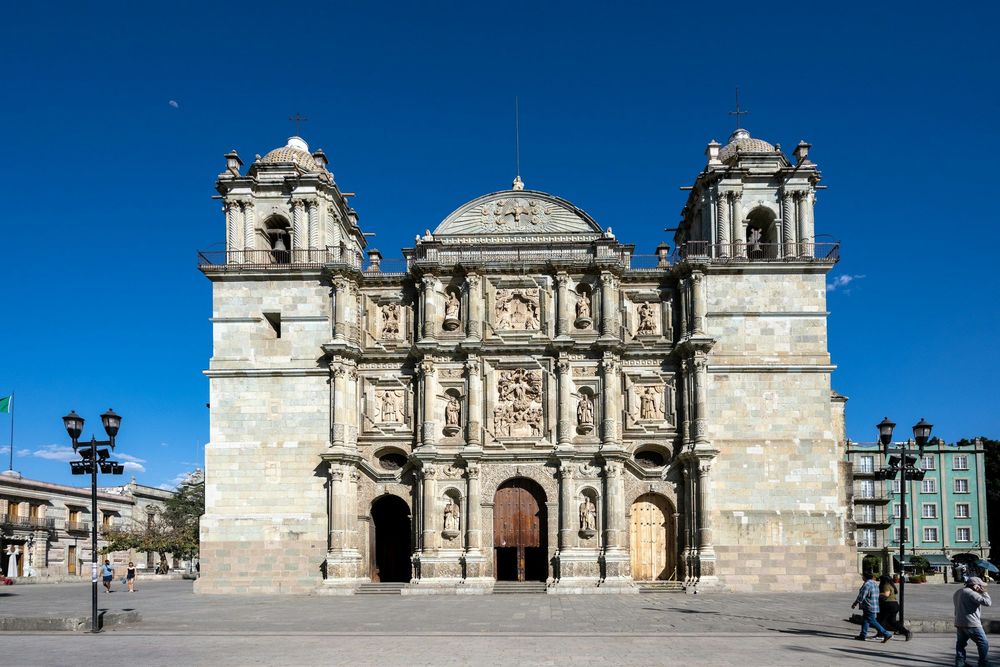
Cover photograph: Stone church facade with two bell towers and a plaza in Oaxaca. Photo by Krzysztof on Unsplash.
Frequently Asked Questions
What is the best time to visit Oaxaca City for a first trip?
January–February or mid-November–early December are our editorial first choices for walking, museums and valley excursions outside the principal festival dates. Compare your exact dates with local events and accommodation availability.
When is Oaxaca City's rainy season?
Summer is the main rainy period, with May and October acting as transition months. November–April is broadly drier. These seasonal patterns do not guarantee rain-free mornings or specify the weather on your travel dates.
Is July a good time to visit Oaxaca?
Yes if Guelaguetza is a priority and you plan around the confirmed programme. Expect to keep weather alternatives and check event access before booking; a July stay alone does not guarantee a particular performance.
Should I visit for Day of the Dead or later in November?
Choose late October–early November for the celebration centred on 1–2 November, after confirming specific activities. Choose mid-November for a sightseeing-led trip, accepting that the main observances will have passed. Cemetery access always depends on local arrangements.

Keep Exploring

Best Time to Visit Singapore: Weather and Planning
February is a useful weather-first starting point, but your best Singapore dates depend on outdoor plans, holidays and how flexibly you can travel.
Best Time to Visit Kyoto: Seasons and Tradeoffs
Compare Kyoto's seasons by walking comfort, crowds and seasonal scenery. Plan around uncertain blossom dates, summer heat and shorter winter days.

Best Time to Visit New York City: A Seasonal Guide
Match your New York City dates to the trip you want: spring gardens, autumn walks, summer evenings or winter culture, with practical weather alternatives.